Feeds:
Posts
Comments

Archive for the ‘Old Princeton’ Category

“The Spirit of the Lord God is upon me”—this is the response of the Messiah to such gracious promises—”because the Lord hath anointed me to preach good-tidings unto the meek; he hath sent me to bind up the broken hearted, to proclaim liberty to the captives, and the opening of the prison to them that are bound; to proclaim the acceptable year of the Lord, and the day of vengeance of our God; to comfort all that mourn; to appoint unto them that mourn in Zion, to give unto them a garland for ashes, the oil of gladness for mourning, the garment of praise for the spirit of heaviness; that they might be called trees of righteousness, the planting of the Lord, that he might be glorified” (Isa. lxi. 1 sq.).

No one will fail to observe in these beautiful descriptions of the endowments of the Messiah, how all the theocratic endowments which had been given separately to others unite upon Him; so that all previous organs of the Spirit appear but as partial types of Him to whom as we are told in the New Testament, God “giveth not the Spirit by measure” (John iii. 34). Here we perceive the difference between the Messiah and other recipients of the Spirit. To them the Spirit had been “meted out” (Isa. xl. 13), according to their place and function in the development of the kingdom of God; upon Him it was poured out without measure. By Him, accordingly, the kingdom of God is consummated. The descriptions of the spiritual endowments of the Messiah are descriptions also, as will no doubt have been noted, of the consummated kingdom of God. His endowment also was not for himself but for the kingdom; it, too, was official. Nevertheless, it was the source in Him of all personal graces also, the opulence and perfection of which are fully described. And thus He becomes the type not only of the theocratic work of the Spirit, but also of His work upon the individual soul, perfecting it after the image of God.

* * * *

From “The Spirit of God in the Old Testament.” Listen to the entire audio here. Or read it below (scroll to the second page):

Read Full Post »

The following is included as one of several appendices to Princeton Seminary’s first president and American Presbyterian worthy, Archibald Alexander. Entitled “Counsels to Christian Mothers,” this piece is worth the cost of the book, and the book itself truly worth its weight in gold. This is definitely one of my all-time favorites, a rich exploration of Christian experience in all its varieties, complexities, trials and triumphs, and all from a confessionally Reformed viewpoint and drawn from the heart of a seasoned physician of souls. The Banner of Truth has been continuously publishing it for I don’t know how long, and for good reason. Also, if you’d like to hear a recording of it, I did that several years back (I have improved in quality since then, so fair warning!). For more audio resources, visit WPE Audio here.

* * * * * *

When I address myself to Christian mothers, I do not mean to intimate non-Christian mothers stand in no need of admonition. Alas! that in a Christian country there should be mothers who have nothing of the spirit of Christ! Young people often promise themselves that they will attend to true religion after they are married and settled in the world. How preposterous is this! It ought rather to be their resolution not to think of entering into a state involving such weighty responsibilities, and the exercise of so many virtues—until they have become the possessors of true religion! Without vital piety how is it possible for any woman rightly to fulfill the duties of a wife, and especially of a mother? I feel that no woman destitute of religion is fit to become a wife and mother. Only think of it—an impious mother! If it were not so common, the very expression would excite emotions similar to those which we experience when we hear of an impious minister.

I address Christian mothers, because from them alone can I expect a patient hearing. I address Christian mothers, because all mothers ought to be sincere Christians. Is there a person on earth, whose mind is so perverted by prejudice, as not to perceive a congruity between piety and this tender relation? It was formerly a current opinion, even among infidels that religion was an ornament and safeguard to a woman. I knew one distinguished man who had renounced all belief in the Christian religion himself, who encouraged it in his wife, and furnished her with all the necessary means of attending church; and when one of his friends complained to him, that his wife was becoming pious, which gave him great concern, he told him that he was a fool, for that nothing was more suitable and desirable than that a wife should be pious. Even infidels are constrained, like the demons of old, to give their testimony in favor of Christ. Many ungodly men desire to obtain wives of genuine piety, and few intelligent men in our country would be pleased with a female infidel. Such a character was so rare in Virginia forty years ago, when infidelity abounded among the higher classes of men, that when a certain lady was pointed out as the advocate of deistical opinions, it created a revulsion of feeling in almost every mind.

Here I take pleasure in saying that in no class of society anywhere have I found examples of more pure and elevated piety than among the ladies of Virginia. And I have reason to believe that these examples have rather been increased than diminished since I left my native State. It may, in an important sense, be said that the Commonwealth has been preserved from utter destruction by the prudence, purity and piety of Virginian mothers. They have been the salt which has arrested the progress of moral corruption in the mass of society. Accordingly there is no country in the world, perhaps, where mothers are so much respected by their children, and have so great an influence over them. Ask almost any young Virginian where he will look for the brightest examples of moral excellence, and his thoughts will turn at once to the character of pious females, and perhaps to his own mother, if she happens to be pious.

(more…)

Read Full Post »

This expanding collection of audio resources includes sermons, discourses, and articles by the great theologians of Old Princeton (1812-1929), the American bastion of Calvinist orthodoxy of the 19th century. As with the other collections, I’m attempting to develop a Reformed audio library of higher-quality, amateur recordings to fill gaps and so assist church officers and others who have narrower margins of time to sit and read. And visit the complete WPE Audio library here.

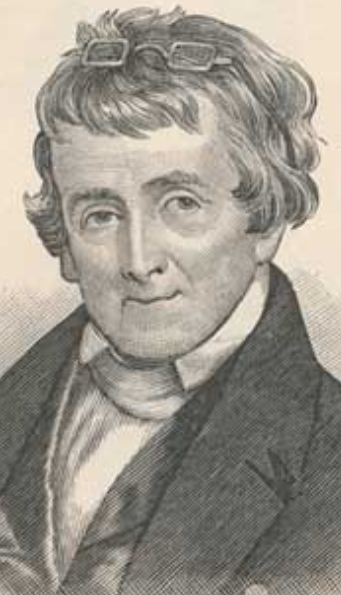
Archibald Alexander (1772-1851)

Archibald Alexander Hodge (1823-1886)

Samuel Miller (1769–1850)

Geerhardus Vos (1862–1949)

Benjamin B. Warfield (1851-1921)

Don’t see something here you’d like to see added? Leave a comment!

[links updated 1/9/25]

Read Full Post »