Feeds:
Posts
Comments

Archive for the ‘Natural Theology’ Category

The following is some rich material on the “divine nature” or the “Godhead” from the Synopsis Purioris Theologiae (1625).

* * * * *

In using the phrase “divine Essence” we mean that what God is; for “to be” is said of Him (Hebrews 11:6, and ho ōn kai ho ēn, Revelation 4:8). To Him are attributed “nature,” phusis (Galatians 4:8), and “divine nature” (2Peter 1:4; although it is restricted to the divine properties), theotēs, “deity” (Colossians 2:9) and theiotēs, “divinity” (Romans 1:20), and to theion, “the divine” or “the godhead” (Acts 17:29), and morphē theou, “the form of God” (Philippians 2:6); and He is called theos, “God” (Acts 17:24, 29). From and in this divine nature all things are and exist, everything by means of its own way of participation. . .

(more…)

Read Full Post »

The following comes from the pen of Abraham Kuyper (1837-1920), pastor, theologian, and prime minister of the Netherlands. It’s a devotional work entitled To Be Near Unto God. And you don’t have to be a card-carrying Neo-Calvinist to appreciate it!

“NIGHT is a mystery in our life, and remains a mystery. For years together, sleep to most people is a provisional going out from life, in order after some seven or eight hours to come back to it. When they fall asleep, which most people do immediately after their head touches the pillow, they are gone, and when the hand on the dial of the clock has moved on a given number of hours, they rise and resume their part in life. At most they have an occasional remembrance of a dream that entered into their sleep, but for the rest it is all a blank. The seven hours during which they were lost in unconsciousness passed by unobserved, and as far as their remembrance of them goes they amounted to no more than two or at most three hours.

“Thus a third of life is taken out of their existence. When they are thirty years of age, they have actually lived but twenty, and the other ten years are wrapped in the haziness of sleep.

“This sleep, however, was not devoid of purpose. He who was weary on retiring, rises girded with new strength, though as far as his consciousness goes, he was idle. His thinking, feeling, willing, working, have all been at a stand-still. This absolute surcease of life is the normal state of things, for as long as man is well, in the fullness of his strength and not oppressed by cares, he sleeps as long as nothing disturbs him from without.

“Why this was so ordained, remains a riddle. For though it is true that after hours of work our strength becomes exhausted and demands rest to recuperate, this does not solve the problem. For at once the question arises: “Why this exhaustion of strength?” God, our Maker, after Whose Image weare created fainteth not, neither is He weary. The heavenly hosts of angels do not sleep. Of the New Jerusalem we read: “And there shall be no night there” (Rev. 22: 5). Thus, a being who does not continually exhaust his strength, and hence is in no need of sleep, is conceivable. Why God, our Maker, appointed a life for us with continual exhaustion of its power to be restored by sleep, remains a mystery. This ordinance of the Lord has not been promulgated without a purpose and a wise design, though no one understands it.”

Read the rest of the chapter here.

[Image source.]

Read Full Post »

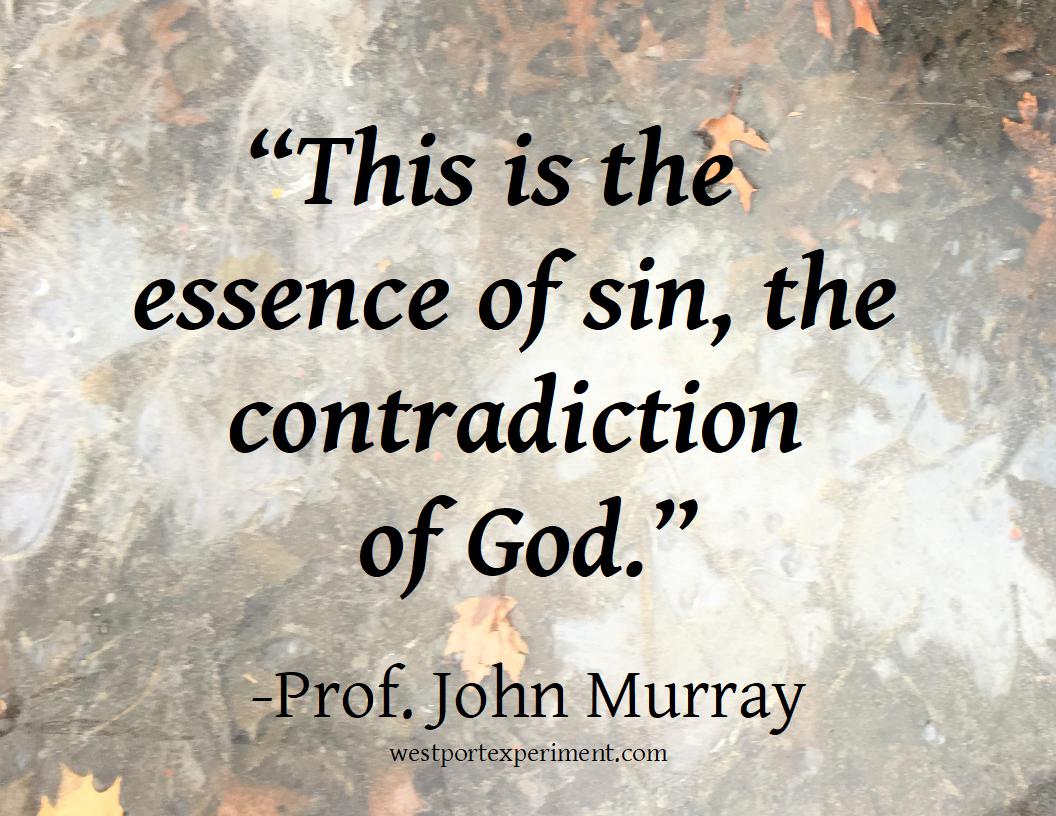
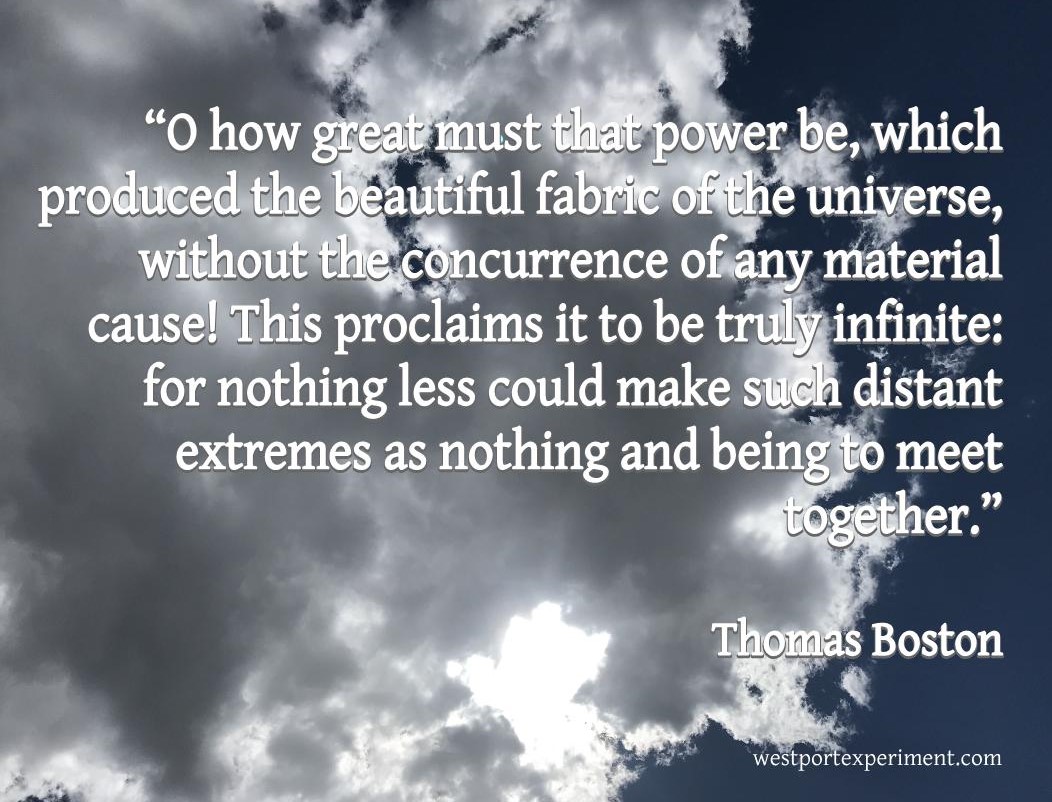
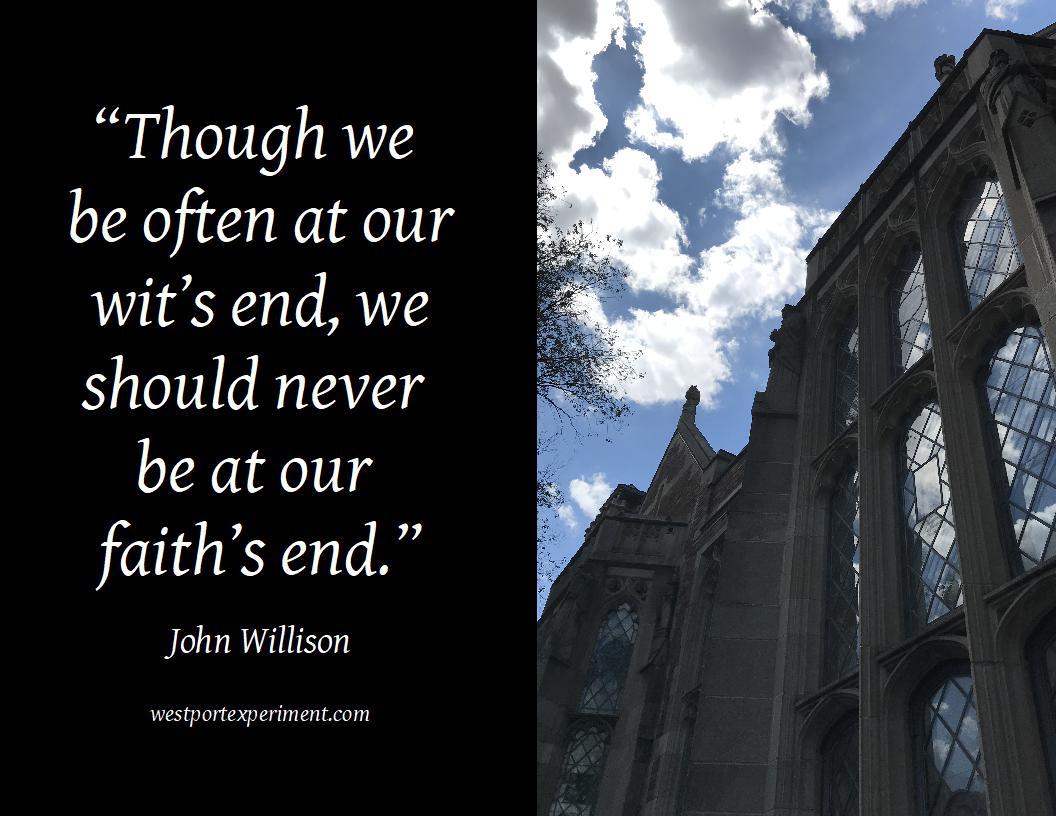
To reduce cluttering your inboxes, I’m posting several memes I’ve finished recently:

Murray, Essence of Sin

Boston, Beautiful Fabric

Willison, Wit's End

Read Full Post »

Another addition to the Chalmers Audio Library. A tremendous address! Little wonder that Wilberforce once wrote of him, “All the world is wild about Chalmers.” If this sermon doesn’t drive you to your prayer closet, what will?

Read Full Post »

Here’s a great quote in Chalmers’ treatise on Natural Theology.  Innate instincts are marvelously designed for the welfare of humanity and even the animal kingdom.  Even fear!  –

* * *

“Man has not been left to himself, any more than the inferior animals, for the care of his own preservation ; and instead of this interest being altogether confided to his own wisdom, or his own vigilance, he too has been fitted with a number of unreflecting instincts and appetites, but for the impulse of which he would inevitably perish. There cannot be a more palpable exhibition of this than is afforded by the appetite of hunger, which both reminds and urges man by its periodic calls to the food that is needful for his sustenance, and seems planted there to serve the office of a monitor, who might prompt him at right times to take of that aliment, on the neglect of which for a few days there would ensue his dissolution. And the same holds true of his mental as well as his bodily affections. When danger threatens, it is not enough either for escape or for protection, that under the government of reason he should adopt the right measures by which to shun or to resist it; but whether to wing his flight or to stimulate his wakeful diligence, there is inserted within his bosom the affection of fear. When an infant is born, it is not enough that nature has provided the material nourishment which keeps it in life; but for the indispensable safety of the little stranger, nature has also planted the strongest of her instincts in the heart of its mother, who under the impulse of an affection that never wearies, ceases not day nor night to tend and watch over it.”

Read Full Post »