Door-to-door parish missions “may not introduce Christianity within the precincts of every family; but it brings the overtures of Christianity or of Christian instruction to the door of every family. The lessons of the gospel are brought by it to every door; and our experience is, that, when once brought thus far, in the vast majority of instances an entry is permitted—and so these lessons are carried by it across almost every threshold” (Thomas Chalmers, Works, 17:333).
The following extract comes from Thomas Cochrane’s, Home Mission-work; Or, Twenty-five Years in a Mission Field (1873; pp. 51-52). Chalmers earlier advocated these exact same tactics years before. In my parish mission efforts, I’m already seeing the profound wisdom and insight of this policy. If they don’t yet come to church, then (assuming they let you in the door) bring church to them!
“In all Territorial districts there will be found many not only living in entire neglect of the sanctuary, but many of that number who will scarcely be persuaded by prayer and pains to avail themselves of the privilege To meet such cases, the devoted missionary will often be found to try and bridge over the difficulty by taking the church to them; sometimes, perhaps, even taking possession of the home of the neglectful, and making a church in their house. The effect of such little gatherings is often very blessed indeed. By these meetings there is not only opened a way for bringing the Gospel to the very homesteads of the careless and prayerless, but it is also, under GOD, a very fruitful source of augmenting the central gatherings.
“One of the most useful members of the Mission relates, as his own experience, how by this agency especially he was won to the public ordinances of the church. He was ill to gain over. Many months of prayerful effort were spent, but “by keeping at it,” with God’s blessing on the means, he was at last enlisted in the good cause ; and how useful he has been since in gaining others, the future only can reveal. How devoted he has been cannot be told.
“The services at these fireside gatherings should not, as a general rule, be lengthened above an hour, for many reasons. Mothers cannot conveniently give longer time from household duties. Short telling addresses at such meetings will ordinarily be most useful and acceptable. The grand object being to deal chiefly and closely with those who have not been accustomed to much serious thinking about religious subjects, anything fitted to weary and repel should be carefully avoided. How all-important to leave a good impression, and, by this short pithy service, to beget a thirst for the more extended, if not more formal, services of the house of God! It would not be an easy thing to say how many members of the church first found their footing towards the sanctuary through the influence of these district meetings. They will not only prove useful-almost essential-in the forming of a Territorial congregation, but will be of immense benefit after it has been formed, both as a means of dealing with the neglectful members of the congregation, and of reaching those beyond the pale of the church.”
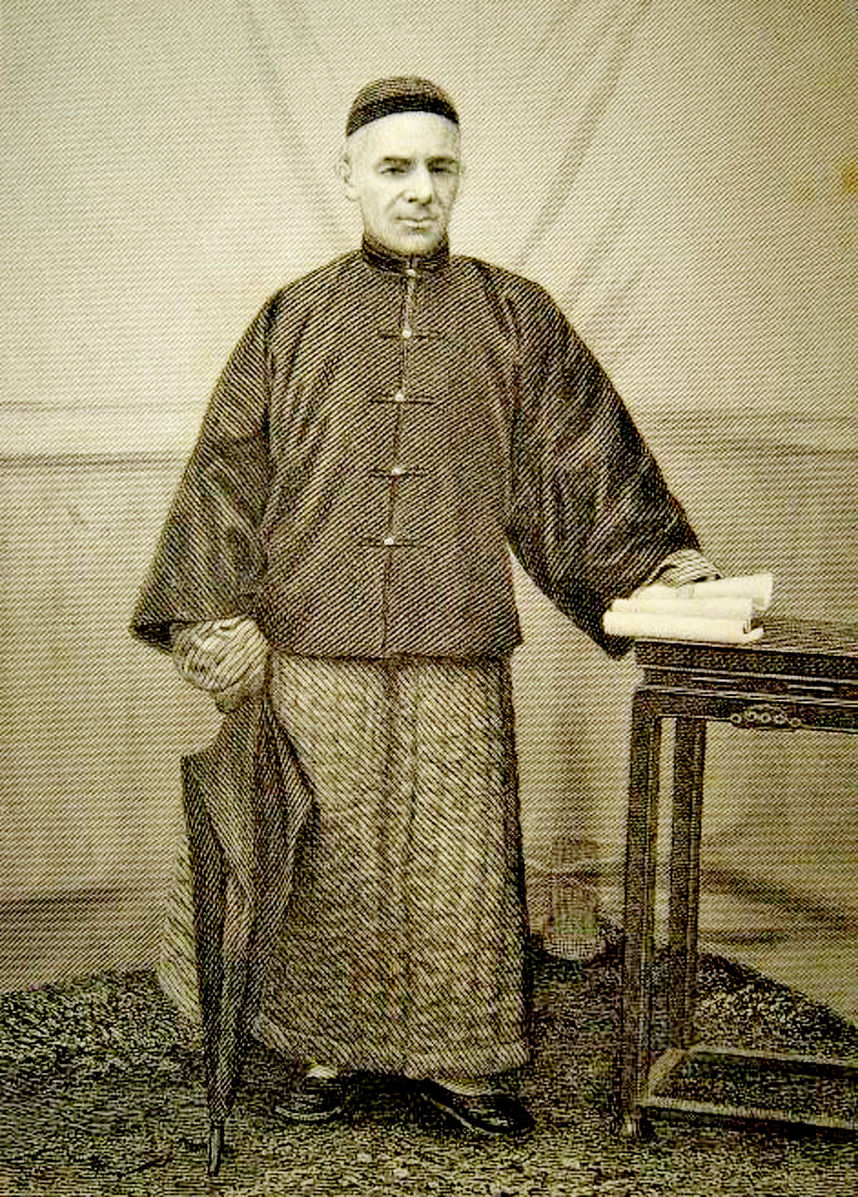
The following is a portion from William Chalmers Burns‘ sermon “I am Debtor,” from Romans 1:14. Burns was a good friend and ministerial colleague to Robert Murray M’Cheyne, and was a heroic Presbyterian missionary to China. Listen to the full audio recording here. And for more audio resources, click on the WPE Audio tab at the top.
* * * *
The apostle says something more than this, — “I am debtor both to the Greeks, and to the Barbarians; both to the wise, and the unwise.” The meaning of this seems to be, — if I were free to make a choice, I might choose the barbarian or I might choose the Greek, I might choose the wise or the unwise; but Paul says, I am debtor, and you know a debtor has no such thing as a choice to make to whom he will pay his debts. The debtor knows this, and the believer feels it just in the same way. “Whatever my calculations may be, or whatever I might myself desire, the question is not, what would I like, but what is my commission, — what are the objects of my embassy? It is not my choice that I have to do with, but God’s commission, — what instructions does it contain?”
We would fain impress this important, solemn truth upon God’s children. Believer, do you feel this? Do you know what it is to feel yourself a debtor to a lost world? Have you ever thought of what object Christ had in view when He brought you to Himself? what design He had in calling you? It was certainly, in the first instance, to save you from perdition, but that was not the only end. It is possible to think too much, or, at least, too exclusively, about your own case. In one sense you cannot do that; woe be to him who seeks to pull the mote out of a brother’s eye, when a beam is in his own. But yet a believer must remember that he is called to know Christ, not only to be safe himself, but also that he may be a witness for Christ in the world. Ah! think of this; don’t be selfish in the matter of salvation, and remember above all, that his is not a thing which you may or may not do, just as you like. Some people do much in this way, just because they have a liking to it, and because the employment suits their taste – and it is a happy thing to feel that; but there is a far more unchangeable foundation for a believer’s labour in the Lord’s vineyard than that. The man is no longer free to like, or not to like; he is a debtor now – a debtor to do it fully, and constantly, and unceasingly, and devotedly, whether he likes it or not. Think of it in this light, and then you will be going and hasting to tell your friends, and all whom you know, of these precious things of God. Oh, if this were fully felt, and felt universally , how many would be preaching whose mouths are dumb through sloth and idleness! There would be fewer preaching as a trade, and more preaching as debtors, forevery believer would then have a voice with which to sound the praises of the most high God.
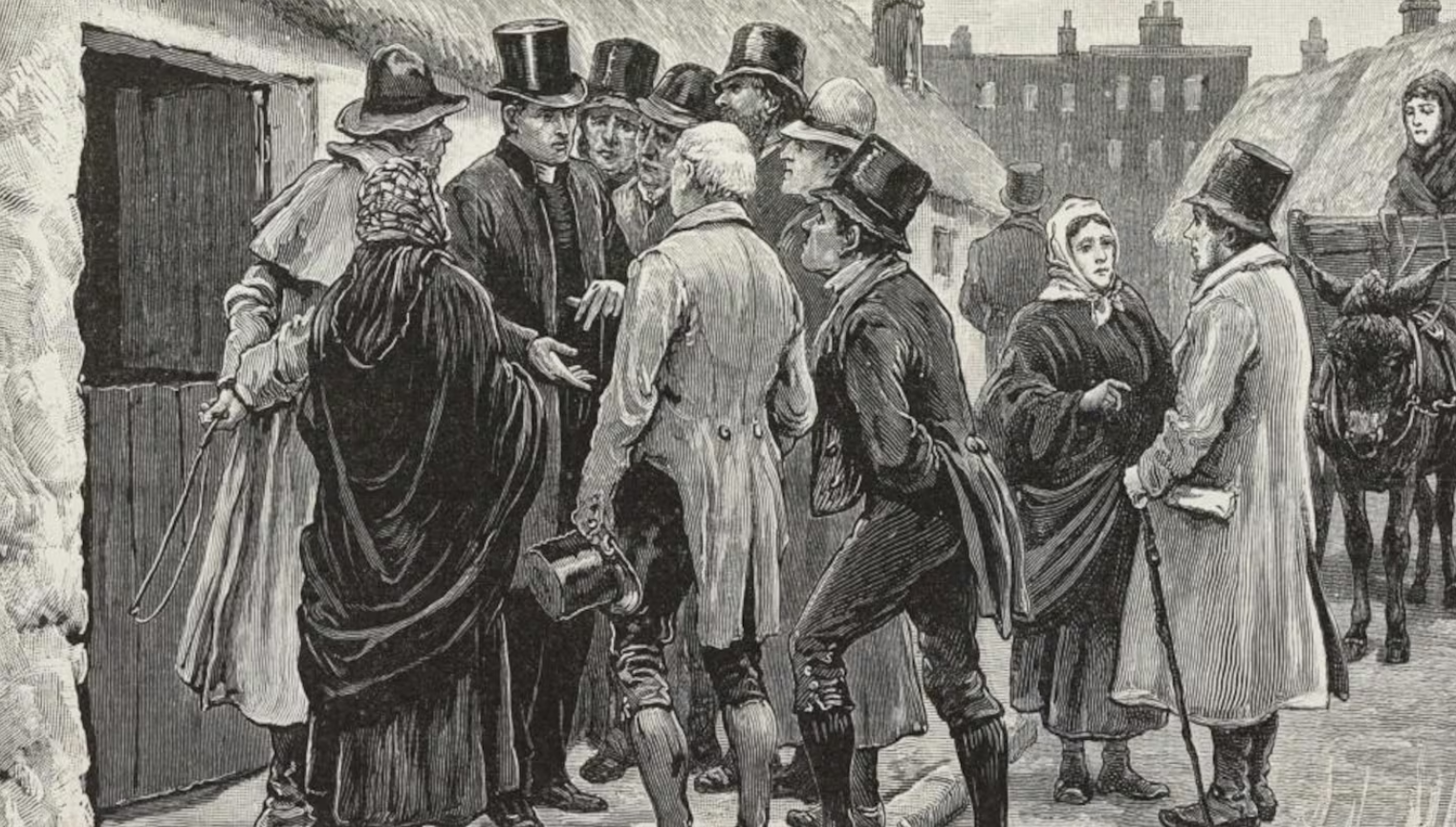
“Yet I must say I liked the Irish part of my parishioners. They received me always with the utmost cordiality, and very often attended my household ministrations, although Catholics” (Works 16:243).
This and the following are selections from Thomas Chalmers on his attitude and outlook on reaching the poor Irish “papists” of his day, both domestically through aggressive, Protestant territorial missions, as well as on the Emerald Isle itself. Much here that is relevant, especially when so many Western nations have swarms of un-Christianized immigrants on our very doorstep.
* * * * *
Chalmers here refutes the notion that the Protestant establishment in Ireland ought to respect parochial bounds of Romanists. No! Parish lines are only relevant for the sake of the Gospel, and ought valiantly to be transgressed when the strong man’s house must be plundered: “We do not say that the maxim has been universally acted on, but it has been greatly too general, that to attempt the conversion of a Papist was to enter another man’s field; and that, in kind at least, if not in degree, there was somewhat of the same sort of irregularity or even of delinquency in this, as in making invasion on another man’s property. In virtue of this false principle, or false delicacy, the cause of truth suffered, even in the hands of conscientious ministers; and when to this we add the number of ministers corrupt, or incompetent, or utterly negligent of their charges, we need not wonder at the stationary Protestantism, or the yet almost entire and unbroken Popery of Ireland. We now inherit the consequences of the misgovernment and the profligacy of former generations. They may be traced to the want of principle and public virtue in the men of a bygone age. Those reckless statesmen who made the patronage of the Irish Church a mere instrument of subservience to the low game of politics—those regardless clergymen who held the parishes as sinecures, and lived in lordly indifference to the state and interests of the people—these are the parties who, even after making full allowance for the share which belongs to the demagogues and agitators of the day, are still the most deeply responsible for the miseries and the crimes of that unhappy land (Chalmers T 1838m; Works 17:304).
The article below on Andrew Bonar at Finnieston, Glasgow, was written by my friend Matthew Vogan and published in the Bulwark Magazine of the Scottish Reformation Society. The author relates the compelling story of Bonar’s evangelistic labor on the parish principle as taught and modeled by Thomas Chalmers.
Here are some sample extracts from the article:
Every afternoon from one o’clock till nearly five he would be found walking about his parish, visiting his people. He was well known on the streets of the district. He became a well-known figure in the area, and his friendly way of speaking and behaving endeared him to all, including children. Little children would run up to him as he walked and put their hand in his and receive a smile and gentle hand laid on the heard. One child called him “the minister with the laughing face.” Soon after arriving in the city, he spoke to a little girl in the street, addressing her by name. The child ran home to her mother with the delighted cry, “Mither, mither, he kens me.” [“Mother, mother, he knows me!”]
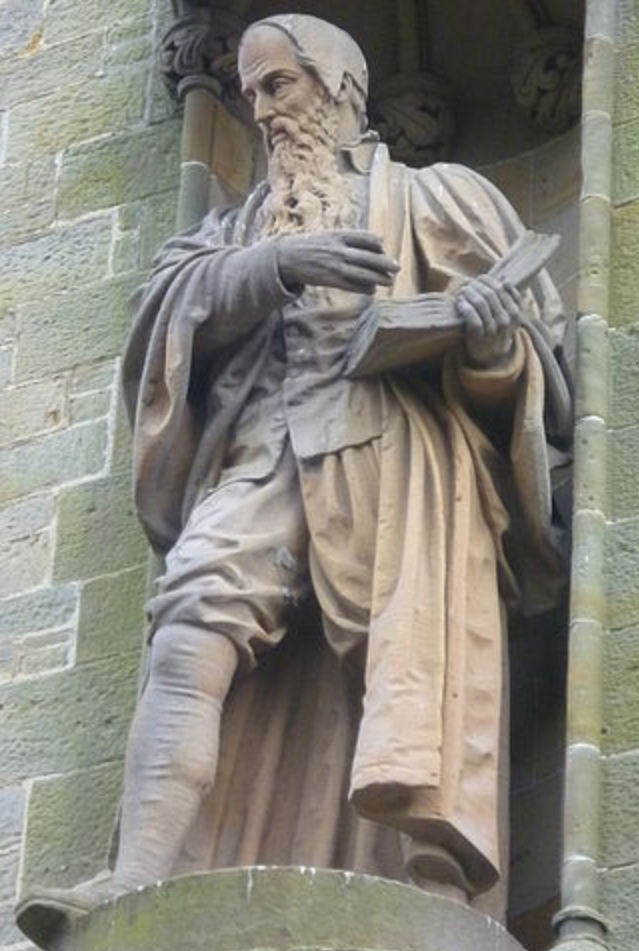
It is said that John Knox prayed, “Give me Scotland, or I die.” In 1560, God gave him Scotland. The purpose of this submission is to examine what he and his colleagues did with her and initiate a discussion on what lessons we might learn for today.
To achieve our purpose, we shall first examine the mission strategy which Knox and his colleagues set out in The First Book of Discipline.
Second, we shall examine what the Reformers sought to do in the light of Presbyterian principles. Now, the object of our scrutiny is the Reformation in Scotland, and that, in fairness, requires a Scottish approach. We are not looking at Knox and company’s mission strategy for precedents which we might apply analogously to the pattern of English Common Law, but for principles which we might reapply in each situation while being informed by examples of previous applications.
Third, we shall describe how the principles and practices of the Scottish Reformation might be reapplied in mission situations today. As we have said, this is a discussion. This third section will not be a list of modern mission solutions but of resource maximizing suggestions. This will not require thinking outside of the box: our commitment to Scripture forbids that. This will involve rethinking our perception of the box’s dimensions and utilizing the extra space.
This article was written by the Rev. D. Douglas Gebbie and published by the Haddington House Journal in 2008. To read the rest, click here.
Micro-presbyterians study hard to get things right. We dot our i’s and cross our t’s. And yet for all our learning, we can miss some pretty big things—in fact, some pretty big presbyterian things. Church-planting would definitely be one of them.
I speak from experience. For nearly the entirety of my 29-year Reformed career, I’ve been a ‘micro-presbyterian.’ I skipped the 1689 thing, past the (relatively) big-tent Reformed bodies, going straight into the Presbyterian Reformed Church, a very small psalm-singing body formed in 1965. I rather distaste the term ‘micro-presbyterian,’ especially with its connotations of over-scrupulosity and cantankerousness; and, the term may be a little dated. But in any case, God put me here, and I love my denomination. (And getting a gorgeous wife and elder’s daughter out of deal didn’t hurt either!).
I also think it has come a long way over the years. I feel that we have matured simultaneously, from a kind of cage-stage to something more balanced, stable, and seasoned. It has also helped, quite frankly, that we decided to join NAPARC some years back. Sure, it made us a pariah with many who might otherwise have sought us out. But often, those very types would never be happy in any case until they were safe in the embrace of an ecclesiastical micromanager or worshipping every Lord’s day in their own living-room.
I know we all have learned the hard way from many mistakes, missteps, and quite frankly, sins. “In many things, we offend all.” While we cannot deny the light that the Lord has graciously shown us, but embrace and follow on in it; while we cannot but press forward to the higher and better attainments of the First and Second Reformations and maintain them with diligence and zeal, we must also humbly acknowledge where we have mixed holy with unholy fire, and where we have in fact justified means by ends. Sometimes in our earnestness for truth we have cut corners; sometimes we’ve cut far more than just corners. But two wrongs do not make a right. And we may never “do evil that good may come.”
“Fear not; from henceforth thou shalt catch men.” Luke 5:10
In this marvelous account, Jesus catches Peter. Now this may seem strange, given that Simon Peter had already become a follower of the Nazarene. Andrew, Peter’s brother, had been a following of John the Baptist. But the Baptist redirected his disciples to Jesus, for Jesus “must increase,” and he “decrease.” Andrew dutifully went, but soon was himself caught by the Master. From there he went to his brother for another catch. “We have found the Messiah” (Jn. 1:41)! Andrew drew Peter to shore, as it were, and Jesus did the rest! Peter began following Jesus.
But still, he kept one foot on dry land. He held on to his day job—better safe than sorry, after all! Following is one thing; forsaking all quite another. But Jesus would not let this one go. So on this morning, after he finished teaching the crowds, he bade Peter go fishing. “Launch out into the deep, and let down your nets for a draught.” What! Peter was the fisherman, Peter knew these waters like the back of his hand, Peter went when the fish were out, and Peter had done everything right. Yet Peter that night had come up empty. Yet out of respect, he yielded to Jesus. Reluctantly no doubt, but reverently. He believed the Master; at least, generally speaking. But what did the carpenter-preacher really know about this trade?
“Mission efforts have often been led by notable individuals. When it comes to examples, we may first think of the missionary journeys of the Apostle Paul, the preaching of George Whitfield, or the exploratory work of Hudson Taylor. These individuals, their characters, and their stories loom large in our minds, and to a degree, they ought to. Their biographies are helpful, their tenacity was admirable, and most important, the Lord’s care for them and blessing on their work encourages the church to continue in missions. A careful survey of scripture, as well as Reformed practices and precedents, however, reveals that while the Lord often uses individuals prominently, it ought not to be ordinary to send individuals alone into a mission field.”
Read the rest of this helpful, thought-provoking paper by Rev. Rob VanDoodewaard of the Free Reformed Churches of North America:




 West Port Experiment