Feeds:
Posts
Comments

Archive for the ‘Ministerial Fidelity’ Category

The labor of the man of God, in the congregation or the community, ought to be paternal through and through. “For though ye have ten thousand instructors in Christ, yet have ye not many fathers: for in Christ Jesus I have begotten you through the gospel” (1 Cor. 4:15; cf. Larger Catechism 124). He must be strong and steady, a visionary, yet eminently practical. He must patient, but ever pushing and pulling. He must be sensitive to the true needs and worthy feelings of the people, yet not obsequiously over-indulgent to their every whim.

Tragically, too much of modern ministry fails to live up to this ideal. While the clergy have in the past sometimes been too harsh and overbearing, the pendulum has swung quite the opposite direction. The modern pastor-coach is in the worst case an effeminate nothing. He cannot command true respect. Only fleeting popularity from the herd.

The following passage from Thomas Chalmers reveals just how timeless the unfatherly pastor is – and how dignified the ideal. O Lord, make us those men.  Our Father, make us fathers!

* * *

“And here one reason at least becomes manifest, why, on the part of clergymen, the mere whimsies of popular feeling ought not to be complied with; and that between favourite preachers and their doting admirers such a spectacle should never be held out, as that of servile indulgence upon the one side, and weak, trifling, senseless conceits of taste and partiality, on the other.  It is this which, more perhaps than any other cause, has degraded the popular opinion into a thing of no estimation; and has thrown circumstances of ridicule around it, which have given, an edge to satire, and furnished a plea of extenuation for the policy that holds it at nought. If it be grievous to observe the demand of the people about frivolities of no moment, it is still more grievous to behold the deference which is rendered thereto by the fearful worshippers at the shrine of popularity. It is a fund of infinite amusement to lookers on, when they see, in this interchange of little minds, how small matters can become great, and each caprice of the popular fancy can be raised into a topic of gravest deliberation. It were surely better that Christian people reserved their zeal for essentials; and that Christian teachers, instead of pampering the popular taste into utter childishness, disciplined it, by a little wholesome resistance, into an appetite, at once manly, and rational, and commanding. Everything that can disarm the popular voice of its energy will be lamented by those who think as we do, that it is a voice which, in the matters of Christianity, is mainly directed to what is practically and substantially good; and that it is just the despite which has been done to it that has so paralyzed the ministrations of our Establishment. And, therefore, do we hold it so desirable that the popular taste were chastened out of all those vagaries which have just had the effect of chasing away the homage that else would have been rendered to it. We know that it has its occasional weaknesses and extravagances; but we believe that these are in no way essential to it; and that, by the control of the ministers of religion, acting wisely, and honestly, and independently, they could all be done away. Though these were lopped off from the affection, it would still subsist with undiminished vigour, and it would then be seen what it nakedly and characteristically is—not that mere fantastic relish which it is often conceived to be, but the deep and strong aspiration of conscious humanity, feeling, and most intelligently feeling, what the truths, and who the teachers are, that are most fitted to exalt and to moralize her.

“In proof of this we may, with all safety, allege that let there be a teacher of religion, with a conscience alive to duty, and an understanding soundly and strongly convinced of the truths of the gospel; let him, with these as his only recommendations, go forth among a people, alive at every pore to offence from the paltry conceits and crotchets in which they have drivelled and been indulged for several generations; let them be prepared with all the senseless exactions which a dark and narrow bigotry would often bring upon a minister; and let him, disdainful of absurdity in all its forms, whilst zealous and determined in acquitting himself of every cardinal obligation, only labour amongst them in the spirit of devotedness: and it will soon be seen that the general good-will of a neighbourhood is far more deeply and solidly founded, than on the basis of such petty compliances as have made popularity ridiculous in the eye of many a superficial observer. The truth is, that there is not one irrational prejudice among his hearers, which such a teacher would not be at liberty to thwart and to traverse, till he had dislodged it altogether. Grant him the pure doctrine of the Bible for his pulpit, with an overflowing charity in his heart for household ministrations— and the simple exhibition of such worth and such affection on the week, from one who preaches the truths of Scripture on the Sabbath, will, without one ingredient of folly, gain, for him, from the bosoms of all, just such a popularity as is ever awarded to moral worth and to moral wisdom. This, indeed, we believe to be the main staple of that popularity which is so much derided by the careless, and often so unfeelingly trampled upon by the holders of patronage. And thus it is fearful to think that, in the systematic opposition which has been raised upon this subject against the vox populi, Government may, unknowing of the mischief, have been checking, all the while, the best aspiration that am arise from the bosom of a country—may have been combating, in its first elements, the growth of virtue in our land —and, in wanton variance with its own subjects about the principle of religion, may have been withering up all those graces of religion, which would else have blessed and beautified our population” (Works 14:192-195).

Read Full Post »

The Church frequently gets its axiology – its theory of value – dead wrong.  To value is fundamentally human.  It is instinctive and inescapable, a testament to the fact that man is the offspring of God.  But when the Church fails to discern between the values of  “the present evil world” and her Lord, it has just plain sold the farm.  A Church that doesn’t defend its axiological borders (God’s rather) has in effect seceded to the enemy.  And so she comes under Christ’s condemnation, “Ye are they which justify yourselves before men; but God knoweth your hearts: for that which is highly esteemed among men is abomination in the sight of God” (Luke 16:15).

Read Full Post »

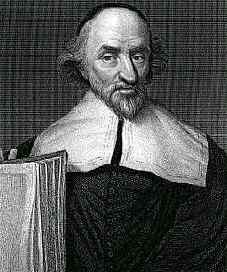
Thomas Chalmers (1780-1847) records the following about an invitation he had accepted to preach.  In the passage, he relates his growing revulsion as he learned of the details planned for the event.  It’s amusing, yet sobering – especially since it’s so contemporary!

* * * * *

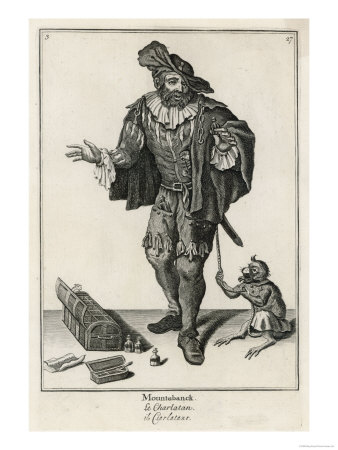
“They have got the sermon into the newspaper, and on reading the advertisement I was well-nigh overset by the style of it. They are going to have a grand musical concert along with the sermon, to which the best amateurs and performers of the neighborhood are to lend their services. This is all put down in their gaudy manifesto, and to me it is most ineffably disgusting. You know that I am to be very guarded; but I could not perfectly disguise my antipathies to this part of the arrangement. I asked Mr. Grant if I might take the paper with me for the amusement of my Scottish friends. He asked if I disliked music. I said that I liked music, but disliked all charlatanry. Thus far I went; and it was perhaps too far, but this is really making it a theatrical performance, and me one of the performers. But let me be patient; I am jaded and overdone, and reserve my further writing till Monday. . .

When I went to the great preaching hall, I found that there was just this practicing before an immense assemblage, on which I called out, in the distinct hearing of those about me, that there was an air of charlatanry about the whole affair, and that I did not like it at all. I would stay no longer in that place, and went along with them to the committee-room, where there were about twenty managers and others. I said that I had come from a great distance on their account, and had therefore purchased the privilege of telling them plain things; that they should have consulted me ere they had made their arrangements—that I was quite revolted by the quackery of their advertisement—that they had made me feel myself to be one of the performers in a theatrical exhibition—that what they had done stood in the same relation to what they ought to have done, that an advertisement of Dr. Solomon’s did to the respectable doings of the regular faculty, &c., &c. I was firm and mild withal—they confused, and awkward, and in difficulties. I said, that still I would preach, but that I thought it right to state what I felt” (Memoirs 2:41).

Read Full Post »

John Knox, the great Scottish Reformer, was definitely no adept in worldly-wisdom.  His positions were always unbending and uncompromising.  He despised subtlety, and spoke always with the greatest of candor.  He obviously had little interested in making friends and influencing people; that is, unless by influence one means shameless, hard-hitting argument!

When Queen Mary came to Scotland in 1561 to take the throne, she was of a mind to assert her royal prerogatives in everything – religion included.  An ardent Romanist from her youth, she decided to make a clear, bold statement at the outset.  She would have a mass celebrated in the chapel of the Holyrood house, something forbidden by the Protestant magistracy at the time.

Not surprisingly, Knox was outspoken against the celebration.  There could be no accommodation, no middle ground.  “One mass,” proclaimed Knox,  “was more fearful unto him than if ten thousand armed enemies were landed in any part of the realm, of purpose to suppress the whole religion.”

One mass, Master Knox?  One private mass, as a concession to the rightful heir of the throne?  And that one mass should be of more dire consequence than a foreign invasion?  Not only is this intolerant, but it’s unreasonable!  Don’t you realize that to get what you want, you’ve got to give?

Knox responds to the naysayers.  The mass issue is a non-negotiable, for “in our God there is strength to resist and confound multitudes, if we unfeignedly depend upon Him, of which we have had experience; but when we join hands with idolatry, it is no doubt but both God’s presence and defence will leave us; and what shall then become of us?”

What the calculators of this world can’t grasp is that he was more practical than them all!  His explanation here reveals the deepest sagacic insight.  Why?  Because, thought Knox, you must factor God into every equation.  Giving in to Queen Mary on one little point may have been expedient on the earthly plane in the short-run, but by doing so it would alienate the One whose favor is absolutely indispensable.  You don’t want to mess with the ‘wrong man’ (or woman, in Mary’s case), but it’s far worse to mess with the ‘wrong God!’

Knox had learned his other-worldly wisdom at the feet of Wisdom incarnate.  He, the Logos, the Light that lightens every man entering the world had said, “Whosoever shall seek to save his life shall lose it; and whosoever shall lose his life shall preserve it” (Lu. 17:33).  To make it in this world and in the next, you must think counter-culturally, counter-intuitively.  But be assured, this is the best way!

In deference to the One who “knows all things,” Knox shunned statescraft.  But in doing so, he became the true patron and friend of the nation.  If only we had eyes to see what Master Knox saw!  If we would close our eyes and heed true Wisdom, we would walk the safest and most expedient course.  And we would assign much less weight to earthly factors, which to the eye of the flesh loom so large.

Read Full Post »

« Newer Posts