Feeds:
Posts
Comments

Archive for the ‘Macleod, John (1872-1948)’ Category

Absolutely tremendous article (sermon?) in the public domain by Prof. John Macleod (1872-1948). I recently recorded it as I prepared for a recent message of mine on Luke 7:18-23, “John Baptist hath sent us unto thee, saying, Art thou he that should come? or look we for another?” (Verse 20.) You won’t be disappointed. Here’s a little “handful of purpose.” And view the entire audio library here, with more Macleod recordings and many others.

Read Full Post »

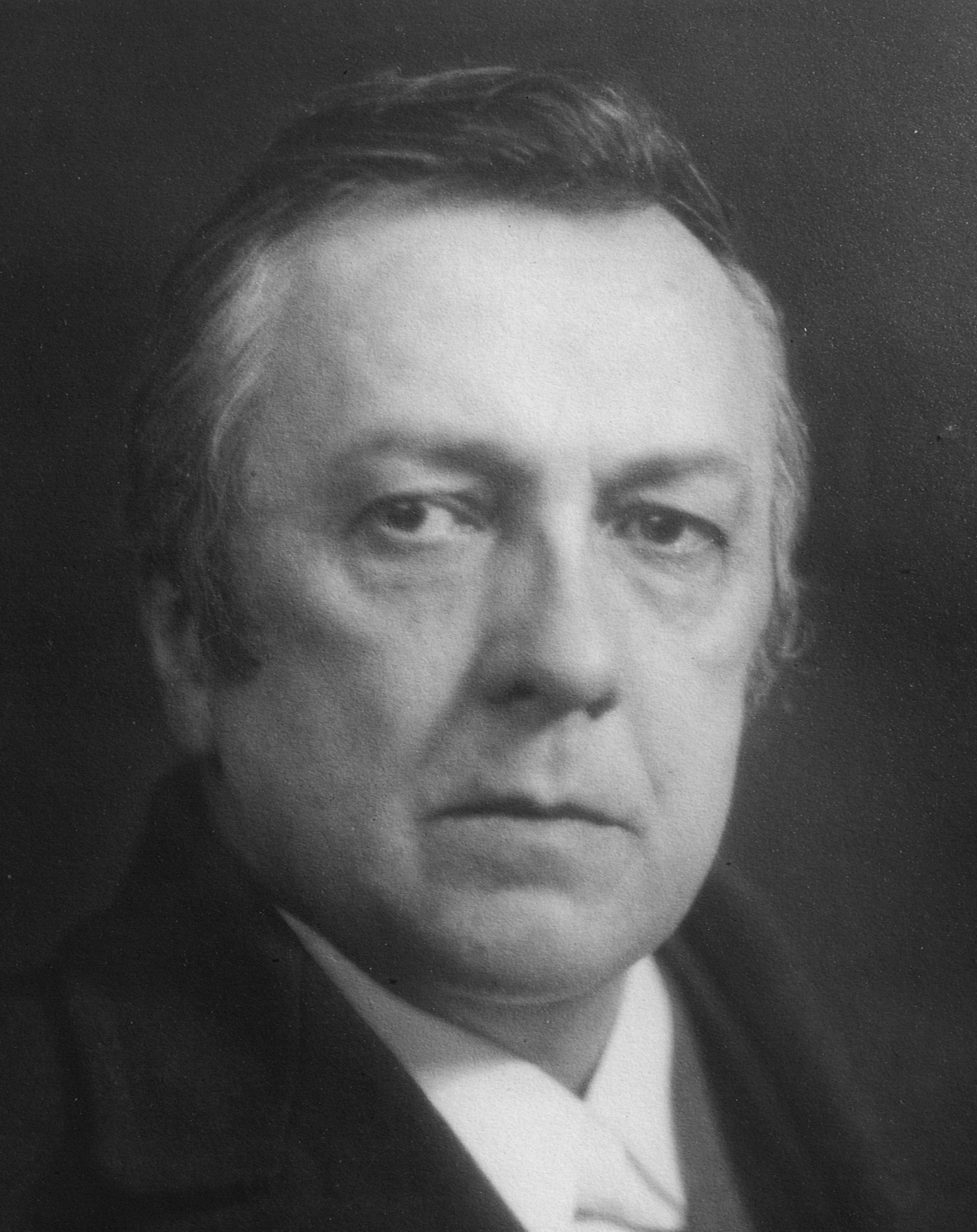
Principal John Macleod (1872-1948) writes with a freshness and a force of thought that sadly is all too uncommon today. Listen to my latest recording of his sermon, “The Sure Mercies of David.” (View entire library here.) Here are a couple of worthy passages:

Nay, as Victor our Lord has overcome and is set down with the Father on His Throne. There as the Exalted Servant He is seated on the Throne of His Heavenly Father and on the throne of His father David. It is as David’s throne was the throne of the Lord over Israel that his Exalted Son sits upon it now. Having died death outright He lives with a life over which the shadow of death shall never fall. He dieth no more for He has borne and exhausted the curse. So as Lord of life and death He is the Resurrection and the Life. His rising from the dead was the step that went before His Ascension; and it was a step that brought with it in full detail every succeeding step of His glory as the Lord’s Exalted Servant.

With our Lord’s Resurrection and Ascension the Kingdom of God has come. Until He arose and went up it was a kingdom or order of things that was yet to come. This is the case no more. The fullness of the glory of the kingdom is in the course , of being unveiled. The fullness itself reaches unto the eternal ages.

Also, a delightful passage on the conversion of the Jews:

Israel shall return to the Lord their God and to David their King. When the set time comes the David of the New Testament will subdue them and bring them in. Then the natural branches shall come to their place in the old olive tree and it will be as it were life from the dead. Not only will it be life from the dead : to them it will be such life from the dead as a pining Church and perishing world need. It is for ~ur Lord Himself to bring about this glorious return. He will then make Jerusalem a praise in the earth; for He will pour on the house of David and on the inhabitants of Jerusalem His own Spirit, the token of His good will, as the Spirit of prayer, and they shall call on Him. They shall look on Him whom they pierced, and the world shall know the mourning of the brethren of the New Testament Joseph when He makes Himself known to them and gives them the kiss of peace. This thing will not be done in a corner. All the world shall hear of it.

Here is the original copy:

Read Full Post »

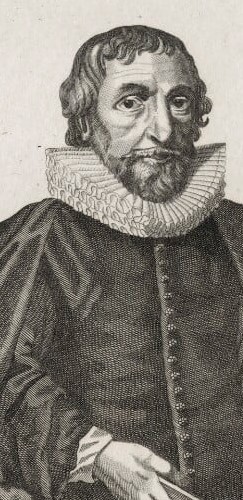
Have a listen to recorded sermons by the Second Reformation divine, the great architect of the Church of Scotland in that era, Alexander Henderson. More titles from this and other expanding shelves in my audio library here.

Principal John Macleod in his definitive work, Scottish Theology in Relation to Church History (1943), wrote the following:

“There are great times in which a crop of great men is raised up. In one sense all times are great by reason of the opportunities which they offer and the duties for which they call. Men in quiet times, however, live in an age that tells on the more stirring times ahead and their influence will contribute to the stir and bustle of those times when they come. The quiet times see the stream of life running a more smooth and less exciting course. They may be said to be the days of the average man or of the leading man that is distinctly small. The days of the Second Reformation were not of the tame an uneventful kind. They were days when things happened that are not forgotten and great men appeared on the field and had the chance to show their quality. The leader of the Church of Scotland in those days was not one of the creatures of the court exalted to dignified office above his brethren. There were such men with honours thrust upon them—yet not against their will—strutting their petty hour upon the stage. They were, however, but the puppets and tools of the royal policy. The leader who emerged when the call his work came was the minister of a quiet parish in Fife where he had almost as his next neighbor the Archbishop of St Andrews. The Archbishop was Spottiswoode, and the minister was Alexander Henderson.”

[Is a link broken? Please drop me a note! mjives dot refparish at gmail dot com]

Read Full Post »

Just finished recording this masterful article by Principle John Macleod (1872-1948) of the Free Church of Scotland. While it is somewhat encumbered by historical details less familiar to the American reader, it is still a fresh, perceptive, and prophetic appeal for the old adherence to full, good faith subscription to the Confession of Faith. If you’re a historic Presbyterian belonging to or respectful of the old Church of Scotland and Free Church testimonies, you owe it to yourself. The PDF of the article is below; and here is a ‘handful of purpose’:

“The Churches of Scotland were unprepared for the day that had overtaken them. In their halting uncertainty they suffered a tendency that was inimical to their historical faith to effect a lodgment in their bosom. They lost sight of the essential simplicity of the Christian position- “Heaven’s easy artless unencumbered plan.” When John tells us that he wrote his Gospel that we might believe that Jesus is the Christ, the Son of God and that believing we might have life through His Name he thought the witness borne by his fellows and himself to be ground enough for the faith of Christians to build upon. Christian faith through the ages has responded to this claim. It was the claim not only of the Apostle but of the Holy Ghost who spoke in him. It is undoubtedly the mind of the Spirit that the evidence which He thus bore to the truth as it is in Jesus should suffice for the Church of God to the end of time and to the ends of the earth. What was thus in the Gospels claimed by the Apostles for the witness that they bore they claimed for their teaching in the Epistles. They spoke not in the words which man’s wisdom teaches but which the Holy Ghost teaches. They could say, ‘We are of God: he that knoweth God heareth us; he that is not of God heareth not us.’ Such claims were in full keeping with the promises given to them in the Upper Chamber. There has been from the beginning a Holy Catholic Church -define it how we may- to whose care and keeping the New Testament books were committed and from whose hands in successive generations her children have received them as being alike in their witness and in their teaching the crystallised and perpetuated ministry of the Apostles. As many as are willing to sit at their feet, as they thus continue to bear witness and to teach, will learn to treat the Old Testament. Scriptures as the Lord and His Apostles did. Here we have the common view of Holy Writ held throughout historical Christendom. On this view the whole structure of Christian Theology is built. To maintain the superstructure we must defend the substructure.”

Check out my growing audio library here.

* * * *

Whole doctrine catholicity | “Who is she that looketh forth as the morning, fair as the moon, clear as the sun, and terrible as an army with banners” (Song 6:10)?

Read Full Post »

I recently read a very troubling, yet extremely revealing quote in John Macleod’s Scottish Theology.  In the context, Macleod is  speaking of  the theological decline of the 19th century Free Church of Scotland and the erosion of confessional subscription in her ranks.  To illustrate the Zeitgeist of the time, he quotes a famous anti-confessionalist by the name of James Martineau, who apparently was an influential Unitarian.  It shows the essential grudge he and others had about the time-honored practice of ecclesiastical subscription to subordinate standards:

My protest is against a Church fixing its creed, i.e., against a prior generation of life tenants prejudging the convictions of a posterior and using their own rights to the restriction of their posterity’s.  I know well that to believe a thing true is to believe it immutable; that earnest conviction naturally excludes all suspicion of possible change and carries in it a confidence of spreading to other minds and attaining to universal recognition.  Within the limits of his proper rights I would have every man surrender himself freely to these impressions, utter them and act upon them.  But limits there certainly are to his proper rights in this respect; arising partly from the presence around him of his fellows within precisely similar feeling attached to different beliefs; partly from the certainty of successors whose faculties and opportunities are not his to mortgage.

Macleod then judiciously observes, “That is to say, men may think  for themselves that they have found the truth, but the Church must be ever learning and never able to come to the knowledge of it” (Scottish Theology, pp. 316-17).

As if the quote were not damning enough, it bears a disturbing resemblance to the words of a famous Deist, Thomas Jefferson.  Writing to James Madison in 1789, Jefferson wrote:

I set out on this ground, which I suppose to be self evident, ‘that the earth belongs in usufruct to the living’: that the dead have neither powers nor rights over it. The portion occupied by an individual ceases to be his when himself ceases to be, and reverts to the society. . . . [thus] it may be proved that no society can make a perpetual constitution, or even a perpetual law. The earth belongs always to the living generation. They may manage it then, and what proceeds from it, as they please, during their usufruct. They are masters too of their own persons, and consequently may govern them as they please.

Read Full Post »