Feeds:
Posts
Comments

Archive for the ‘Light of Eternity’ Category

“In one way we think a great deal too much of the atomic bomb. ‘How are we to live in an atomic age?’ I am tempted to reply: ‘Why, as you would have lived in the sixteenth century when the plague visited London almost every year, or as you would have lived in a Viking age when raiders from Scandinavia might land and cut your throat at night; or indeed, as you are already living in an age of cancer, an age of syphilis, an age of paralysis, an age of air raids, an age of railway accidents, an age of motor accidents.

“In other words, do not let us begin by exaggerating the novelty of our situation. Believe me, dear sir or madam, you and all whom you love were already sentenced to death before the atomic bomb was invented… It is perfectly ridiculous to go about whimpering and drawing long faces because the scientists have added one more chance of painful and premature death to a world which already bristled with such chances and in which death itself was not a chance at all, but a certainty.

(more…)

Read Full Post »

Read Full Post »

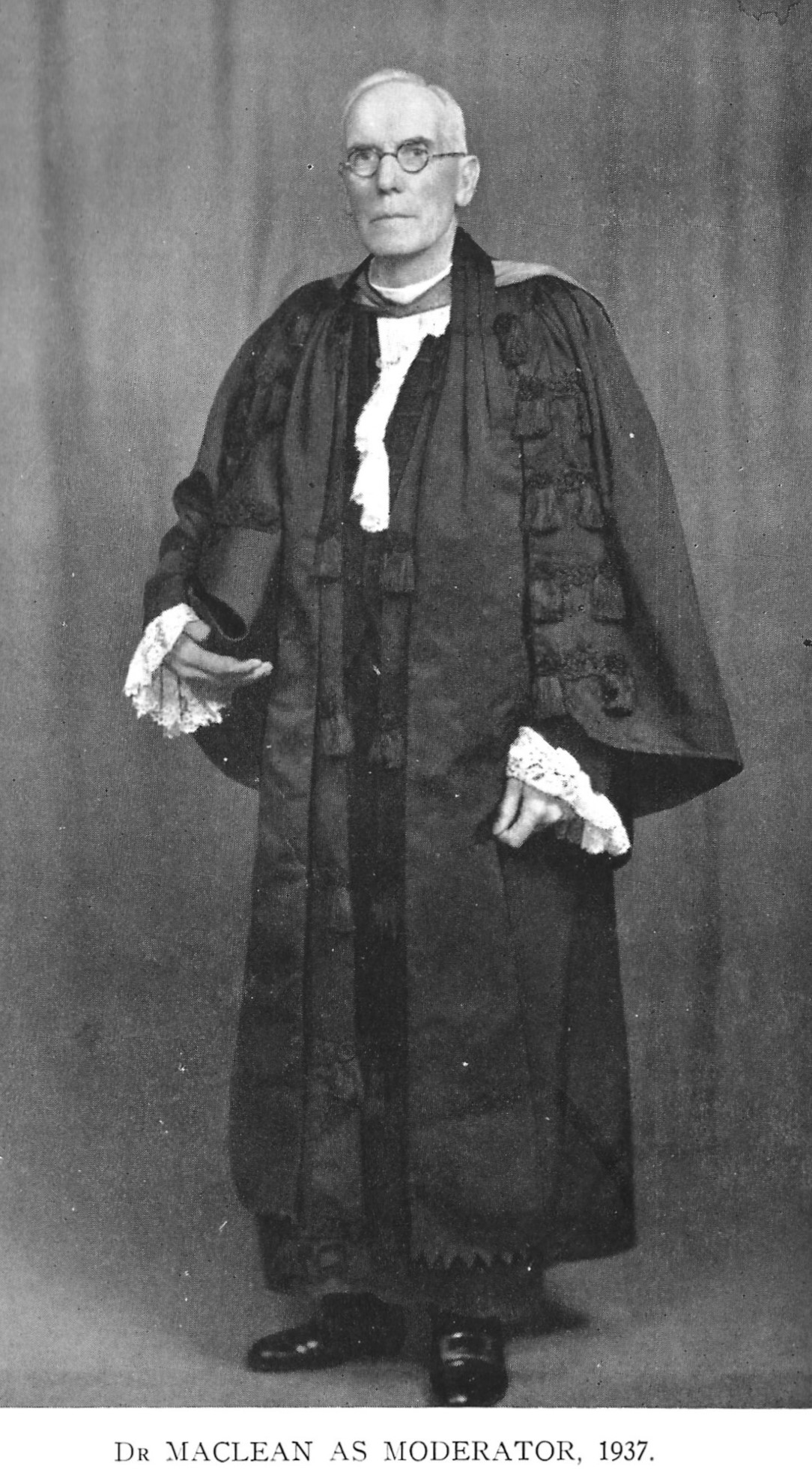
Just recently audio-recorded two articles by Free Church of Scotland Principal Donald Maclean (1869-1943). I have found several of the men of that generation not only profoundly rich theologically and spiritually, but that their English prose is also quite compelling. We are generally below the mark these days, I fear.

The following quote is a sample, from Maclean’s “An Evangelical Ministry.” Here, he answers the question as to the effect of Anglo-American Christianity’s emphasis on the social application of Christian around the turn of the 20th century: “The answer is sadly easy. The flood-tide to the Churches has, alas, not set in. The prejudices and hostility of sinful man have not been softened by the undoubted social amelioration effected. The heedless multitude still pass by. But even more serious is the reaction which the social application of Christianity has had upon the faith itself. Revealed truth itself cannot be affected by human reactions, for the Word of the Lord endures for ever. Nevertheless, the attempts to apply Christianity socially have profoundly affected the meaning which the Christian faith has for the average man and ordinary churchgoer. The emphasis on the social has largely stifled the spiritual nature of the faith. It has obscured the revealed fact that the Christian message was primarily to and for individuals. That the Son of God became man, and that man must be born again, are sufficiently strong reminders to us of the divine estimate of the immortal soul of man. The great doctrines of grace which the Bible so unmistakably connects with the redemption of the human personality, have been so rarely emphasised during more than a generation that, not only have these doctrines become unknown, but the spiritual faculties of hearers have been so weakened by disuse that spiritual discernment has faded away. The Church of to-day is consequently faced with the difficult but necessary task, arising from her former neglect, of re-educating her people in the fundamental elements of the faith which give it the character and distinction of being the Christian faith of revelation. For the business of the Church in its God-given mission is to the individual and through the individual to society. Moreover, the Christian revelation holds out no hope for society except in so far as the men and women who form it are Christian, which for the secular State is a futile and unattainable ideal. It is therefore all the more essential that the truth should be understood that a Christian society can only be fashioned out of and by Christian men and women.”

Special thanks to the Rev. John Keddie for assistance with photo above. More historic audio resources from the heritage of the Free Church of Scotland available here. All Thomas Chalmers titles are separate, here. And visit our entire audio library here.

Read Full Post »

Ever read this classic of pastoral theology? Perhaps you should. But if you could use it in audio format, I’m making progress in recording it into mp3. Access it here (and more to follow).

Consider these contemporary endorsements from the Banner edition, then I challenge you not to ‘take up and read.’ Or, now listen, if you prefer!

“This book has been my companion for almost fifty years. First published in 1830, it is arguably more needed now than then. It is a classic, serving as a guide to all who are aware of the perils and privileges of pastoral ministry.” — Alistair Begg

“People ask me, “What’s the very best book for Ministers?” Overall for the ministry, and for passionate preaching, and how to preach to different kinds of people – there’s nothing like The Christian Ministry.” — Joel Beeke

For more titles, see my growing amateur audio library. [And if any links fail, kindly drop me a note: mjves dot refparish at gmail dot com. Thanks!]

Read Full Post »

This message was delivered at the Presbytery Conference of the Presbyterian Reformed Church on June 16, 2022. The audio is available here. Special thanks to Susan Abel for her selfless efforts in transcription!

* * * * *

Isaiah 35:7-10, “And the parched ground shall become a pool, and the thirsty land springs of water: in the habitation of dragons, where each lay, shall be grass with reeds and rushes. And an highway shall be there, and a way, and it shall be called The way of holiness; the unclean shall not pass over it; but it shall be for those: the wayfaring men, though fools, shall not err therein. No lion shall be there, nor any ravenous beast shall go up thereon, it shall not be found there; but the redeemed shall walk there. And the ransomed of the LORD shall return, and come to Zion with songs and everlasting joy upon their heads: they shall obtain joy and gladness, and sorrow and sighing shall flee away.”

Revelation 21:1-3, “And I saw a new heaven and a new earth: for the first heaven and the first earth were passed away; and there was no more sea. And I John saw the holy city, new Jerusalem, coming down from God out of heaven, prepared as a bride adorned for her husband. And I heard a great voice out of heaven saying, Behold, the tabernacle of God is with men, and he will dwell with them, and they shall be his people, and God himself shall be with them, and be their God. Amen, this is the Word of the living God.”

Last month I had the personal privilege of going back to my old stomping grounds—at least, one of them— as a boy. I had not been to Homestead, Florida, just south of Miami, since I was about fourteen years old, not long after my father went to glory. It was a place, notwithstanding the bitterness of the memories of the loss of my father, [that] was overall a time of great delight: many good memories, especially on this particular street. And I am sure my children can tell you, that I would mention the many late nights when we would play a pick-up game of baseball, and take some charcoal and make some bases, and have an awful lot of fun. Well, as we drove up and came into the neighborhood, memories started flooding back—a lot of good memories. And finally I came with my wife to this home, and there it was, largely as I remembered it, although it had a new coat of paint. And much was the same, and much was so very sweet and so very special. I even got to meet the next-door neighbor whom I did remember as a boy (and I got to have a selfie with them!). So it was quite special.

(more…)

Read Full Post »

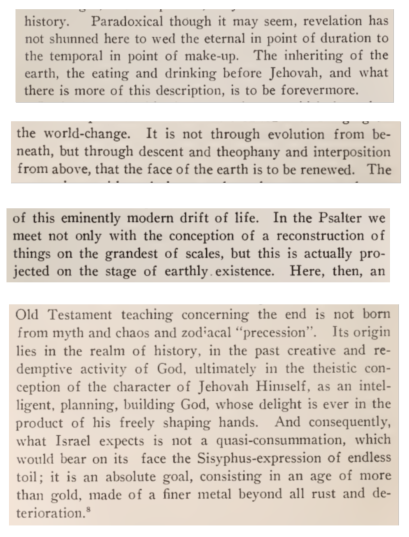
“Thus, then, it is that God is saving the world—the world, mind you, and not merely some individuals out of the world—by a process which involves not supplanting but reformation, re-creation. We look for new heavens and a new earth, it is true; but these new heavens and new earth are not another heaven and another earth, but the old heaven and old earth renewed; or, as the Scriptures phrase it, “regenerated.” For not the individual merely, but the fabric of the world itself, is to be regenerated in that “regeneration when the Son of man shall sit on the throne of his glory” (Matt. 19:28). During the process, there may be much that is discarded. But when the process is completed, then also shall be completed the task which the Son of Man has taken upon himself, and the “world” shall be saved—this wicked world of sinful men transformed into a world of righteousness.”

“Surely, we shall not wish to measure the saving work of God by what has been already accomplished in these unripe days in which our lot is cast. The sands of time have not yet run out. And before us stretch, not merely the reaches of the ages, but the infinitely resourceful reaches of the promise of God. Are not the saints to inherit the earth? Is not the re-created earth theirs? Are not the kingdoms of the world to become the kingdom of God? Is not the knowledge of the glory of God to cover the earth as the waters cover the sea? Shall not the day dawn when no man need say to his neighbor, “Know the Lord,” for all shall know him from the least unto the greatest?”

-Warfield, “God’s Immeasurable Love”

-Vos, “Eschatology of the Psalter”

Read Full Post »

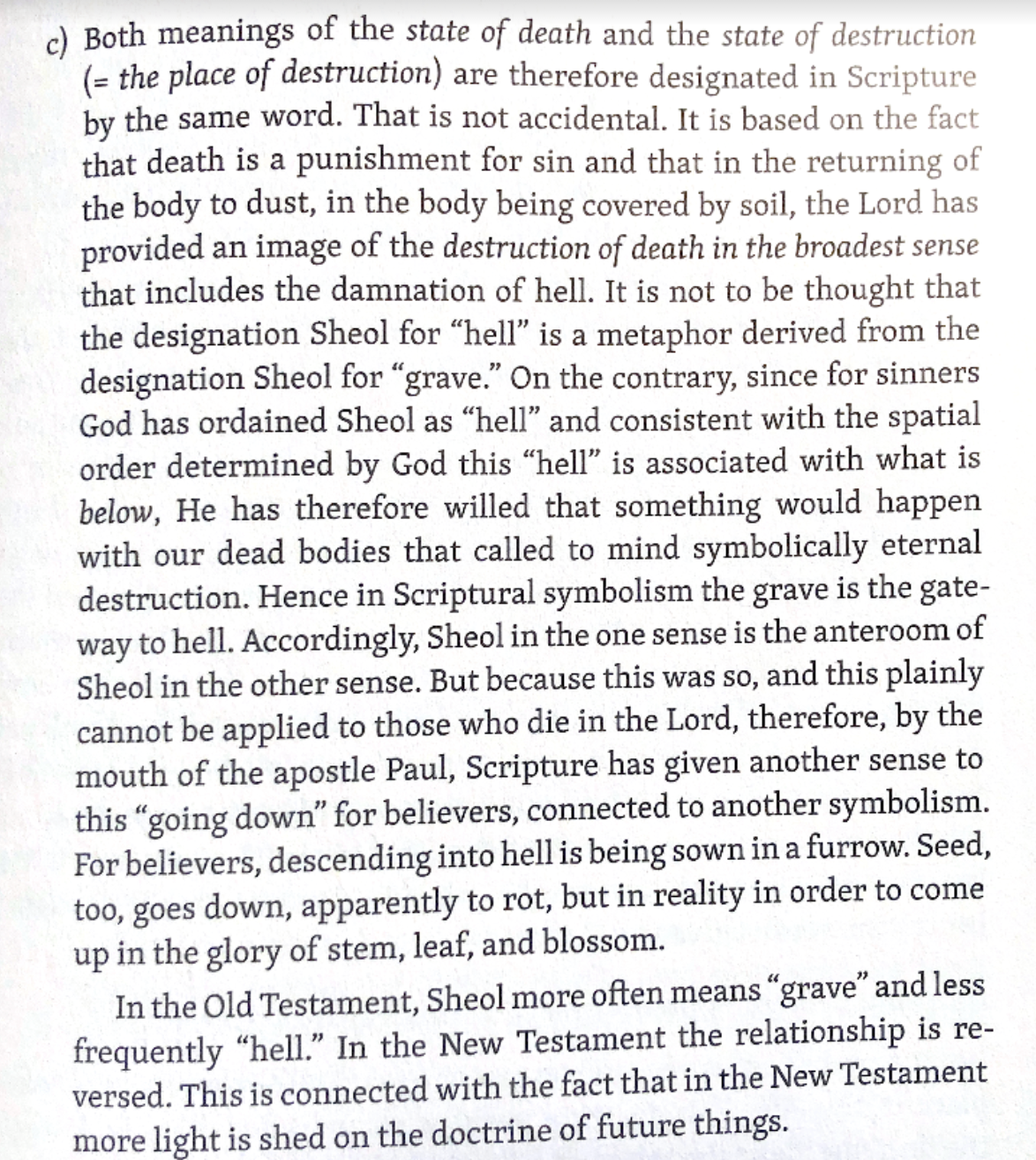
Geerhardus Vos, Reformed Dogmatics, vol. 5. “In Scripture symbolism the grave is the gateway to hell. Accordingly, Sheol in the one sense is the anteroom of Sheol in the other sense.”

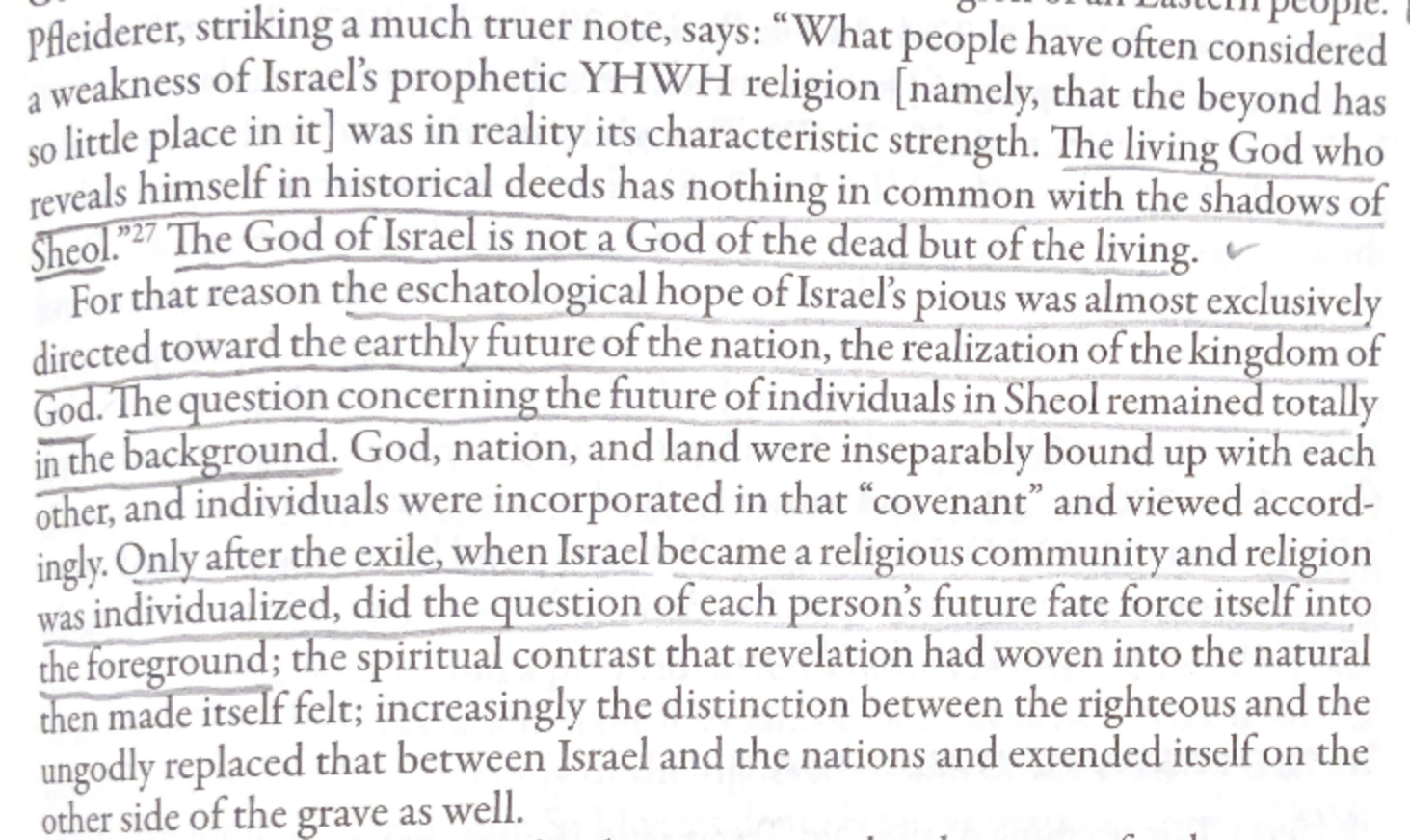
Herman Bavinck, Reformed Dogmatics, vol. 4

Read Full Post »

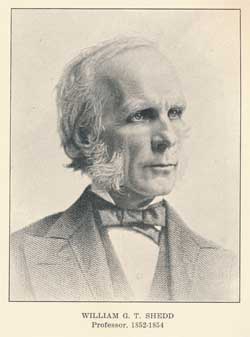
Just finished recording the lengthy chapter “The Biblical Argument” in W. G. T. Shedd’s theological treatise, The Doctrine of Endless Punishment. Truly the definitive modern work on the subject. Listen to them here. Among other insightful and profound passages is the following on the apocalyptic, revelatory nature of death:

“. . . in Scripture death is represented as the deciding epoch in a man’s existence. It is the boundary between the two Biblical aeons, or worlds. Until man dies, he is in ‘this world’ (ho nun aion); after death, he is in ‘the future world’ (aion ho mellon). The common understanding of the teaching of Scripture is, that men are in ‘time,’ so long as they live, but when they die, they enter ‘eternity.’ ‘It is appointed unto men once to die, but after that judgment,’ Heb. 9:27. This teaches that prior to death man’s destiny is not decided, he being not yet sentenced; but after death his destiny is settled. When he dies, the ‘private judgment,’ that is, the immediate personal consciousness either of penitence or impenitence, occurs. Every human spirit, in that supreme moment when it ‘returns to God who gave it,’ knows by direct self-consciousness whether it is a child or an enemy of God, in temper and disposition; whether it is humble and contrite, or proud, hard, and impenitent; whether it welcomes or rejects the Divine mercy in Christ. The article of death is an event in human existence which strips off all disguises, and shows the person what he really is in moral character. He knows ‘as he is known,’ and in this flashing light passes a sentence upon himself that is accurate. This ‘private judgment’ at death, is reaffirmed in the ‘general judgment’ of the last day.”

Read Full Post »

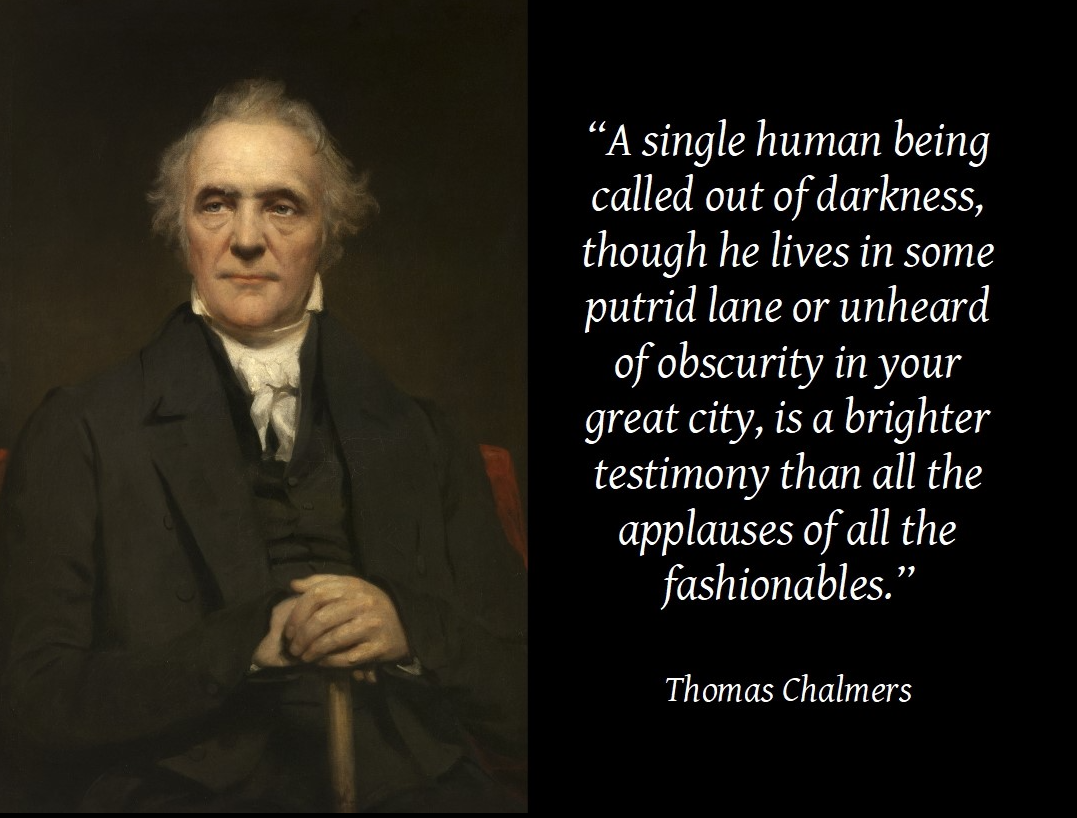
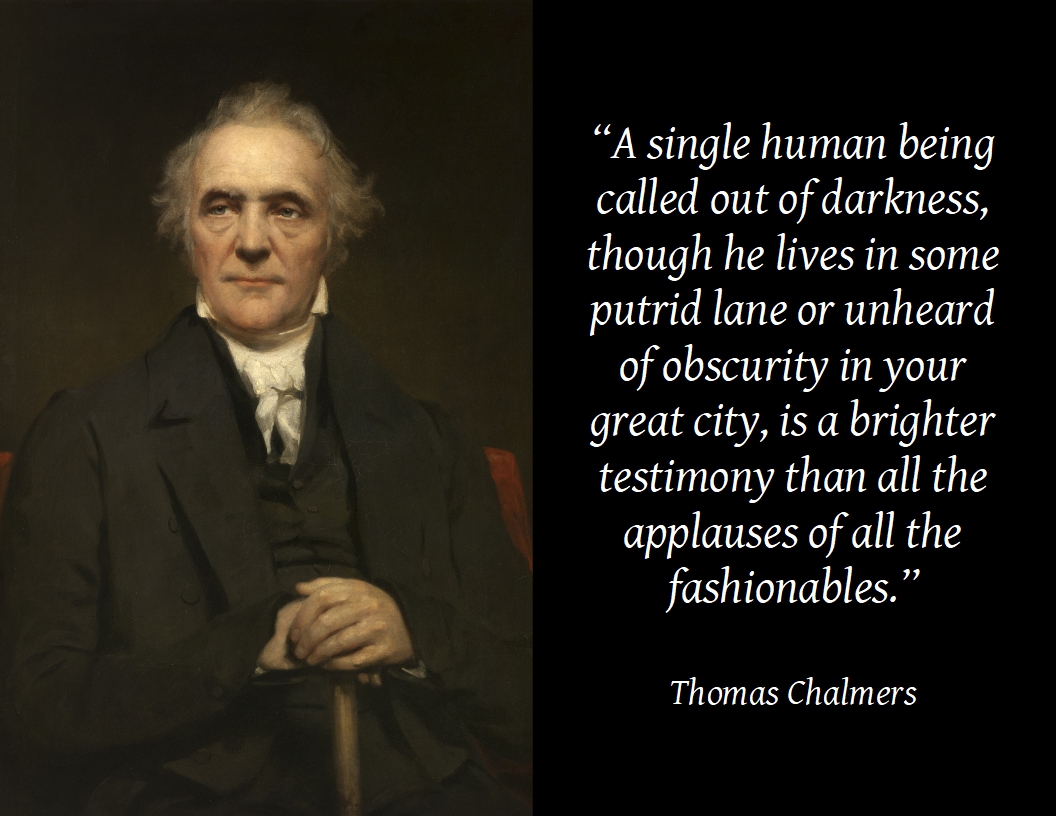
Chalmers, A Single Human Being

Image. Gordon, Sir John Watson. Thomas Chalmers, 1780 – 1847. Preacher and Social Reformer. About 1838. Scottish National Print Gallery, Edinburgh. Accessed December 19, 2019. [URL]

Read Full Post »

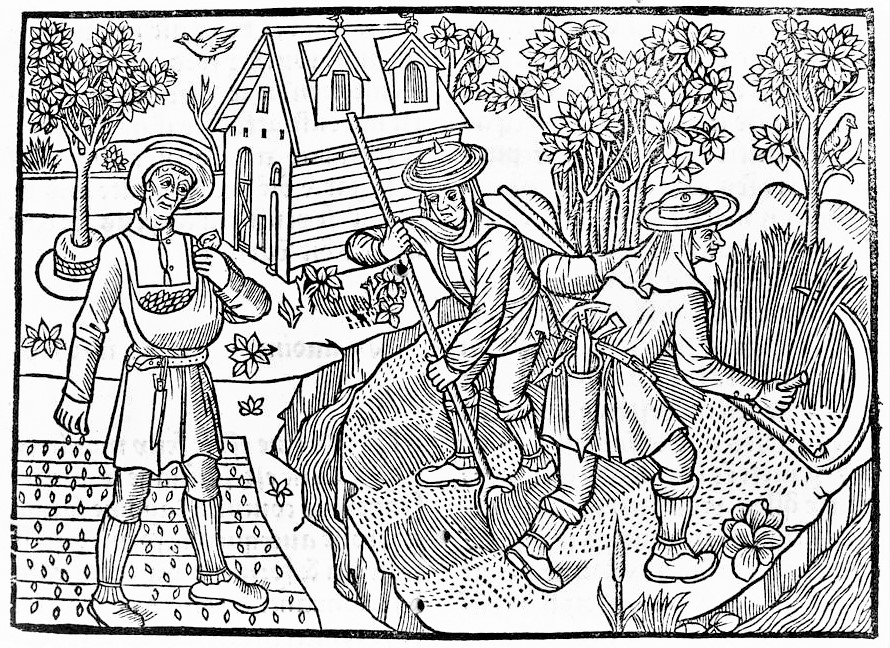
This late 17th century treatise on ministerial catechesis by Robert Doolittle is simply masterful. A few highlights are worth mentioning. He argues that catechesis should not just be a discipline for the young, but also for the old. One is also struck by the great importance he places on stocking the mind with the furniture of foundational, biblical doctrine. And it is hardly an academic exercise – eternity hangs in the balance. No knowledge, no salvation!

Below is a sample. I’ve simply inserted images from the document. Yes, it’s in an old script. But give it a go, and it will come before long. Note that some s’s look like f’s.

Read Full Post »

Older Posts »