Feeds:
Posts
Comments

Archive for the ‘Indigenous Principle’ Category

The Presbyterian Reformed Church (PRC) is an indigenous North American denomination whose roots are in the Scottish Reformation. We endeavour, by God’s grace, to keep to the Old Paths in the New World.
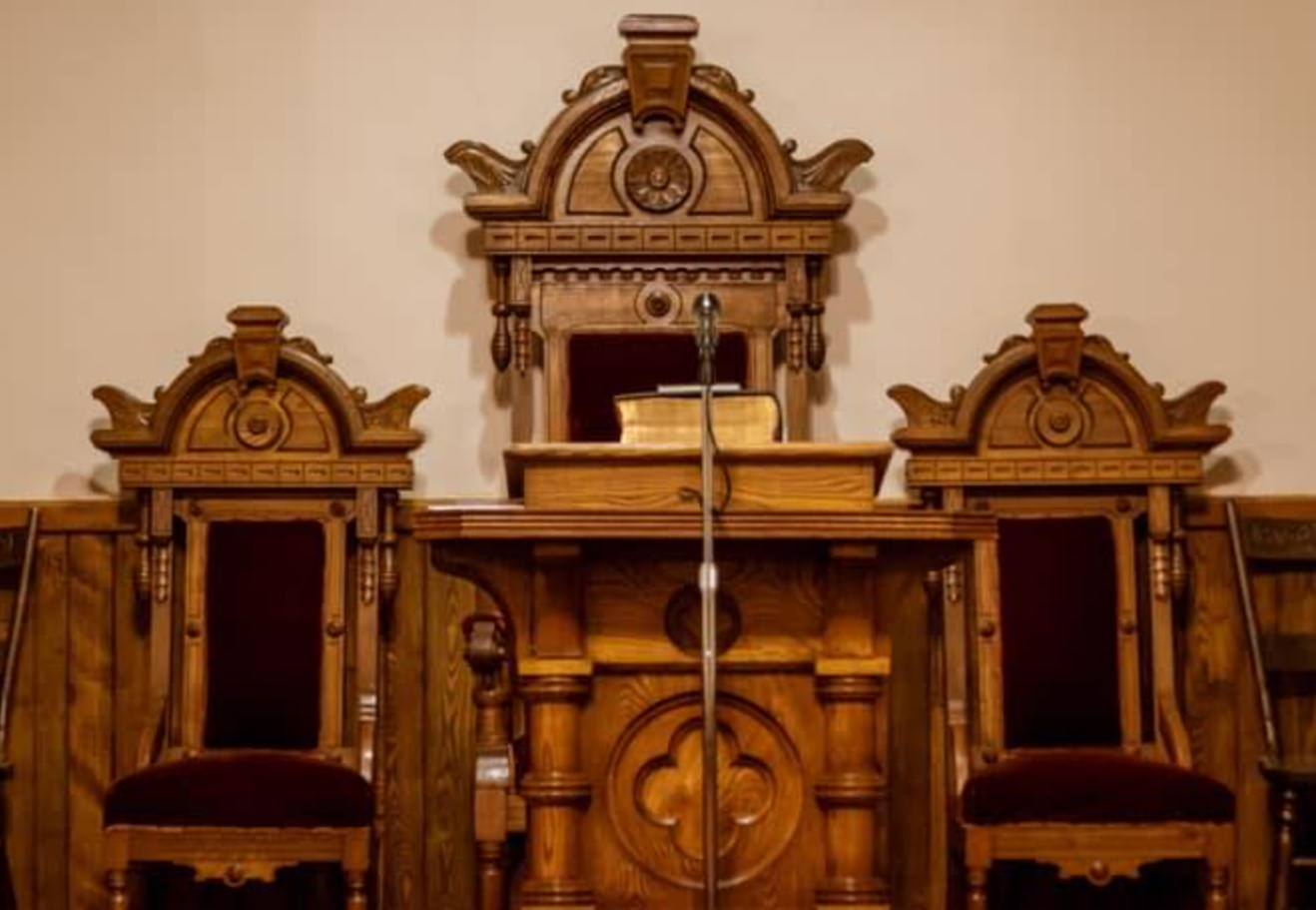
The church was formed in 1965 by the union of the Free Presbyterian Church of Ontario and the Bloor Street Presbyterian Church. The Free Presbyterian Church of Ontario was made up of the descendants of the Scottish settlers who had remained out of the unions which brought into being the Presbyterian Church in Canada (PCC) and who met in various communities throughout Southwestern Ontario. The origins of the Bloor Street Church were Scots-Irish immigrants from Ulster who settled in Toronto and were unhappy with the introduction of new worship practices in the PCC. By the 1960s, subsequent immigration from Scotland and family connections had united the congregations in doctrine and worship. It was time to unite them in government. That union was facilitated by Prof. John Murray of Westminster Theological Seminary.

Read more of this article by Rev. D. Douglas Gebbie at Presbyterian Picante.
Read Full Post »

The following two quotes are taken from George Gillespie’s An Assertion of the Government of the Church of Scotland (1641). They seem to me to have a bearing on the question of the ‘indigenous principle’ that our denomination, the Presbyterian Reformed Church, has advocated since its inception in 1965. That is, presbyterian churches ought ideally to develop their own nationally autonomous bodies distinct from others outside their borders; or, trans-national denominations, especially when ‘centered’ in one particular nation, should be avoided or superseded as impractical, and liable to hierarchicalism or a kind of church-imperialism. These quotes in particular demonstrate that historic presbyterianism, while holding out a gradation of church courts, nevertheless accepts as valid smaller and even the smallest church units when circumstances on the ground prevent more.

“Add unto these a distinction betwixt a congregation lying alone in an island, province or nation, and a congregation bordering with sister churches. If either there be but one congregation in a kingdom or province, or if there be many far distant one from another, so that their pastors and elders cannot ordinarily meet together, then may a particular congregation do many things by itself alone, which it ought not to do where there are adjacent neighbouring congregations, together with which it may and should have a common presbytery” (43).

(more…)

Read Full Post »