Feeds:
Posts
Comments

Archive for the ‘Historiography’ Category

As we turn in deep gratitude to the Most High for all His blessings towards us, let us remember especially the unique favor He has shown to our fathers and mothers of the faith who first came to these shores on a holy “errand into the wilderness.” In the words of the Mayflower Compact (1620), their cause was “undertaken for the Glory of God, and Advancement of the Christian Faith, and the Honour of our King and Country.”

Let me encourage you to listen to our Pilgrim and Puritan fathers. In addition to other amateur recordings, I’ve been steadily adding to this collection of sermons, treatises, and narratives from the pen of these giants of the faith, who helped found this “City on a Hill.” And if you’d like to hear an early account of the Pilgrim colony, check out Cotton Mather’s, “Magnalia Christi Americana 1.1: Discoveries of America.” Also, John Winthrop’s original sermon where he speaks of the “city on an hill,” is available under “A Modell of Christian Charity.”

And as we thank the Lord today, lest us with humility and earnestness implore Him to restore the former glory through national repentance. He did it before, and He can do it again! “Wilt thou not revive us again: that thy people may rejoice in thee” (Psalm 85:6)?

Visit the WPE Audio page for our full audio library.

Read Full Post »

The following are extracts from John Flavel’s Whole Works reflecting his (and Protestantism’s) mainly positive appraisal of Constantine and the shift to Christendom. The first passage doesn’t mention his name in particular, but employs the “earth helping the woman” trope for Christian magistrates supporting the true religion that I first encountered in Thomas Chalmers, but clearly predates him.

* * * * * * * * * * * *

“Secondly, We shall next enquire how Jesus Christ administers this providential kingdom. And here I must take notice of the means by which, and the manner in which he does it. The means, or instruments, he uses in the governing the providential kingdom, (for he is not personally present with its himself), are either angels or men, “the angels are ministering creatures, sent forth by him for the good of them that shall be heirs of salvation,” Heb. 1:14. Luther tells us, they have two offices, superius canere, et inferius vigilare, “to sing above and watch beneath.” These do us many invisible offices of love. They have dear and tender respects and love for the saints. To them, God, as it were, puts forth his children to nurse, and they are tenderly careful of them while they live, and bring them home in their arms to their Father when they die. And as angels, so men are the servants of Providence; yes, bad men as well as good. Cyrus, on that account, is called God’s servant: they fulfill his will, while they are prosecuting their own lusts. “The earth shall help the woman,” Rev. 12:16. But good men delight to serve Providence; they and the angels are fellow servants in one house, and to one master, Rev. 19:10. Yes, there is not a creature in heaven, earth, or hell, but Jesus Christ can providentially use it and serve his ends, and promote his designs by it. But whatever the instrument be Christ uses, of this we may be certain, that his providential working is holy, judicious, sovereign, profound, irresistible, harmonious, and to the saints peculiar” (Works 1:216).

(more…)

Read Full Post »

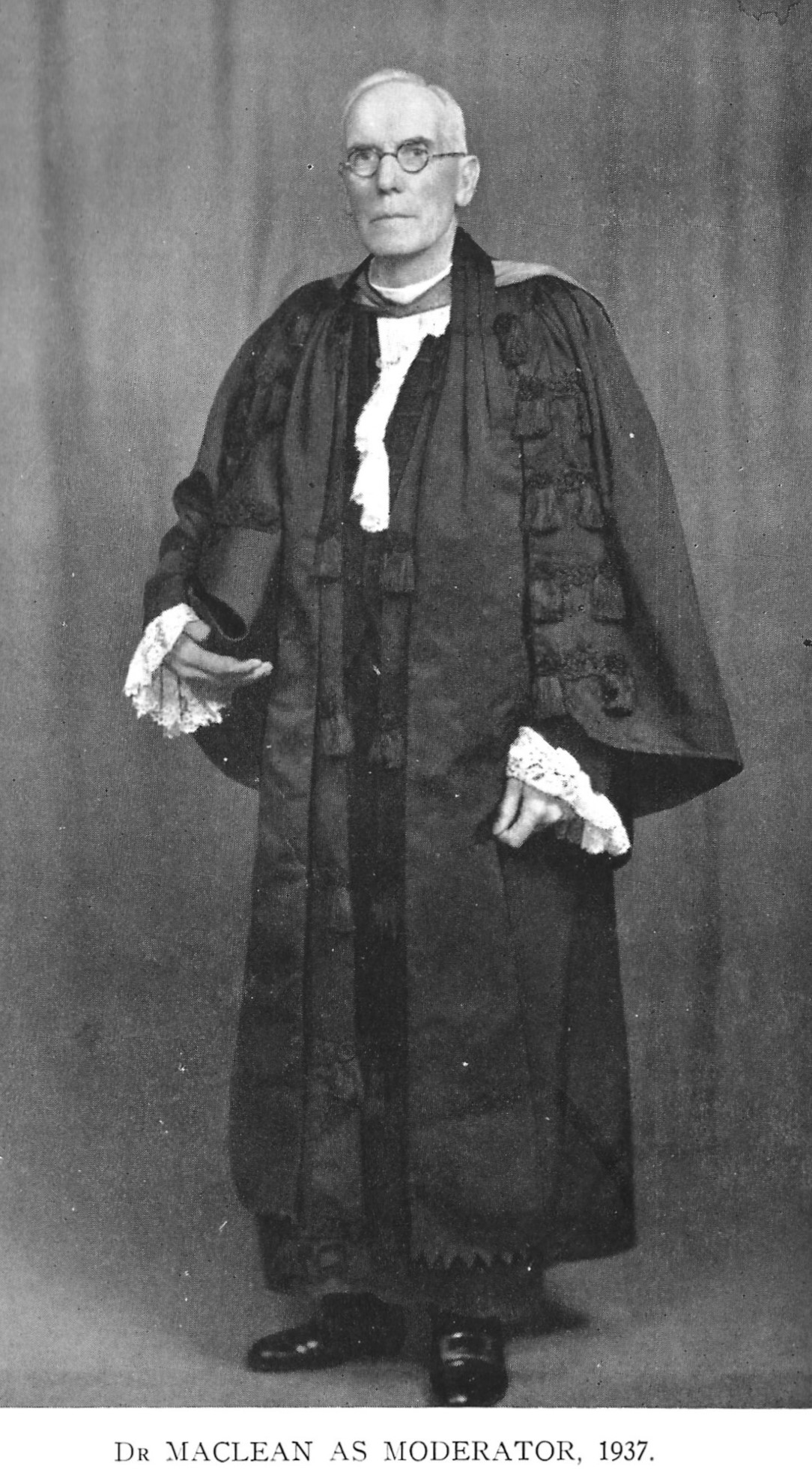
Just recently audio-recorded two articles by Free Church of Scotland Principal Donald Maclean (1869-1943). I have found several of the men of that generation not only profoundly rich theologically and spiritually, but that their English prose is also quite compelling. We are generally below the mark these days, I fear.

The following quote is a sample, from Maclean’s “An Evangelical Ministry.” Here, he answers the question as to the effect of Anglo-American Christianity’s emphasis on the social application of Christian around the turn of the 20th century: “The answer is sadly easy. The flood-tide to the Churches has, alas, not set in. The prejudices and hostility of sinful man have not been softened by the undoubted social amelioration effected. The heedless multitude still pass by. But even more serious is the reaction which the social application of Christianity has had upon the faith itself. Revealed truth itself cannot be affected by human reactions, for the Word of the Lord endures for ever. Nevertheless, the attempts to apply Christianity socially have profoundly affected the meaning which the Christian faith has for the average man and ordinary churchgoer. The emphasis on the social has largely stifled the spiritual nature of the faith. It has obscured the revealed fact that the Christian message was primarily to and for individuals. That the Son of God became man, and that man must be born again, are sufficiently strong reminders to us of the divine estimate of the immortal soul of man. The great doctrines of grace which the Bible so unmistakably connects with the redemption of the human personality, have been so rarely emphasised during more than a generation that, not only have these doctrines become unknown, but the spiritual faculties of hearers have been so weakened by disuse that spiritual discernment has faded away. The Church of to-day is consequently faced with the difficult but necessary task, arising from her former neglect, of re-educating her people in the fundamental elements of the faith which give it the character and distinction of being the Christian faith of revelation. For the business of the Church in its God-given mission is to the individual and through the individual to society. Moreover, the Christian revelation holds out no hope for society except in so far as the men and women who form it are Christian, which for the secular State is a futile and unattainable ideal. It is therefore all the more essential that the truth should be understood that a Christian society can only be fashioned out of and by Christian men and women.”

Special thanks to the Rev. John Keddie for assistance with photo above. More historic audio resources from the heritage of the Free Church of Scotland available here. All Thomas Chalmers titles are separate, here. And visit our entire audio library here.

Read Full Post »

Establishments got some good press last week, at least on a respectable Reformed podcast. Kudos to Christ the Center for welcoming on Timon Cline to a panel discussion last Friday. While I’ve never heard of Timon before, I am sure going to read and listen to more of him. And I’m sure I’m not alone!

The panel discussion focused on Dr. Alan Strange’s newly published book, Empowered Witness: A Panel Discussion on Politics, Culture, and the Spiritual Mission of the Church. Giving feedback and critiques were D. G. Hart, Nick Wilborn, and Timon Cline. I’ve not read Strange’s book, so I’m only commenting on the video. The discussion up to Timon and related rejoinders was interesting enough. But Timon sure rocked the boat pretty hard when he brought up the obvious (at least from a historical Reformed perspective and not an American echo-chamber), that is, what about the spiritual nature in the church in light of the classic, confessionally Reformed and Presbyterian endorsements of religious establishments?

It’s clear that Dr. Strange was a bit flustered, though keeping a gracious demeanor. Sadly, though a respectable and accomplished Reformed scholar whom I otherwise appreciate, Strange’s response to Timon was more or less a rigmarole of informal fallacies and non-answers. Hart, however, just became flummoxed and unhinged. In contrast to Cline’s calm, measured demeanor, and even more importantly, to his much more careful, close, and logical reasoning (they guy’s a practicing lawyer, and it shines), Hart just full-on melted down, notwithstanding a clever little jab about Timon’s alleged tap-dancing like James Cagney. But even that was more amusing than apropos, as it only thinly veiled his chagrin. The young no-namer clearly bested his betters.

(more…)

Read Full Post »

A fallible, yet sturdy monument to far better times, when men feared God and kept His day. Lord, let your Wind blow once again!

Read Full Post »

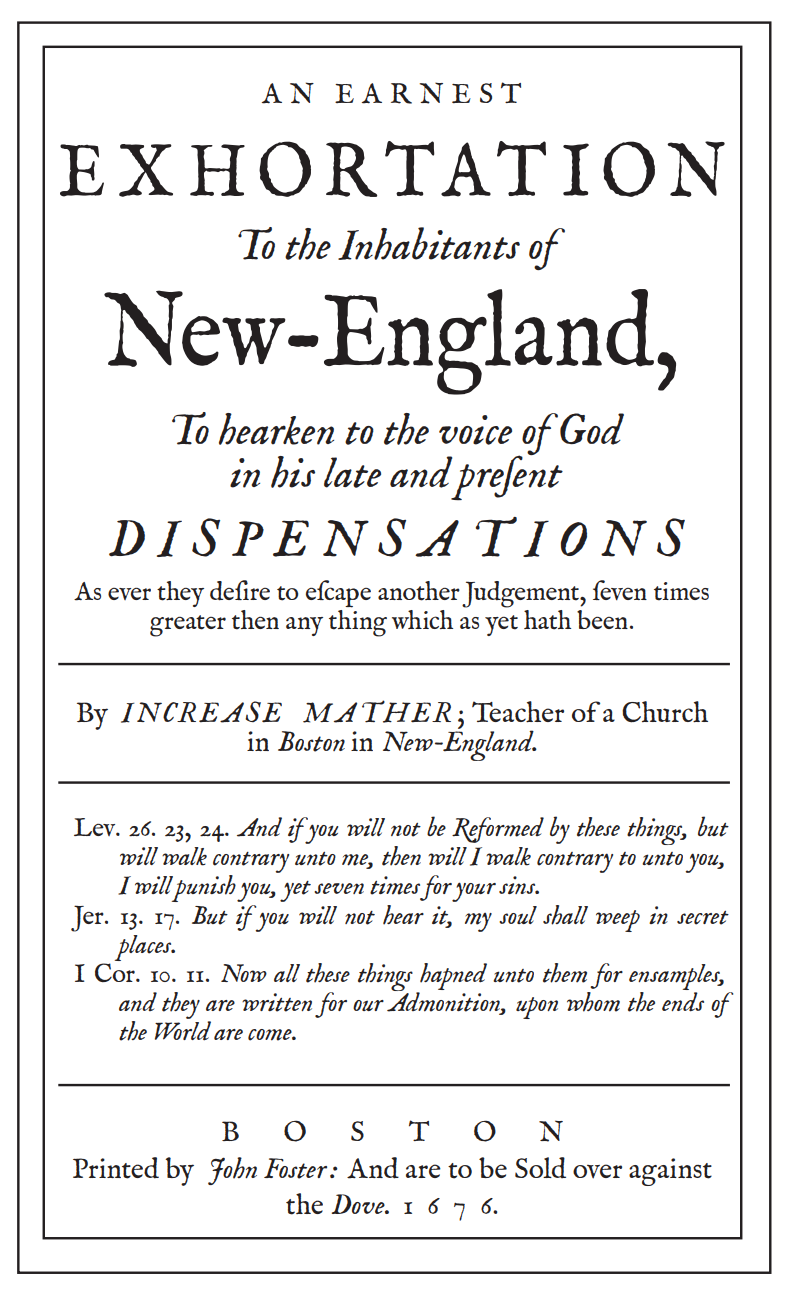
In light of the ‘National Day of Mourning’ tomorrow, I find New England Puritan Increase Mather’s sermon here such an illuminating and worthy rejoinder. As the King Philip’s War (1675-1678) raged, natives attacking English settlements, he leads his contemporaries to probe the source. And it’s no hateful rant against the Indians! (Listen here; read here.)

Mather indicts the English settler’s provocations of the natives, including land-greed, which may well have contributed to the war. For these and other offenses, Mather takes off the gloves and summons his peers to repentance. But more, he rebukes them for growing cold and even in some cases becoming hostile to the explicit missionary intentions of the New England Fathers. How many had become prejudicial to these poor souls!

Definitely a cause for mourning, as the bodies piled up and the houses burned in 1676. But a far cry from the mourning of the modern “1619 Project” types who have swung from the one extreme of myopic idealization and historical whitewashing, to the other extreme of tarring and feathering everything that is European. The truth, as they say, is often in the middle.

I mourn today for all the wrongs my ancestors have done to those who lived before us — though hardly all of them, or even the majority. I further mourn for our national apostasy and covenant-breaking with God and His Son, Jesus Christ, and grieve for the judgments we are even now experiencing, one of which is a generation that has been taught to reject and abhor all things past, including the Pearl of Great Price that our ancestors brought with them to the New World.

But tomorrow I’m going to give thanks and remember the Pilgrim Fathers, and Squanto, and Massasoit, the fair treaties that were honored, and John Eliot’s work among the Massachusetts, and their Praying Villages, the myriad of other blessings we now enjoy in civil society where the rule of law prevails, and above all, the freedom to worship God according to His Word. God knows the New World was no native paradise before 1619.

For more audio resources from our Reformed heritage, visit WPE Audio.

Read Full Post »

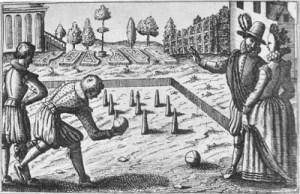
16th century lawn bowls“We show and teach daily in our sermons, that God took upon him our nature: but how do men hear them? Who is there that troubleth himself much to read the scripture? There are very few that attend to these things; every man is occupied with his own business. If there be one day in the week reserved for religious instruction, when they have spent six days in their own business, they are apt to spend the day which is set apart for worship, in play and pastime; Some rove about the fields, others go to the taverns to quaff: and there are undoubtedly at this time as many at the last mentioned place, as are here assembled in the name of God. Therefore, when we see so many shun and flee from this doctrine, can we marvel that there is such a brutishness, that we know not the rudiments of Christianity?”
– John Calvin, sermon on 1 Tim. 3:16

Read Full Post »

download

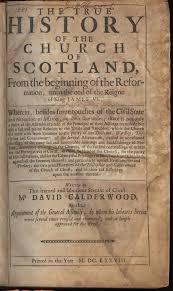
The following is a quote from David Calderwood’s (1575-1650) introduction to the First and Second Books of Discipline of the Church of Scotland (1560 and 1578 respectively).  Here, we have a find statement of sound, Christian historiography. It really goes to the heart of unbelief as applied to the doing of history in our modern, secular age.  “Let God arise, and His enemies be scattered!”

* * *

“Is the Lord changed, because he changes the manner of his working? God forbid. For although he declares not in our times who belongs to him by miraculous fire sent from heaven, as in the days of Elijah; the earth opens not her mouth, as in the days of Korah; he rains not showers of brimstone upon the Sodomites of this age; he turns not such as look back into pillars of salt to season others; neither is his favour manifested towards his own secret ones in earthly and visible blessings, so wonderfully as of old; yet the God of Israel is our God, and the God of the old testament is the God of the new, and better testament, having still a secret and equivalent providence most wisely disposed, and framed for the weal of his kirk, according to the diversity of the ages succeeding one after another. So that no wise heart perceiving the course thereof could wish another than the present, howsoever the folly of infidelity blinds men to affect the miracles, ease, and outward prosperity of former generations, and if these fail, to cast themselves headlong in desperation, defection, or atheism. Yea, because he works not as before, in their haste they conclude that he works not at all.”

Read Full Post »

William Hanna, son-in-law and biographer of Thomas Chalmers, here reflects on the bearing of Chalmers’ inner, spiritual history on his outer history in the public light.  Inner histories are certainly more inaccessible and uncertain to others.  “For what man knoweth the things of a man, save the spirit of man which is in him?”  Even self-knowledge is murky at best.  Yet with the infallible light of Scripture, we may shed light on what is left us of the inner-histories of great men, shaping the parts they played on the stage of divine providence.

* * *

“The events in which Dr. Chalmers mingled, and which ho helped so much to mould, were far from engrossing his thoughts. The part he took in them was in fact the product of those deeper convictions which rested upon the unseen and enduring objects of faith. Behind the outer history of his life there lay that inner spiritual history which made the other what it was. His correspondence, his speeches, his published writings, and his public acts, which furnish such ample materials for unfolding the one history, are absolutely barren as to the other. We know of no other iImagendividual of the same force and breadth of Christian character, who, in all his converse, public and private, with his fellow-men, spoke so little of himself, or afforded such slender means of information as to his own spiritual condition and progress, and yet it would be difficult to name another of whose deeper religious experience we have so full and so trustworthy a record. We owe this to the openness and perfect truthfulness of his private Journal. The strict reserve which he observed in his communications with others he entirely laid aside when communing with his own heart, the fullness of the one disclosure more than atoning for the stintedness of the other. The very breaks and gaps, the compressed or the expanded condition of his private Journal, when studied in connection with his external occupations during different periods, are themselves instructive. Judged of in this way, the year 1840 formed a marked epoch in his spiritual life, as exhibiting the commencement of that softening, refining, elevating process which, ripening to perfection, threw such a pure and mellow light of piety around his closing years—a light whose chastened lustre was perceived and felt even by those who saw not into the place of its birth.”


Read Full Post »