Just read this section from Charles’ Bridges masterful classic of pastoral theology, The Christian Ministry. Have a listen above; and hear the whole thing here. Or read it below.
Archive for the ‘Gospel Proclamation’ Category
“The Decided Preaching of the Gospel”
Posted in Church of England, Gospel Proclamation, Ordinary Means Ministry, Pastoral Theology, Preaching on February 23, 2026| Leave a Comment »
Have you toiled all night and taken nothing?
Posted in Free Offer of the Gospel, Gospel Proclamation, Missiology, The Free Offer of the Gospel, The Gospel, Thomas Boston on January 9, 2026| Leave a Comment »
You who are by office “fishers of men,” have you caught little, or even nothing? Lose not heart. Take it from good Master Boston:

John Maclaurin (1693-1754)
Posted in Audio Resources, Church of Scotland, Gospel Proclamation, The Gospel on January 14, 2025| Leave a Comment »

Before reading of him in Principal John Macleod’s Scottish Theology in Relation to Church History, I had never heard of John Maclaurin. A contemporary of Jonathan Edwards and Thomas Boston, he stood within the old Evangelical wing of the Church of Scotland during the long, wintry reign of Moderatism. Impressed with the high praise for his sermon “Glorifying in the Cross of Christ,” I recorded it here. Here is a rich sample from Maclaurin as he waxes eloquent on the “fabric of nature” visibly responding to the horror of the death of the Prince of life:
“The frame of nature solemnized the death of its Author; heaven and earth were mourners; the sun was clad in black; and if the inhabitants of the earth were unmoved, the earth itself trembled under the awful load. There were few to pay the Jewish compliment of rending their garments; but the rocks were not so insensible, they rent their bowels. He had not a grave of his own; but other men’s graves opened to him. Death and the grave might be proud of such a tenant in their territories; but he came not there as a subject, but as an invader, a conqueror. It was then the king of terrors lost his sting; and on the third day the Prince of life triumphed over him, spoiling death and the grave. But this last particular belongs to Christ’s exaltation: the other instances show a part of the glory of his humiliation, but it is a small part of it.”
You can read more about Maclaurin in the PDF below, taken from Macleod’s work and the DSCH&T. And be sure to check out other audio titles from the Old Church of Scotland and the entire West Port Audio library.
“I am Debtor”
Posted in Audio Resources, Church of Scotland, Free Church of Scotland, Gospel Proclamation, Missiology, The Gospel & the Poor on December 9, 2024| Leave a Comment »
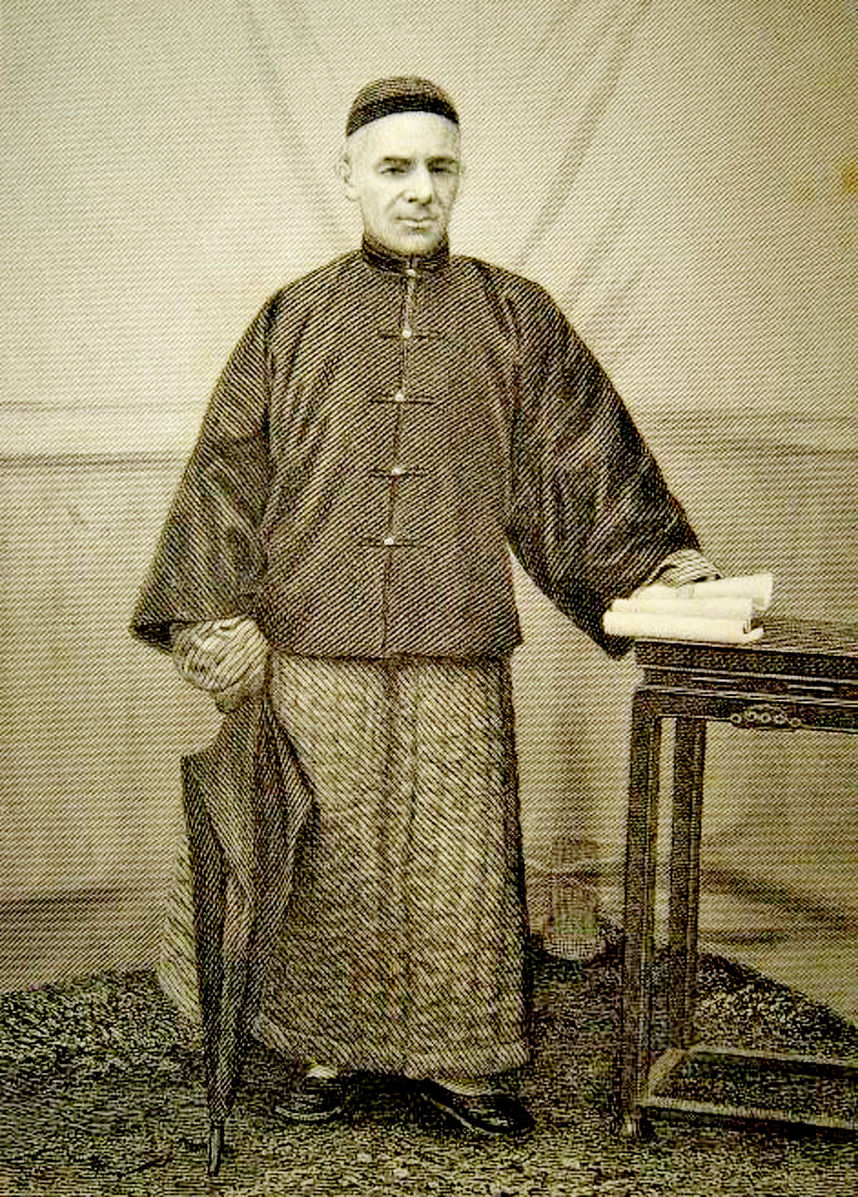
The following is a portion from William Chalmers Burns‘ sermon “I am Debtor,” from Romans 1:14. Burns was a good friend and ministerial colleague to Robert Murray M’Cheyne, and was a heroic Presbyterian missionary to China. Listen to the full audio recording here. And for more audio resources, click on the WPE Audio tab at the top.
* * * *
The apostle says something more than this, — “I am debtor both to the Greeks, and to the Barbarians; both to the wise, and the unwise.” The meaning of this seems to be, — if I were free to make a choice, I might choose the barbarian or I might choose the Greek, I might choose the wise or the unwise; but Paul says, I am debtor, and you know a debtor has no such thing as a choice to make to whom he will pay his debts. The debtor knows this, and the believer feels it just in the same way. “Whatever my calculations may be, or whatever I might myself desire, the question is not, what would I like, but what is my commission, — what are the objects of my embassy? It is not my choice that I have to do with, but God’s commission, — what instructions does it contain?”
We would fain impress this important, solemn truth upon God’s children. Believer, do you feel this? Do you know what it is to feel yourself a debtor to a lost world? Have you ever thought of what object Christ had in view when He brought you to Himself? what design He had in calling you? It was certainly, in the first instance, to save you from perdition, but that was not the only end. It is possible to think too much, or, at least, too exclusively, about your own case. In one sense you cannot do that; woe be to him who seeks to pull the mote out of a brother’s eye, when a beam is in his own. But yet a believer must remember that he is called to know Christ, not only to be safe himself, but also that he may be a witness for Christ in the world. Ah! think of this; don’t be selfish in the matter of salvation, and remember above all, that his is not a thing which you may or may not do, just as you like. Some people do much in this way, just because they have a liking to it, and because the employment suits their taste – and it is a happy thing to feel that; but there is a far more unchangeable foundation for a believer’s labour in the Lord’s vineyard than that. The man is no longer free to like, or not to like; he is a debtor now – a debtor to do it fully, and constantly, and unceasingly, and devotedly, whether he likes it or not. Think of it in this light, and then you will be going and hasting to tell your friends, and all whom you know, of these precious things of God. Oh, if this were fully felt, and felt universally , how many would be preaching whose mouths are dumb through sloth and idleness! There would be fewer preaching as a trade, and more preaching as debtors, forevery believer would then have a voice with which to sound the praises of the most high God.
“The Scottish Reformation and Modern Missions”
Posted in Church of Scotland, Gospel Proclamation, John Knox, Missiology on September 6, 2024| Leave a Comment »

It is said that John Knox prayed, “Give me Scotland, or I die.” In 1560, God gave him Scotland. The purpose of this submission is to examine what he and his colleagues did with her and initiate a discussion on what lessons we might learn for today.
To achieve our purpose, we shall first examine the mission strategy which Knox and his colleagues set out in The First Book of Discipline.
Second, we shall examine what the Reformers sought to do in the light of Presbyterian principles. Now, the object of our scrutiny is the Reformation in Scotland, and that, in fairness, requires a Scottish approach. We are not looking at Knox and company’s mission strategy for precedents which we might apply analogously to the pattern of English Common Law, but for principles which we might reapply in each situation while being informed by examples of previous applications.
Third, we shall describe how the principles and practices of the Scottish Reformation might be reapplied in mission situations today. As we have said, this is a discussion. This third section will not be a list of modern mission solutions but of resource maximizing suggestions. This will not require thinking outside of the box: our commitment to Scripture forbids that. This will involve rethinking our perception of the box’s dimensions and utilizing the extra space.
This article was written by the Rev. D. Douglas Gebbie and published by the Haddington House Journal in 2008. To read the rest, click here.
“An Evangelical Ministry,” by Principal D. Maclean
Posted in Audio Resources, Culture, Free Church of Scotland, Gospel Proclamation, Historiography, Individual & individualism, Light of Eternity, Secularization, Social Issues, The Sacred Ministry on June 12, 2024| Leave a Comment »
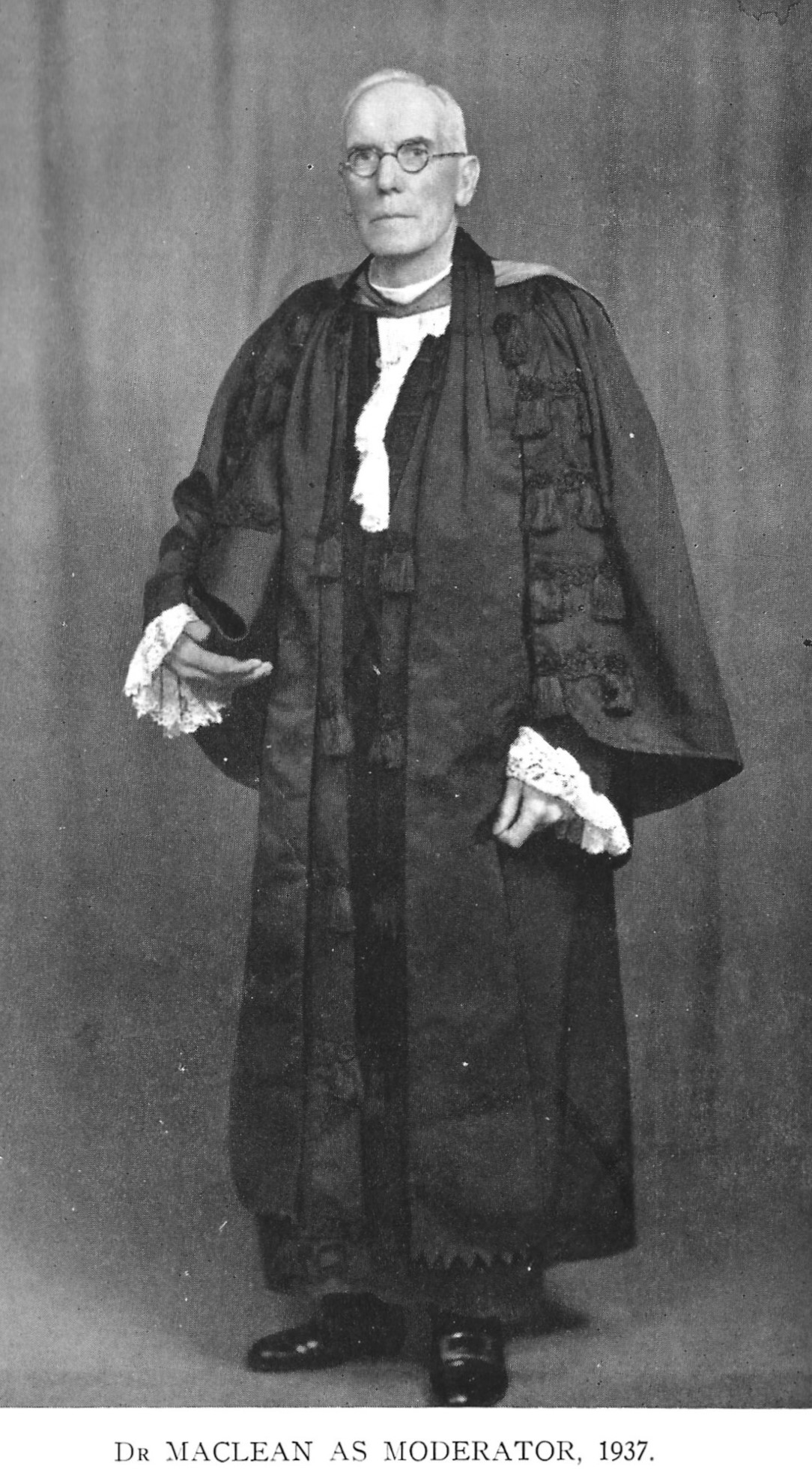
Just recently audio-recorded two articles by Free Church of Scotland Principal Donald Maclean (1869-1943). I have found several of the men of that generation not only profoundly rich theologically and spiritually, but that their English prose is also quite compelling. We are generally below the mark these days, I fear.
The following quote is a sample, from Maclean’s “An Evangelical Ministry.” Here, he answers the question as to the effect of Anglo-American Christianity’s emphasis on the social application of Christian around the turn of the 20th century: “The answer is sadly easy. The flood-tide to the Churches has, alas, not set in. The prejudices and hostility of sinful man have not been softened by the undoubted social amelioration effected. The heedless multitude still pass by. But even more serious is the reaction which the social application of Christianity has had upon the faith itself. Revealed truth itself cannot be affected by human reactions, for the Word of the Lord endures for ever. Nevertheless, the attempts to apply Christianity socially have profoundly affected the meaning which the Christian faith has for the average man and ordinary churchgoer. The emphasis on the social has largely stifled the spiritual nature of the faith. It has obscured the revealed fact that the Christian message was primarily to and for individuals. That the Son of God became man, and that man must be born again, are sufficiently strong reminders to us of the divine estimate of the immortal soul of man. The great doctrines of grace which the Bible so unmistakably connects with the redemption of the human personality, have been so rarely emphasised during more than a generation that, not only have these doctrines become unknown, but the spiritual faculties of hearers have been so weakened by disuse that spiritual discernment has faded away. The Church of to-day is consequently faced with the difficult but necessary task, arising from her former neglect, of re-educating her people in the fundamental elements of the faith which give it the character and distinction of being the Christian faith of revelation. For the business of the Church in its God-given mission is to the individual and through the individual to society. Moreover, the Christian revelation holds out no hope for society except in so far as the men and women who form it are Christian, which for the secular State is a futile and unattainable ideal. It is therefore all the more essential that the truth should be understood that a Christian society can only be fashioned out of and by Christian men and women.”
Special thanks to the Rev. John Keddie for assistance with photo above. More historic audio resources from the heritage of the Free Church of Scotland available here. All Thomas Chalmers titles are separate, here. And visit our entire audio library here.
You shall catch men
Posted in Articles, Gospel Proclamation, Gospel Tactics, Missiology, The Gospel & the Poor, The Kingdom of God, WPE Editor on May 8, 2024| Leave a Comment »
“Fear not; from henceforth thou shalt catch men.” Luke 5:10
In this marvelous account, Jesus catches Peter. Now this may seem strange, given that Simon Peter had already become a follower of the Nazarene. Andrew, Peter’s brother, had been a following of John the Baptist. But the Baptist redirected his disciples to Jesus, for Jesus “must increase,” and he “decrease.” Andrew dutifully went, but soon was himself caught by the Master. From there he went to his brother for another catch. “We have found the Messiah” (Jn. 1:41)! Andrew drew Peter to shore, as it were, and Jesus did the rest! Peter began following Jesus.
But still, he kept one foot on dry land. He held on to his day job—better safe than sorry, after all! Following is one thing; forsaking all quite another. But Jesus would not let this one go. So on this morning, after he finished teaching the crowds, he bade Peter go fishing. “Launch out into the deep, and let down your nets for a draught.” What! Peter was the fisherman, Peter knew these waters like the back of his hand, Peter went when the fish were out, and Peter had done everything right. Yet Peter that night had come up empty. Yet out of respect, he yielded to Jesus. Reluctantly no doubt, but reverently. He believed the Master; at least, generally speaking. But what did the carpenter-preacher really know about this trade?
Read the rest of this article below, published in the Banner of Sovereign Grace Truth
Who cares? A plea for reformed parish missions
Posted in Articles, Confessional Subscription, Contemporary Parochialism, Free Church of Scotland, Gospel Proclamation, Missiology, Parish in American Context, Parish Theory & Practice, The Gospel & the Poor, The Romance of Locality, The Sacred Ministry, Thomas Chalmers, West Port experiment, WPE Editor on June 20, 2022| Leave a Comment »
“Chalmers’ method was simple, systematic, spiritual, and unadorned. It was concerned with reaching souls rather than building brands; it sought them out. A gathered team of committed individuals connected with their local community and the lives of individuals through visitation and interaction. Such a method has massive challenges in a society where community has disintegrated but that is not to say it is impossible. No doubt something resembling it is bearing fruit in some communities.”
In this article below, my good friend Matthew Vogan recounts the old national vision of our Scottish Presbyterian forbears like Thomas Chalmers, who maintained confessional fidelity while also aggressively engaged in home missions. Does anyone among the theological heirs of Chalmers have such a national vision? Or even more pointedly, does anyone care?
Well, I for one deeply believe that they do care. And that they have the almighty Spirit of God dwelling in them and resting upon them. Nothing can defeat the sword of the Lord and of Gideon, nothing can stop these ‘sons of oil,’ for it is “not by might, nor by power, but by [His] Spirit, saith the LORD.” They will hear their charge, and they will go, shaking off all inhibitions and possessing the good land that rightly belongs them–and much more, to the Heir of all!
(There. That’s the closest this stodgy Presbyterian will ever get to ‘naming and claiming!’)
* * * *
This article is found in The Bulwark, popular magazine published by the Scottish Reformation Society. To read it more easily, you will likely need to download and rotate view.
Reformed parish missions: “To the Greek and to the barbarian”
Posted in Articles, Contemporary Parochialism, Covenant Theology, Family Religion, Gospel Proclamation, Gospel Tactics, Locality & the Law of Residence, Ministerial Fidelity, Missiology, Ordinary Means Ministry, Parish in American Context, Parochial Strategy, Reformed Parish Mission (RPM) Posts, Social Byproduct, The Church in America, The Gospel & the Poor, The Visible Church, Theology of Community, Thomas Chalmers, Transgenerational Faith, WPE Editor on May 23, 2022| Leave a Comment »
Years back, my heart got large for missions — especially urban missions to those on the ‘other side of the tracks.’ At about the same time, I became Reformed (a high octane, old school Presbyterian no less!), putting me in a a sub-subset of a subset. My life and ministry has ever since lived somewhat in the frontiers the unlikely and the implausible. A straightlaced, tall gringo Presbyterian goes out among immigrants, trying to evangelize in broken Spanish and recruit sinners to the “outward and ordinary means” in a humble, little Reformed church 15 minutes to the south. And to sing Psalms. Without musical accompaniment. In English.
I admit that there are all kinds of problems with this model, from a human perspective. But it is actually more plausible than one might think. Yet before I deal with the plausibles, let me first set forth some principles.
The first principle is principle! Principle precedes the practical. We must first determine whether something should be done before we decide whether or not we think it is practical. We ought to go out and bring the Gospel to all. None excluded. Politics quite aside, we may and must not discriminate based on sex, ethnicity, gender, or for that matter even sexual ‘preference.’ By the mandate of our King, we must go and tell them. Yes, as Calvinists, we know that not every “all” means “all.” But “every creature” does in fact mean “every creature.” Even if they don’t look like us, eat like us, or even use our language. It doesn’t matter whether they ‘have papers’ or not, vote Democrat or not. How they got here and whether they should by law be here, is a separate issue for a different discussion (and full disclosure: I lean quite “red” when it comes to immigration policy!). But that they are here means they are here for us to evangelize. And not just gripe about and avoid them as much as possible.
(more…)Retaining children & aggressive missions
Posted in Articles, Audio Resources, Contemporary Parochialism, Covenant Theology, Experimental Religion & the Cure of Souls, Family Religion, Fatherhood, Gospel Proclamation, Gospel Tactics, John Murray, New England Puritanism, Parish in American Context, Parochial Strategy, Pastoral Theology, The Kingdom of God, Visitation Evangelism on April 26, 2022| Leave a Comment »

I try to avoid promoting my own sermons very often. But after giving a short, three-part series on the doctrine of hell, I continued with a second short series on the subject of biblical, Reformed church growth, something very near my heart. Specifically, I spoke from Matthew 16:18 about building up the church from within by training up, winning over, and thus retaining our baptized, covenant children. We must promote and encourage Christian child-bearing and so helping populate the (visible) Kingdom through these “federally holy” sinners, a mission field in its own right. (More on that subject here.) Then, I laid out in the final messages a call and battleplan for aggressive, local and regional missions. As Prof. Murray said when personally engaging in church-planting in New England, we must “go where the people are, not where you hope they will come.”
I have been serving in New England and now New Jersey for 18+ years. Let us pray earnestly and labor believingly for the extension of confessional Presbyterianism here in our northeastern “Samaria.” It may be spiritually ‘rocky soil,’ but God can create sons of Abraham from these stones. He did it before! If things go from bad to worse, a strategic retreat is possible. But let us not give up the Messiah’s ground without a fight! And who knows? Perhaps the Lord will make this “desert to blossom as the rose” again, and restore the pure worship of our godly Puritan forbears.
Do you live in the northeast—in New England, New York, or New Jersey? Are you committed to the old paths of the Puritans and Presbyterians? Do you long for a Third Great Awakening today? Would you be interested in hosting special meeting in your area? Please get in touch with me at 515-783-5637 or michael@reformedparish.com. [Note, 7/25/24: we would seek to do so in a collaborative way with area NAPARC and other more faithful churches, where possible.]
And if you don’t live in the northeast, would you pray for us? And maybe even consider joining us, if Providence opens a door?
 West Port Experiment