Feeds:
Posts
Comments

Archive for the ‘Gathered Church Ecclesiology’ Category

“Under a local system, the teachers move towards the people. Under a general system, such of the people as are disposed to Christianity, move towards them. . . .

“It is the pervading operation of the local system, which gives it such a superior value and effect in our estimation. It is its thorough diffusion through that portion of the mass in which it operates. It is that movement by which it traverses the whole population; and by which, instead of only holding forth its signals to those of them who are awake, it knocks at the doors of those who are most profoundly asleep, and, with a force far more effective than if it were physical, drags them out to a willing attendance upon its ministrations. . . .

“The schools under a local system are so many centres of emanation, from which a vivifying influence is actively propagated through a dead and putrid mass.”

Thomas Chalmers, Collected Works, 14:79, 81.

Read Full Post »

“The Dissenter builds his chapel, and he draws hearers indiscriminately from all the places around; but drawing none save those who have a predisposition for what is sacred, he can only retard the degeneracy of his townsmen, but never, with his present processes, is he able to recall it. The Establishment builds its chapel also; but, besides this, it metes off [measures out] a geographical vineyard to him who officiates therein; and it lies with himself to be in a very few months, a respected and a recognized functionary among all its tenements; and without any romantic sacrifice of his time or of his ease, but just in the quiet and regular discharge of the assiduities of his office, among the ignorant, the sick, and the dying, will he be sure to find good welcome in every heart, and goodwill in every home towards him. Now, it is by these week-day attentions among the people of his local territory, that he, at length, diffuses over the whole of this contiguous space an interest and a desire after his Sabbath ministrations; and gathers new recruits to his congregation from the most worthless of its families” (Thomas Chalmers, Works 16:149).

Read Full Post »

“It is no personal disparagement to the dissenting minister, when we simply say of him that he is less favourably placed. He may officiate through the week among his own hearers, who often lie scattered in isolated families over a wide extent of country, or through all the streets, and to the distant outskirts of a populous town. We have no doubt that he would greatly augment his influence, by assuming a local district in either of these two situations, and, in the way of Christian experiment, charging himself with the duty of religious attention to all the families within its limits whom he shall find willing to receive him. We should look for a far wider and more welcome respondency, and therefore a better result than is generally anticipated. But, in point of fact, this is seldom if ever done by dissenters. They are incredulous of its success—and are even themselves discouraged by a certain haunting sense of inferiority, which in as far as it is well founded, is itself a strong demonstration in favour of a religious establishment. They do apprehend a certain defect of reception and recognition among the families; and that, on the ground too, that they are not the regular or established functionaries of the land. They hang back under a sort of consciousness, that theirs is not so valid a right of entry as that of the parish minister. They cannot help the feeling of a certain defect in their warrant, in virtue of which they are not so authorized to go into every house, and there overture the services of Christianity. They themselves, in short, would have a greater sense of comfort and confidence in the prosecution of such a round, if translated into the place of regular clergymen, or similarly backed by the institutions of the land. For ourselves, we should like if our dissenting ministers could in the spirit of enlightened zeal, or of active religious philanthropy, overleap all these delicacies, and actually make the attempt of carrying their household ministrations into the bosom of every family that would open the door to them. The fact that this is so little done by them, is pregnant with inference. To our mind, it speaks powerfully for a religious establishment; that under the cover of its sanctions, there is on the one side, a greater boldness of access felt by its ministers; and, on the other side, a readier acquiescence by the people, in their offered services. The propriety of a universal movement among the houses of his allotted territory on any Christian errand, or with any Christian proposal, is far more promptly recognized by all, when performed by the parish clergyman, than would be a similar movement, if gratuitously attempted by a sectarian minister. And this would be the feeling not of the upper classes of society alone—but, in truth, the feeling even of workmen and cottagers. It is one of those aptitudes of our nature, of which it were most legitimate to avail ourselves—and which is turned to its best account by the device of an establishment. Without this machinery, the population will fall away in large masses, beyond the scope of any ecclesiastical cognizance. With it a wide door of access is opened to all the families. It is just the access which it is most desirable that a man of principle and prayer should be provided with that as it is a great, so also it may be an effectual door” (Thomas Chalmers, Collected Works 17:123-124).

Read Full Post »

Apologies to everyone who tried to watch the livestream—technical issues. Here is the audio:

Read Full Post »

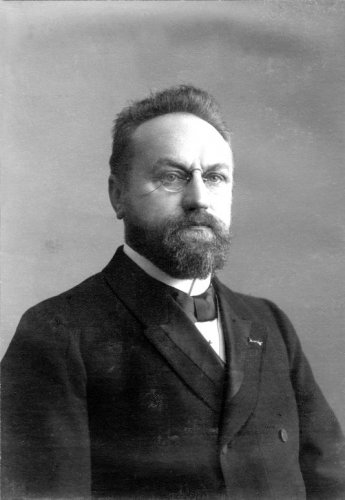
​”The rise of sectarianism that has accompanied the Protestant movement is a dark and negative phenomenon. It manifested itself already at the beginning of the Reformation, but it has never flourished as it has in our age. New church after new church is established. In England there are already more than two hundred sects. In America they are innumerable. The differences have become so many and so insignificant that one cannot keep track of them. There are even voices arguing for a new discipline in theology itself devoted to the comparative history of church confessions. What is even more serious is that this sectarianism leads to the erosion and disappearance of church consciousness. There is no longer an awareness of the difference between the church and a voluntary association. The sense that separation from the church is a sin has all but disappeared. One leaves a church or joins it rather casually. When something or other in a church no longer satisfies us, we look for another without any pangs of conscience. The decisive factor turns out to be our taste. Exercise of discipline thus becomes virtually impossible; it loses its very character. What preacher is left who dares, in good conscience, except perhaps in extremely rare instances, to use the form for excommunication? The worst result of all this is that by breaking the unity of doctrine and the church, Christians do violence to the communion of saints, deprive themselves of the Spirit’s gifts of grace, by which  other believers labor to build up the saints, shut themselves up in their own circle, promote spiritual pride, strengthen Rome, and give the world occasion for scorn and mockery.”

-Herman Bavinck, “The Catholicity of Christianity and the Church”

Read Full Post »

“Ministers are the fishers of men; and the effect of an endowment is to lengthen their line, and enable them to reach downward to the lowest gradations of the commonwealth. The voluntaries are a kind of fly-fishers—whose operations do not reach to the muddy bottoms, to those depths and those fastnesses of society, which to them are inaccessible. And a chapel of ease, give it any ecclesiastical organization you like, is just such a voluntary [entity]. Nominally, you may give it the title of an established church; but you will never give it the power or the properties of an established church without an endowment” (Works 18:101-102)

In this quote, Chalmers is contending within his historical situation for the full inclusion of “chapels of ease” (more or less preaching stations) within the established Church of Scotland. But what is crucial, he argues, is that they should be territorial, assigned to focus pastorally and evangelistically on one defined neighborhood, and endowed, so that they do not have to be beholden to the more privileged classes attending from beyond their ‘parish.’ Without these two pillars, the ability to minister to all, both rich and poor, becomes extremely difficult. In fact, it becomes impossible when contemplated as a system for the entire nation, which is what an establishment is built to guarantee. In the end, you are back to the religious marketplace, and those who lack “wealth and will” are left to sink to the bottom.

[image source]

Read Full Post »

Funny, but damningly true. Again, reinforcement that Adam Smith was dead wrong about leaving religion purely to market forces.

Read Full Post »

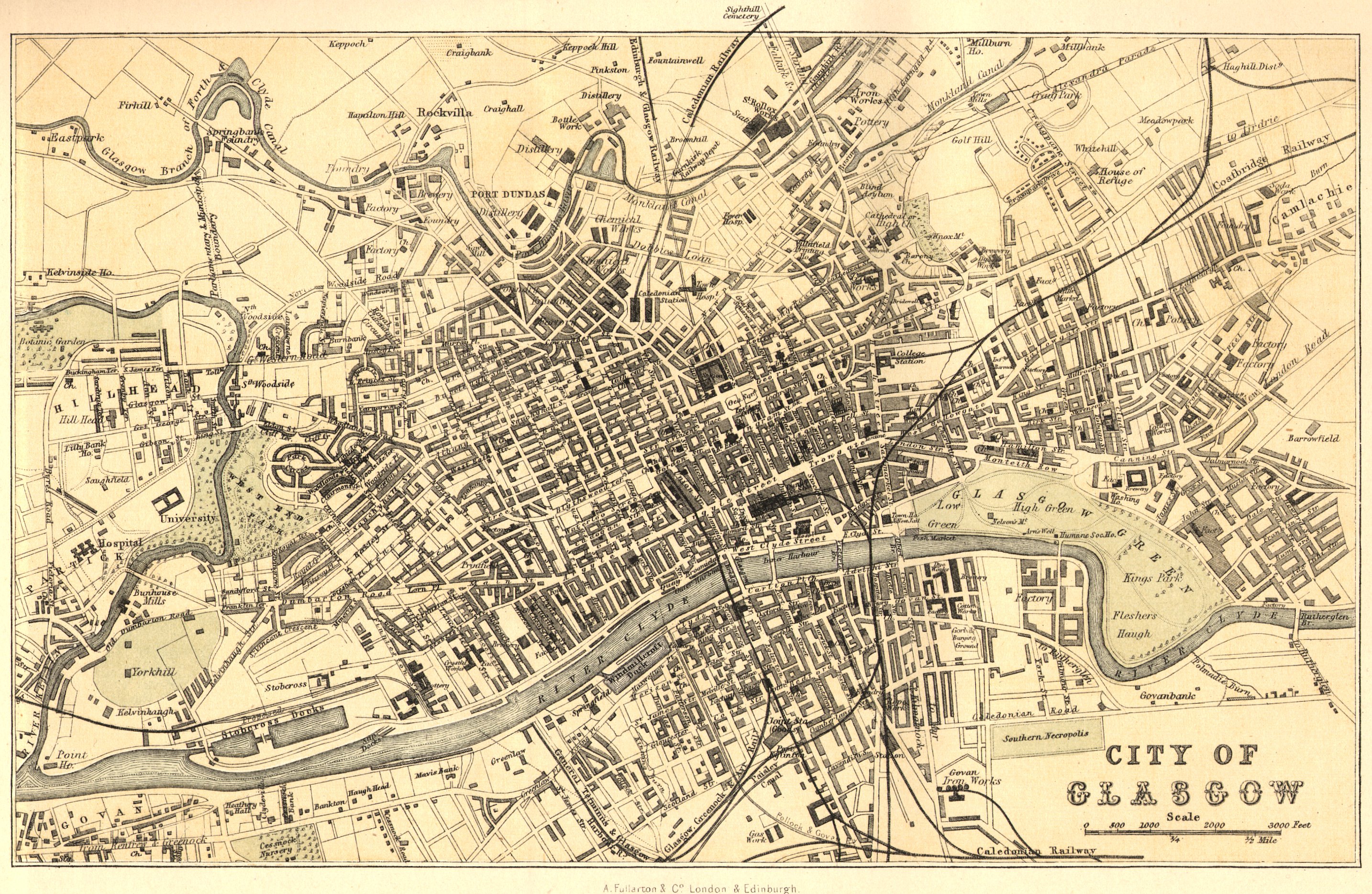
Glasgow_map_1878“Now the specific business which we would like to put into the hands of a Christian minister is, not that he should fill his church any how – that he may do by the superior attractiveness of his preaching, at the expense of previous congregations, and without any movement in advance on the practical heathenism of the community: But what we want is, to place his church in the middle of such a territory as we have now specified and to lay upon him a task, for the accomplishment of which we should allow him to the labour and preference of a whole lifetime; not to fill his church any how, but to fill this church out of that district. We should give him the charge over head, of one and all of its families; and tell him, that, instead of seeking hearers from without, he should so shape and regulate his movements, that, as far as possible, his church-room might all be taken up by hearers from within. It is this peculiar relation between his church, and its contiguous households, all placed within certain geographical limits, that distinguishes him from the others as a territorial minister.”

– Thomas Chalmers

Read Full Post »

In the following quote, Thomas Chalmers (1780-1847) is urging that the Church of Scotland in his day stick to its parish principles, that is, attaching a church to a district, charging its minister to evangelize it, and giving preference to its residents in seating during the services.  A church should be a local, or a ‘territorial’ church.  It should not operate on the law of supply and demand, thus drawing any and all irrespective of residence.  When it does, as Chalmers here points out, it occasions the worst in those who are already religious, fostering a culture of religious fastidiousness – and church-hopping.

Without a territorial arrangement, the “population” of the parish “might still abide in a state of unmoved heathenism; and the chapel congregation, instead of being formed or recruited out of their families, will be drawn very much at the expense of previous congregations, from that class of the community whose habits of church-going are not only already established, but may be said to have been refined into fastidiousness; to whom change is luxury, and who, ever agog on the impulse of novelty, are, in fact, the deadliest adversaries of that territorial system, wherein the great strength of our establishment lies” (Collected Works 16:184).

Again, Chalmers exposes the commercialization of religion that has only grown from embryo to full monster.

Read Full Post »

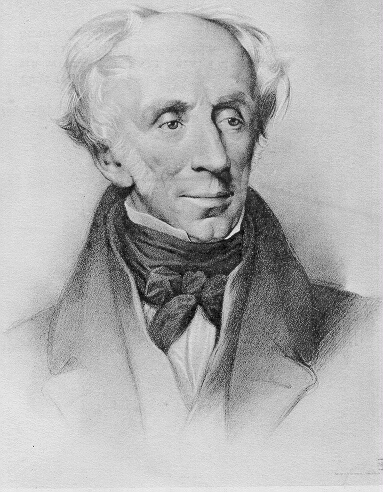
“The sounder part of the Scottish nation know what good their ancestors derived from their Church, and feel how deeply the living generation is indebted to it. . . . Visionary notions have in all ages been afloat upon the subject of best providing for the clergy; notions which have been sincerely entertained by good men, with a view to the improvement of that order, and eagerly caught at and dwelt upon by the designing, for its degradation and disparagement. Some are beguiled by what they call the Voluntary system, not seeing (what stares one in the face at the very threshold) that they who stand in most need of religious instruction are unconscious of the want, and therefore cannot reasonably be expected to make any sacrifices in order to supply it. Will the licentious, the sensual, and the depraved, take from the means of their gratifications and pursuits, to support a discipline that cannot advance without uprooting the trees that bear the fruit which they devour so greedily?  Will they pay the price of that seed whose harvest is to be reaped in an invisible world?  A Voluntary system for the religious exigencies of a people numerous and circumstanced as we are! Not more absurd would it be to expect that a knot of boys should draw upon the pittance of their pocket-money to build schools, or out of the abundance of their discretion be able to select fit masters to teach and keep them in order! Some, who clearly perceive the incompetence and folly of such a scheme for the agricultural part of the people, nevertheless think it feasible in large towns, where the rich might subscribe for the religious instruction of the poor. Alas! they know little of the thick darkness that spreads over the streets and alleys of our large towns. The parish of Lambeth, a few years since, contained not mora than one church, and three or four small proprietary chapels, while Dissenting chapels, of every denomination, were still more scantily found there; yet the inhabitants of the parish amounted at that time to upwards of 50,000. Were the parish church and the chapels of the Establishment existing there an impediment to the spread of the Gospel among that mass of people?  Who shall dare to say so?  But if any one, in the face of the fact which has just been stated, and in opposition to authentic reports to the same effect from various other quarters, should still contend that a Voluntary system is sufficient for the spread and maintenance of religion, we would ask, What kind of religion?  Wherein would it differ, among the many, from deplorable fanaticism?

“For the preservation of the Church Establishment, all men, whether they belong to it or not, could they perceive their own interest, would be strenuous; but how inadequate are its provisions for the needs of the country!  and how much is it to be regretted that, while its zealous friends yield to alarms on account of the hostility of Dissent, they should so much overrate the danger to be apprehended from that quarter, and almost overlook the fact that hundreds of thousands of our fellow-countrymen, though formally and nominally of the Church of England, never enter her places of worship, neither have they communication with her ministers!  This deplorable state of things was partly produced by a decay of zeal among the rich and influential, and partly by a want of due expansive power in the constitution of the Establishment as regulated by law.  Private benefactors in their efforts to build and endow churches have been frustrated, or too much impeded, by legal obstacles; these, where they are unreasonable or unfitted for the times, ought to be removed; and, keeping clear of intolerance and injustice, means should be taken to render the presence and powers of the Church commensurate with the wants of a shifting and still increasing population” (Poetical Works of William Wordsworth, 606, 607).

Read Full Post »

Older Posts »