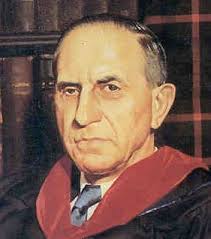
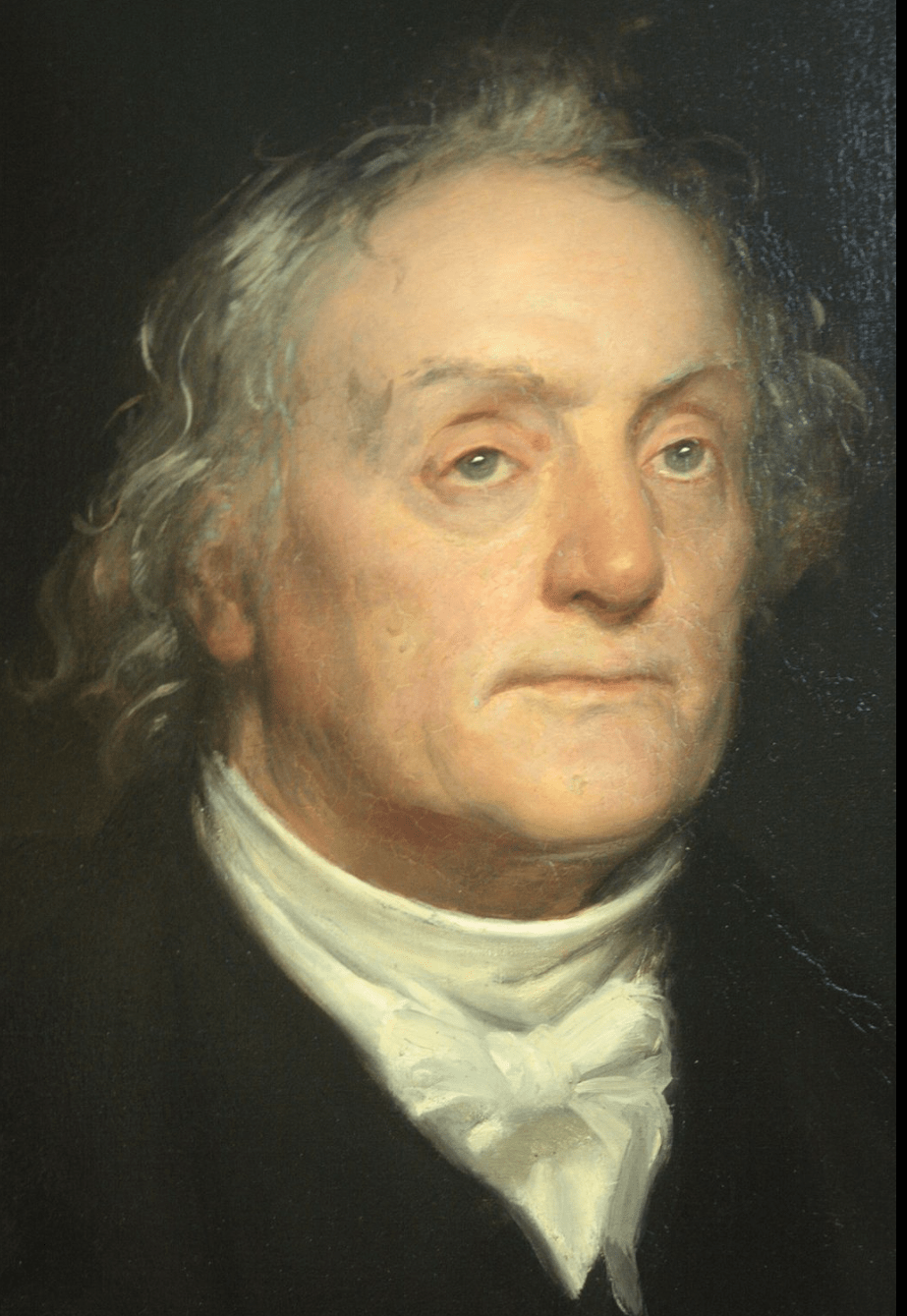
Read the entire chapter from William Cunningham’s Historical Theology: A Review of the Principal Discussions in the Christian Church Since the Apostolic Age (1863). Or, listen to the audio here.
Posted in Articles, Audio Resources, Catholicity, Christ & the Church, Church of Scotland, Church Order & Discipline, Connectionalism & Conciliarism, Ecclesiology, Free Church of Scotland on May 29, 2022| Leave a Comment »

Read the entire chapter from William Cunningham’s Historical Theology: A Review of the Principal Discussions in the Christian Church Since the Apostolic Age (1863). Or, listen to the audio here.
Posted in Articles, Church of Scotland, Church Order & Discipline, Confessional Subscription, Establishments, Experimental Religion & the Cure of Souls, Free Church of Scotland, Free Offer of the Gospel, John Murray, Practice of Piety, Presbyterian Reformed Church, Psalmody, Puritans & Puritanism, Sabbatarianism & the Church Calendar, Sacraments, The Free Offer of the Gospel, The Godly Prince, The Lord's Supper, Vital Godliness, Worship, True & False on October 7, 2021| Leave a Comment »
The following is a series of messages given to lay out the distinctives of the Presbyterian Reformed Church, a denomination organized through the instrumentality of Professor John Murray in 1965, committed to the principles of historic Scottish Presbyterianism in doctrine, worship, government, and discipline, as enshrined in the original Westminster Confession of Faith (1646).
For a historical sketch of our beginnings, see here.
(Note: The title “Our Testimony” is merely thematic, and does not refer to a supplementary ecclesiastical document besides the Westminster Standards as is done among Reformed Presbyterian brethren.)
Our Testimony, Part 1: Psalm Singing
Our Testimony, Part 2: Instruments in Worship
Our Testimony, Part 3: Presbyterianism
Our Testimony, Part 4: Holy Days, True & False
Our Testimony, Part 5: Confessionalism
Our Testimony, Part 6: Experimental Religion
Our Testimony, Part 7: The Free Offer of the Gospel
Our Testimony, Part 8: Religious Establishments #1
Our Testimony, Part 8: Religious Establishments #2
Our Testimony, Part 9: Head Coverings
Our Testimony, Part 10: Liberty of Conscience
Our Testimony, Part 11: Our Communion Practice
Our Testimony, Part 12: Frequency of Communion
Posted in Church of Scotland, Free Church of Scotland, Thomas Chalmers on August 11, 2021| Leave a Comment »
Interested in learning more about Chalmers? Here are several helpful resources (in addition to mine) for those who want to explore his life and thought further.
(1) Introductions online
(2) Audio/visual resources online
(3) Biographies & scholarly references
Posted in Audio Resources, Church of Scotland, Free Church of Scotland, Thomas Chalmers on November 10, 2020| Leave a Comment »
Welcome to the “Chalmers Audio Library,” a collection of sermons, essays, and works by the great 19th century Scottish preacher and social reformer, Thomas Chalmers (1780-1847). These are presently being hosted on SermonAudio here.
See all WPE Audio resources. And if you’ve found these recordings a blessing, could you possibly help me?
Chalmers is regrettably a rather forgotten figure both in his own country and even within the confessional legacy to which he belonged, historic Presbyterianism. Yet in his day, he drew high praise for his churchmanship, his social vision and activity, and perhaps above all, his preaching.
(more…)Posted in Articles, Free Church of Scotland, Locality & the Law of Residence, Missiology, Moral Suasion, Parish Theory & Practice, Parochial Strategy, The Romance of Locality, Theology of Community, Theology of Place, Thomas Chalmers, Vignettes from 19th Century District Visitation, Visitation Evangelism, West Port experiment, WPE Editor on April 14, 2020| Leave a Comment »


My 2018 journal article, “Desert Rose: Thomas Chalmers’ West Port Experiment (1844-1847),” published in the 2018 edition of The Confessional Presbyterian. Images used by permission. To purchase a copy, click here.
Posted in Church of Scotland, Experimental Religion & the Cure of Souls, Family Religion, Free Church of Scotland, Gospel Tactics, Locality & the Law of Residence, Missiology, Moral Suasion, Parish Theory & Practice, Parochial Strategy, Vignettes from 19th Century District Visitation, Visitation Evangelism, WPE Editor on April 9, 2020| Leave a Comment »

“As to the attendance of the people on the Sabbath ministrations of the missionary, you will doubtless find that they will give you very fair promises. They may all say they will go to church; but by many of them the promises will not be kept. In such circumstances, a very good plan, which I would recommend to you, would be this, — Let either the agent of the district, or some person on whom he can depend, after the hour at which the various churches go in, go to the district where the defaulters, — reside, and entering one of their houses, beg to be allowed to conduct a family exercise, to which the neighbours may be called in. Depend upon it, they will take it very well. They will of course feel themselves caught . . . but still they will tolerate you, and make their escape next Sabbath, by going to the place of worship. That’s one of a variety of doing the thing. It will bring them in contact with the gospel at any rate. The great matter is to get them into the habit of church-going.”
-Thomas Chalmers, 1844 lecture on the eve of the West Port Experiment
[image]
Posted in Church of Scotland, Free Church of Scotland, Gospel Proclamation, Practice of Piety, Preaching, The Sacred Ministry on April 11, 2019| Leave a Comment »

“As preachers, they were all remarkable. There are some who preach before their people, like actors on the stage, to display themselves and to please their audience. Not such were the self-denied preachers of Ross-shire. There are others who preach over their people. Studying for the highest, instead of doing so for the lowest, in intelligence, they elaborate learned treatises, which float like mist, when delivered, over the heads of their hearers. Not such were the earnest preachers of Ross-shire. There are some who preach past their people. Directing their praise or their censure to intangible abstractions, they never take aim at the views and the conduct of the individuals before them. They step carefully aside, lest their hearers should be struck by their shafts, and aim them at phantoms beyond them. Not such were the faithful preachers of Ross-shire. There are others who preach at their people, serving out in a sermon the gossip of the week, and seemingly possessed with the idea, that the transgressor can be scolded out of the ways of iniquity. Not such were the wise preachers of Ross-shire. There are some who preach towards their people. They aim well, but they are weak. Their eye is along the arrow towards the hearts of their hearers, but their arm is too feeble for sending it on to the mar. Superficial in their experience and in their knowledge, they reach not the cases of God’s people by their doctrine, and they strike with no vigour at the consciences of the ungodly. Not such were the powerful preachers of Ross-shire. There are others still, who preach along their congregation. Instead of standing with their bow in front of the rank, these archers take it in line, and, reducing their mark to an individual, never change the direction of their aim. Not such were the discriminating preachers of Ross-shire. But there are a few who preach to the people directly and seasonably the mind of God in His word, with authority, unction, wisdom, fervour, and love. Such as these last were the eminent preachers of Ross-shire.”
-John Kennedy of Dingwall, The Days of the Fathers in Ross-Shire, pp. 32-33
Posted in Free Church of Scotland, Parish Theory & Practice, Parochial Strategy, Thomas Chalmers on July 26, 2016| Leave a Comment »
The following is a guest post by Dr. George Grant.
The great Scottish pastor, social reformer, educator, author, and scientist Thomas Chalmers was born on March 17, 1780 at Anstruther on the Fife coast. His father was a prosperous businessman in the town and Thomas grew up as the sixth in a large family of fourteen children—he had eight brothers and five sisters.
Showing early signs of prodigy, at the age of three, he went to the local parish school to learn the classical trivium of grammar, logic, and rhetoric in English, Latin, Greek, and Hebrew. His parents were people of strong Calvinist conviction and keen that their family should grow up to bear witness to a lively and relevant Christianity. Piety and intellectual rigor marked their daily lives.
Before he was twelve, he had sufficiently mastered language, literary, and philosophical skills that he was recommended to advance his studies at the University of St Andrews. His brother, William, who was just thirteen, accompanied him. At the time, Thomas was the second-youngest student at St Andrews and widely recognized as a student with extraordinary promise. Although a great part of his time in the first two sessions at the university were apparently occupied in boyish amusements, such as golf, soccer, and hand-ball—in which he was remarkably expert, owing to his being left-handed—he had already begun to demonstrate the great intellectual power which was to be one of his chief characteristics throughout adult life. For mathematics he developed special enthusiasm and to its study he gave himself with great energy and dedication. Ethics and politics were also themes of special interest to him as he sought to integrate his life and faith with the evident woes of the world around him.