Feeds:
Posts
Comments

Archive for the ‘Free Church of Scotland’ Category

The following passage is taken from Free Church of Scotland minister Robert Gordon’s Christ as Made Known to the Ancient Church (1854), where he treats the command of God to build the tabernacle in the wilderness. “And let them make me a sanctuary; that I may dwell among them” (Ex. 25:8). Gordon sets forth rather poignantly the biblical doctrine as expressed in the Westminster Confession of Faith ch. 25, “On the Church.”

* * * * *
Though it was to the incarnation of Christ, therefore, that the passage before us does more immediately refer, as that which was prefigured by the tabernacle; yet the effect of his manifestation is, that God has always dwelt, and ever will dwell, among men, even in his Church, to whom Christ has promised that by his Spirit he will be with her always, even unto the end of the world. The Church, indeed, is represented as the tabernacle or dwelling, place of the Lord; for it is evidently of the Church at large, as well as of the place which God had chosen from among the tribes of Israel to put his name there, that he thus speaks: “The Lord hath chosen Zion; he hath desired it for his habitation. This is my rest for ever: here will I dwell; for I have desired it. I will abundantly bless her provision: I will satisfy her poor with bread. I will also clothe her priests with salvation: and her saints shall shout aloud for joy.” And again, “Look upon Zion, the city of our solemnities: thine eyes shall see Jerusalem a quiet habitation, a tabernacle that shall not be taken down; not one of the stakes thereof shall ever be removed, neither shall any of the cords thereof be broken. But there the glorious Lord will be unto us a place of broad rivers and streams.”

(more…)
Read Full Post »

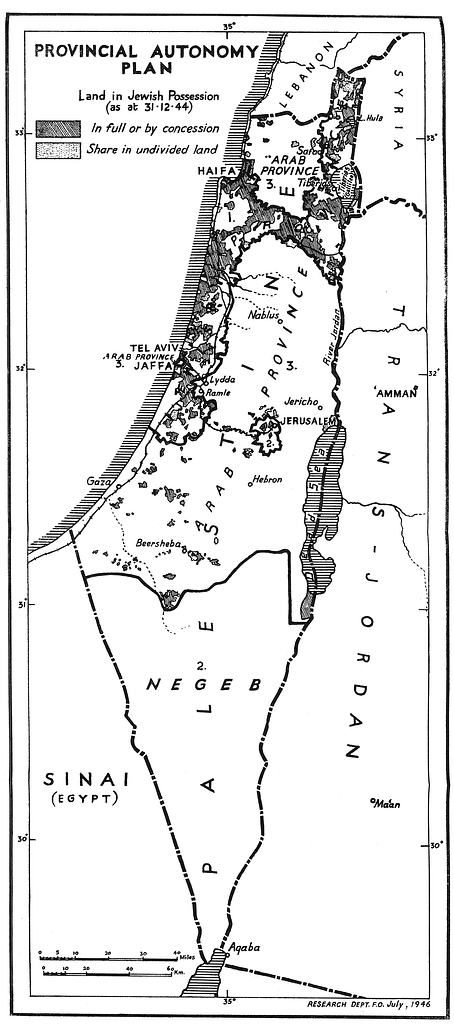
A friend shared this very helpful article about a year ago that explores the actual contours of how Scottish Presbyterians dealt with Jewish questions, the emergence of the nation-state of Israel, and the very problematic other-rail of Dispensationalism in modern evangelicalism. It is very regrettable in the current context that there isn’t much nuance in how our Reformed fathers approached Jewish questions vis-a-vis the errors of J.N. Darby and his ilk. Abstract here:

(more…)

Read Full Post »

“In the second place, the principles laid down demonstrate the evil of schism, or of causeless separation in the Church. The visible Church of Christ was intended by Him to be catholic and one; and notwithstanding of the dissemination far and wide throughout the world of the separate societies of professing Christians, it would be one in reality, as comprehending all and uniting all, were it not for the sinful infirmities of its members. That can be no light offence which gives to the one kingdom of God in this world the appearance of a kingdom divided against itself, and liable to fall. It were impossible, indeed, to deny that there may be real and sufficient ground for separation from some particular local Church. That a particular Church may itself apostatize from the faith, or be guilty of imposing upon its members terms of communion, to comply with which would be sin, there cannot be a doubt; and in such a case separation becomes a duty to be discharged, and not an offence to be avoided. But in separating in such circumstances from the Church, the schism lies not with the parties who separate, but with the Church that compels and causes the separation. In thus going forth from it, we maintain, in fact, rather than infringe on the higher unity of the one Church of Christ. But for parties to separate wantonly, and on insufficient grounds, from the communion of the visible Church, is a grave and serious offence against the authority of Christ in His house. To go out from the communion of the visible Church, and to widen its breaches wilfully, and for trivial reasons, is to set ourselves against the desire and design of Christ that His kingdom in this world should be catholic and one. And when schism is aggravated by the permanent abandonment of a Church profession and Church state,—when causeless separation from any one Church of Christ is followed by the disavowal of all,—when the outward profession that makes a man a member of the visible Church is cast off, and all Christian fellowship is disowned, the guilt incurred is of a ruinous kind.” ” The visible Church,” says the Confession of Faith,” is the house and family of God, out of which there is no ordinary possibility of salvation” (emphasis mine).

James Bannerman, The Church of Christ

* * * *

Whole doctrine catholicity | “Who is she that looketh forth as the morning, fair as the moon, clear as the sun, and terrible as an army with banners” (Song 6:10)?

Read Full Post »

“But now, to apply all this to the subject under consideration—the earthly inheritance : If that inheritance was promised in a way which, from the very first, implied a resurrection from the dead, before it could be rightly enjoyed; and if all along, even when Canaan was possessed by the seed of Abraham, the men of faith still looked forward to another inheritance, when the curse should be utterly abolished, the blessing fully received, and death finally swallowed up in victory,—then a twofold boon must have been conveyed to Abraham and his seed, under the promise of the land of Canaan; one to be realized in the natural, and the other in the resurrection state, —a mingled and temporary good before, and a complete and permanent one after, the restitution of all things by the Messiah. So that, in regard to the ultimate designs of God, the land of Canaan would serve much the same purpose as the garden of Eden, with its tree of life and cherubim of glory—the same, and yet more; for it not only presented to the eye of faith a type, but also gave in its possession an earnest, of the inheritance of a paradisiacal world. The difference, however, is not essential, and only indicates an advance in God’s revelations and purposes of grace, making what was ultimately designed for the faithful more sure to them by an instalment, through a singular train of providential arrangements, in a present inheritance of good. They thus enjoyed a real and substantial pledge of the better things to come, which were to be fulfilled in the kingdom of God.”

Patrick Fairbairn, The Typology of Scripture

Read Full Post »

“Let a man examine himself, and so let him eat of that bread and drink of that cup. For he that eateth and drinketh unworthily, eateth and drinketh damnation [judgment] to himself, not discerning the Lord’s body” (1 Cor. 11:27-28).

How should you prepare for the Lord’s Supper? A few thoughts for those who have come to appreciate the theology, practice, and piety of confessional Presbyterianism around the celebration Communion.

First, dedicate time ahead of time. You cannot put things off until Saturday night. Nor can you just let attendance at a midweek preparatory service ‘check the box.’ You need to begin to schedule in some meaningful time, in addition to your regular personal and family seasons of worship, to be one on one with God. Adjust your week’s schedule early, especially if you have more responsibilities surrounding the weekend, such as food preparation, etc. And husbands, be especially mindful of your wives. Help plan ahead and streamline things so that preparation doesn’t get eclipsed, helping the children step up–and even stepping up yourself!

(more…)

Read Full Post »

I’ve recently read-recorded three sermons from Alexander Moody Stuart’s great devotional classic, The Three Marys. Below is a very helpful 2-part introduction to Moody-Stuart published in The Bulwark.

Part 1 begins on p. 7 (pdf), p. 12 (print):

Part 2 begins on p. 2 (pdf), p. 3 (print):

Read Full Post »

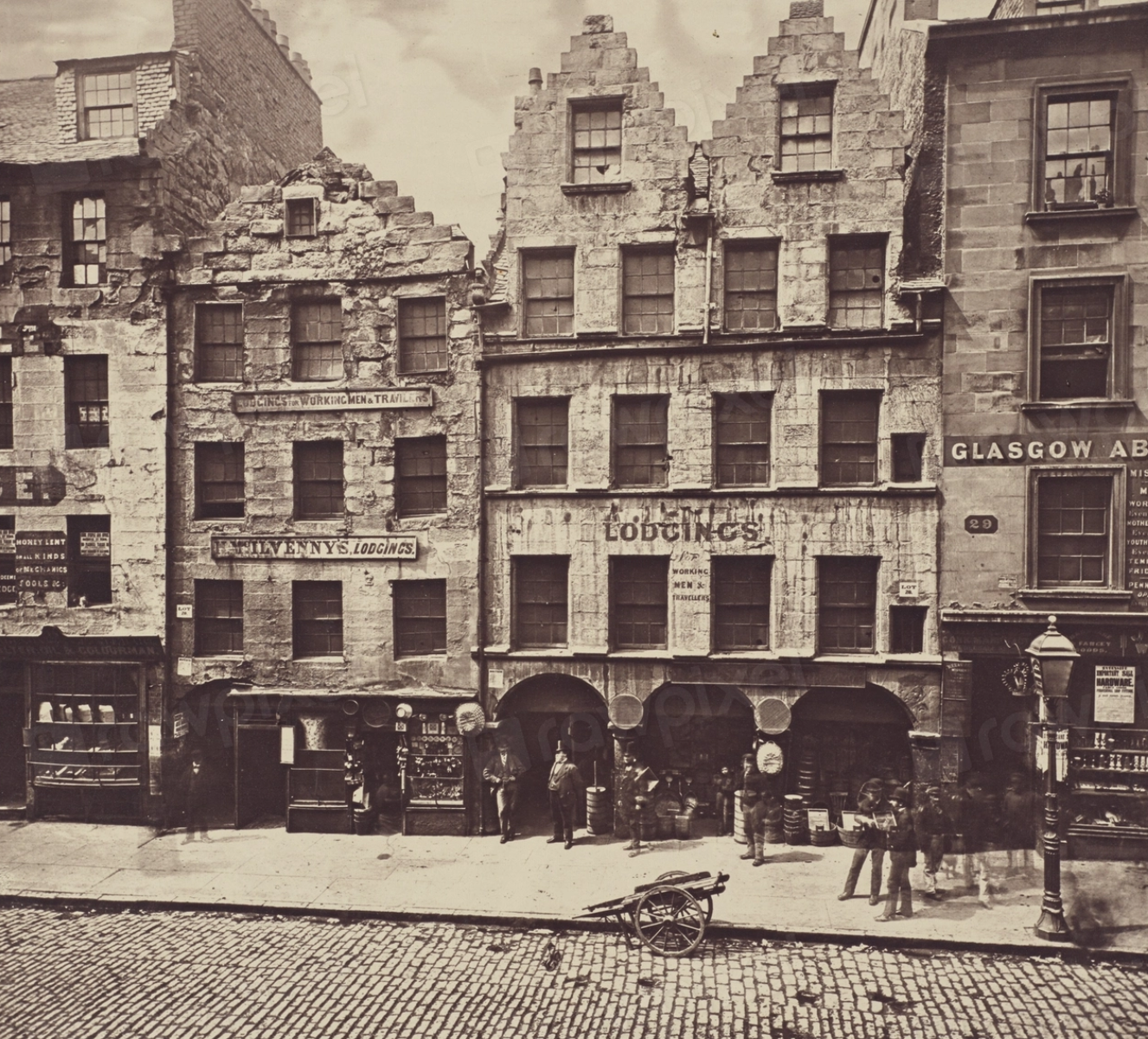
“For the accomplishment of this, there must not only be a going forth on the vast and untrodden spaces that are without; there must be a filling up of the numerous and peopled vacancies that are within—a busy, internal locomotion, that might circulate, and disperse, and branch off to the right and to the left, among the many thousand families which are at hand: and thoroughly to pervade these families; to make good a lodgment in the midst of them, for the nearer or the more frequent ministrations of Christianity than before; to have gained welcome for the Gospel testimony into their houses, and, in return, to have drawn any of them forth to attendance on the place of Sabbath and of solemn services—this, also, is to act upon our text, this is to do the part, and to render one of the best achievements of a missionary.”

-Thomas Chalmers, Works, 6:270.

[image source]

Read Full Post »

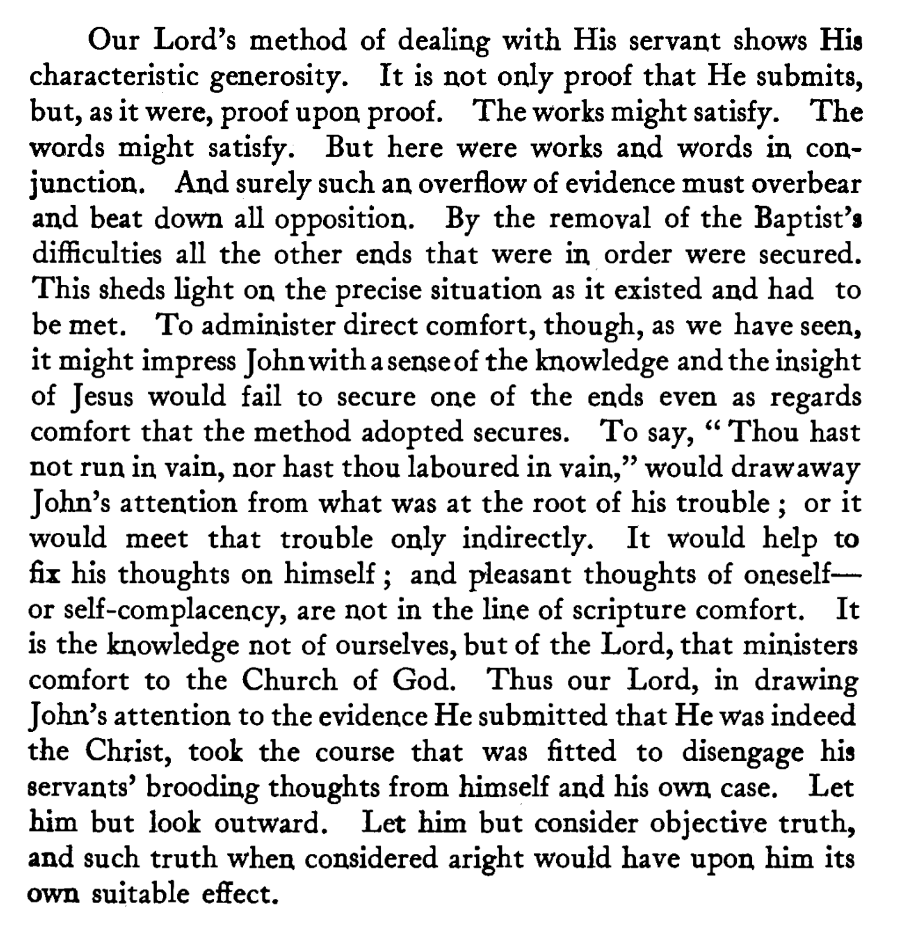
Absolutely tremendous article (sermon?) in the public domain by Prof. John Macleod (1872-1948). I recently recorded it as I prepared for a recent message of mine on Luke 7:18-23, “John Baptist hath sent us unto thee, saying, Art thou he that should come? or look we for another?” (Verse 20.) You won’t be disappointed. Here’s a little “handful of purpose.” And view the entire audio library here, with more Macleod recordings and many others.

Read Full Post »

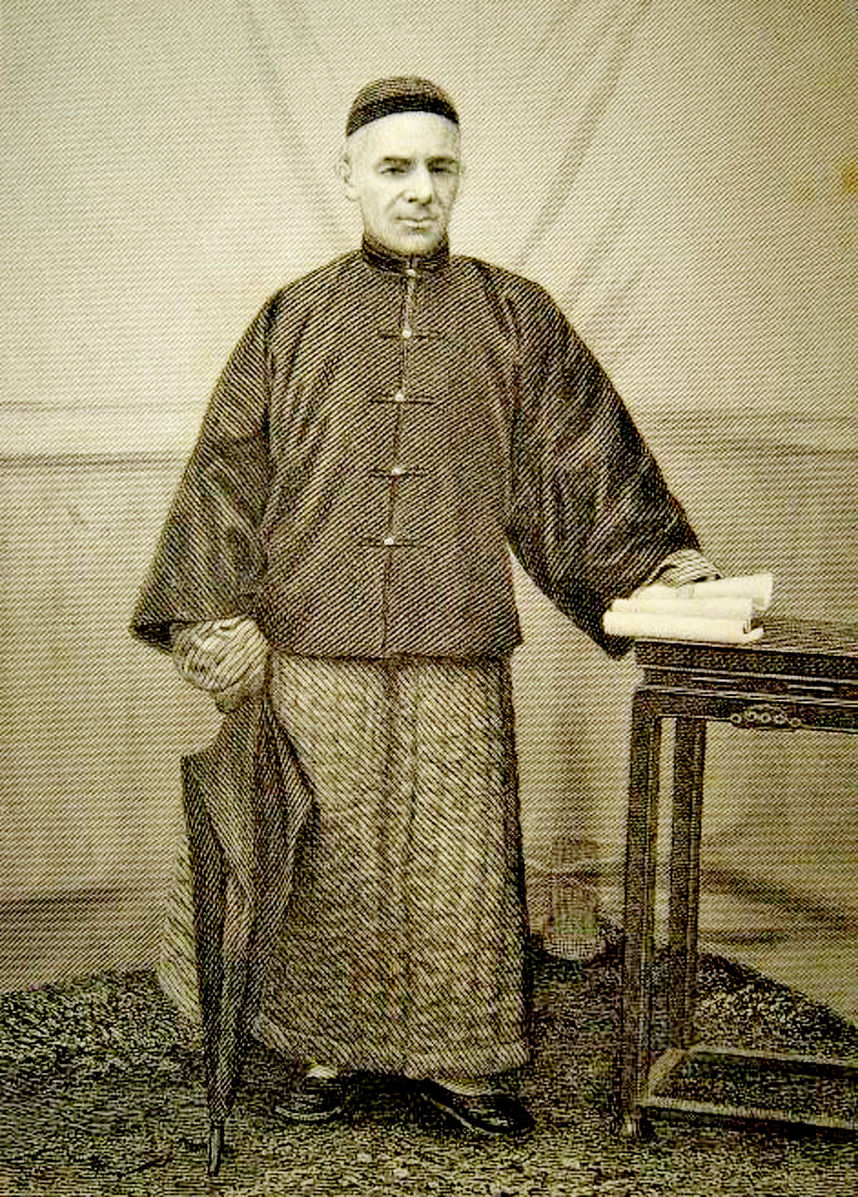
The following is a portion from William Chalmers Burns‘ sermon “I am Debtor,” from Romans 1:14. Burns was a good friend and ministerial colleague to Robert Murray M’Cheyne, and was a heroic Presbyterian missionary to China. Listen to the full audio recording here. And for more audio resources, click on the WPE Audio tab at the top.

* * * *

The apostle says something more than this, — “I am debtor both to the Greeks, and to the Barbarians; both to the wise, and the unwise.” The meaning of this seems to be, — if I were free to make a choice, I might choose the barbarian or I might choose the Greek, I might choose the wise or the unwise; but Paul says, I am debtor, and you know a debtor has no such thing as a choice to make to whom he will pay his debts. The debtor knows this, and the believer feels it just in the same way. “Whatever my calculations may be, or whatever I might myself desire, the question is not, what would I like, but what is my commission, — what are the objects of my embassy? It is not my choice that I have to do with, but God’s commission, — what instructions does it contain?”

We would fain impress this important, solemn truth upon God’s children. Believer, do you feel this? Do you know what it is to feel yourself a debtor to a lost world? Have you ever thought of what object Christ had in view when He brought you to Himself? what design He had in calling you? It was certainly, in the first instance, to save you from perdition, but that was not the only end. It is possible to think too much, or, at least, too exclusively, about your own case. In one sense you cannot do that; woe be to him who seeks to pull the mote out of a brother’s eye, when a beam is in his own. But yet a believer must remember that he is called to know Christ, not only to be safe himself, but also that he may be a witness for Christ in the world. Ah! think of this; don’t be selfish in the matter of salvation, and remember above all, that his is not a thing which you may or may not do, just as you like. Some people do much in this way, just because they have a liking to it, and because the employment suits their taste – and it is a happy thing to feel that; but there is a far more unchangeable foundation for a believer’s labour in the Lord’s vineyard than that. The man is no longer free to like, or not to like; he is a debtor now – a debtor to do it fully, and constantly, and unceasingly, and devotedly, whether he likes it or not. Think of it in this light, and then you will be going and hasting to tell your friends, and all whom you know, of these precious things of God. Oh, if this were fully felt, and felt universally , how many would be preaching whose mouths are dumb through sloth and idleness! There would be fewer preaching as a trade, and more preaching as debtors, forevery believer would then have a voice with which to sound the praises of the most high God.

Read Full Post »

The article below on Andrew Bonar at Finnieston, Glasgow, was written by my friend Matthew Vogan and published in the Bulwark Magazine of the Scottish Reformation Society. The author relates the compelling story of Bonar’s evangelistic labor on the parish principle as taught and modeled by Thomas Chalmers.

Here are some sample extracts from the article:

Every afternoon from one o’clock till nearly five he would be found walking about his parish, visiting his people. He was well known on the streets of the district. He became a well-known figure in the area, and his friendly way of speaking and behaving endeared him to all, including children. Little children would run up to him as he walked and put their hand in his and receive a smile and gentle hand laid on the heard. One child called him “the minister with the laughing face.” Soon after arriving in the city, he spoke to a little girl in the street, addressing her by name. The child ran home to her mother with the delighted cry, “Mither, mither, he kens me.” [“Mother, mother, he knows me!”]

(more…)

Read Full Post »

Older Posts »