Feeds:
Posts
Comments

Archive for the ‘Experimental Religion & the Cure of Souls’ Category

The following is a stinging rebuke of those of us in the ministry who tend to have a ‘clock in and clock out’ view of our calling:

The late excellent Mr. Hervey resolved – ‘Never to go into any company, where he could not obtain access for his Master.’ And at least we should determine to venture into no society, but where we sincerely desire and endeavour, to introduce our Master. There is indeed ” a time for keeping silence,” and ” keeping our mouth with a bridle,” in the presence of the ungodly; lest, by “giving that which is holy unto dogs, and casting our pearls before swine,” we should provoke a needless excitement of enmity against the Gospel. But (as Dr. Watts has well observed)—’ I doubt this caution has been carried much further by our own cowardice and carnality of spirit, than David ever practised it in the thirty-ninth Psalm, or than Jesus Christ meant it in the seventh of Matthew.’ Certainly if we are “dumb with silence, and hold our peace even from good,” without feeling, like David under these circumstances, our “sorrows to be stirred;” it is but too plain, that we have lost that distinction of ” the servants of Christ,” which it would have been our honour to have preserved; that our Christian prudence has degenerated into worldly cowardice; and that our conversation with the world has been regulated by the fear of man, fleshly indulgence, and practical unbelief of the most solemn warnings of the Gospel.

Our Divine Master never intended, that we should confine our religion to the services of the sanctuary. As men of God, we should have it at heart and in hand, spreading a spiritual savour over the common walks of society, and stamping us with the mark of confessors of Christ in the midst of a world, who hold him still in the same contempt, as when eighteen centuries since they nailed him to the cross. There must be some defect if we do not bring an atmosphere with us, which is more or less instantaneously felt.  It is the want of this high tone of character, that makes our private Ministrations so pointless and ineffective. For when parochial visits have been unaccompanied with one searching inquiry respecting the state of the soul, it is easily supposed, that, as no suspicion was thrown out, none was entertained; and that, if there was not quite so much religion as with some others, yet that there was no ground for alarm, nor had the solemn statements of the pulpit any specific reference to them (115-16).

When we consider that the ‘parson’ is the public person of the community, he must always be representing Christ in deed if not in word also.  We should especially fight the cultural pressure toward anonymity and the privitization of our faith.  Men of God, let us ever ‘go public’ with Him!

Read Full Post »

Following is the next installment of John G. Paton’s account of his experience with the Glasgow City Mission, an example of 19th century urban territorial missions.  For the previous one, click here.

* * * *

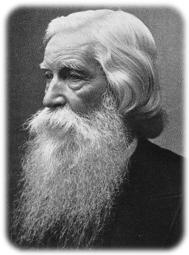
The kind cow-feeder had to inform us—and he did it with much genuine sorrow—that at a given date he would require the hay-loft, which was our place of meeting; and as no other suitable house or hall could be got, the poor people and I feared the extinction ofJohn G. Paton our work. On hearing this the ostlers and other servants of Menzies, the coach-hirer, who had extensive premises near our place of meeting, of their own accord asked and obtained liberty to clear out a hay-loft of theirs that was seldom in use, and resolved, at their own expense, to erect an outside wooden stair for the convenience of the people. This becoming known, and being much talked of, caused great joy in the district, arrested general attention, and increased the interest of our work. But I saw that, however generous, it could be at the best only another temporary arrangement, and that the premises might again at any moment be required. After prayer I therefore laid the whole case before my good and great-hearted friend, Thomas Binnie, Esq., Monteith Row, and he, after inquiring into all the circumstances, secured a good site for a Mission Hall in a piece of unoccupied ground near our old hay-loft, on which he proposed to build suitable premises at his own expense. At that very time; however, a commodious block of buildings, that had been Church, Schools, Manse, etc., came into the market Mr. Binnie persuaded Dr. Symington’s congregation, Great Hamilton Street, in connection with which my Mission was carried on, to purchase the whole property for Mission purposes. Its situation at the foot of Green Street gave it a control of the whole district where my work lay ; and so the Church was given to me in which to conduct all my meetings, while the other halls were adapted as Schools for poor girls and boys, where they were educated by a proper master, and were largely supplied with books, clothing, and even food, by the ladies of the congregation. The purchasing and using of these buildings for an evangelistic and educational Mission became a blessing — a very conspicuous blessing — to that district in the Calton of Glasgow ; and the blessing still perpetuates itself, not only in the old premises, now used for an Industrial School, but still more in the beautiful and spacious Mission Halls, erected immediately in front of the old, and consecrated to the work of the Lord in that poor and crowded and clamant portion of the city.

Availing myself of the increased facilities, my work was all re-organized. On Sabbath morning, at seven o’clock, I had one of the most deeply interesting and fruitful of all my Classes for the study of the Bible. It was attended by from seventy to a hundred of the very poorest young women and grown-up lads of the whole district.  They had nothing to put on except their ordinary work-day clothes,—all without bonnets some without shoes. Beautiful was it to mark how the poorest began to improve in personal appearance immediately after they came to our class ; how they gradually got shoes and one bit of clothing after another, to enable them to attend our other meetings- and then to go to church ; and, above all, how eagerly they sought to bring others with them, taking a deep personal interest in all the work of the Mission. Long after they themselves could appear in excellent dress, many of them still continued to attend in their working clothes, and to bring other and poorer girls with them to that morning class, and thereby helped to improve and elevate their companions.

My delight in that Bible Class was among the purest joys in all my life, and the results were amongst the most certain and precious of all my ministry. Yet it was not made successful without unceasing pains and prayers. What would my younger brethren in the Ministry, or in the Mission, think of starting out at six o’clock every Sunday morning, running from street to street for an hour, knocking at the doors and rousing the careless, and thus getting together, and keeping together, their Bible Class?  This was what I did at first; but, in course of time, a band of voluntary visitors belonging to the class took charge of all the irregulars, the indifferents, and the new-comers, and thereby not only relieved and assisted me, but vastly increased their own personal interest, and became warmly attached to each other. 

I had also a very large Bible Class—a sort of Bible-reading—on Monday night, attended by all, of both sexes and of any age, who cared to come or had any interest in the work. Wednesday evening, again, was devoted to a Prayer Meeting for all, and the attendance often more than half-filled the Church. There I usually took up some book of Holy Scripture, and read and lectured right through, practically expounding and applying it.  On Thursday I held a Communicants’ Class, intended for the more careful instruction of all who wished to become full members of the Church. Our constant text-book was “Patterson on the Shorter Catechism,” than which I have never seen a better compendium of the doctrines of Holy Scripture. Each being thus trained for a season, received from me, if found worthy, a letter to the minister of any Protestant Church which he or she inclined to join. In this way great numbers became active and useful communicants in the surrounding congregations, and eight young lads of humble circumstances educated themselves for the ministry of the Church,—most of them getting their first lessons in Latin and Greek from my very poor stock of the same! Friday evening was occupied with a Singing Class, teaching Church music, and practising for our Sabbath meetings. On Saturday evening we held our Total Abstinence meeting, at which the members themselves took a principal part, in readings, addresses, recitations, singing hymns, etc. . . .

Next

Read Full Post »

It has been some time since I’ve read the classic John G. Paton: Missionary to the New Hebrides (1898).  A truly amazing story of God’s work through a humble, Scottish Presbyterian missionary among the cannibals of Australasia.

But I had altogether forgotten the book’s recounting of his preparatory work in the Glasgow City Mission.  He had been an active district visitor in the famous mission work founded by David Nasmith and patterned largely on Thomas Chalmers’ mission principles of locality and aggression.  In the next few installments, we’ll offer some selections from Paton’s chapter on his experience with the Glasgow City Mission.  It should give us some firsthand insight into what 19th century district visitation among the urban poor looked like.  (And, by the by, I personally abstain from his teetotalism.)

* * * * *

Before undertaking the Maryhill school, I had applied to be taken on as an agent in the Glasgow City Mission ; and the night before I had to leave Maryhill, I received a letter from Rev. Thomas Caie, the superintendent of the said Mission, saying that the directors had kept their eyes on me ever since my application, and requesting, as they understood I was leaving the school, that I would appear before them the next morning, and have my qualifications for becoming a Missionary examined into. Praising God, I went off at once, passed the examination successfully, and was appointed to spend two hours that afternoon and the following Monday in visitation with two of the directors, calling at every house in a low district of the town, and conversing with all the characters encountered there on their eternal welfare. I had also to preach a ” trial” discourse in a Mission meeting, where a deputation of directors would be present, the following evening being Sunday ; and on Wednesday evening, they met again to hear their reports and to accept or reject me. All this had come upon me so unexpectedly, that I almost anticipated failure; but looking up for help I went through with it, and on the fifth day after leaving the school they called me before a meeting of directors, and informed me that I had passed my trials most successfully, and that the reports were so favourable that they had unanimously resolved to receive me at once as one of their City Missionaries. It was further explained that one of their number, Matthew Fairley, Esq., an elder in Dr. Symington’s congregation, had guaranteed the half of my salary for two years, the other half to be met by the resources of the Mission voluntarily contributed,—the whole salary at that time amounting to £40 per annum. The district allocated to me was one especially needful and trying, that had never been occupied, in and around the Green Street of Calton, and I was enjcined to enter upon my duties at once. After receiving many good and kind counsels from these good and kind men, one of them in prayer very solemnly dedicated me and my work to the Lord; and several of them were appointed to introduce me to my district, taking a day each by turns, and to assist me in making arrangements for the on-carrying of the work. Deeply solemnized with the responsibilities of my new office, I left that meeting praising God for all His undeserved mercies, and seeing most clearly His gracious hand in all the way by which He had led me, and the trials by which He had prepared me for the sphere of service, Man proposes—God disposes.

Most of these directors were men of God, adapted and qualified for this special work, and very helpful in counsel as they went with me from day to day, introducing me to my district, and seeing the character and position of the people dwelling there. Looking back upon these Mission experiences, I have ever felt that they were, to me and many others, a good and profitable training of students for the office of the Ministry, preparing us to deal with men of every shade of thought and of character, and try to lead them to the knowledge and service of the Lord Jesus. I found the district a very degraded one. Many families said they had never been visited by any minister; and many were lapsed professors of religion who had attended no church for ten, sixteen, or twenty years, and said they had never been called upon by any minister, nor by any Christian visitor. In it were congregated many avowed infidels, Romanists, and drunkards,—living together, and associated for evil, but apparently without any effective counteracting influence. In many of its closes and courts sin and vice walked about openly—naked and not ashamed.

We were expected to spend four hours daily in visiting from house to house, holding small prayer meetings amongst those visited, calling them together also in evening meetings, and trying by all means to do whatever good was possible amongst them. The only place in the whole district available for a Sabbath evening Evangelistic Service was a hay-loft, under which a cow-feeder kept a large number of cows, and which was reached by an outside rickety wooden stair. After nearly a year’s hard work, I had only six or seven non-church-goers, who had been led to attend regularly there, besides about the same number who met on a week evening in the groundfloor of a house kindly granted for the purpose by a poor and industrious but ill-used Irishwoman. She supported her family by keeping a little shop, and selling coals. Her husband was a powerful man —a good worker, but a hard drinker, and, like too many others addicted to intemperance, he abused and beat her, and pawned and drank everything he could get hold of. She, amid many prayers and tears, bore everything patiently, and strove to bring up her only daughter in the fear of God. We exerted, by God’s blessing, a good influence upon him through our meetings. He became a total abstainer, gave up his evil ways, and attended church regularly with his wife. As his interest increased, he tried to bring others also to the meeting, and urged them to become abstainers. His wife became a centre of help and of good influence I all the district, as she kindly invited all and welcomed them to the meeting in her house, and my work grew every day more hopeful.

Seeing, however, that one year’s hard work showed sach small results, the directors proposed to remove me to another district, as in their estimation the nonchurch-goers in Green Street were unassailable by ordinary means. I pleaded for six months’ longer trial, as I had gained the confidence of many of the poor people there, and had an invincible faith that the good seed sown would soon bear blessed fruit.  To this the directors kindly agreed. At our next meeting I informed those present that, if we could not draw out more of the non-church-goers to attend the services, I should be removed to another part of the city. Each one there and then agreed to bring another to our next meeting. Both our meetings at once doubled their attendance. My interest in them and their interest in me now grew apace, and, for fear I might be taken away from them, they made another effort, and again doubled our attendance. Henceforth meeting and class were both too large for any house that was available for us in the whole of our district.  We instituted a Bible Class, a Singing Class, a Communicants’ Class, and a Total Abstinence Society; and, in addition to the usual meetings, we opened two prayer meetings specially for the Calton division of the Glasgow Police—one at a suitable hour for the men on day duty, and another for those on night duty. The men got up a Mutual Improvement Society and Singing Class also amongst themselves, weekly, on another evening. My work now occupied every evening in the week; and I had two meetings every Sabbath. By God’s blessing they all prospered, and gave evidence of such fruits as showed that the Lord was working there for good by our humble instrumentality.

[Next post]

Read Full Post »

From the diary of Sir Michael Connal, evangelical Presbyterian merchant in Glasgow:

“November 6 [1838].—Visited two poor women, as a member of the Stirlingshire Charitable Society ; one a Mrs. Buchanan, a poor object, five children.just out of scarlet fever, three stairs up in a back land in the High Street; dreadful poverty, suffocating smell, rags, filth ; these sights should make me more and more active in doing good. I feel more and more satisfied with my position in providence ; may I improve it aright, devoting mind and body to the pursuit so far as is consistent with Christian light and love. May I be blessed in my mental pursuits as enlarging and strengthening my mind.”

March 12 [1844].—How various my employments often in the evening. Visited a Roman Catholic dying of consumption. Attempted to speak, but was put off with many excuses. Took up a missal and read a few verses of the 51 st Psalm.”

“October 28 [1844].—On Monday evening called round upon various families in my district. I was interested in one family especially. How much real elegance and politeness and decorum there is in a family under the influence of religion, however poor.”

January 13 [1846].— . . . On New Year’s Day went to call in the Spoutmouth on the woman Mackay; found that she had died that morning. Got a lesson not to speak harshly to those whom I visited. Was much pleased with the affection of the Roman Catholic woman, with whom she lived, for the deceased.”

October 2 [1847].—I have had much pleasure in visiting through my district. How much contentment, how much happiness, with very little of this world.”

April 5 [1848].—Went through my district; found the people glad to see me.”

October 10 [1850].— . . . I have been pressed in spirit to purchase the Dovehill Church. I think that schools could be opened there to advantage. I do think that it is my duty to turn to the next great means of the elevation of that district of the city in the institution of a school. . . . I know that it will cost me labour and trouble, but I have undertaken the adventure knowing that I have many opportunities to accomplish successfully now what I may not have at a future time. I pity the cold selfishness of some so-called Christians. Nothing but earnestness will do. Devotedness of purpose is the characteristic of Rome; why not of Protestants ?

Read Full Post »

May the Lord imprint these truths, so well expressed by Charles Bridges, on the heart of every Gospel minister:

“The book of God is indeed the living voice of the Spirit. To be intent therefore upon the study of it, must result in a clear apprehension of the mind of God. Hence the maxim—’ Bonus textuarius, bonus Theologus.’ Most beautifully does Witsius set out the value of this primary Ministerial qualification—” mighty in the Scriptures.” ‘ Let the Theologian ascend from the lower school of natural study, to the higher department of Scripture, and, sitting at the feet of God as his teacher, learn from his mouth the hidden Old Dutch Family Bible (from flickr.com)mysteries of salvation, which ” eye hath not seen, nor ear heard; which none of the princes of this world knew;” which the most accurate reason cannot search out; which the heavenly chorus of angels, though always beholding the face of God, ” desire to look into.” In the hidden book of Scripture, and no where else, are opened the secrets of the more sacred wisdom. Whatever is not drawn from them—whatever is not built upon them—whatever does not most exactly accord with them—however it may recommend itself by the appearance of the most sublime wisdom, or rest upon ancient tradition, consent of learned men, or the weight of plausible argument—is vain, futile, and, in short, a very lie. ” To the law and to the testimony. If any one speak not according to this word, it is because there is no light in them.” Let the Theologian delight in these sacred oracles: let him exercise himself in them day and night; let him meditate on them; let him live in them ; let him derive all his wisdom from them; let him compare all his thoughts with them; let him embrace nothing in religion which he does not find here. Let him not bind his faith to a man— not to a Prophet—not to an Apostle—not even to an Angel himself, as if the dictum of either man or angel were to be the rule of faith. Let his whole ground of faith be in God alone. For it is a Divine, not a human faith, which we learn and teach; so pure that it can rest upon no ground but the authority of God, who is never false, and never can deceive. The attentive study of the Scriptures has a sort of constraining power. It fills the mind with the most splendid form of heavenly truth, which it teaches with purity, solidity, certainty, and without the least mixture of error. It soothes the mind with an inexpressible sweetness; it satisfies the sacred hunger and thirst for knowledge with flowing rivers of honey and butter; it penetrates into the innermost heart with irresistible influence; it imprints its own testimony so firmly upon the mind, that the believing soul rests upon it with the same security, as if it had been carried up into the third heaven, and heard it from God’s own mouth; it touches all the affections, and breathes the sweetest fragrance of holiness upon the pious reader, even though he may not perhaps comprehend the full extent of his reading. We can scarcely say, how strongly we are opposed to that preposterous method of study, which, alas ! too much prevails among us—of forming our views of Divine things from human writings, and afterwards supporting them by Scripture authorities, the result either of our own inquiry, or adduced by others too rashly, and without further examination or bearing upon the subject; when we ought to draw our views of Divine truths immediately from the Scriptures themselves, and to make no other use of human writings, than as indices marking those places in the chief points of Theology, from which we may be instructed in the mind of the Lord.’ This exquisite Master of Theology proceeds in the same strain to remark the importance of the Student giving himself up to the inward teaching of the Holy Spirit, as the only mean of obtaining a spiritual and saving acquaintance with the rule of faith; ‘ it being needful that he that is a disciple of Scripture should also be a disciple of the Spirit’ (Bridges, The Christian Ministry, pp. 58-60).

Read Full Post »

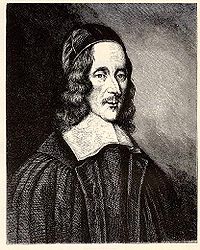
Not long ago, I stumbled across a great treatise in Pastoral Theology from the Puritan era, The Country Parson: His Character and Rule of Holy Life, by George Herbert (better known for his poetry).  Herbert, though a conformist to the Church of England, was obviously highly regarded among the non-conformists.  Richard Baxter had George Herbertthis to say of him, “Herbert speaks to God like one that really believeth a God, and whose business in the world is most with God. Heart-work and heaven-work make up his books.”  High praise, coming from the ‘Reformed Pastor’ himself!

There are many things in the work that doesn’t directly apply to the modern day pastor.  But there is much to glean.  I offer just a few quotes from his chapter entitled, “The Parson in His House,” since it builds on the material of a previous post on the strategic role of the manse:

The Parson is very exact in the governing of his house, making it a copy and model for his parish.  He knows the temper and pulse of every person in his house; and, accordingly, either meets with their vices, or advanceth their virtues (25).

His parsonage is but the workroom of grace in his family, which in turn serves the blessing of salvation to the neighborhood.

He is not a one-man show, however.  His children are commissioned into the service of their ‘parson’ father:

His children he first makes Christians, and then commonwealth’s men: the one he owes to his heavenly country, the other to his earthly, having no title to either, except he do good to both.  Therefore, having seasoned them with all piety – not only of words, in praying and reading; but in actions, in visiting other sick children, and tending their wounds; and sending his charity by them to the poor, and sometimes giving them a little money to do it themselves, that they get a delight in it, and enter favor with God, who weighs even children’s actions (1 Kings, xiv. 12, 13).

The exhortation in Deuteronomy 6 is to be taken quite literally in the manse:

Even the walls are not idle; but something is written or painted there, which may excite the reader to a thought of piety: especially the 101st Psalm; which is expressed in a fair table, as being the rule of a family (26).

And that’s just a sampling.

No doubt its obscurity is due to its identification with ‘conformist’ Puritanism, if that is even an appropriate term.  It’s too bad, though.  Quite a treasure trove of Pastoral Theology.

Read Full Post »

I’ve recently stumbled across Shedd’s Pastoral Theology . It contains several interesting insights into the theory and practice of Reformed parochialism.  But even more intriguing is the fact that it illustrates the survival and idealization of the old, European ecclesiastical model within the untamed vastness of multi-denominational, disestablished America.  And no, it’s not Roman Catholic or Anglican!

In a couple of installments, I’m going to share some great quotes from this Pastoral Theology and add a few observations.

“We define Pastoral Theology to be, that part of the clerical curriculum which relates to the clergyman’s parochial life. It contemplates him in his more retired capacity, as one who has the care of individual souls. The pastor is a curate, and Pastoral Theology relates to the clergyman’s curacy. These terms, which are not so familiar to the American as to the English ear, if taken in their etymological signification, denote precisely the more private character and duties of the clergyman. They are derived from the Latin curare, to take care of. A curate is one who has the care of souls. The apostle Paul speaks of ‘watching for souls.’ The pastor, or curate, is a watcher for souls” (320-321).

“The Christian minister, by his very vocation, is the sacred man in society. By his very position, he is forbidden to be a secular member of community, and hence he must not be secular, either in his character of his habits. It is true, that the clergy are not a sacred caste, yet they are a sacred profession. Hence, society expects from them a ministerial character and bearing, and respects them just in proportion as they possess and exhibit it. The clergyman is sometimes called the ‘parson.’ Though the word has fallen into disuse, owing to the contemptuous employment of it, by the infidelity of the eighteenth century, its etymology is instructive in this connection. Parson is derived from the Latin persona. The clergyman is the person, by way of emphasis, in his parish. He is the marked and and peculiarly religious man, in the community. His very position and vocation, therefore, make it incumbent upon him to be eminently spiritual. His worldly support is provided by the Church, to whom he ministers, and his acceptance of it is an acknowledgement upon his part, that a secular life is unsuitable for him, and a demand upon their part, that he devote himself entirely to religion, and be an example to the flock” (323-24).

I find it very useful to understand the etymological background of these older terms for ordained ministers, curate and parson. What is more, they tap a pastoral-theological well that is full of rich and relevant truth.

The idea of the minister as the parson or persona of a community reveals a federal dimension to parochialism.  He is the head of a community.  He is in a unique position as what the Puritans would call a ‘publick person.’  He is poised to be the blessing or bane of a social unit whom he represents and whom he is called to serve.  Consequently, the minister as parson functions in a kind of priestly capacity.  He stands for the community to God and for God to the community.  He is, in a sense, the embodiment of Christ, the Great High Priest for others.

The idea of pastor as curate highlights the paternal character of parochialism.  We care for souls under us, a definite number with whom we are bound.  This may be a sub-aspect of the federal aspect.

It is true, the Bible never gives ‘ministers’ or ‘pastors’ the designation of curate or parson.  This is extrabiblical terminology – or maybe we might call it biblical-theological (i.e., thematic) terminology.  It does give them something close, however, such as ‘overseers’ and ‘men of God’; and for that reason, I’m not so skittish about them.  (Although ‘curate’ definitely has a high church ring to it.)

But Protestants, minus the Church of England, rightly rejected the terms of ‘fathers’ and ‘priests’ for those in the ministry.  I speculate that these sacerdotal themes inherent in the Scriptural doctrine of the ministry grew beyond the bounds of all modest, biblical proportion in the development of the Church.  Pastors are paternal figures, yet our Lord warns against calling men ‘father.’  And while they have priestly functions, they are never called priests.  To give them this term in an official capacity is not only to transgress biblical language but to tend in the direction of denigrating the finality of Christ’s priesthood and the universal priesthood of all believers.

That being said, we shouldn’t dismiss priestly concepts from our ministerial thought and practice.  It can very much enrich both. Paul did, Peter did.  And obviously so do did Shedd, a staunch Presbyterian.

All of this is relevant for the ministry in relation to the believing congregation.  But Shedd makes takes another step, which reflects more classical ideas of parochialism.  But we’ll leave that to the next installment!

Go to “More on Shedd & Parochialism”

Read Full Post »

Richard Baxter

Portrait of Richard Baxter.  King’s College London,

Foyle Special Collections Library

J. William Black, “From Martin Bucer to Richard Baxter: ‘Discipline’ and Reformation in Sixteenth- and Seventeenth Century England”


            Anyone with a basic familiarity of the history of Protestantism will no doubt be acquainted with its leading personalities.  Each of them had particular gifts, standing head and shoulders as Saul of Kish above their peers.   And each contributed uniquely to the Church of their own as well as of the present day.  Richard Baxter was certainly one of those figures, in whose shadow pastors of the present day still stand. 

            In this essay, Black renders a helpful service to us in the Reformation stream of pastoral theology.  He traces the historical background for, the development, and the impact of Richard Baxter’s parish-based discipline, calculated to achieve the two-fold goal of the reformation of discipline in the Church of England and, simultaneously, the propagation of the gospel in the land.  The program of Baxter’s involved, to put it concisely, “pastor-led and parish based … system of church discipline that would preserve the integrity of the sacraments and thus rob separatists of one of their primary excuses for abandoning the parochial system” (644). 

According to Black, this was not a new paradigm, but one inherited from Martin Bucer, who in the 16th century sought to help the young Church of England establish a program that would reform the Church and Christianize the land.  By refining discipline on the local level, the Church would be purified of its parish dross; by maintaining the parochial system of territorially defined ‘evangelistic’ (to use an anachronism) responsibility, the unconverted lump of the nation could effectively be leavened with the gospel.  In this model, there are two concentric circles – the smaller, the Church, within the larger, the nation.  By keeping these quite distinct and unblurred, the Church retains her spiritual integrity.  By keeping the smaller self-consciously within and in reference to the larger, she retains her missiological purpose and vision.  She must push the circumference of her circle increasingly towards the limits of the other in faithful obedience to the mandate of Christ. 

Baxter simply borrowed this program and diligently implemented it.  On the one hand, he set right to work removing the blur between congregation and parish by a faithful imposition of pastoral discipline.  On the other hand, he did not cherry-pick ‘the best sort’ out of parish churches to form ‘gathered churches’ as the separatists did, leaving the parish spiritually to fend for itself.  This would be to feed the sheep in the fold, yet leave Christ’s sheep as yet outside the fold without regular pastoral (evangelistic) concern.  The Baxterian – or the Bucerian paradigm – retained both emphases without sacrificing one for the sake of the other.  So Baxter was a nonconformist, one might say, in terms of church discipline and an establishment churchman in terms of national evangelistic responsibility and zeal. 

The course by which Baxter achieved these ideals simultaneously was one that in the first place simply fell back to defining publicly the proper procedure for full adult communicant membership and publicly enforcing it.  Black summarizes this policy, by which


the rights of adult church membership were made contingent upon a credible profession of faith and of consent to submit to pastoral oversight and discipline.  Those who found themselves unfit for such a step could undergo a period of preparation to acquaint themselves with the fundamentals of Christian faith without calling their baptismal rights into question.  The pastor could apply himself directly to helping them come to Christian faith and profession.  Discipline would be exercised only on those who had willingly consented to place themselves under it.  Thus the Lord’s Supper would be reserved for those in the parish who understood and professed the faith and who had willingly agreed to place themselves under the pastor’s oversight.  The ignorant or otherwise ungodly members of the parish were excluded from the Lord’s Supper, but given a clear procedure by which they might become full adult members (664-65).


In the second place, for those not members yet in the parish the minister was obliged to solicit their spiritual change by an aggressive parochial visitation ministry.

Key also to Baxter’s program was cooperation or associationalism.  This, we might say, would be a precondition for the twin ideals of local church discipline and parish evangelistic initiative.  The existence of spheres of responsibility presumes a self-conscious understanding of distinct boundaries separating the them and us in the broader ChurchWhat ethnically defined spheres of service were to Paul and Peter (Gal. 2:7-9), geographically defined ones were to English clergymen.  And yet fences were not so much to divide as to unite.  For by the division of labor geographically, the Church of England ministers would combine the aggregate of their mutual efforts to bear on the unsaved population.  Let each have a portion dedicated to himself (Neh. 3), and the wall will be raised; let each build on his own foundation (Rom. 15:20-21), and the City of God shall stand.   It was this conviction that led Baxter to found the Worcestershire Association and write extensively on church unity.

            But cooperation was not only a precondition, but also a result of the church discipline/parish reclamation plan.  By working in a non-competitive and cooperative way with other churchmen for the purging and the furtherance of the Church through the parish system, the case of Kidderminster was viewed as a replicable model for further similar ventures across the land.  Kidderminster was a successful experiment of sorts, and Baxter was all too happy to see it inspiring others to work cooperatively for the greater good.  He rejoiced to see that the Congregationalists and Baptists who


… had before conceited that Parish Churches were the great Obstruction of all true Church Order and Discipline … did quite change their Minds when they saw what was done at Kidderminster, and begin to think now, that it was much through the faultiness of the Parish Ministers, that Parishes are not in a better Case; and hat it is a better Work thus to reform the Parishes, than gather Churches out of them (670; quoted from Reliquiae Baxterianae 1:§136, 85-86).


            Having recently studied Thomas Chalmers’ theory and practice of church extension, I can’t help but observe many lines of connection between these two great promoters of the parish ideal.  Both were ardently concerned for ecclesiastical unity and cooperation, extensively collaborating with others beyond the bounds of their own denominational context.  Both were staunch establishmentarians, eager to retain the preexisting parish system and to Christianize not only their parishes, but, by furnishing encouraging models for others to replicate, the entire nation and beyond (Black does not mention Baxter’s keen interest in overseas missions, such as that of John Eliot to the American Indians; but it is another striking parallel).  Both were theorists as well as practitioners, arguing with the pen as much as with the hands and feet – Baxter gave us Kidderminster and Chalmers’ St. John’s and West Port.  And both have left a lasting impact on modern day pastors and churches keen to see the reign of Christ manifested in individual souls, families, and their aggregates – societies, economies, and nations. 

            The paper does stimulate many further questions in my mind, but I will confine myself only to one, the problem of separation.  This was a significant problem for Baxter (as well as Chalmers in the 19th century).  Baxter sympathized with separatists because he saw first hand how corrupt many parish churches in the Church of England had become.  The attraction of gathered churches was certainly strong among the truly godly.  And yet Baxter excoriated them on the other hand for their detrimental policies.  Black quotes Baxter:


Do not do as the lazy separatists, that gather a few of the best together, and take then [sic] only for their charge, leaving the rest to sink or swim. . . If any walk scandalously, and disorderly, deal with them for their recovery. . . . If they prove obstinate after all, then avoid them and cast them off; But do not so cruelly as to unchurch them by hundreds & by thousands, and separate from them as so many Pagans, and that before any such means hath been used for their recovery (The Saints Everlasting Rest, 509, emphasis mine).


So obviously Baxter was interested in a pure church: but not so pure that it cut off the world and buried its head ostrich-like in the sand before evangelistic duty.

But when does separation become necessary for Baxter?  I have not studied him in great depth as of yet.  But if I am correct, though a nonconformist liturgically, he was spared many of the hardships that others experienced who had sought first to reform the Church of England from within.  And if the spirits of the godly in the Church of England were grieved at the profanation of the Lord’s Supper by the ungodly, did they have no other option than to move to Kidderminster or a similar parish?  Is there not a point when, to use my earlier illustration, the integrity of the smaller circle is sacrificed for the well being of the larger?  Black in this connection observes that, “While concerned to cope with the notoriously ungodly in their parishes, the more accommodating puritans were still hopeful that the existing parish system itself could be reformed.  But even amongst these more patient puritans, there grew an increasing frustration with a structure and a hierarchy that seemed to fear more the implications of nonconformity and separatism than blatant hypocrisy and scandal at Communion” (652). 

I speculate that perhaps Baxter was grieved more at the rush to separation without having first attempted the measures he successfully employed in his own context.  Perhaps Baxter sniffed retreatism beneath surface claims of purism.  And I also wonder whether the separatists would have satisfied him more (like Chalmers later) if they had after their break retained an ecclesiastically cooperative and territorially evangelistic approach.  Whether they did or did not retain these ideals, or to what degree they did or did not, I cannot determine with my present knowledge.  I would welcome any light on the matter. 


Read Full Post »
« Newer Posts