“As the Sabbath Day is the most excellent of all the Days in the week; so a Communion Sabbath is the most desireable of all the Sabbaths in the Year; for, that is a Day in God’s Courts, in an eminent Manner, and is truly better than a Thousand. . . . If ordinary Sabbaths do require great Care and Diligence in preparing for, and improving them; then much more do Communion Sabbaths, being solemn and high Days; wherein we make most near Approaches unto God, and he makes near Approaches unto us: They are Days of Heaven upon Earth, and do most eminently represent the Employments and Enjoyments of the Glorified in Heaven.”
Listen to the last two sermons of Richard Sibbes here. Both of them are on the words of our Lord on the night of his betrayal, “Let not your hearts be troubled: ye believe in God, believe also in me” (John 14:1).
“Holy men, as they be ‘ trees of righteousness,’ Isa. Ixi. 3, and desire to be fruitful at all times, so most especially towards their end; having but a short time to live in the world, they be willing to leave the world with a good savour. So it was with Jacob. So with Moses, as appears in his excellent Song made before his death. You may see it in King Solomon and David before their deaths. But especially in our Saviour. The nearer to heaven, the more heavenly-minded. When grace and glory are ready to join, the one to be swallowed up of the other, then grace is most glorious. All the passages of Christ are comfortable; but none more comfortable than those sermons of his, that were delivered a little before his death. Of all words that come from loving men to those they love, such are most remarkable as be spoken when they be ready to die; because then men are most serious, they being about the most serious business. Then they be wisest, and best able to judge; for the consideration of their end makes them wise. And therefore, saith God, ‘ that my people were wise to consider their latter end!’ Deut. xxxii. 29. And, ‘ teach me to number my days, that I may apply my heart to wisdom,’ saith Moses, Ps. xc. 12. And indeed there is no wisdom to that; for it teacheth men to pass a right judgment upon all things in the world. They be no longer drunk with the prosperity of the world; they be no longer swayed with opinion, but they pass an estimation of things as they are.”
Here is a sermon I recorded by John Owen on the ordination of a minister, late in his career. As always, Owen is exceptional. Here is a sample passage—so searching! See the rest of the WPE Audio library at the tab up top.
* * * * * *
“Another thing required hereunto, is experience of the power of the things we preach to others. I think truly, that no man preaches that sermon well to others, that doth not first preach it to his own heart. He who doth not feed on, and digest, and thrive by what he prepares for his people, he may give them poison as far as he knows; for, unless he finds the power of it in his own heart, he cannot have any ground of confidence, that it will have power in the hearts of others. It is an easier thing to bring our heads to preach, than our hearts to preach. To bring our heads to preach, is but to fill our minds and memories with some notions of truth of our own or other men, and speak them out to give satisfaction to ourselves and others: this is very easy. But to bring our hearts to preach, is to be transformed into the power of these truths ; or to find the power of them both before, in fashioning our minds and hearts. and in delivering of them, that we may have benefit; and to be acted with zeal for God, and compassion to the souls of men. A man may preach every day in the week, and not have his heart engaged once. This hath lost us powerful preaching in the world, and set up, instead of it, quaint orations; for such men never seek after experience in their own hearts : and so it is come to pass, that some men’s preaching, and some men’s not preaching, have lost us the power of what we call the ministry: that, though there be twenty or thirty thousand in orders, yet the nation perishes for want of knowledge, and is overwhelmed in all manner of sins, and not delivered from them unto this day.”
The following is the text of a rather insightful, inspiring, and challenging firsthand vignette of English Puritanism, by John Geree, “The Character of an Old English Puritan, or Non-Conformist.” Listen to a recording of it here; and visit the entire WPE audio library. A digital facsimile is below.
* * * *
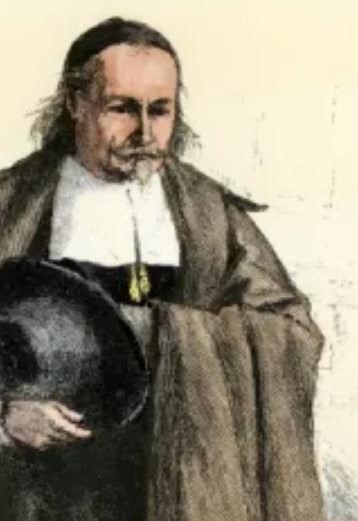
The Old English Puritan was such an one, that honored God above all, and under God gave every one his due. His first care was to serve God, and therein he did not what was good in his own, but in God’s sight, making the word of God the rule of his worship. He highly esteemed order in the House of God: but would not under color of that submit to superstitious rites, which are superfluous, and perish in their use. He reverenced Authority keeping within its sphere: but durst not under pretence of subjection to the higher powers, worship God after the traditions of men. He made conscience of all God’s ordinances, though some he esteemed of more consequence. He was much in prayer; with it he began and closed the day. It is he was much exercised in his closet, family and public assembly. He esteemed that manner of prayer best, whereby the gift of God, expressions were varied according to present wants and occasions; yet did he not account set forms unlawful. Therefore in that circumstance of the church he did not wholly reject the liturgy, but the corruption of it. He esteemed reading of the word an ordinance of God both in private and public but did not account reading to be preaching. The word read he esteemed of more authority, but the word preached of more efficiency. He accounted preaching as necessary now as in the Primitive Church, God’s pleasure being still by the foolishness of preaching to save those that believe. He esteemed the preaching best wherein was most of God, least of man, when vain flourishes of wit and words were declined, and the demonstration of God’s Spirit and power studied: yet could he distinguish between studied plainness and negligent rudeness. He accounted perspicuity the best grace of a preacher: And that method best, which was most helpful to the understanding, affection, and memory. To which ordinarily he esteemed none so conducible as that by doctrine, reason and use. He esteemed those sermons best that came closest to the conscience: yet would he have men’s consciences awakened, not their persons disgraced. He was a man of good spiritual appetite, and could not be contented with one meal a day. An afternoon sermon did relish as well to him as one in the morning. He was not satisfied with prayers without preaching: which if it were wanting at home, he would seek abroad: yet would he not by absence discourage his minister, if faithful, though another might have quicker gifts. A lecture he esteemed, though not necessary, yet a blessing, and would read such an opportunity with some pains and loss. The Lord’s Day he esteemed a divine ordinance, and rest on it necessary, so far as it conduced to holiness. He was very conscientious in observance of that day as the mart day of the soul. He was careful to remember it, to get house, and heart in order for it and when it came, he was studious to improve it. He redeems the morning from superfluous sleep, and watches the whole day over his thoughts and words, not only to restrain them from wickedness, but worldliness. All parts of the day were like holy to him, and his care was continued in it in variety of holy duties: what he heard in public, he repeated in private, to whet it upon himself and family. Lawful recreations he thought this day unseasonable, and unlawful ones much more abominable: yet he knew the liberty God gave him for needful refreshing, which he neither did refuse nor abuse. The sacrament of baptism he received in infancy, which he looked back to in age to answer his engagements, and claim his privileges. The Lord’s Supper he accounted part of his soul’s food: to which he labored to keep an appetite. He esteemed it an ordinance of nearest communion with Christ, and so requiring most exact preparation. His first care was in the examination of himself: yet as an act of office or charity, he had an eye on others.
He endeavored to have the scandalous cast out of communion: but he cast not out himself, because the scandalous were suffered by the negligence of others. He condemned that superstition and vanity of Popish mock-fasts; yet neglected not an occasion to humble his soul by right fasting: He abhorred the popish doctrine of opus operatum in the action. And in practice rested in no performance, but what was done in spirit and truth. He thought God had left a rule in his word for discipline, and that aristocratical by elders, not monarchical by bishops, nor democratical by the people. Right discipline he judged pertaining not to the being, but to the well-being of a church. Therefore he esteemed those churches most pure where government is by elders, yet unchurched not those where it was otherwise. Perfection in churches he thought a thing rather to be desired, than hoped for. And so he expected not a church state without all defects. The corruptions that were in churches he thought his duty to bewail, with endeavors of amendment: yet he would not separate, where he might partake in the worship, and not in the corruption. He put not holiness in churches, as in the temple of the Jews; but counted them convenient like their synagogues. He would have them kept decent, not magnificent: knowing that the gospel requires not outward pomp. His chief music was singing of psalms wherein though he neglected not the melody of the voice, yet he chiefly looked after that of the heart. He disliked such church music as moved sensual delight, and was as hinderance to spiritual enlargements. He accounted subjection to the higher powers to be part of pure religion, as well as to visit the fatherless and widows: yet did he distinguish between authority and lusts of magistrates, to that he submitted, but in these he durst not be a servant of men, being bought with a price. Just laws and commands he willingly obeyed not only for fear but for conscience also; but such as were unjust he refused to observe, choosing rather to obey God than man; yet his refusal was modest and with submission to penalties, unless he could procure indulgence from authority. He was careful in all relations to know, and to duty, and that with singleness of heart as unto Christ. He accounted religion an engagement to duty, that the best Christians should be best husbands, best wives, best parents, best children, best masters, best servants, best magistrates, best subjects, that the doctrine of God might be adorned, not blasphemed. His family he endeavors to make a church, both in regard of persons and exercises, admitting none into it but such as feared God; and laboring that those that were borne in it, might be born again unto God. He blessed his family morning and evening by the word and prayer and took care to perform those ordinances in the best season. He brought up his children in the nurture and admonition of the Lord and commanded his servants to keep the way of the Lord. He set up discipline in his family, as he desired it in the church, not only reproving but restraining vileness in his. He was conscientious of equity as well as piety knowing that unrighteousness is abomination as well as ungodliness. He was cautious in promising, but careful in performing, counting his word no less engagement than his bond. He was a man of tender heart, not only in regard of his own sin, but others misery, not counting mercy arbitrary, but a necessary duty wherein as he prayed for wisdom to direct him, so he studied for cheerfulness and bounty to act. He was sober in the use of things of this life, rather beating down the body, than pampering it, yet he denied not himself the use of God’s blessing, lest he should be unthankful, but avoid excess lest he should be forgetful of the Donor. In his habit he avoided costliness and vanity, neither exceeding his degree in civility, nor declining what suited with Christianity, desiring in all things to express gravity. He own life he accounted a warfare, wherein Christ was his captain, his arms, prayers, and tears. The Cross his banner, and his word, Vincit qui patitur.
He was immovable in all times, so that they who in the midst of many opinions have lost the view of true religion, may return to him and find it.
You who are unconverted, if you do not give heed, know that He will not always speak to you. He will remove either His Word, His Spirit, or you, and then it will be too late. “To-day if ye will hear His voice, harden not your heart” (Ps 95:7-8). You who are converted, know also that if you are not diligent in listening to Him, in continually beseeching Him, in expecting His answer, nor in following His counsel, He will remain silent, hide Himself more and more, and leave you in darkness. The more attentively and persistently you hear His instruction, however, the more He will reveal His secrets to you, and grant deeper insight into that which you may know already. His voice of instruction will be more enduring and efficacious within you. Therefore, “Hear attentively the noise of His voice, and the sound that goeth out of His mouth” (Job 37:2). The Lord Jesus says, “Hearken diligently unto Me, and eat ye that which is good, and let your soul delight itself in fatness” (Isa 55:2); “Blessed is the man that heareth me, watching daily at My gates, waiting at the posts of My doors. For whoso findeth Me findeth life, and shall obtain favour of the Lord” (Prov 8:34-35). All of you who are conscious of your blindness and are desirous for spiritual light, come to this Prophet who can and will instruct you, in order that by His instruction you may make progress.
I just completed reading-recording the most helpful, practical, and thorough treatment on the subject of the Christian and his emotions I have ever read. Baxter’s “On the Government of the Passions” (or emotions) is found in Volume 3 of his Practical Works, a part of his massive Christian Directory. If you’ve never read the Puritans before, this would surely be a good place to start. The English is of course dated, but I’d say its much more accessible than you might think. I would personally encourage anyone who has never read this to do so—and you’ll probably feel like me, that this one should be read maybe once per year. And now I’ve recorded if for you, so now you have no excuse! Begin to heal your disordered feelings and cultivate a godly, stable, and enriching emotional life today as you are stuck in traffic or washing dishes. Your next podcast episode will still be there later. Your venerable fathers await!
And on the subject, let me commend a (more) modern theologian, B. B. Warfield, and his absolutely one-of-a-kind article, “On the Emotional Life of our Lord.” As Baxter is a doctor here treating the illness, Warfield presents the Savior who walked in our footsteps with the full range of our emotions, yet without sin. And the complete WPE Audio library can be accessed by the tab up top.
The following is a sample, where Baxter is treating sinful depression and despair. The PDF is below (print p. 256; pdf p. 281)
* * * *
Direction XIV. ‘Abhor all that tendeth to take down the power and government of reason (that is, all feebleness and cowardioe of mind, and a melancholy, a peevish, passionate disposition): and labour to keep up the authority of reason, and to keep all your passions subject to your wills; which must be done by Christian faith and fortitude.’ If you come once to that childish or distracted pass, as to grieve and say, ‘I cannot help it: I know it is sinful and immoderate, but I cannot choose,’ if you say true, you are out of the reach of counsel, advice, or comfort. You are not to be preached to, nor talked to, nor to be written for: we do not write directions to teach men how to touch the stars or explain the asperities or inequalities of the moon, or the opacous [opaque, or hidden] parts of Saturn, or to govern the orbs, or rule the chariot of the sun. If it be become a natural impossibility to you, doctrine can give you no remedy: but if the impossibility be but moral in the weakness of reason, and want of consideration, it may be doctrine, consideration, and resolution be overcome. You can do more if you will than you think you can. How come you to lose the command of your passions? Did not God make you a rational creature that hath an understanding and will to rule all passions? How come you to have lost the ruling power of reason and will? You would take it for a disparagement to be told that you have lost the use of your reason: And is it not a principal use of it to rule the passions, and all other inferior subject powers? You say you cannot choose but grieve! But if one could give you that creature which you want or desire, then you could choose: You could rejoice, if one could restore you that child, that friend, that estate which you have lost. But God, and Christ, and Heaven it seems, are not enough to cure you: if you must have but them you cannot choose but grieve! And what hearts have you then that are thus affected? Should not those hearts be rather grieved for? God will sometime make you see, that you had more power than you used.
The following quotes are from Andrew Bonar’s (1810-1892) Diary and Letters.
“We must continue in prayer if we are to get an outpouring of the Spirit. Christ says there are some things we shall not get, unless we pray and fast, yes, ‘prayer and fasting.’ We must control the flesh and abstain from whatever hinders direct fellowship with God.”
“It is considered by most these days to be a form of legalism but fasting is a spiritual practice that God honours and is commanded in scripture. Are we desperate enough for God to move in our lives? Sometimes this requires desperate measures that might require some sort of sacrifice.”
“God will not let me get the blessing without asking. Today I am setting my face to fast and pray for enlightenment and refreshing. Until I can get up to the measure of at least two hours in pure prayer every day, I shall not be contented. Meditation and reading besides.”
“How easy it is to give up and not persevere. I believe this is a big fault in my life, having not the desire and earnestness like Jacob to grab God in a sense and not let go until He blesses me.”
“We have not been men of prayer. The spirit of prayer has slumbered among us. The closet has been too little frequented and delighted in. We have allowed business, study or active labor to interfere with our closet-hours. And the feverish atmosphere in which both the church and the nation are enveloped has found its way into our prayer closets.”
“Why is there so little forethought in the laying out of time and employment, so as secure a large portion of each day for prayer? Why is there so much speaking, yet so little prayer? Why Is there so much running to and fro to meetings, conventions, fellowship gatherings and yet so little time for prayer’? Brethren, why so many meetings with our fellow men and so few meetings with God?”
“This is such and important aspect of our relationship to God. To set aside time not to read the bible, not to sing songs. But to just quietly seek God’s face alone in the private.”
“O brother, pray; in spite of Satan, pray; . . . rather neglect friends than not pray; rather fast, and lose breakfast, dinner, tea, and supper – and sleep too – than not pray. And we must not talk about prayer, we must pray in right earnest. The Lord is near. He comes softly while the virgins slumber.”
Just added a recording in two parts of John Witherspoon’s farewell sermon to his congregation in Paisley, Scotland before sailing over to the American colonies to take up the presidency of the College of New Jersey in 1768. It is a profoundly moving and historic sermon, and especially one that ministers of the Gospel would do well to read. I began recording it soon before my transition to a pastorate in New Jersey, which added to its personal significance for me. Here are the opening words of the sermon. And to access more titles from my growing audio library, go here.
“My brethren, these words [Acts 20:26-27] are a part of the apostle Paul’s discourse to the elders of Ephesus, when taking leave of them, under a firm persuasion, or rather a certain knowledge, that he would never again see them in the body. My present situation, of which none of you is ignorant, has determined me to the choice of this passage, as a very proper subject from which I may conclude the exercise of my ministry among you. I had once occasion, on leaving another charge, to have taken a formal farewell of a very affectionate people, but had not courage to attempt it. The circumstances attending the removal, which, if Providence prevent not, seems now to be at hand, are such as do not lessen, but greatly increase the difficulty of speaking from such a subject. And yet, in another view, they seemed to urge it so strongly, and to present such an opportunity of being useful, as I durst not wholly decline. Every Christian ought to be an observer of providence. Nothing will more effectually promote his holiness and comfort. And both a minister and his people ought to improve the aspect of providence, when it hath any thing peculiar in it, to their mutual benefit.
“Let me therefore intreat you to attend to the following discourse, with patience and composure. This request I the rather hope you will comply with, as there is nothing intended that is personal, further than must necessarily arise from the subject itself, or be unavoidably suggested by your own thoughts. I bless God that I have no complaint to make of want of duty or affection upon your side; neither is it any part of my purpose to justify my own conduct, during the time that I have had the honour and happiness of being entrusted with the ministry of the gospel in this place. I shall therefore only fay, that whether I have been able to deliver my own foul by fidelity in duty, and by purity of principle, I am certain, that very much has been laid to the charge of many of yours. Least of all do I intend to endeavour to satisfy you of the motives which have induced me to accept of a call to a distant part of the world, and, in some degree, a different employment in the Church of Christ. For this, I know that an account must be given, in due time, to a much greater Judge, with whose approbation either the applause or censure of men are not worthy to be laid in the balance. The single purpose, therefore, of the following discourse, shall be to give you such a comprehensive view of the truths of the everlasting gospel, of the importance and difficulty of a minister’s work; as may direct you in the choice of another pastor, increase your esteem of such as are faithful, and excite you to guard against every thing that may either discourage them in their work, or prevent their success.”




 West Port Experiment