Feeds:
Posts
Comments

Archive for the ‘Establishments’ Category

“We presume it to be agreed on both sides, that the outcast millions ought to be reclaimed from the ignorance and irreligion of heathenism. The only difference relates to the party at whose expense this great achievement ought to be perfected —whether by private Christians, under the impulse of a religious benevolence; or by an enlightened government under the impulse of a paternal regard for the highest weal of its subject population. We, the advocates of a National Establishment, hold it the duty and wisdom of every state, thus to undertake for the education of the great family under its charge, and to provide the requisite funds for the fulfilment of the enterprise—and this without prejudice, but the contrary, to the liberality of those individuals, who might choose of their own means to build more churches, and maintain more ministers—thus adding to the amount of Christian instruction in the land. Our antagonists on the other hand hold this to be only the fitting work of individuals, whether acting separately or in associated bodies—to be their concern, and theirs exclusively; and that the government of a country should have nothing to do with it” (Chalmers, Works 17:258-59).

Read Full Post »

The following is a six-part series of articles by my father-in-law, Brian Myers, who is a long-standing elder in our Des Moines, Iowa congregation of the Presbyterian Reformed Church on the subject of the Scottish Covenanters, the Reformed Presbyterians, and political dissent. It really is an extremely helpful overview of the subject from the perspective of confessional Presbyterians today who accept the basic legitimacy of the Revolution Church of 1690, who oppose separation and schism, and who allow a legitimate place for voting in the modern democratic political order without the compromise of original Presbyterian principles. Well worth your time.

1. Political Dissent Part One: A Practice Searches For A Doctrine

2. Political Dissent Part Two: The Doctrine Articulated

3. Political Dissent Part Three: A Shift To A New Cause

4. Political Dissent Part Four: Change And Division

5. Political Dissent Part Five: The U.S. Constitution

6. Political Dissent Part Six: Conclusion

Read Full Post »

“If you build it, they will come.” Or . . . will they? Smith said yes; Chalmers said absolutely not. The following is an academic article I wrote for the Historical Journal of the Scottish Reformation Society that explains how Thomas Chalmers (1780-1847) argued for religious church establishments as mission agencies against Adam Smith’s regrettable misapplication of laissez faire to matters of religion.

I also gave a somewhat abbreviated lecture last year at Puritan Reformed Theological Seminary. You can listen to that here:

Someday I hope to be free to return to further academic research on Chalmers’ territorial or ‘parish’ missiology, if not to get back into a Ph.D. program. All God willing!

[image source]

Read Full Post »


Religious establishments are built upon the divine economy, both of nature and of grace: “They are the overflowings of the Nile which have given rise to the irrigations of an artificial husbandry in Egypt, for the distribution of its waters. And there is positively nothing in the doctrine of a sanctifying or fertilizing grace from heaven above, which should discharge us—but the contrary—from what may be termed the irrigations of a spiritual husbandry in the world beneath. It is not enough that there be a descent; there must be a distribution also, or ducts of conveyance, which, by places of worship and through parishes, might carry the blessings of this divine nourishment to all the houses and families of a land” (Thomas Chalmers, Works 17:190-91).

Read Full Post »

You read it right. There is actually a Christian religious establishment within the U.S. of A., and I imagine that it is completely free of whites. So for you R2K-types, assorted Anabaptists, and secular liberals, “put that in your pipe and smoke it!”

Read Full Post »

In this public lecture of the Scottish Reformation Society, I will be discussing Thomas Chalmers’ (1780-1847) defense of church establishments over against Adam Smith’s critique. Chalmers championed such an establishment as a “Great Home Mission.”‘ Yet is this a merely an academic question? Does Chalmers have something to offer is in modern, pluralistic America? You might be surprised. Join us Friday, October 18 at 2:30 p.m. Eastern-U.S. / 7:30 p.m. U.K. Watch through Facebook Live. More information below:

Read Full Post »

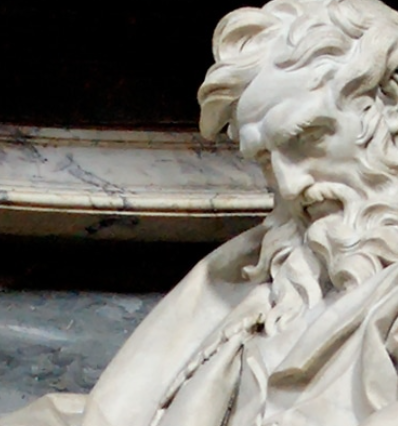
Moses atop the U.S. Supreme Court (source)

Here’s a delightful old volume on Sabbath laws in the United States. As I skim through these, a few short observations. 1. We have collectively forgotten what was once a cultural norm. Hence the fitness of the imperative, “Remember the Sabbath day, to keep it holy.” 2. Freedom of thought, speech, and religion obviously had a big asterisk (at least from our 2024 context). Tolerance was clearly not a free-for-all for every pagan and libertine. 3. This gives the lie to the radical secular-sanitizing narratives of liberals who decry ‘Christian nationalism,’ as well as the hardcore R2K types like Daryl Hart who make strange bedfellows with the same.

A few samples from states in which I’ve lived:

(more…)

Read Full Post »

“10.  He may and ought to remove all false worships, and endure no corrupt preaching, or writing, or meetings for that end, or administrating of corrupted sacraments, or any ordinance other than what is allowed; for, Josiah did cause the people stand to the Covenant that was made, and having removed all idolatrous worship, he made Israel to serve the Lord, that is, he made them abandon corrupt worship, and wait on pure ordinances, as keeping of the sabbaths, offering of sacrifices, etc. and that according to the manner prescribed by the Lord.

“Neither was it a wronging of their liberty, to do so, because:

1.  It was the preservation of their liberty, to keep them from the abominable bondage of these evils.

2.  It was their duty to abstain from these, and to follow the ordinances purely, and the magistrate may well put people to that.

(more…)

Read Full Post »

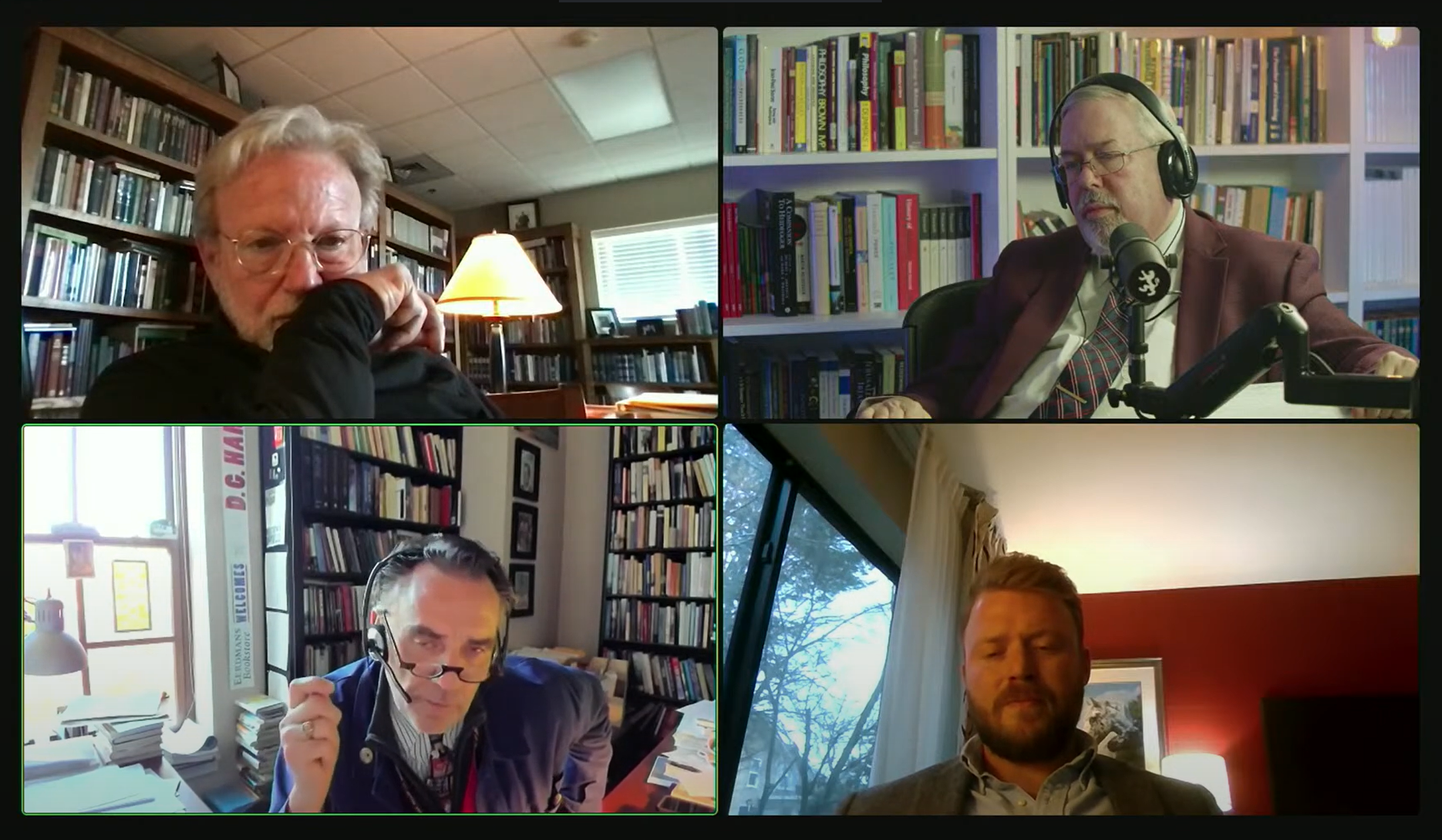
Establishments got some good press last week, at least on a respectable Reformed podcast. Kudos to Christ the Center for welcoming on Timon Cline to a panel discussion last Friday. While I’ve never heard of Timon before, I am sure going to read and listen to more of him. And I’m sure I’m not alone!

The panel discussion focused on Dr. Alan Strange’s newly published book, Empowered Witness: A Panel Discussion on Politics, Culture, and the Spiritual Mission of the Church. Giving feedback and critiques were D. G. Hart, Nick Wilborn, and Timon Cline. I’ve not read Strange’s book, so I’m only commenting on the video. The discussion up to Timon and related rejoinders was interesting enough. But Timon sure rocked the boat pretty hard when he brought up the obvious (at least from a historical Reformed perspective and not an American echo-chamber), that is, what about the spiritual nature in the church in light of the classic, confessionally Reformed and Presbyterian endorsements of religious establishments?

It’s clear that Dr. Strange was a bit flustered, though keeping a gracious demeanor. Sadly, though a respectable and accomplished Reformed scholar whom I otherwise appreciate, Strange’s response to Timon was more or less a rigmarole of informal fallacies and non-answers. Hart, however, just became flummoxed and unhinged. In contrast to Cline’s calm, measured demeanor, and even more importantly, to his much more careful, close, and logical reasoning (they guy’s a practicing lawyer, and it shines), Hart just full-on melted down, notwithstanding a clever little jab about Timon’s alleged tap-dancing like James Cagney. But even that was more amusing than apropos, as it only thinly veiled his chagrin. The young no-namer clearly bested his betters.

(more…)

Read Full Post »

Apologies to everyone who tried to watch the livestream—technical issues. Here is the audio:

Read Full Post »

« Newer Posts - Older Posts »