
Just a few things I’ve read or listened to online that are worth your time. As usual, standard caveats.
“From Nietzsche to Nick Fuentes: The Rise of Nihilism Online”
Posted in Apologetics & Evidences, Education, Holy Trinity: Ontological & Economic, Israel; Calling of & Mission to the Jews, Natural Theology, Postwar Consensus, Nationalism, Race, Kinism, "Race Realism", Social Issues on February 22, 2026| Leave a Comment »
Just a few things I’ve read or listened to online that are worth your time. As usual, standard caveats.
“From Nietzsche to Nick Fuentes: The Rise of Nihilism Online”
Posted in Audio Resources, Care for the Youth, Church of Scotland, Education on August 21, 2025| Leave a Comment »

The following is a passage from David Calderwood’s The Pastor and the Prelate (1628), a short and very punchy treatise contrasting the godly Presbyterian pastor’s mentality over and against the worldly, time-serving prelate (bishop, etc.) of the episcopal Church under the Stuarts. In this chapter, he shows how the “pastor” far better serves the interests of the commonwealth and the good of the social fabric of society, while the “prelate” is a barnacle if not a blight upon the kingdom. One particular area is in their two very different approaches to education—or shall we say, Christian public education! I’m almost done audio-recording the book; present uploads here for your listening pleasure.
* * * *
The PASTOR would have learning to grow, and, considering that schools and colleges are both the seminary of the commonwealth and the Lebanon of God for building the temple desireth earnestly that there might be a school in every congregation, that the people might be more civil, and might more easily learn the grounds of religion; he would have the best engines chosen and provided to the students’ places in universities, the worthiest and best men to the places of teachers, who might faithfully keep the arts and sciences from corruption, and especially the truth of religion, as the holy fire that came down from heaven was kept by the Levites: he desireth the rewards of learning to be given to the worthiest, and, after they have received them, that they be faithful in their places, lest by loitering and laziness they become both unprofitable and unlearned.
The PRELATE is not so desirous of learning in himself as of ignorance in others, that he only may be eminent both in kirk and commonwealth, and all others may render him blind obedience and respect. He devoureth that himself which should entertain particular schools: he filleth the places of students without trial of their engines, to please his friends and suitors, contrary to the will of the masters and the acts of the foundations: he filleth the places of learning not with the most learned, but the wealthiest sort, who, for any vigilance of his, might both corrupt the human sciences and bring strange fire into the house ofGod. If a learned man happen to attain to one of their highest places, which they call the rewards of learning, incontinent, their learning beginneth to decay, and their former gifts to wither away. So that their great places and prelacies either find them or make them unlearned.
Posted in Church of Scotland, Education, John Knox on May 27, 2025| Leave a Comment »
The following is drawn from the First Book of Discipline (1560), adopted by the Church of Scotland during the Reformation period. Education is key!

* * * * *
Seeing that God has determined that his church here in earth shall be taught not by angels but by men; and seeing that men are born ignorant of all godliness; and seeing, also, God now ceases to illuminate men miraculously, suddenly changing them, as that he did his apostles and others in the primitive church: of necessity it is that your honours be most careful for the virtuous education and godly upbringing of the youth of this realm, if either ye now thirst unfeignedly [for] the advancement of Christ’s glory, or yet desire the continuance of his benefits to the generation following. For as the youth must succeed to us, so we ought to be careful that they have the knowledge and erudition to profit and comfort that which ought to be most dear to us-to wit, the church and spouse of the Lord Jesus.
Of necessity therefore we judge it, that every several church have a schoolmaster appointed, such a one as is able, at least, to teach grammar and the Latin tongue, if the town is of any reputation. If it is upland, where the people convene to doctrine but once in the week, then must either the reader or the minister there appointed, take care over the children and youth of the parish, to instruct them in their first rudiments, and especially in the catechism,[10] as we have it now translated in the book of our common order, called the Order of Geneva. And further, we think it expedient that in every notable town, and especially in the town of the superintendent, [there] be erected a college, in which the arts, at least logic and rhetoric, together with the tongues, be read by sufficient masters, for whom honest stipends must be appointed; as also provision for those that are poor, and are not able by themselves, nor by their friends, to be sustained at letters, especially such as come from landward.
(more…)Posted in Commerce & Christianity, Education on March 18, 2025| Leave a Comment »
A really good podcast episode from King’s Hall. They basically said what I had already been thinking (for what that’s worth!). In short, one size does not fit all educationally; and we really ought to rethink adding more vo-tech courses into the standard Christian school/homeschool curriculum.
Posted in Care for the Youth, Education, Family Religion on March 18, 2013| Leave a Comment »
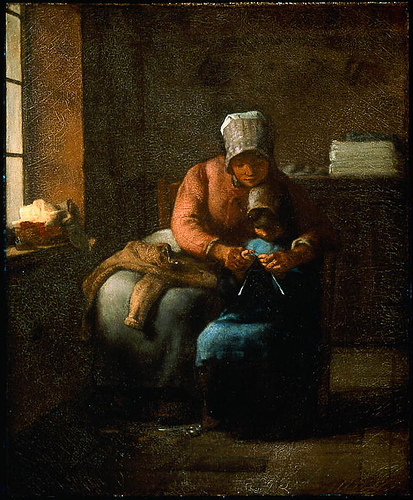 “Keep your children as long as you can in your own house. Domestic feeling is a sacred tie which should be preserved fresh and strong—as long as possible. Often, mothers lose all their influence over sons by their being sent abroad to school. Have as much of your children’s education, therefore, conducted at home, as is practicable. Be assured that no place is so favorable to the good feelings and morals of the young as the family circle, unless the family be destitute of religion and virtue; and for such I do not now write.
“Boarding schools for girls may be useful—but I would advise you to keep your daughters at home, under your own eye, and when they go to school in the day, let them come home by night. You may possibly find a better school by sending them abroad—but the sacrifice is too great, and the risk of evil habits and evil sentiments is not small. And as to your sons, if they must go abroad, place them in the family of some pious man, and under the maternal care of some pious woman, where they may find a substitute for parental attention. While absent, let them return home as frequently as they can, that what I have called the ‘domestic’ feeling may be preserved. If your sons must be put to a trade, or become clerks in a store or counting-house, be very particular as to the character and conscientious fidelity of their master. It is lamentable to see how youth in these circumstances are neglected; and how they are exposed to temptations from which it is hardly possible they can escape without guilt and contamination.”
– Archibald Alexander (1772-1851)
 West Port Experiment