Feeds:
Posts
Comments

Archive for the ‘Culture’ Category

I thought I might share what I’ve been reading recently. In addition to my devotional and theological recordings, here are some books I’ve finished in recent days of personal interest. In our extremely digital age, we need to stay reading. Let us read good books; and if we read books that are not explicitly Christian, let us do so critically with an eye to Scripture as our absolute authority.

First, Nancy R. Pearcey’s The Toxic War on Masculinity: How Christianity Reconciles the Sexes. In a similar fashion to Carl Trueman’s The Rise and Triumph of the Modern Self, Nancy Pearce frames her book of cultural commentary around a “how did we get here?” question. For Trueman, it was “how did we ever get to the place where a man thinks he is a woman?” For Pearcey, it is “how did masculinity ever become ‘toxic?'” She engages in a historical and sociological inquiry that is quite insightful, from a thoughtful, Christian perspective. I especially found her explanation of the shift of men from cottage-industry and family-integrated work patterns to working outside the home in factories, etc., at the Industrial Revolution, and its negative impact on father-son relationships and family life in general. For a kind of teaser, listen to this interview on Issues, etc.

(more…)

Read Full Post »

[I thought I’d blogify a short FB post.]

My daughter, Geneva, and I were discussing this recent chatter (bilge) of kinism among confessional Presbyterian types. She rather perceptively observed that there is a total confusion of race and culture here.

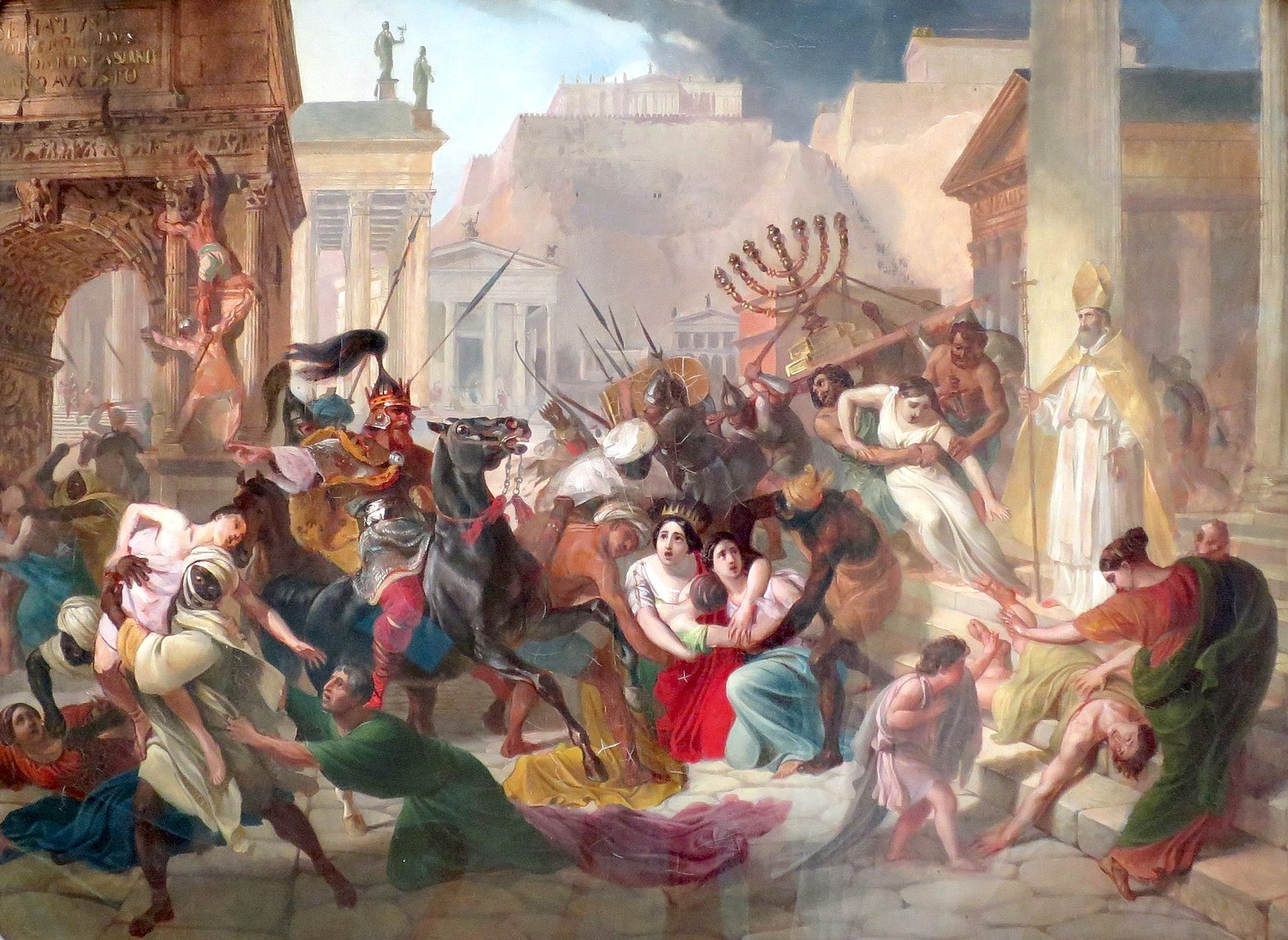
It is claimed that as the swarms of immigrants who pour through our porous border, “our people” are threatened. So does “our people” include Gavin Newsom and Joe Biden? I’m the first to bewail the dreadful non-enforcement of the U.S. border. But I share much more culture with many blacks and Latinos and find them more my people than many a white liberal. What is this supposed pristine white culture that is in jeopardy? And let’s not forget that the Vandals and Visigoths who toppled the Roman Empire became the genesis of Medieval Christendom. The “City of God” is my people.

Read Full Post »

Moses atop the U.S. Supreme Court (source)

Here’s a delightful old volume on Sabbath laws in the United States. As I skim through these, a few short observations. 1. We have collectively forgotten what was once a cultural norm. Hence the fitness of the imperative, “Remember the Sabbath day, to keep it holy.” 2. Freedom of thought, speech, and religion obviously had a big asterisk (at least from our 2024 context). Tolerance was clearly not a free-for-all for every pagan and libertine. 3. This gives the lie to the radical secular-sanitizing narratives of liberals who decry ‘Christian nationalism,’ as well as the hardcore R2K types like Daryl Hart who make strange bedfellows with the same.

A few samples from states in which I’ve lived:

(more…)

Read Full Post »

The following is a transcription, graciously provided by Paul Barth, of my sermon some years back on head coverings for women during public worship. You can listen to the original audio here, which was an installment in a series on the distinctives of the Presbyterian Reformed Church.

Part of the practice that our presbytery has adopted is that in the public worship of God, women have their heads covered. The passage, naturally, that we go to is one that is not exactly easy to understand. I myself for many years read it and struggled with it. But I do think that the position that we have come to as a presbytery is the right one, as far as we think God has given us light. And we would like to set that before you humbly, for your prayerful consideration. We are not holding it forth as a “term of communion” that is a requirement to be a member in good standing of the church. We have not seen fit to go that far, as we also recognize that it is a challenging passage. And many other godly believers in the Lord Jesus Christ have seen things differently than we have. Nevertheless we set forth this position.

Now, the way we are going to go about things is, first, simply to read through the passage in 1 Corinthians 11 with comment, noticing the structure of the argument that the Apostle outlines, and then we will close with answers to several objections. The thesis here is that in the public worship of God women ought to worship God with their heads covered.

* * * * *

Read the rest here. See also an illustrative chart on 1 Cor. 11:6.

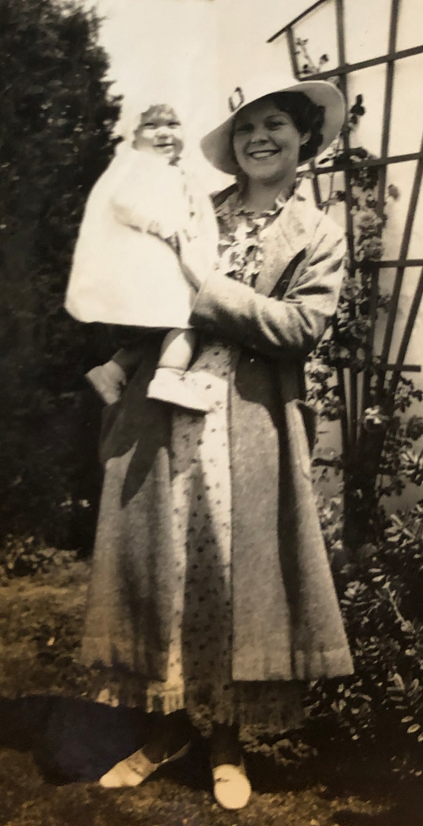
Incidentally, the photo above is my mother as a baby, being held by her mother. Looking lovely in their Sunday best!

Read Full Post »

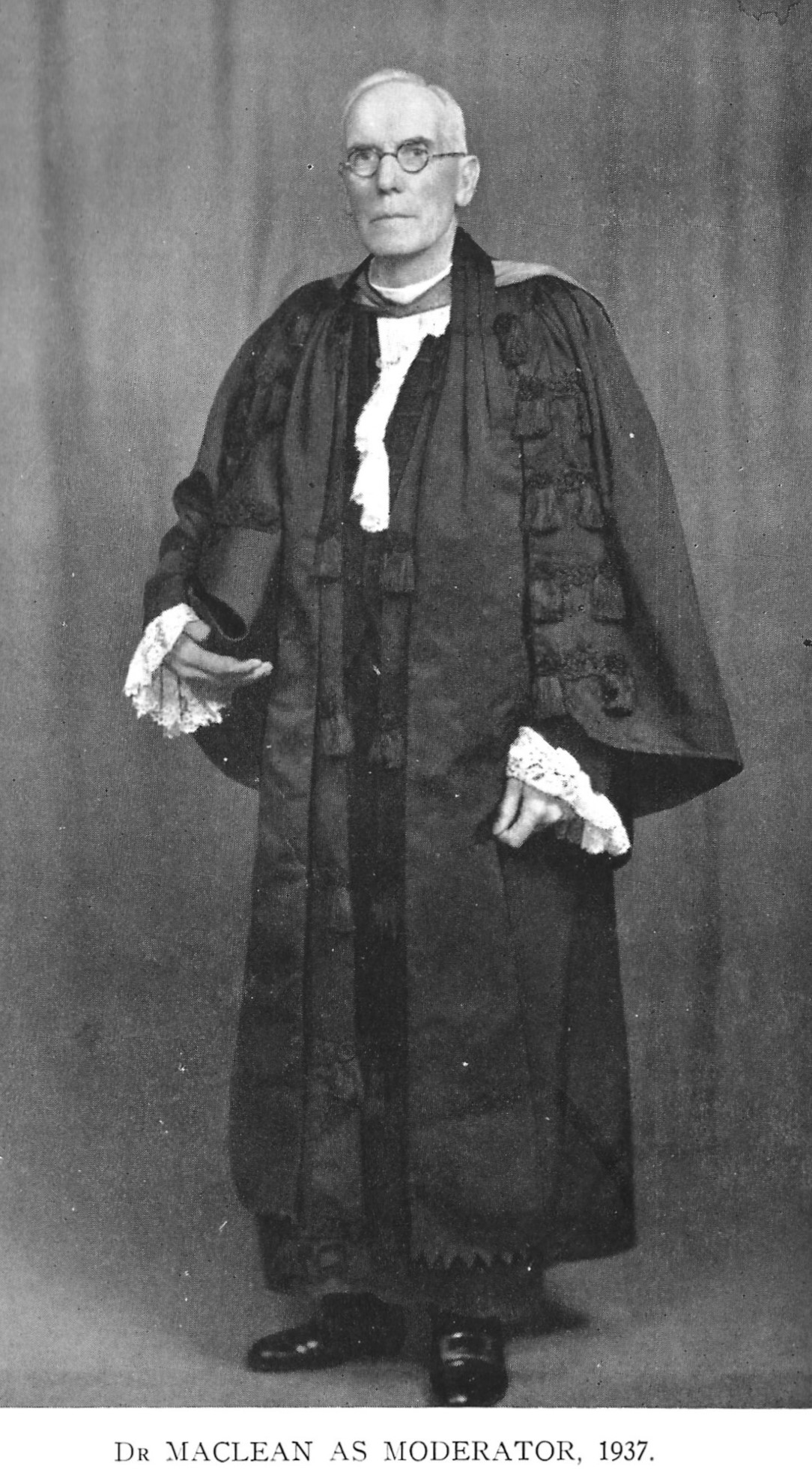
Just recently audio-recorded two articles by Free Church of Scotland Principal Donald Maclean (1869-1943). I have found several of the men of that generation not only profoundly rich theologically and spiritually, but that their English prose is also quite compelling. We are generally below the mark these days, I fear.

The following quote is a sample, from Maclean’s “An Evangelical Ministry.” Here, he answers the question as to the effect of Anglo-American Christianity’s emphasis on the social application of Christian around the turn of the 20th century: “The answer is sadly easy. The flood-tide to the Churches has, alas, not set in. The prejudices and hostility of sinful man have not been softened by the undoubted social amelioration effected. The heedless multitude still pass by. But even more serious is the reaction which the social application of Christianity has had upon the faith itself. Revealed truth itself cannot be affected by human reactions, for the Word of the Lord endures for ever. Nevertheless, the attempts to apply Christianity socially have profoundly affected the meaning which the Christian faith has for the average man and ordinary churchgoer. The emphasis on the social has largely stifled the spiritual nature of the faith. It has obscured the revealed fact that the Christian message was primarily to and for individuals. That the Son of God became man, and that man must be born again, are sufficiently strong reminders to us of the divine estimate of the immortal soul of man. The great doctrines of grace which the Bible so unmistakably connects with the redemption of the human personality, have been so rarely emphasised during more than a generation that, not only have these doctrines become unknown, but the spiritual faculties of hearers have been so weakened by disuse that spiritual discernment has faded away. The Church of to-day is consequently faced with the difficult but necessary task, arising from her former neglect, of re-educating her people in the fundamental elements of the faith which give it the character and distinction of being the Christian faith of revelation. For the business of the Church in its God-given mission is to the individual and through the individual to society. Moreover, the Christian revelation holds out no hope for society except in so far as the men and women who form it are Christian, which for the secular State is a futile and unattainable ideal. It is therefore all the more essential that the truth should be understood that a Christian society can only be fashioned out of and by Christian men and women.”

Special thanks to the Rev. John Keddie for assistance with photo above. More historic audio resources from the heritage of the Free Church of Scotland available here. All Thomas Chalmers titles are separate, here. And visit our entire audio library here.

Read Full Post »

Years back, Prof. John Murray’s letter to a friend on the question of ladies wearing head-coverings in public worship was very helpful to me. In particular, he helped me see that 1 Corinthians 11:6 in particular will make no sense at all on the thesis that Paul wanted women simply to wear long hair in church. But if the long-hair “covering” of v. 15 is all that Paul meant for women being “covered” in vv. 5-6, then what does verse 6 even mean?

To help make this as clear as possible for others, I decided to make a little chart here below. Also feel free to read a transcript of a sermon I gave on the subject here.

* * * * * * *

Interested in receiving occasional notifications of new West Port Experiment posts? Sign up at the top right, under “Email Subscription.”

Read Full Post »

In the following quote, Chalmers explains how a territorial establishment, where parish missions bring the Gospel to every home and hearth, is a double blessing. Even if few souls are saved, the social and moral impact of the Gospel effort leavens the lump:

“And perhaps it will give in your eyes less of a Utopian, and more of an experimental character, to our anticipations of a result so general—if we ask you to consider the just observation of Mr. Wilberforce, on the effect of Christianity even beyond the circle of its own proper and genuine disciples. It elevates the general standard of morals, in every country or neighbourhood which it enters. Even though it should but spiritualize the few, it civilizes the many. Over and above its direct influence on those whom it converts, it has, through the medium of their example and their virtues, a reflex or secondary influence on the families of every little vicinity around them-insomuch that the sanctities and the extraordinary graces of a small number, with the influence of a purifying and preserving salt on the general mass, tell, by a certain overawing power, in restraining the profligacies, and so in raising the character for decency and morals of society at large. This will be remarkably seen in any parish that is under a reclaiming process from the out-fields of heathenism, if the experiment be but well and vigorously conducted. We do not say that the minister will Christianize all; or that he will introduce the worship of God, the voice of psalms, into every family. But the melody that is heard in the habitations of the righteous, will have a certain softening and subduing effect on the inmates of other habitations; and it will be found no romance, but in strict accordance with the realities of human nature, if-by means of his schools and of his other parochial institutes, and (of no small account either) if, by means of his own frequent and various intercourse with the people, and the dignifying effect upon all the householders of their personal acquaintance with the clergyman, and of the personal cognizance which he takes of them and of their families—he mollifies, and to a very great degree, the general aspect of that parochial community over which he presides ; and bequeaths to​ his successors a far blander and better generation, than he had to encounter himself at the outset of his great undertaking” (Works 14:334-335)

Read Full Post »
« Newer Posts