Feeds:
Posts
Comments

Archive for the ‘Church Order & Discipline’ Category

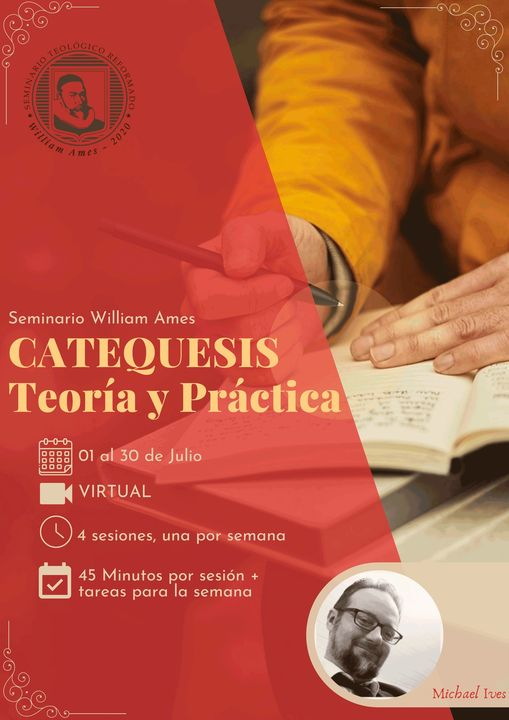
Inscríbase en un curso del seminario sobre la teoría y la práctica de la catequesis. El costo del curso es de sólo $10 USD; y hay vacantes disponibles gratuitamente para un número limitado de quienes deseen auditar el curso.

Más información sobre el curso: https://www.facebook.com/str.iprbolivia.org

Comprensión teológica: Los estudiantes adquirirán una sólida comprensión de los principios básicos y las ventajas de la catequesis como disciplina teológico-pastoral dentro de la Iglesia. Serán capaces de analizar y aplicar estos conceptos fundamentales en su vida y práctica cristiana.

Formación doctrinal: El curso capacitará a los estudiantes para formar a otros en las doctrinas fundamentales de la fe cristiana. Aprenderán a transmitir de manera clara y efectiva estos principios, tanto a adultos convertidos como a menores bautizados, fomentando una comprensión profunda y significativa de la fe.

Profesión de fe personal: Los estudiantes desarrollarán la habilidad de realizar una profesión de fe personal y creíble. A través del conocimiento adquirido en el curso, podrán articular su fe de manera coherente y convincente, fortaleciendo así su relación con Dios y su plena pertenencia a la Iglesia.

Página web del seminario: https://iprbolivia.org/strinfo/
Read Full Post »

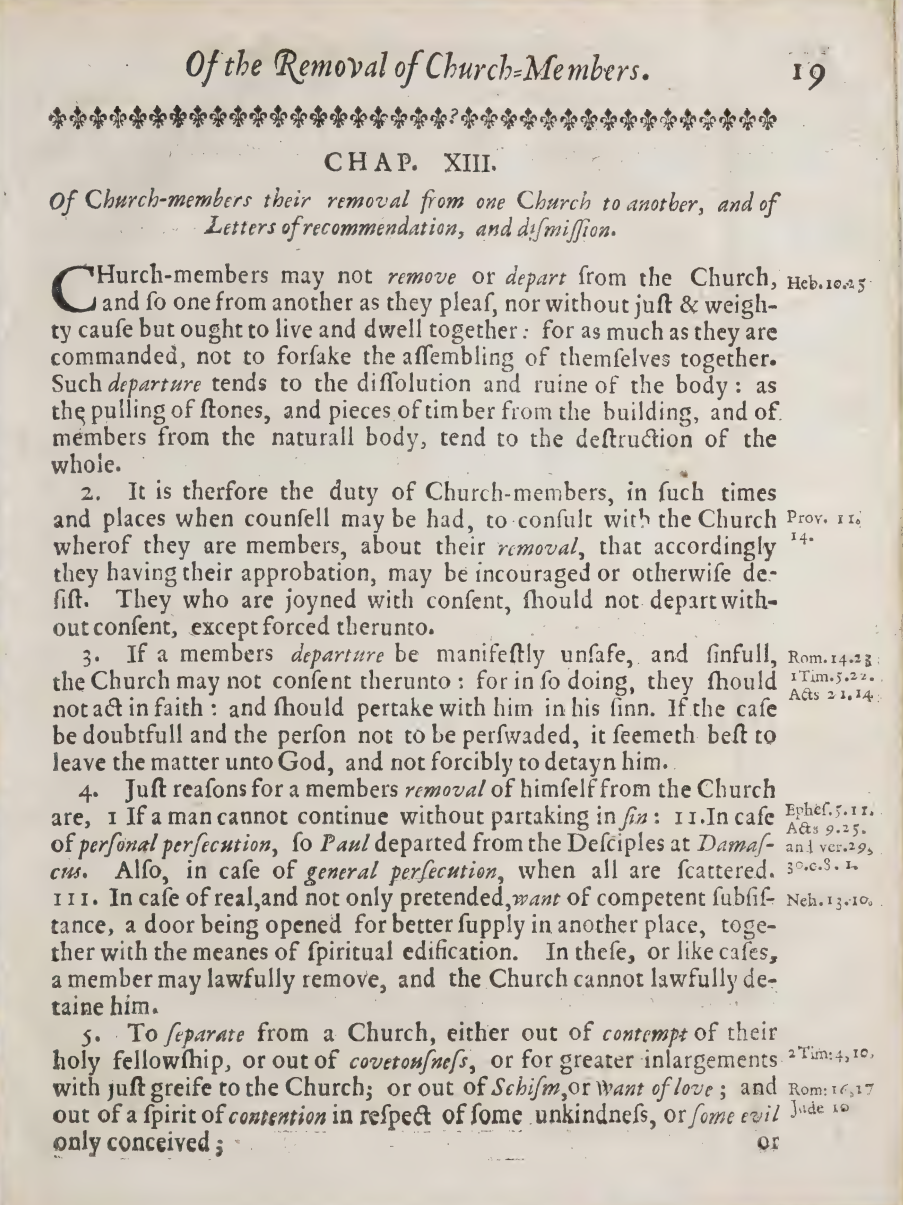
Though I am Presbyterian, I have for years deeply appreciated the great majority of what the New England fathers set forth here in their Cambridge Platform (1649) concerning why, how, and when church members may lawfully leave their local congregation to join another. Would to God we “eat this scroll,” internalizing its biblical principles. And so may we more and more in this individualistic and non-committal age live out the articles of our ancient creed, “I believe an holy catholic church” and “the communion of saints!”

* * * * * * * * *

CHAPTER XIII.

Of church members, their removal from one church to another, and of recommendation and dismission.

1. CHURCH members may not remove or depart from the church, and so one from another as they please, nor without just and weighty cause, but ought to live and dwell together; forasmuch as they are commanded, not to forsake the assembling of themselves together. Such departure tends to the dissolution and ruin of the body, as the pulling of stones and pieces of timber from the building, and of members from the natural body, tend to the destruction of the whole.

Heb. x. 25.

2. It is therefore the duty of church members, in such times and places where counsel may be had, to consult with the church whereof they are members about their removal, that accordingly they having their approbation, may be encouraged, or otherwise desist. They who are joined with consent, should not depart without consent, except forced thereunto.

Prov.xi. 16.

3. If a member’s departure be manifestly unsafe and sinful, the church may not consent thereunto; for in so doing, they should not act in faith, and should partake with him in his sin. If the case be doubtful, and the person not to be persuaded, it seemeth best to leave the matter unto God, and not forcibly to detain him.

Rom. xiv. 23. 1 Tim. v. 22. Acts, xxi. 14.

(more…)

Read Full Post »

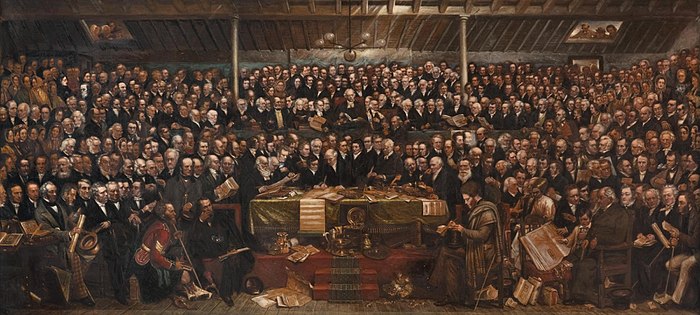
“Our Reformers were men of great wisdom, undaunted courage, irrepressible zeal and strong faith. They relied not on human expediency, vain traditions, or worldly wisdom, but on God’s promised blessing on His own means. They went direct to the Bible for all their plans, and the result was that every rag of rotten Popery, and every relic of the Amorite was purged away, and cast forth as things accursed into the region of eternal detestation, and the pure evangel set up instead. In the language of George Gillespie:

‘The Church of Scotland was blessed with a more glorious and perfect reformation than any of our neighbor Churches. The doctrine, discipline, regiment, and policy established here by ecclesiastical and civil laws, and sworn and subscribed unto by the king’s majesty and [the] several presbyteries and parish churches of the land, as it had the applause of foreign divines; so was it in all points agreeable unto the word; neither could the most rigid Aristarchus of these times challenge any irregularity of the same.'”

* * * *

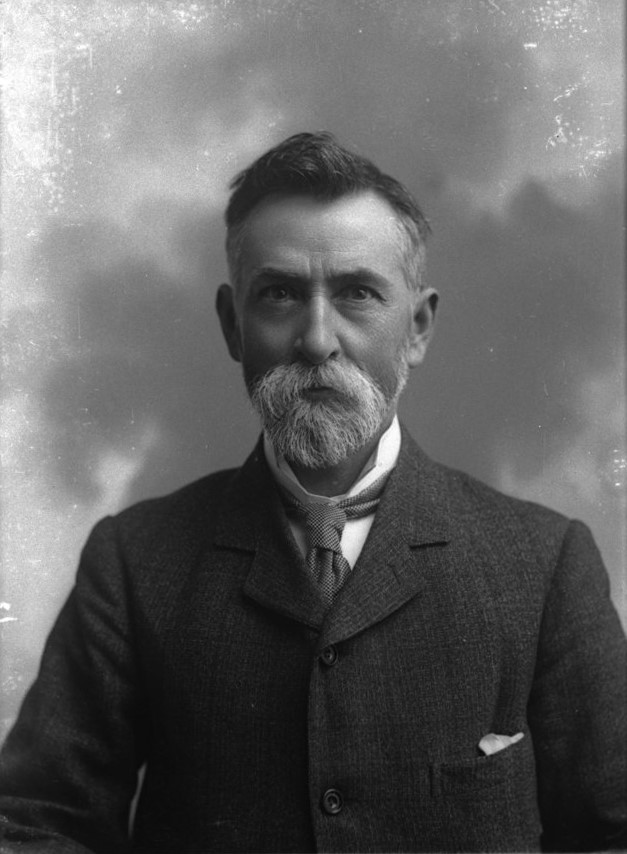
These words are drawn from the opening of David Hay Fleming’s four-part series of articles in the Original Secession Magazine in 1878 entitled, “The Discipline of the Reformation.” I’ve just finished recording the fourth today. Listen to them here. The PDF is below. And check out more titles in my expanding amateur audio library.

I do not suggest that everything our fathers in the Reformation and Second Reformation did or said regarding discipline should be carried over in toto today. Nor do I think Fleming himself thought this. But before we too quickly dismiss what we may judge austere or harsh, let us consider that we are just as much creatures of our time as they were. And if we shouldn’t be slaves to their judgments, yet we still ought to honor father and mother. And listen to them in the first case!

[image source]

Read Full Post »

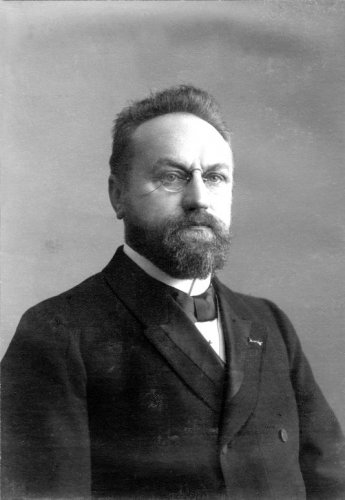
​”The rise of sectarianism that has accompanied the Protestant movement is a dark and negative phenomenon. It manifested itself already at the beginning of the Reformation, but it has never flourished as it has in our age. New church after new church is established. In England there are already more than two hundred sects. In America they are innumerable. The differences have become so many and so insignificant that one cannot keep track of them. There are even voices arguing for a new discipline in theology itself devoted to the comparative history of church confessions. What is even more serious is that this sectarianism leads to the erosion and disappearance of church consciousness. There is no longer an awareness of the difference between the church and a voluntary association. The sense that separation from the church is a sin has all but disappeared. One leaves a church or joins it rather casually. When something or other in a church no longer satisfies us, we look for another without any pangs of conscience. The decisive factor turns out to be our taste. Exercise of discipline thus becomes virtually impossible; it loses its very character. What preacher is left who dares, in good conscience, except perhaps in extremely rare instances, to use the form for excommunication? The worst result of all this is that by breaking the unity of doctrine and the church, Christians do violence to the communion of saints, deprive themselves of the Spirit’s gifts of grace, by which  other believers labor to build up the saints, shut themselves up in their own circle, promote spiritual pride, strengthen Rome, and give the world occasion for scorn and mockery.”

-Herman Bavinck, “The Catholicity of Christianity and the Church”

Read Full Post »

It is very common for professing Christians to draw a distinction between essentials and non-essentials in religion, and to infer that, if any fact or doctrine rightly belongs to the latter class, it must be a matter of very little import­ance, and may in practice be safely set at naught. The great bulk of men take their opinions on trust; they will not undergo the toil of thinking, searching, and reasoning about anything, and one of the most usual expedients adopted to save them the trouble of inquiry, and to turn aside the force of any disagreeable fact, is to meet it by saying, ”The matter is not essential to salvation; therefore we need give ourselves little concern on the subject.”

If the distinction here specified is safe, the inference drawn from it is certainly dangerous. To say that, because a fact of Divine revelation is not essential to salvation, it must of necessity be unimportant, and may or may not be received by us, is to assert a principle, the application of which would make havoc of our Christianity. For, what are the truths essential to salvation? Are they not these: That there is a God; that all men are sinners; that the Son of God died upon the cross to make atonement for the guilty; and that whosoever believes on the Lord Jesus Christ shall be saved? There is good reason for believing that not a few souls arc now in happiness, who in life knew little more than these—the first principles of the oracles of God—the very alphabet of the Christian system; and if so, no other Divine truths can be counted absolutely essential to salvation. But if all the other truths of revelation are unimportant, because they happen to be non-essentials, it follows that the Word of God itself is in the main unimportant; for by far the greatest portion of it is occupied with matters, the knowledge of which, in the case supposed, is not absolutely indispensable to the everlasting happiness of men. Nor does it alter the case, if we regard the number of fundamental truths to be much greater. Let a man once persuade himself that importance attaches only to what he is pleased to call essentials, what­ever their number, and he will, no doubt, shorten his creed and cut away the foundation of many controversies; but he will practically set aside all except a very small part of the Scriptures. If such a principle does not mutilate the Bible, it stigmatizes much of it as trivial. Revelation is all gold for preciousness and purity, but the very touch of such a principle would transmute the most of it into dross.

Read the entire treatise, Which is the Apostolic Church?, by Thomas Witherow, below. Or, listen to an audio version here.

Read Full Post »

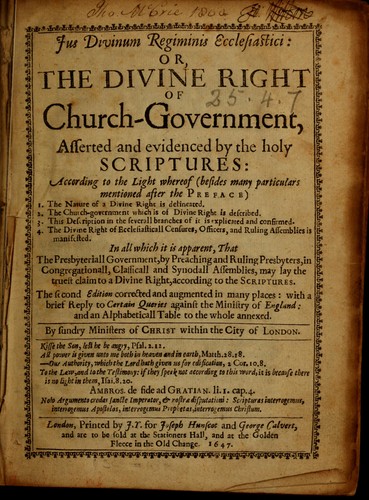
Listen to this classic work of Presbyterian church government written by London divines at the time of the Westminster Assembly. But fair warning: not for the faint of heart! But if you’re a thinker and would like to learn as you go, let me do the reading for you. [Project in progress.]

“Arguably the best biblical defenses of presbyterian ecclesiology and explanations of its polity were produced in the seventeenth century. Among these, none has a reputation better than an English work with the Latin title Jus Divinum Regiminis Ecclesiastici, with the English subtitle The Divine Right of Church Government. In three successive editions, two of which were penned during the time that the Westminster Assembly met, ‘sundry’ London ministers laid out their case. In the first part of the book they demonstrate that there is a government of the church established and revealed by God. In the second part of the book they describe that government, explain its benefits to God’s people, and further develop the biblical and theological justifications for presbyterianism.

Chris Coldwell’s new edition of this classic work will prove a most welcome addition to the Presbyterian minister’s or even church member’s bookshelf. The entire book was addressed to people who were not yet persuaded regarding the merits of presbyterian church government. It hardly needs to be said that such an audience has only expanded in the Christian world and that many people could benefit from understanding a principled form of church government rather than ones where leaders (or members) make it up as they go along. This critical edition is almost a third longer than earlier abridged versions. It offers David Noe’s translations of Latin material and a thoughtful introduction. The edition also evidences Coldwell’s careful editorial work and successful sleuthing, in some cases solving puzzles that have stumped historians for centuries. Editor, subscribers, and publisher are to be thanked for this invaluable scholarly contribution.” 

— Chad Van Dixhoorn, editor of The Minutes and Papers of the Westminster Assembly 1643–1652

Read Full Post »

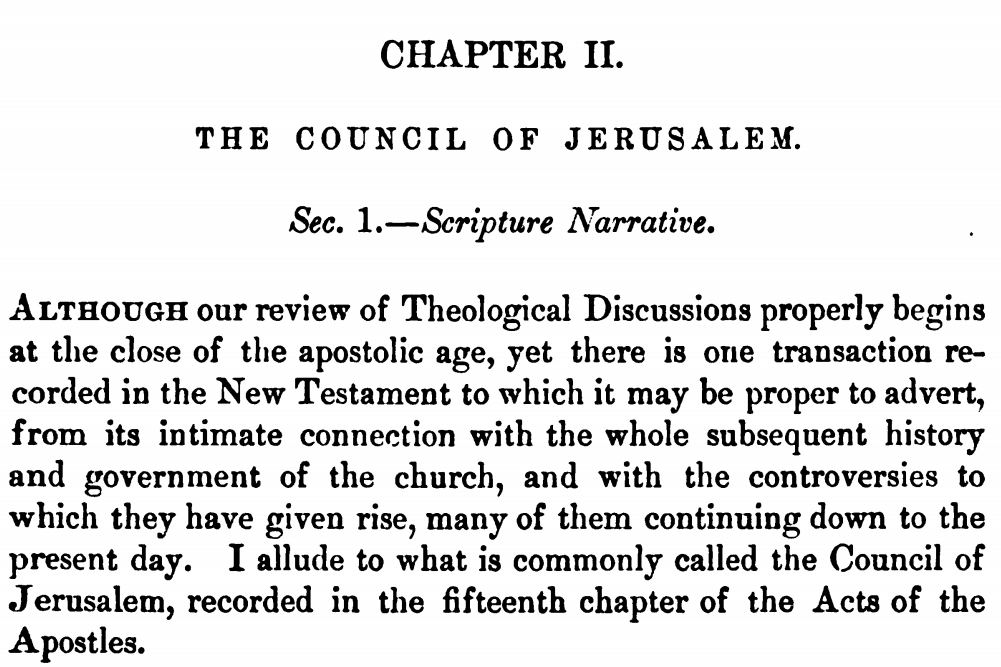
Read the entire chapter from William Cunningham’s Historical Theology: A Review of the Principal Discussions in the Christian Church Since the Apostolic Age (1863). Or, listen to the audio here.

Read Full Post »

The following is a series of messages given to lay out the distinctives of the Presbyterian Reformed Church, a denomination organized through the instrumentality of Professor John Murray in 1965, committed to the principles of historic Scottish Presbyterianism in doctrine, worship, government, and discipline, as enshrined in the original Westminster Confession of Faith (1646).

(Note: The title “Our Testimony” is merely thematic, and does not refer to a supplementary ecclesiastical document besides the Westminster Standards as is done among Reformed Presbyterian brethren.)

Original Series

Our Testimony, Part 1: Psalm Singing

Our Testimony, Part 2: Instruments in Worship

Our Testimony, Part 3: Presbyterianism

Our Testimony, Part 4: Holy Days, True & False

Our Testimony, Part 5: Confessionalism

Our Testimony, Part 6: Experimental Religion

Our Testimony, Part 7: The Free Offer of the Gospel

Our Testimony, Part 8: Religious Establishments #1

Our Testimony, Part 8: Religious Establishments #2

Our Testimony, Part 9: Head Coverings

Our Testimony, Part 10: Liberty of Conscience

Our Testimony, Part 11: Our Communion Practice

Our Testimony, Part 12: Frequency of Communion

Additional Messages

One Table, One Cup, One Bread

Read Full Post »

X. Sess. 13 et ult., April 27, 1708.—Act and Recommendation concerning Ministerial Visitation of Families.

“. . . Seeing, for the faithful discharge of ministers’ work, they ought, besides what is incumbent to them in the public congregation, to take special care and inspection of the particular persons and families under their oversight and charge, in order to which, it hath been the laudable custom of this Church, at least once a year, if the largeness of the parish, bodily inability in the minister, or other such like causes, do not hinder, for ministers to visit all the families in their parish, and oftener, if the parish be small, and they be able to set about it.

“For the more uniform and successful management of which work, although in regard of the different circumstances of some parishes, families, and persons, much of this work, and the management thereof, must be left to the discretion and prudence of ministers in their respective oversights, yet these following advices are offered and overtured as helps in the management thereof, that it may not be done in a slight and overly manner.

(more…)

Read Full Post »

Here is a great article highlighting the lessons we can glean from John Knox and company on missions.

Read Full Post »

« Newer Posts - Older Posts »