Feeds:
Posts
Comments

Archive for the ‘Church of Scotland’ Category

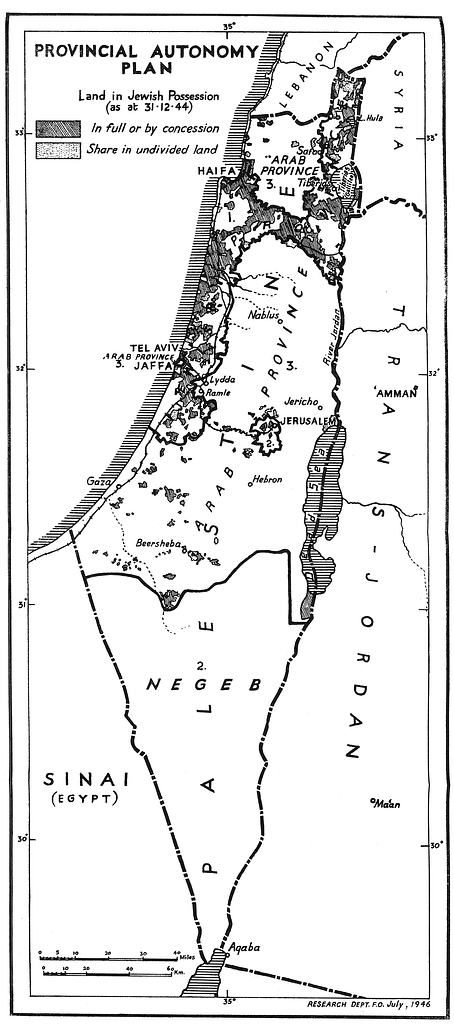
A friend shared this very helpful article about a year ago that explores the actual contours of how Scottish Presbyterians dealt with Jewish questions, the emergence of the nation-state of Israel, and the very problematic other-rail of Dispensationalism in modern evangelicalism. It is very regrettable in the current context that there isn’t much nuance in how our Reformed fathers approached Jewish questions vis-a-vis the errors of J.N. Darby and his ilk. Abstract here:

(more…)

Read Full Post »

WHEN the congregation is to meet for publick worship, the people (having before prepared their hearts thereunto) ought all to come and join therein; not absenting themselves from the publick ordinance through negligence, or upon pretence of private meetings.

Let all enter the assembly, not irreverently, but in a grave and seemly manner, taking their seats or places without adoration, or bowing themselves towards one place or other.

The congregation being assembled, the minister, after solemn calling on them to the worshipping of the great name of God, is to begin with prayer.

“In all reverence and humility acknowledging the incomprehensible greatness and majesty of the Lord, (in whose presence they do then in a special manner appear,) and their own vileness and unworthiness to approach so near him, with their utter inability of themselves to so great a work; and humbly beseeching him for pardon, assistance, and acceptance, in the whole service then to be performed; and for a blessing on that particular portion of his word then to be read: And all in the name and mediation of the Lord Jesus Christ.”

The publick worship being begun, the people are wholly to attend upon it, forbearing to read any thing, except what the minister is then reading or citing; and abstaining much more from all private whisperings, conferences, salutations, or doing reverence to any person present, or coming in; as also from all gazing, sleeping, and other indecent behaviour, which may disturb the minister or people, or hinder themselves or others in the service of God.

If any, through necessity, be hindered from being present at the beginning, they ought not, when they come into the congregation, to betake themselves to their private devotions, but reverently to compose themselves to join with the assembly in that ordinance of God which is then in hand.

Read the rest of the Directory for the Public Worship of God (1645)

Read Full Post »

The way of the Lord on which the Christian walks “hath all the properties of a good way, none so pleasant and plain;—how sweet and pleasant sights all the way! It is an alley of delight,—the way of his commandments; it wants not accommodation in it to refresh the traveller. The most delightful company is here; the Father and the Son, who sought no other company from all eternity, but were abundantly satisfied and rejoiced in one another. This fellowship the Christian hath to solace himself with, and he is admitted to be partaker of that joy. There is nothing that doth disburden the soul so of care and anxiety, nothing doth rid a man of so many perplexities and troubles, as this way. But the way of sin in itself is most laborious, most difficult. It hath infinite by-ways that it leads a man into, and he must turn and return, and run in a circle all the day, all his time, to satisfy the infinite lusts and insatiable desires of sin. O how painful and laborious is it to fulfil the lusts of the flesh! How much service doth it impose! How serious attention! What perplexing cares and tormenting thoughts! How many sorrows and griefs are in every step of this way! Do you not perceive what drudges and slaves sin makes you,—how much labour you have to satisfy your lusts? And you are always to begin, as near that which you seek in the end of your years, as in the beginning. How thorny, how miry is the way of covetousness! Are you not always out of one thorn into another, and cut asunder, or pierced through with many sorrows? 1 Tim. vi. 10; Matt. xiii. 22. Is that a pleasant and easy way, I pray you, that makes all your sorrow and your travail grief, and suffers not your heart to take rest in the night? Eccl. ii. 22, 23. What pains of body! What plotting of mind! What labour and vexation of both must a sinner have as his constant attendance in this way! The way is intricate, deep, unpassable, that leads to that satisfaction you desire to your lusts. Your desires are impotent and impatient, the means to carry you on are weak and lame, nowise accommodated or fit for such a journey, and this puts you always, as it were, on the rack, tormented between the impatience of your lusts, and the impotency of means, and impossibility to fulfil them. Desires and disappointments, hopes and fears, divide your souls between them. Such is the way after the flesh, an endless labyrinth of woes and miseries, of pains and cares, ever while here.”

Hugh Binning, The Sinner’s Sanctuary

Read Full Post »

“He has dressed the whole Supper Himself, covered the table, and there is no more for us to do, but sit down and eat. If we look to this dressed Supper, Christ dressed it all Himself, in the furnace of God’s wrath, and the bread that we here eat is His flesh, which He gave for the life of the world. The wine, which is mingled and drawn is His blood. And, O, sirs, was not our Lord a hot man in making ready this Supper? Not one dish is mis-cooked, all is set before us in the gospel, and Jesus craves no more for all His pains, but only that His friends come to the banquet and eat and be merry; and if ye will come, Christ will pay all the reckoning. When the Israelites were fed with manna, they behoved to go out of the camp, and gather it themselves; but we furnish nothing of this Supper. God be thanked, Christ bears all the expense. Alas! alas! that the unhappy world will not eat heartily, since Christ pays for all. The poor sons of Adam were all sick and at the point of death, and their stomachs were so spoiled with a sour apple that Adam did eat, that they were famished and not able to eat. In comes Jesus and makes a medicinal dinner of His own flesh and blood; lays down Himself and is slain to make physic of His crucified body for us, in order to affect our cure. It is just they die for hunger, and lose their stomach for evermore, who loathe this meat. In the sacrament all things are ready; whatever the soul wants, it shall find at the Table. All the hungry shall find Christ meat and drink.”

Samuel Rutherford

Read Full Post »

“Schism and division among the ministers and members of the church is a grievous malady that we at present labour under. Surely it is a most unnatural distemper that causes the sheep of Christ to bite and devour one another, and the members of Christ to separate as aligns; yea, not only to break up Christian communion, but break out in uncharitable reflections, bitterness, wrath, clamour and evil speaking, one against an other. A strange distemper! that puts those who will delightfully worship God together through a whole eternity, in such a case, that they cannot keep fellowship together here! A distemper that makes men renounce communion with those they once delighted in, and with whom the glorious Head doth still hold communion: that takes many off from the vitals and essentials of religion and employs their time in public controversies about party opinions, the grounds of separation, the characters of preachers, and things which rather tend to be. get alienation of affections, and angry quarrels, than to promote saving knowledge, faith, love, and godly edifying. Oh! how, like a judgment is that spirit of strife and division which God hath poured out upon this land for our former misimprovement of the gospel, and contempt of many glorious evils Christ? and calamities! Ah, what a flood-gate doth it open to many evils and calamities! That is a true doth word it of the apostle, James iii, 16, “Where envying and strife is there is confusion and every evil work.” What a plague must that be that produces every evil work? What a dreadful disease it is, that turns Christian converse into vain janglings, that hinders social prayers, that mars the success of the gospel, weakens the interest of religion, propagates all kind of evil, and exposes the church to the scorn and derision of her enemies! How applicable is that word to us, Lam. ii. 13, “Thy breach is great like the sea, who can heal thee?” Surely none but he that hath the balm of Gilead.”

Whole doctrine catholicity | “Who is she that looketh forth as the morning, fair as the moon, clear as the sun, and terrible as an army with banners” (Song 6:10)?

Read Full Post »

The following is a passage from David Calderwood’s The Pastor and the Prelate (1628), a short and very punchy treatise contrasting the godly Presbyterian pastor’s mentality over and against the worldly, time-serving prelate (bishop, etc.) of the episcopal Church under the Stuarts. In this chapter, he shows how the “pastor” far better serves the interests of the commonwealth and the good of the social fabric of society, while the “prelate” is a barnacle if not a blight upon the kingdom. One particular area is in their two very different approaches to education—or shall we say, Christian public education! I’m almost done audio-recording the book; present uploads here for your listening pleasure.

* * * *

The PASTOR would have learning to grow, and, considering that schools and colleges are both the seminary of the commonwealth and the Lebanon of God for building the temple desireth earnestly that there might be a school in every congregation, that the people might be more civil, and might more easily learn the grounds of religion; he would have the best engines chosen and provided to the students’ places in universities, the worthiest and best men to the places of teachers, who might faithfully keep the arts and sciences from corruption, and especially the truth of religion, as the holy fire that came down from heaven was kept by the Levites: he desireth the rewards of learning to be given to the worthiest, and, after they have received them, that they be faithful in their places, lest by loitering and laziness they become both unprofitable and unlearned.

The PRELATE is not so desirous of learning in himself as of ignorance in others, that he only may be eminent both in kirk and commonwealth, and all others may render him blind obedience and respect. He devoureth that himself which should entertain particular schools: he filleth the places of students without trial of their engines, to please his friends and suitors, contrary to the will of the masters and the acts of the foundations: he filleth the places of learning not with the most learned, but the wealthiest sort, who, for any vigilance of his, might both corrupt the human sciences and bring strange fire into the house ofGod. If a learned man happen to attain to one of their highest places, which they call the rewards of learning, incontinent, their learning beginneth to decay, and their former gifts to wither away. So that their great places and prelacies either find them or make them unlearned.

Read Full Post »

“Let a man examine himself, and so let him eat of that bread and drink of that cup. For he that eateth and drinketh unworthily, eateth and drinketh damnation [judgment] to himself, not discerning the Lord’s body” (1 Cor. 11:27-28).

How should you prepare for the Lord’s Supper? A few thoughts for those who have come to appreciate the theology, practice, and piety of confessional Presbyterianism around the celebration Communion.

First, dedicate time ahead of time. You cannot put things off until Saturday night. Nor can you just let attendance at a midweek preparatory service ‘check the box.’ You need to begin to schedule in some meaningful time, in addition to your regular personal and family seasons of worship, to be one on one with God. Adjust your week’s schedule early, especially if you have more responsibilities surrounding the weekend, such as food preparation, etc. And husbands, be especially mindful of your wives. Help plan ahead and streamline things so that preparation doesn’t get eclipsed, helping the children step up–and even stepping up yourself!

(more…)

Read Full Post »

The following is drawn from the First Book of Discipline (1560), adopted by the Church of Scotland during the Reformation period. Education is key!

* * * * *

The Necessity of Schools

Seeing that God has determined that his church here in earth shall be taught not by angels but by men; and seeing that men are born ignorant of all godliness; and seeing, also, God now ceases to illuminate men miraculously, suddenly changing them, as that he did his apostles and others in the primitive church: of necessity it is that your honours be most careful for the virtuous education and godly upbringing of the youth of this realm, if either ye now thirst unfeignedly [for] the advancement of Christ’s glory, or yet desire the continuance of his benefits to the generation following. For as the youth must succeed to us, so we ought to be careful that they have the knowledge and erudition to profit and comfort that which ought to be most dear to us-to wit, the church and spouse of the Lord Jesus.

Of necessity therefore we judge it, that every several church have a schoolmaster appointed, such a one as is able, at least, to teach grammar and the Latin tongue, if the town is of any reputation. If it is upland, where the people convene to doctrine but once in the week, then must either the reader or the minister there appointed, take care over the children and youth of the parish, to instruct them in their first rudiments, and especially in the catechism,[10] as we have it now translated in the book of our common order, called the Order of Geneva. And further, we think it expedient that in every notable town, and especially in the town of the superintendent, [there] be erected a college, in which the arts, at least logic and rhetoric, together with the tongues, be read by sufficient masters, for whom honest stipends must be appointed; as also provision for those that are poor, and are not able by themselves, nor by their friends, to be sustained at letters, especially such as come from landward.

(more…)

Read Full Post »

Below are a number of documentaries and educational videos about Scottish Presbyterian history, with special focus on the history of the Covenants and the Covenanters.

The following short documentary series by my friend, Matthew Vogan, definitely the best out there from a confessionally sympathetic perspective. Well produced, informative, and challenging to the mind and heart. The trailer is immediately below; watch the entire series here.

Check out also a great series for children, “Stories of the Covenant” by the same. Watch a sample below; view the entire series here.

* * * *

(more…)

Read Full Post »

Joseph Receives His Brothers on their Second Visit to Egypt, a painting by Bacchiacca, ca. 1515.

The following are some passages from Scottish Presbyterian fathers on the Christological theme of our Lord’s mediatorial “stewardship.” Sublime:

“And if there be varieties of temperature of saints, some rough and stiff, some mild, some old men, and some babes, 1 John 2:13. And as there be some lambs, some fainting, weak and swooning tender things, that Christ feeds like kings’ sons, with wine of heaven: so there be others that are under the care of the steward Christ, who are heifers and young bullocks, like Ephraim not well broken yet, Jer.31:18, 19 and there be hoping and waiting saints, that must bear the yoke in their youth, Lam. 3:26, 27 and sundry kinds and sizes of children; every one must have their own portion and diet, 2 Tim.2:15; Mat. 24:45. One man’s meat is another’s poison, and yet they are both the sons of one Father.”

-Samuel Rutherford, Christ’s Dying and Drawing Sinners to Himself

“You have cause to hold up your heart in remembrance and hope of that fair long summer day, for in this night of your life, wherein you are in the body absent from the Lord, Christ’s fair moon-light in his word and sacraments, in prayer, feeling, and holy conference, hath shined upon you to let you see the way to the city. I confess our diet here is but sparing; we get but tastings of our Lord’s comforts; but the cause of that is not because our steward Jesus is a niggard, and narrow-hearted, but because our stomachs are weak, and we are narrow-hearted. But the great feast is coming, and the chambers of them made fair and wide to take in the great Lord Jesus . Come in, then, Lord Jesus to hungry souls gaping for thee!”

-Samuel Rutherford, Letters

(more…)

Read Full Post »

Older Posts »