Feeds:
Posts
Comments

Archive for the ‘Christian Ethics’ Category

I came across this excellent piece by Virgil Walker, entitled “The Moment the Mask Slipped: How Christian Nationalism Opened the Door to Ethnic Hostility.” Extremely well-written, poignant, and so needed in the present hour. I also appreciate how he writes from a position of real sympathy for nationalism, patriotism, and acknowledgment of racial diversity—at least, as defined with confessional “guardrails.” This is hardly another tired liberal, globalist harangue, tone-deaf to real fears and grievances of young white Americans. In doing this, I think he meets those ‘halfway’ who find themselves drawn to the more radical online provocateurs out there.

I haven’t fact-checked this. What little I have done lends credibility to this account. But if anyone has evidence to the contrary, send me a note: michael@reformedparish.com.

* * * * *

There are moments in cultural life when an undercurrent becomes undeniable—when quiet tremors surge into a cultural earthquake.

This week was one of those moments.

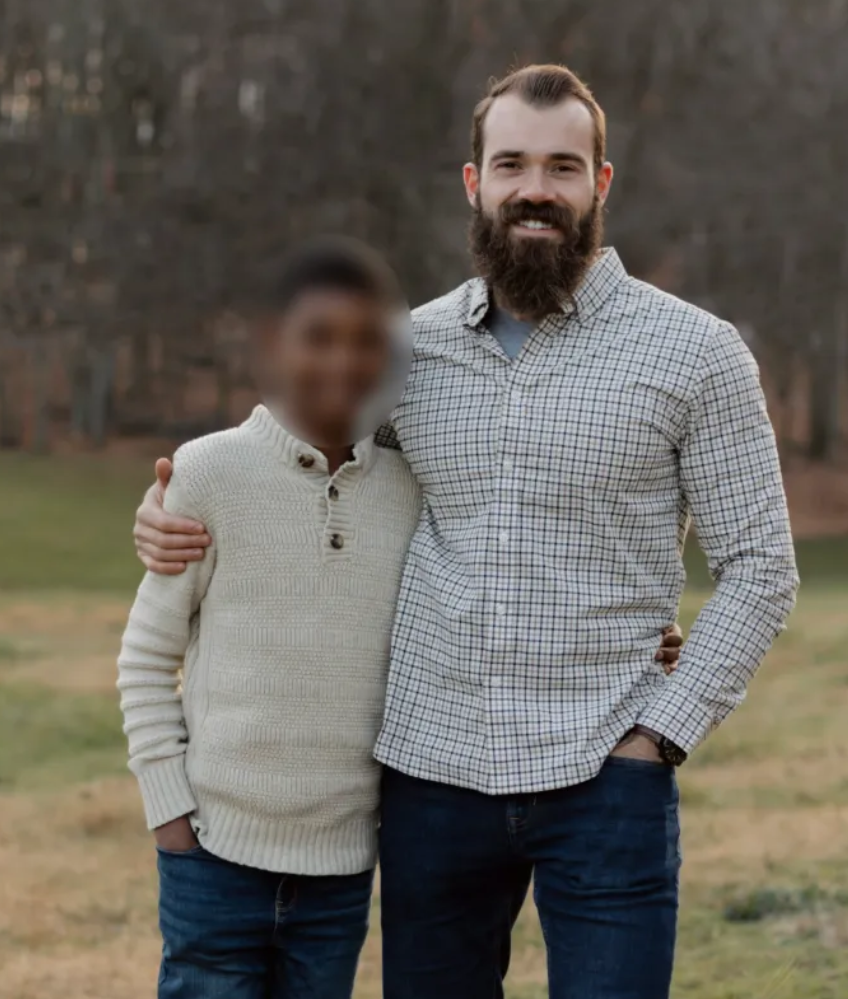
A friend and brother in Christ, Alex Kocman, posted a simple photo of his adopted son turning thirteen. A family milestone. A request for prayer. A moment Christians should instinctively celebrate.

But the post detonated into more than seven million views.
And what followed wasn’t merely disagreement. It wasn’t a debate about prudence or policy.

It was ethnic hostility.
Open. Public. Unmasked.

Comments attacking the child’s dignity.
Insinuations that a white father “wasted his time” on a black boy.
Suggestions that adoption should be limited to “your own kind.”
Warnings that interracial families “destroy the West.”
Accusations that bringing a child into the home from another ethnicity is “inviting a foreigner into your bloodline.”

And here’s what matters:

Many of those voices weren’t from atheists, leftists, or anonymous trolls.
They came from people who openly identify with Christian Nationalism.

Not the entire movement.
But a growing, vocal, unrestrained wing of it.

And that’s exactly what I warned about long before this week.

Read the rest here.

Read Full Post »

Pope Leo apparently just said, “Someone who says ‘I’m against abortion but says I am in favor of the death penalty’ is not really pro-life.”

Thomas Aquinas said, “Therefore if a man be dangerous and infectious to the community, on account of some sin, it is praiseworthy and advantageous that he be killed in order to safeguard the common good . . . .” (ST IIa-IIae, q. 64, a. 2).

And, “It is permissible to kill a criminal if this is necessary for the welfare of the whole community. However, this right belongs only to the one entrusted with the care of the whole community — just as a doctor may cut off an infected limb, since he has been entrusted with the care of the health of the whole body” (ST IIa-IIae, q. 64, a. 3).

Rome the same, “everywhere, always, by all,” right?

Semper protestans!

Read Full Post »

A great little video on marriage with Dr. Joel Beeke:

Read Full Post »

The following is drawn from William Ames’ Marrow of Theology 2.16, “Of Justice and Charity toward our neighbour.” A Reformed orthodox treatment of the ordo amoris or order of love.

* * * * *

13. The order of this charity is this: that God is first and chiefly to be loved by charity, and so he is, as it were, the formal reason for this charity toward our neighbour. Next after God we are bound to love ourselves, namely with that charity which respects true blessedness; for loving God himself with a love of union, we love ourselves immediately with that chief charity which respects our spiritual blessedness. But secondarily, we should love others whom we would have partake of the same good with us. Moreover, others may be deprived of this blessedness without our fault, but we ourselves cannot; and therefore we are more bound to will and to seek this blessedness for ourselves than for others.

14. This is why the love of ourselves has the force of a rule or a measure for the love of others: You shall love your neighbour as yourself.

15. Hence it is never lawful to commit any sin for another’s sake, even though our offence may seem small, and to be a chief good which we should seek for another. For he that wittingly and willingly sins, hates his own soul. Pro 8.36, He that sins against me, offers violence to his own soul. Pro 29.24. He that partakes with a thief, hates himself: he hears cursing and does not declare it.

(more…)

Read Full Post »

The following are quotes are from A Body of Practical Divinity (1838 edition):

“We glorify God, when we give God the glory of all we do. . . . As the silk-worm, when she weaves her curious work, she hides herself under the silk, and is not seen; so when we have done Constantine did use to write the name of Christ over his door, so should we write the name of Christ over our duties; let him wear the garland of praise” (27).

“The word being begun to be preached, hear it with reverence and holy attention. ‘A certain woman, named Lydia, attended unto the things which were spoken of Paul.’ Acts 16: 14. Constantine, the emperor, was noted for his reverent attention to the word” (381).

(more…)

Read Full Post »

And some other resources from CCEF on the same subject here and here.

Read Full Post »

William Ames (1576-1633), a very notable English Puritan and delegate to the famous Synod of Dort, wrote on the ethics of war and warfare in his work on conscience. If you are patient enough to try to read it with its antiquated typeset, by all means—see below. (A big hint: many “f’s” are actually “s’s.”) Or you can listen to me read it to you here!

Read Full Post »