Some videos I’ve watched in the recent month. The ones with Tom Holland are intriguing, at the very least as an illustration of the persuasive power of Christianity on the modern mind short of regeneration. May the Lord grant academics like Holland not just to be “near” the Kingdom or “almost a Christian,” but inside it and altogether Christian!
And as always, “standard caveats.” I read and watch a wide range of things, some of which I do not agree with in whole or in part. I do commend everyone to “test the spirits.” And even the most mature of Christians should ever be vigilant, knowing that our Enemy is ever on the ready to draw us away.
Continuing to follow with interest Timon Cline et al over at American Reformer. Still parsing the field of contemporary “Christian nationalism” and trying to discern the good and the not-so-good; so I share this with some tentativeness, yet general appreciation thus far. Classical Protestant ethics and socio-political ethics fascinates me, so anyone participating in a retrieval has my attention.
Have enjoyed reading this article about John Witherspoon and the colonial Presbyterian iteration of establishmentarianism, contra Kevin DeYoung’s pluralistic take of the American revision of the WCF 23. Looks like others there have also written on the same. I still wonder to what degree Witherspoon may have been influenced by Enlightenment liberalism and what bearing that may have had on how he approached Christian magistracy. But that there is more continuity with the original WCF 23 than not just seems to sync with what I’ve understood about public religion in colonial America. Absolute separation just seems laughable on so many counts. I am also reminded how Dr. William Young opined that the American revision of WCF 23 did not technically contradict the original 1646 statement. While my denomination is the only NAPARC body committed to the original edition, I am at least coming to appreciate that we may have more of a genetic connection with colonial Presbyterian than I had first thought.
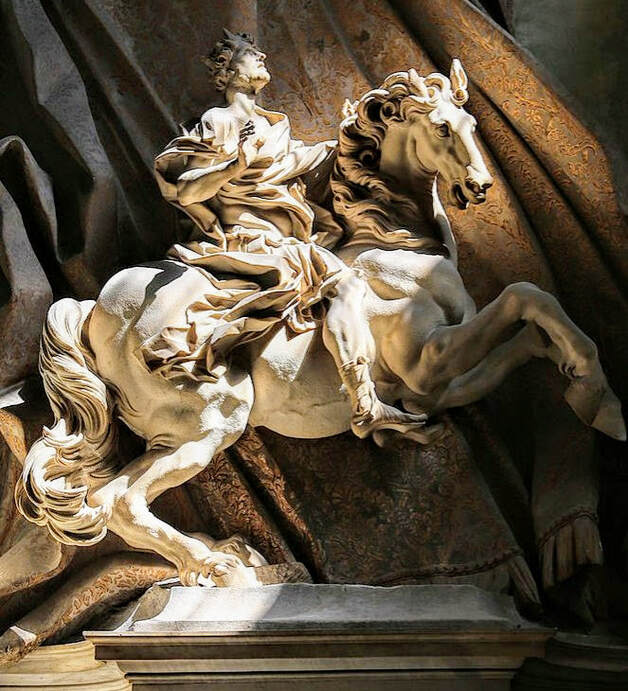
The following are extracts from John Flavel’s Whole Works reflecting his (and Protestantism’s) mainly positive appraisal of Constantine and the shift to Christendom. The first passage doesn’t mention his name in particular, but employs the “earth helping the woman” trope for Christian magistrates supporting the true religion that I first encountered in Thomas Chalmers, but clearly predates him.
* * * * * * * * * * * *
“Secondly, We shall next enquire how Jesus Christ administers this providential kingdom. And here I must take notice of the means by which, and the manner in which he does it. The means, or instruments, he uses in the governing the providential kingdom, (for he is not personally present with its himself), are either angels or men, “the angels are ministering creatures, sent forth by him for the good of them that shall be heirs of salvation,” Heb. 1:14. Luther tells us, they have two offices, superius canere, et inferius vigilare, “to sing above and watch beneath.” These do us many invisible offices of love. They have dear and tender respects and love for the saints. To them, God, as it were, puts forth his children to nurse, and they are tenderly careful of them while they live, and bring them home in their arms to their Father when they die. And as angels, so men are the servants of Providence; yes, bad men as well as good. Cyrus, on that account, is called God’s servant: they fulfill his will, while they are prosecuting their own lusts. “The earth shall help the woman,” Rev. 12:16. But good men delight to serve Providence; they and the angels are fellow servants in one house, and to one master, Rev. 19:10. Yes, there is not a creature in heaven, earth, or hell, but Jesus Christ can providentially use it and serve his ends, and promote his designs by it. But whatever the instrument be Christ uses, of this we may be certain, that his providential working is holy, judicious, sovereign, profound, irresistible, harmonious, and to the saints peculiar” (Works 1:216).
“Chrysostom soon gained by his eloquent sermons the admiration of the people, of the weak Emperor Arcadius, and, at first, even of his wife Eudoxia, with whom he afterwards waged a deadly war. He extended his pastoral care to the Goths who were becoming numerous in Constantinople, had a part of the Bible translated for them, often preached to them himself through an interpreter, and sent missionaries to the Gothic and Scythian tribes on the Danube. He continued to direct by correspondence those missionary operations even during his exile. For a short time he enjoyed the height of power and popularity” (Schaff, The Life and Work of St. John Chrysostom, Nicene and Post-Nicene Fathers 1.9).
“It was perceived by John [Chrysostom] that the Scythians were involved in the Arian net; he therefore devised counter contrivances and discovered a means of winning them over. Appointing presbyters and deacons and readers of the divine oracles who spoke the Scythian tongue, he assigned a church to them, and by their means won many from their error. He used frequently himself to visit it and preach there, using an interpreter who was skilled in both languages, and he got other good speakers to do the same. This was his constant practice in the city, and many of those who had been deceived he rescued by pointing out to them the truth of the apostolic preaching. On learning that some of the Nomads encamped along the Danube were thirsty for salvation, but had none to bring them the stream, John sought out men who were filled with a love of labor like that which had distinguished the apostles, and gave them charge of the work. I have myself seen a letter written by him to Leontius, bishop of Ancyra, in which he described the conversion of the Scythians, and begged that fit men for their instruction might be sent” (Theodoret, Historia Ecclesiastica 5.30–31).
My daughter, Geneva, and I were discussing this recent chatter (bilge) of kinism among confessional Presbyterian types. She rather perceptively observed that there is a total confusion of race and culture here.
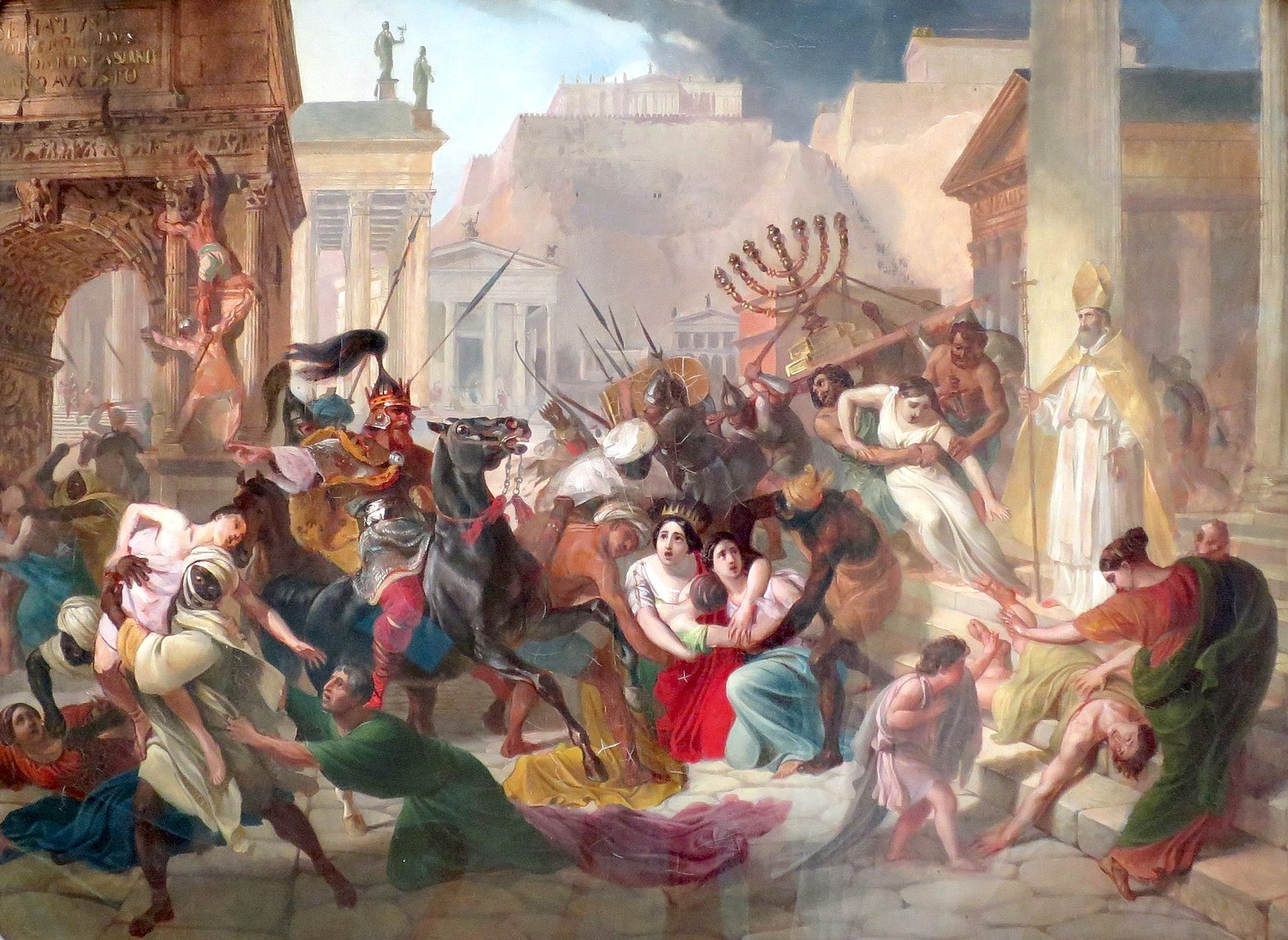
It is claimed that as the swarms of immigrants who pour through our porous border, “our people” are threatened. So does “our people” include Gavin Newsom and Joe Biden? I’m the first to bewail the dreadful non-enforcement of the U.S. border. But I share much more culture with many blacks and Latinos and find them more my people than many a white liberal. What is this supposed pristine white culture that is in jeopardy? And let’s not forget that the Vandals and Visigoths who toppled the Roman Empire became the genesis of Medieval Christendom. The “City of God” is my people.


 West Port Experiment