Feeds:
Posts
Comments

Archive for the ‘Catholicity’ Category

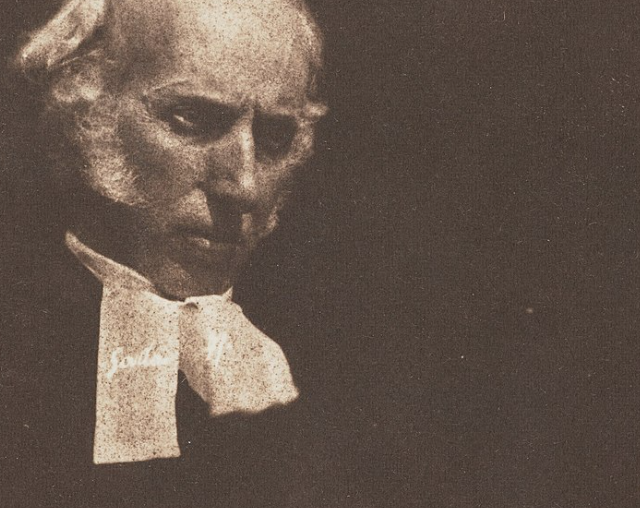
The following passage is taken from Free Church of Scotland minister Robert Gordon’s Christ as Made Known to the Ancient Church (1854), where he treats the command of God to build the tabernacle in the wilderness. “And let them make me a sanctuary; that I may dwell among them” (Ex. 25:8). Gordon sets forth rather poignantly the biblical doctrine as expressed in the Westminster Confession of Faith ch. 25, “On the Church.”

* * * * *
Though it was to the incarnation of Christ, therefore, that the passage before us does more immediately refer, as that which was prefigured by the tabernacle; yet the effect of his manifestation is, that God has always dwelt, and ever will dwell, among men, even in his Church, to whom Christ has promised that by his Spirit he will be with her always, even unto the end of the world. The Church, indeed, is represented as the tabernacle or dwelling, place of the Lord; for it is evidently of the Church at large, as well as of the place which God had chosen from among the tribes of Israel to put his name there, that he thus speaks: “The Lord hath chosen Zion; he hath desired it for his habitation. This is my rest for ever: here will I dwell; for I have desired it. I will abundantly bless her provision: I will satisfy her poor with bread. I will also clothe her priests with salvation: and her saints shall shout aloud for joy.” And again, “Look upon Zion, the city of our solemnities: thine eyes shall see Jerusalem a quiet habitation, a tabernacle that shall not be taken down; not one of the stakes thereof shall ever be removed, neither shall any of the cords thereof be broken. But there the glorious Lord will be unto us a place of broad rivers and streams.”

(more…)


Read Full Post »

A very insightful and theologically rich article on Augustine and the Church. I realize now just how much classic Westminsterian ecclesiology and sacramentology owes to him, especially as he articulated biblical truth over against the Donatists.

[source]

Read Full Post »

Among other sins forbidden under the Second Commandment, according to Thomas Boston, are

“All making of things to be sin or duty which God hath not made so, Matth. xv. 2. Whatever be men’s pretences in this, it is an invading of the power and authority of the great Lawgiver, an accusing of his word of imperfection, and very dangerous, Prov. xxx. 6. This is the great occasion of sad divisions and schisms in the church, while men, not content with plain duty appointed of God, make the conceptions of their own hearts sins and duties, which God never made so, and impose them on others as terms of Christian communion, which superstition can never be sanctified by their fathering it wrongously on the scripture, Prov. xxx. 6.”

Thus legalism and pietism are really at their core but idolatrous manufactures of men, narrowing the Lord’s heritage.

* * * *

Whole doctrine catholicity | “Who is she that looketh forth as the morning, fair as the moon, clear as the sun, and terrible as an army with banners” (Song 6:10)?

Read Full Post »

“The PASTOR procureth the peace of the kirk by following after the things which make for peace; Rom .xiv.; for by the discipline and assemblies of the kirk he preserveth verity, without which there is either no unity, or such unity as is but a conspiracy, and resisteth heresy, the mother of the greatest divisions. So long as our assemblies had their liberty, there could arise no heresy among us; if it had broken out in a parish, a consistory or presbytery would have borne it down; or if it had proceeded further, then the synod, or if it had not been able, the national assembly, would have suppressed it. For the same reason the Kirk of France, which was nearest to ours, hath been free of heresy. In the low countries, if the kirks had enjoyed the liberty of their assemblies, which they wanted for a long time, Arminianism had neither troubled them nor their neighbours. He never can find in his heart to urge or enforce unprofitable and untimely ceremonies upon the kirk, if it were for no other cause but that they have been the apples of contention, and the cause of many schisms, and will choose rather, with Jonah, to redeem the quietness and safety of the kirk with the loss of himself, than for his own particular ends to raise the smallest tempest that may peril her peace; he carrieth himself no otherwise in his ministry than becometh the humble servant of the kirk, and feareth to be affected with Diotrephes’ ambitious humour of aspiring above his brethren, which is a special preservative of peace: he studieth to preserve holiness, without which there can be no sound nor wholesome peace; he is ever at war with that which is contrary to holiness, and sendeth away all scandalous livers with the workers of iniquity, that peace may be upon the Israel of God, Psal. xxv.”

David Calderwood, The Pastor & the Prelate (1628)

Read Full Post »

“Sometimes the church is like a ship in the hands of foolish guides that know not the right art of steerage, at other times spotted with the calumnies of adversaries, or the stains and scandals of its own children; sometimes rent and torn by sad divisions, every party impaling and enclosing the common salvation within their own bounds, unchristianing and unchurching all the rest, and the name of christians challenged to themselves and denied to others, and like a ball of contention carried away by that party that can rustle down others who stand in their way. Though with all this disadvantage it is better to dwell in the courts of the Lord than in the tents of wickedness; yet surely a tender spirit that minded Sion’s welfare will groan under these disorders, and long to come at that great council of souls who with perfect harmony are lauding and praising of God for evermore, ‘that innumerable company of spirits made perfect,’ Heb. 12:23. That general assembly, gathered together out of several countries into one body and one place, who live together sweetly, and serve God without weakness, weariness, and imperfection.”

Thomas Manton

* * * *

Whole doctrine catholicity | “Who is she that looketh forth as the morning, fair as the moon, clear as the sun, and terrible as an army with banners” (Song 6:10)?

Read Full Post »

“In the second place, the principles laid down demonstrate the evil of schism, or of causeless separation in the Church. The visible Church of Christ was intended by Him to be catholic and one; and notwithstanding of the dissemination far and wide throughout the world of the separate societies of professing Christians, it would be one in reality, as comprehending all and uniting all, were it not for the sinful infirmities of its members. That can be no light offence which gives to the one kingdom of God in this world the appearance of a kingdom divided against itself, and liable to fall. It were impossible, indeed, to deny that there may be real and sufficient ground for separation from some particular local Church. That a particular Church may itself apostatize from the faith, or be guilty of imposing upon its members terms of communion, to comply with which would be sin, there cannot be a doubt; and in such a case separation becomes a duty to be discharged, and not an offence to be avoided. But in separating in such circumstances from the Church, the schism lies not with the parties who separate, but with the Church that compels and causes the separation. In thus going forth from it, we maintain, in fact, rather than infringe on the higher unity of the one Church of Christ. But for parties to separate wantonly, and on insufficient grounds, from the communion of the visible Church, is a grave and serious offence against the authority of Christ in His house. To go out from the communion of the visible Church, and to widen its breaches wilfully, and for trivial reasons, is to set ourselves against the desire and design of Christ that His kingdom in this world should be catholic and one. And when schism is aggravated by the permanent abandonment of a Church profession and Church state,—when causeless separation from any one Church of Christ is followed by the disavowal of all,—when the outward profession that makes a man a member of the visible Church is cast off, and all Christian fellowship is disowned, the guilt incurred is of a ruinous kind.” ” The visible Church,” says the Confession of Faith,” is the house and family of God, out of which there is no ordinary possibility of salvation” (emphasis mine).

James Bannerman, The Church of Christ

* * * *

Whole doctrine catholicity | “Who is she that looketh forth as the morning, fair as the moon, clear as the sun, and terrible as an army with banners” (Song 6:10)?

Read Full Post »

“Schism and division among the ministers and members of the church is a grievous malady that we at present labour under. Surely it is a most unnatural distemper that causes the sheep of Christ to bite and devour one another, and the members of Christ to separate as aligns; yea, not only to break up Christian communion, but break out in uncharitable reflections, bitterness, wrath, clamour and evil speaking, one against an other. A strange distemper! that puts those who will delightfully worship God together through a whole eternity, in such a case, that they cannot keep fellowship together here! A distemper that makes men renounce communion with those they once delighted in, and with whom the glorious Head doth still hold communion: that takes many off from the vitals and essentials of religion and employs their time in public controversies about party opinions, the grounds of separation, the characters of preachers, and things which rather tend to be. get alienation of affections, and angry quarrels, than to promote saving knowledge, faith, love, and godly edifying. Oh! how, like a judgment is that spirit of strife and division which God hath poured out upon this land for our former misimprovement of the gospel, and contempt of many glorious evils Christ? and calamities! Ah, what a flood-gate doth it open to many evils and calamities! That is a true doth word it of the apostle, James iii, 16, “Where envying and strife is there is confusion and every evil work.” What a plague must that be that produces every evil work? What a dreadful disease it is, that turns Christian converse into vain janglings, that hinders social prayers, that mars the success of the gospel, weakens the interest of religion, propagates all kind of evil, and exposes the church to the scorn and derision of her enemies! How applicable is that word to us, Lam. ii. 13, “Thy breach is great like the sea, who can heal thee?” Surely none but he that hath the balm of Gilead.”

Whole doctrine catholicity | “Who is she that looketh forth as the morning, fair as the moon, clear as the sun, and terrible as an army with banners” (Song 6:10)?

Read Full Post »

Just recorded three of John Brown’s Letters on the Constitution, Government, and Discipline of the Christian Church: No. 4, “Of the Qualifications of Church Members,” No. 18, “Of Scandals and Discipline,” and No. 19, “Of Church Fellowship and Separation.” Very solid and worth your time. Visit the entire WPE Audio library at the tab up top.

Below I’ve included a few striking passages, followed by the entire PDF. A few observations. First, I note that his letters definitely reflect his Secession outlook vis-a-vis certain corruptions of the Church of Scotland at the time. Second, baptized children may revoke their church standing by falling into heathenish “principles or practices.” Next, it would seem that Brown agrees with me (or better, I with him) that a working knowledge of the Shorter Catechism is more or less the cognitive requisite for an intelligent profession of faith. And while he counts as useful and warranted to utilize confessions and catechisms as a means to ascertaining an intelligent profession of faith, he has great misgivings against overloading the minds and consciences of applicants by the misuse of obliging them to public covenanting. He has said what I have long thought: to require taking vows to historically involved and obscure documents easily calls for implicit faith.

(more…)

Read Full Post »

Thomas Boston preached this sermon in 1708, which I’ve just recorded here. He addressed very tangible forms of division in his day, but its relevance is timeless. Visit the entire WPE Audio library at the tab up above.

Whole doctrine catholicity | “Who is she that looketh forth as the morning, fair as the moon, clear as the sun, and terrible as an army with banners” (Song 6:10)?

Read Full Post »

“Did believers in the Lord Jesus more frequently meet in council, in service, in communion, how soon and entirely would the coldness, the party spirit; the jealousies, the erroneous impressions vanish which now, alas! divide the body of Christ, all whose members are ‘members one of another.’ Knowing each other better, they would love each other more; and loving each other more, there would be more ready concession made to the freedom of judgment and the claims of conscience. The clergy of the various sections of the Christian Church stand too wide apart from each other simply because they do not know each other. And if the shepherds are thus sundered, it is no marvel that the sheep are divided! The Church of Christ is essentially one, why should she not be visibly one? Inseparable from Christ, why should we be separated from each other? With an essential unity of faith, why should we not all unite in excluding uncharitableness? Oh! If the Lord’s people—losing sight of every badge but Christian, and of every name but Christ—were to mingle more frequently, confidingly, and prayerfully together, how much more would they find of assimilation, of sympathy, and affection—how much less to sunder, separate, and censure, and how much more to admire, love, and imitate in each other than they had any conception of.”

–Octavius Winslow

Read Full Post »

Older Posts »