The following is an excerpt from John MacLeod’s Scottish Theology in Relation to Church History, a volume compiled from his lectures at Westminster Seminary in April of 1939. The children of the Scottish Kirk, grateful for their catechism, rise up to call their mother blessed!
* * * *
“From the point of view of modern pedagogy as set forth by so many theorists, who aspire to rank as specialists in the subject, exception has been taken to the wisdom of the method taken by the Reformers in conveying instruction. Their critics hold that it was neither wisdom nor sound educational method for them to frame careful statements of Christian truth to be learned by heart by those under their charge. Now we may take it that our fathers never meant to satisfy themselves when a mere rote acquaintance with such statemetns was attained. They aimed at the opening up of the form of sound words in which they set forth the truth of the Gospel. And when what was committed to memory was opened up by loving teachers at the fireside or in the congregation, the good of having learned the letter of such statements, which were a valuable exhibition of the Faith, came out. And, what was more, those who, in the immature years of childhood, had their minds stored with what at the time when they learned to repeat it might be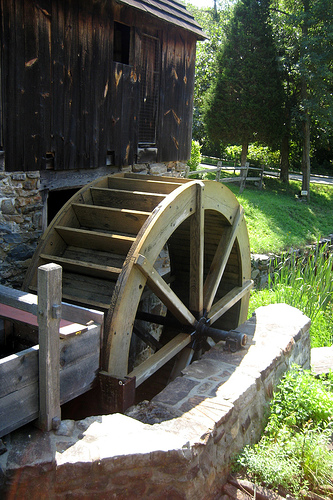 beyond their reach had, in later years, when their powers came to a measure of ripeness, the chance of working in their mind what they once had learned only by rote. They carried with them from childhood a treasure the good of which they had been long familiar. Often have those who have gone through a course in catechistic training in their early days come to discover how useful this teaching is to them now that in later days they have come to feel the power of the truth. They are like a mill with all its mechanism in order that waited for the turning on of the water that it might work. Once the power is brought to bear upon them they learn to their profit the connections in which the various portions of divine truth stand to one another. And thus they start their new life of discipleship with valuable assets to their credit. When bread is thus cast upon the waters it may be found when most needed – in after days. There is this over and above the blessing that often attends at the time the opening up and explanation of these statements to the mind of the child. For those who teach a Catechism are expected to open up its teaching and explain its meaning” (101-102).
 Some time back I was listening to a prominent Reformed speaker. He contended that while our confessions and catechisms were right and useful, yet we tend to freeze-dry them and rigidly force them into cultural contexts where they are not always immediately relevant. He suggested that we need to be sensitive to the questions that the culture is asking in which we minister. Those questions may not be the same as those that have historically been asked.
 duty of catechizing extends to all those who require saving knowledge, those whom we would call the ‘unconverted.’ In such cases, skill and versatility in asking questions is no less necessary than when dealing with covenant children:
 West Port Experiment