Feeds:
Posts
Comments

Archive for the ‘Catechesis’ Category

Chapter 25 – Of Catechizing and of Comforting and Visiting the Sick

YOUTH TO BE INSTRUCTED IN GODLINESS. The Lord enjoined his ancient people to exercise the greatest care that young people, even from infancy, be properly instructed. Moreover, he expressly commanded in his law that they should teach them, and that the mysteries of the sacraments should be explained. Now since it is well known from the writings of the Evangelists and apostles that God has no less concern for the youth of his new people, when he openly testifies and says: “Let the children come to me; for to such belongs the kingdom of heaven” (Mark 10:14), the pastors of the churches act most wisely when they early and carefully caetchize the youth, laying the first grounds of faith, and faithfully teaching the rudiments of our religion by expounding the Ten Commandments, the Apostles’ Creed, the Lord’s Prayer, and the doctrine of the sacraments, with other such principles and chief heads of our religion.  Here let the Church show her faith and diligence in bringing the children to be catechized, desirous and glad to have her children well instructed.

THE VISITATION OF THE SICK. Since men are never exposed to more grievous temptations than when they are harassed by infirmities, are sick and are weakened by diseases of both soul and body, surely it is never more fitting for pastors of churches to watch more carefully for the welfare of their flocks than in such diseases and infirmities. Therefore let them visit the sick soon, and let them be called in good time by the sick, if the circumstance itself would have required it. Let them comfort and confirm them in the true faith, and then arm them against the dangerous suggestions of Satan. They should also hold prayer for the sick in the home and, if need be, prayers should also be made for the sick in the public meeting; and they should see that they happily depart this life. We said above that we do not approve of the popish visitation of the sick with extreme unction because it is absurd and is not approved by canonical Scriptures.

Read Full Post »

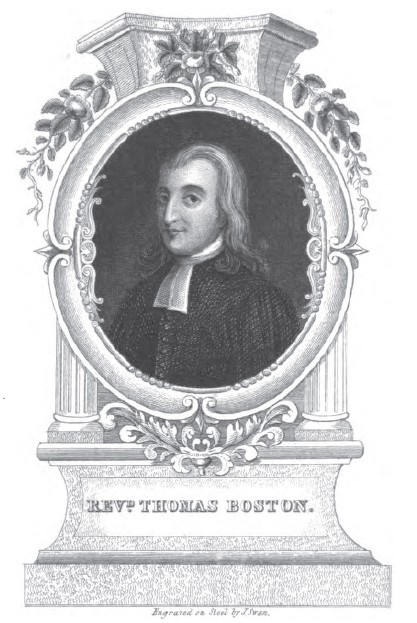
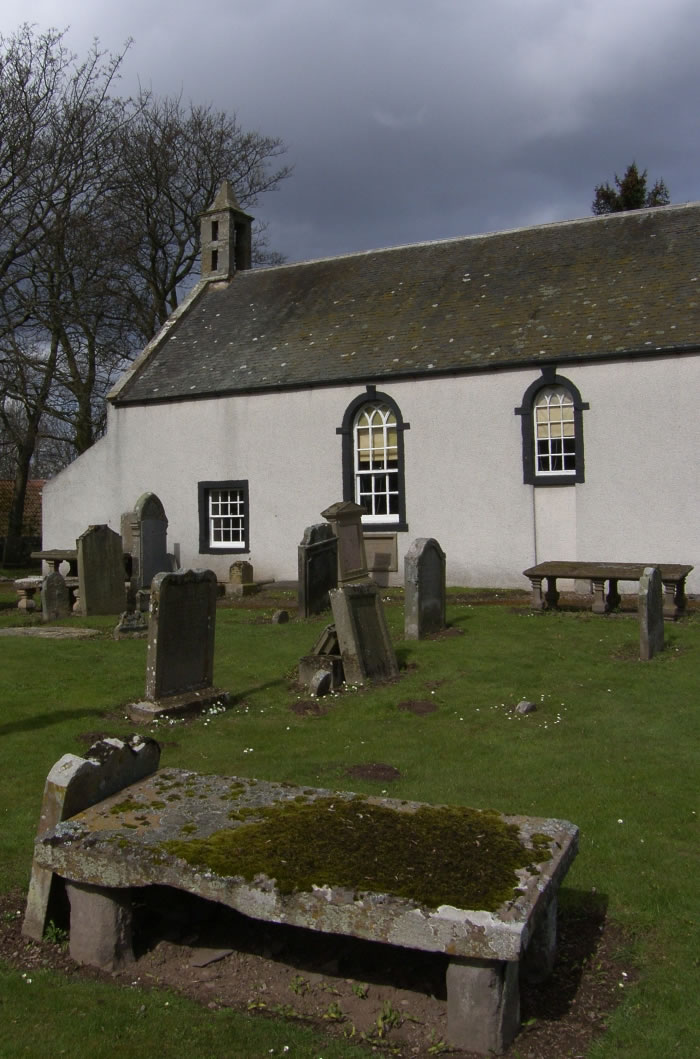
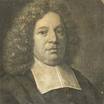
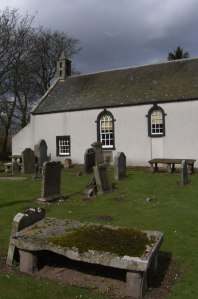
These selections from Boston’s Memoirs come from his ministry in the parish of Ettrick, having accepted that charge in 1707 after his labors in Simprin.  To read the previous post, click here.

Observe the rigors of Boston’s parish ministry.  The strains on his physical constitution in his commitment to parish catechesis remind one of David Brainerd’s hardships with the Delaware Indians.

We also note in these passages a strong sense of ministerial responsibility for the youth.  Several of these ‘diets’ of catechizing were especially for the youth.  Obviously, these were hardly ‘youth groups’ in the modern sense; yet they were gatherings of youth nonetheless.  Also in this pastoral vein we see how Boston’s catechesis often involved practical exhortations.  This wasn’t merely a discipline to inform minds, but to change hearts.

In one instance, Boston distinctly notes that he adjusted his particular practice by observing the useful method of a colleague in the ministry.  This ministerial duty ever needs reassessment and retooling for maximal usefulness, and we should not be ashamed to observe how others do it better than we.

Last, these diets of catechizing appear to have been set for places outside the parish kirk, as in his manse, or throughout the parish at suitable gathering-places.  The man of God, though ‘settled within his bounds,’ is ever itinerant.  He must “preach publicly and from house to house.”   The churchly calling of catechesis engages the mind; but it is worth noting that it first goes to the minds that need engaging!

* * * *

1709

“Twice a-year I catechised the parish, having no diet but one at the church; and once a-year I visited their families. The former was usually begun about the end of October, the latter about the end of April, or beginning of May. This was my ordinary course all along, save that of some few late years; through my wife’s extraordinary sickness in the spring, and the decay of my own strength, I have not got the visiting of families performed as before; neither have I hope of it any more, though I still aim at something of that kind yearly.  But I bless God, that when I had ability, I was helped to lay it out that way. Thus the winter-season was the time wherein I did most of my work in the parish.  Meanwhile that also was the season wherein I did most in my closet.  Being twelve miles distant from the presbytery-seat, I attended it not in the winter; but when I attended it, I ordinarily went away and returned the same day, being loath to lose two or three days on it” (227-28).

1729

“On Tuesday, 11th November, I finished the memorial concerning personal and family fasting, begun 5th August, and consisting of 149 pages; and laid it before the Lord for acceptance through Jesus Christ, and a blessing thereupon.  Having had a severe cold these two days, and been in a sweat Tuesday’s night, I was in doubt whether to keep the appointed diet of catechising at Calcrabank on the Wednesday, or not: but I was determined to go, through one’s coming to me that morning from the parish of Yarrow, with a line, to get his child baptized there.  So I went off, and my cold was no worse.  But being come home again that night, I was seized with a severe fit of the gravel; in which, vomiting up at length some blackish matter, I was deeply impressed with a view of the loathsomeness of this body, bearing the image of the earthly first Adam, and what it must come to by means of death, till it be reduced to dust again; out of which it is to be reformed after the image of the heavenly man, the second Adam, far removed for ever from that corrupt constitution.  The day had been very bad; and this season I have not hitherto had one good day on that occasion; but I have had a sort of pleasure and satisfaction in enduring these little hardships, for my Master and His work’s sake” (426-27).

3rd January.—I found myself fail mightily, in managing the diets of catechising this season; especially the two last diets. Considering the loss sustained by the people, through my inability to speak, and apply to it, it has been very heavy to me.  But this day the Lord pitied, and helped me therein again; the which is the more welcome, that now I begin this work also, the catechising of those of the younger sort, which is carried on together with the public catechising of the parish; not daring as yet to ease myself of that accessory piece of my work” (435-36).

1730

“It had been my manner of a long time, besides the catechising of the parish already mentioned, to have diets of catechising those of the younger sort; and they met in the kirk, sometimes in my house. What time I began this course I do not remember, but I think it has been early; for I learnt it from Mr. Charles Gordon minister of Askirk, whom I found so employed in his house when I went at a time to visit him; and he died, at furthest, in the year 1710.  By this course I got several young people of both sexes, trained up to a good measure of knowledge; some of whom unto this day are solid and knowing Christians; but it suffered some interruptions. The time I found fittest for it on their part, was from January to the beginning of May; and the whole youth of the parish, who were disposed, and had access to wait on, came together and were welcome; as were others also, who inclined to hear. The intimation of their first diet was made from the pulpit; and then from time to time I set and signified to them their next diet; ordinarily they met once a fourtnight; sometimes once in 20 days only; sometimes once a week, as occasion required.  Several times these meetings were closed with warm exhortation to practical religion; the which I sometime used also in the diets of catechising the parish.  Thus this accessory work fell in the time when ordinarily I was weakest; and of late years that my frailty notably increased, I wanted not inclination sometimes to give it over.  But that I might the better comport with it, I did some years ago cause make a portable iron grate, in which I had a fire in the kirk to sit at on these occasions.  This year, after I had once and again found my self fail mightily in diets for the parish, thro’ bodily inability, the time of beginning this course was returning; and the Lord pitied and helped again in another diet for the parish.  So I was encouraged, and began that course again at the ordinary time, not daring as yet to give it over; and thro’ the mercy of God, it was got carried on as usual.

“This winter I did more at night than of a long time before, having ordinarily written something, for a while, after six o’clock at night. And on the 17th day of March, I had completed the catechising of the parish for the second time. This was a kind disposal of Providence: for about the same time began a breach of my health, which made me the heaviest spring I had ever felt” (437-38).

1731

“It pleased the Lord, for my trial, to make the entry on that work difficult; and the progress has, through several interruptions, been small to the writing hereof; whatever He minds to do about it. On the morrow I catechised at Buccleugh. I continued about three hours in that exercise without my spirits or strength failing ; which is the more sweet, and filled my heart with thankfulness, that in the morning I had, in consideration of my weakness, prayed for pity. I was minded next day to have spent some time in prayer for assistance in the aforesaid work: but being called out of my bed that night, to visit a sick person supposed to be a-dying, I found in the morning that I was not in case for it. So I applied myself to writing of letters, which at length I was obliged also to give over. Being seized with a colic, I behoved to take my bed that night: and rising on the Friday, I was obliged to take bed again, where I was fixed till the Saturday morning. Then the pain was removed; but I was unfit for business, save writing of letters. But though the Lord’s day was so bad that few came to church, it was a good day to me, in delivering the Lord’s word, weak and crazy as I was. I admired the indulgence of my gracious Master, in timing the trial so as not to mar my public work; and in that I had as much studied the preceding week, as fully served that Sabbath; so that as I was not able, so I did not need to study. He is a good Master to me: and I kissed that rod” (452).

“On Tuesday, 1st December, I spent some time in prayer, with fasting, chiefly for two causes—1. The work on the Hebrew text; and therein I found a pinching sense of need carrying me to that exercise, my hope of success being in the Lord alone; 2. For my younger son, who the day before had gone towards Edinburgh, to attend the school of divinity only. I reviewed my whole life, made confession, and renewed my acceptance of the covenant, as that time twelve months before: and then I made my supplications on these accounts and some other, particularly the affair at London as to the MSS., concerning which there was still a deep silence; and came away with hope, rolling them on the Lord. On the morrow I catechised at Calcrabank. I had a singular satisfaction in that little journey, while I observed how Providence taught me, trying me and delivering me. It being a very hard frost, it was dangerous riding; and my horses being both away to Edinburgh with my son, I was mounted on a beast that would hardly stir under me. At the second ford above Hopehouse, I was quite stopped, the ford being frozen, and the horse not able to make the brae where the water was open.  Alighting therefore to take the hillside, the bridle slipped off, and my horse got away homeward, and I pursued.  But kind Providence had a well-inclined lad coming down on the other side of the water, who coming through to my help, catched unhorse, led him on, and I walked on foot once and again.  Coming home, I was cast under night; but the lad staid, and came along with me, and led my horse again, while I walked with some uneasiness, by means of my boots, and otherwise.  Meanwhile it was some moonlight: and I had a pleasure in that trial, beholding how my God took notice of me, even in my little matters, and how He balanced them for me!  ‘Lord, what is man that Thou takest knowledge of him! or the son of man, that Thou makest account of him!’ After all, having only got two falls, perfectly harmless, while walking, I came home safe; and found not the least ill effect of this adventure, save some weariness in my legs on the morrow after.  And I got what I could spend of the next day, on the beloved study: but still Providence kept me on trial, as to time for it” (453).

“But holy Providence had designed a piece of new trial for me that I was not aware of.  When I came home from Maxton, I was told one had advised blistering, and putting a pea in my leg, for my sore knee, and had left me a blistering plaister for that end.  The plaister was applied on the Friday’s night.  On the Sabbath night the pea was put in; and thro’ pain I slept none that night.  The pain continuing, the pea was taken out again on the Tuesday; and on the morrow after, I had my first diet of catechising at Chapplehop. After taking away the pea the hole quickly closed; but there grew upon it a hard callous substance and withal the leg was inflamed. This created thoughts of heart, and the sore knee was forgotten.  On the Monday after I wrote for a surgeon; who returned me answer, he apprehended no danger and sent me an ointment to apply.  Expecting some benefit by the ointment, I wrote him on the morrow, he needed not to come till again called.  But finding the ointment quite ineffectual as to the substance aforesaid, I was sorry I had prevented his coming up…”

“Meanwhile the catechising of the parish was interrupted  and I sat in the pulpit when I preached.  But my soul rejoiced to observe, how my gracious God and Master still timed the hardest of my trouble, so as it had been designed, that it should be over before the Sabbath should return.  But with this trouble of my leg there was joined sore eyes, occasioned by my sitting in the bed writing, in the sunlight, on the Tuesday before the surgeon came: so that, for some nights, leg and eyes were to be buckled up with their respective applications at once; and one night a dint of the toothache joined them.  The callous substance was got away by degrees; and on 7th November at night, what day I had intimated from the pulpit a diet of catechising again, the sore appeared closed” (469-71).

“I observed the diet of catechising aforesaid: but the day was so very bad that few came to it, being at Kirkhop.  The week following I had another at Buccleugh. Considering my frailty, the season, and how Providence had, by the above-mentioned trial, carried me by the time I thought fittest for the utmost corners of the parish, I laid the matter before the Lord.  And rising early in the morning, I got a good seasonable day, visited a sick man by the way, had a full allowance of strength for my work of catechising, without failing of my spirits, and got home again with daylight. This merciful conduct of Providence was big in my eyes” (472).

Read Full Post »

Thomas Boston wrote in his Memoirs that he had been troubled ever since beginning his ministry “with several things in our constitution [of the Church of Scotland], especially the manner of admitting to the Lord’s table, and planting of churches” (338).  Being appointed to a committee to review such matters, Boston took the opportunity to redress these problems.  The following is an overture from his pen, entitled “Of admission to the Lord’s table, and debarring from it,” contained as an appendix in his Memoirs (487-88).  While there are many contextual disconnects with our modern circumstances, there is much instructive here for the admission of new members and the role of catechesis in the process. 

* * * *

” 1. Admission to the Lord’s table, and debarring from it, being acts of church discipline and government in a particular congregation, belong to the session of the congregation, and are not to be exercised by any minister or elder by themselves, nor any society of ministers and elders in an extrajudicial capacity.

” 2. Besides the ordinary examinations in parishes, it is meet there be diets of examination particularly for non-communicants, and specially those of the younger sort. And for this end, that once every year at least, especially before the celebration of the sacrament of the Lord’s Supper in the congregation, ministers, from the pulpit, exhort and stir up non-communicants to serious godliness, and the use of the means of knowledge; and intimate to all such as desire to be prepared to partake of that ordinance, that they give in their names to him, and wait on the diets of catechising to be appointed for such.

” 3. The names of such as offer themselves to be instructed, in order to their being admitted to the Lord’s table, are to be kept in a roll separate from that of the whole congregation, and to be brought into the session, and read before them; that it may be recommended to all the brethren, to have a particular eye on the inrolled, each especially on those of his own district; to excite, admonish, and exhort them, to a walk becoming the gospel, and the high privilege they are aspiring to.

“4. When a non-communicant removes out of one parish into another, it were fit that he produce sufficient testimonials from the place of his former abode, before he be inrolled amongst those who have offered themselves to be instructed as above said, in the congregation to which he comes.

” 5. When one desires to be admitted to the Lord’s table, he is in due time to intimate his desire to the session, that they may maturely consider of it. But it were fit, that the party should in the first place acquaint the minister with his purpose; who, if he finds he has not made a competent proficiency by the pains taken on him, in the examinations of non-communicants, or otherwise, may advise him yet to forbear for a time.

” 6. The session entering on this affair, a strict inquiry is to be made among the members, particularly at the elder or elders of the district which the party belongs to, concerning his life and conversation; whether he be guilty of any scandal; owns, submits to, and ordinarily attends, the ordinances of Christ, the public and private worship of God; if he be of a pious and sober deportment, and reputed to be a worshipper of God in secret; and if he be the head of a family, whether he worships God in his family.

” 7. If nothing be found on that part to hinder his admission to the Lord’s table, the session convening, on a set day, in the place of public worship, and the doors being open, that all the communicants, and those who have offered themselves to he instructed as ahove said, may have access, if they please, he is, in face of session, to give proof of his knowledge of the principles of the Christian religion, and particularly of the nature, use, and ends, of the ordinance of the supper, by making a confession of his faith, either in the way of a continued discourse, or by answering questions thereupon proposed by the minister.

” 8. And here special consideration is to be had of some who are known to be serious, and willing to learn, yet are weak ; namely, that the questions be proposed to them, so as they may be answered by Yes, or No; or that the truth and error be both laid before them, and they asked, which of them they believe.

” 9. The trial being ended, the session is to judge, whether the party be endowed with competent knowledge of the principles of the Christian religion, or not.

” 10. And if they be satisfied in this also, the party is to be put explicitly to consent to the covenant (whereof he desires the seal), to be the Lord’s, live unto Him, and serve Him all the days of his life, by answering expressly the following (or the like) questions. 1. Do you believe the doctrine of the Shorter Catechism of this church, so far as you understand the same, to be the true doctrine agreeable to the holy Scriptures, and resolve, through grace, to live and die in the profession of the same?  2. Do you consent to take God in Christ to be your God, the Father to be your Father, the Son to be your Saviour, and the Holy Ghost to be your Sanctifier; and that, renouncing the devil, the world, and the flesh, you be the Lord’s for ever?  3. Do you consent to receive Christ as He is offered in the gospel, for your prophet, priest, and king; giving up yourself to Him, to be led and guided by His word and Spirit; looking for salvation only through the obedience and death of Jesus Christ, who was crucified without the gates of Jerusalem; promising, in His strength, to endeavour to lead a holy life, to forsake every known sin, and to comply with every known duty?  4. Lastly, Do you promise to subject yourself to exhortation, admonition, and rebuke, and the discipline of the church, in case (which God forbid) you fall into any scandalous sin?

“11. The party having professed, consented, and promised, as above said, is to be admitted to the table of the Lord, by a sentence of the session; which is to be recorded in their register, and an extract thereof allowed to be given him, when called for.

” 12. It were fit, that the names of all those who, from time to time, are admitted to the Lord’s table, be inrolled in a bound book belonging to the session.

“13. And how often soever that ordinance be administered in a congregation, the aforesaid roll of those who have at any time been admitted, is always to be read over distinctly, in presence of the session, some competent time before, and the members required to declare, if they know anything against the life and conversation of any of them.

“14. If anything be objected, the session is to order private exhortation or admonition, or sist the accused before them, as they shall see ground, and find the matter to require. And this is to be so managed, as that the accused be sisted, as aforesaid, on report concerning the private exhortation or admonition made, before the time of the administration of the sacrament. But those who have once been orderly admitted, are at no time after to be denied the privilege they were admitted to, except in the case of scandal; for which they are to be debarred by the session, till they have removed the scandal, according to the discipline of the church: Which done, they are restored to their former church-state.”

Read Full Post »

The following is an extract from Thomas Chalmers’ personal notes from house to house visitation in his first parish of Kilmany, with comment by William Hanna, editor of his Memoirs.  It well illustrates the Scottish Reformed legacy of the spiritual care for all souls in a defined geographical area as well as the ancillary custom of pastoral journaling.  Here are the records of a true, spiritual physician.

A few specifics are worthy of special observation.  Note the frequent entreaties raised to the Lord, reminiscent of another memoir-writer, Nehemiah (Neh. 2:4, 5:19, 6:14, 13:14, 22, 29, 31).  Here is one devoting himself to the ministry of the Word and prayer.  We also should observe amid these ‘ejaculatory’ prayers an ongoing willingness to engage in self-criticism.  May we too rest in the Lord for whom we labor, and not in our labors themselves.  They are fraught with sin and imperfection – “but our sufficiency is of God” (2 Cor. 3:5). 

Last, Hanna includes an overview of Chalmers’ practice of catechizing, in the well-worn path of the old Church of Scotland practice.  His method was evidently very gracious and dialogical, yet it clearly honored the high authority vested in the Catechism’s biblical doctrines.  Firmness in confession, pastoral finesse in method.  A delicate balance indeed!

* * * *

“February 15th, 1813.—Visited Mrs. B., who is unwell, and prayed. Let me preach Christ in all simplicity, and let me have a peculiar eye on others. I spoke of looking unto Jesus, and deriving thence all our delight and confidence. O God, give me wisdom and truth in this household part of my duty.

“February 21st.— Visited at Dalyell Lodge. They are in great affliction for the death of a child. I prayed with them. O God, make me wise and faithful, and withal affectionate in my management of these cases. I fear that something of the sternness of systematic orthodoxy adheres to me. Let me give up all sternness; but let me never give up the only name by which men can be saved, or the necessity of forsaking all to follow Him, whether as a Saviour or a Prince.

“March 25th.— Visited a young man in consumption. The call not very pleasant; but this is of no consequence. O my God, direct me how to do him good.

“June 2d.— Mr. ——— sent for me in prospect of death; a man of profligate and profane habits, who resents my calling him an unworthy sinner, and who spoke in loud and confident strains of his faith in Christ, and that it would save him. O God, give me wisdom in these matters to declare the whole of thy counsel for the salvation of men. I represented to him the necessity of being born again, of being humbled under a sense of his sins, of repenting and turning from them. O may I turn it to my own case. If faith in Christ is so unsuitable from his mouth because he still loves sin, and is unhumbled because of it, should not the conviction be forced upon me that I labor myself under the same unsuitableness?  O my God, give me a walk suitable to my profession, and may the power of Christ rest upon me.

“June 4th.— Visited Mr  — again. Found him worse, but displeased at my method of administering to his spiritual wants. He said that it was most unfortunate that he had sent for me; talked of my having inspired him with gloomy images, but seemed quite determined to buoy himself up in Antinomian security.  He did not ask me to pray. I said a little to him, and told him that I should be ready to attend him whenever he sent for me.

“August 9th.— Miss — under religious concern. O my God, send her help from Thy sanctuary. Give me wisdom for these cases.  Let me not heal the wound slightly; and, oh, while I administer comfort in Christ, may it be a comfort according to godliness. She complains of the prevalence of sin. Let me not abate her sense of its sinful ness. Let me preach Christ in all his entireness, as one that came to atone for the guilt of sin, and to redeem from its power.

“March 15th, 1814.—Poor Mr. Bonthron, I think, is dying. I saw him and prayed, after a good deal of false delicacy. O my God, give me to be pure of his blood, and to bear with effect upon his conscience. Work faith in him with power. I have little to record in the way of encouragement. He does not seem alarmed himself about the state of his health, and, I fear, has not a sufficient alarm upon more serious grounds. It is a difficult and heavy task for me; and when I think of my having to give an account of the souls committed to me, well may I say, Who is sufficient for these things?

“March 23d.— Mr. Bonthron was able to be out, and drank tea with us. I broke the subject of eternity with him. He acquiesces; you carry his assent always along with you, but you feel as if you have no point of resistance, and are making no impression.

“March 26th and 27th.—Prayed each of these days with Mr. Bonthron. I did not feel that any thing like deep or saving impression was made. O Lord, enable me to be faithful!

“April 3d.—Visited John Bonthron.

“April 5th.—Prayed with more enlargement with John than usual. I see no agitations of remorse; but should this prevent me from preaching Christ in His freeness?  The whole truth is the way to prevent abuses.

“April 6th and 8th Visited Mr. Bonthron.

“April 9th.—Read and commented on a passage of the Bible to John. This I find a very practicable, and I trust effectual way of bringing home the truth to him.”

The next day was the Sabbath, on the morning of which a message was brought to the manse that Mr. Bonthron was worse. While the people were assembling for worship, Mr. Chalmers went to see him once more, and, surrounded by as many as the room could admit, he prayed fervently at his bedside. No trace remains of another visit.

Prosecuting his earlier practice of visiting and examining in alternate years, he commenced a visitation of his parish in 1813, which, instead of being finished in a fortnight, was spread over the whole year. As many families as could conveniently be assembled in one apartment were in the first instance visited in their own dwellings, where, without any religious exercise, a free and cordial conversation, longer or shorter as the case required, informed him as to the condition of the different households. When they afterward met together, he read the Scriptures, prayed, and exhorted, making at times the most familiar remarks, using very simple yet memorable illustrations. “I have a very lively recollection,” says Mr. Robert Edie, “of the intense earnestness of his addresses on occasions of visitation in my father’s house, when he would unconsciously move forward on his chair to the very margin of it, in his anxiety to impart to the family and servants the impressions of eternal things that so filled his own soul.”  “It would take a great book,” said he, beginning his address to one of these household congregations, “to contain the names of all the individuals that have ever lived, from the days of Adam down to the present hour; but there is one name that takes in the whole of them—that name is sinner: and here is a message from God to every one that bears that name, ‘ The blood of Jesus Christ, His Son, cleanseth us from all sin.'” Wishing to tell them what kind of faith God would have them to cherish, and what kind of fear, and how it was that, instead of hindering each other, the right fear and the right faith worked into each other’s hands, he said, “It is just as if you threw out a rope to a drowning man. Faith is the hold he takes of it. It is fear which makes him grasp it with all his might; and the greater his fear, the firmer his hold.” Again, to illustrate what the Spirit did with the Word: “This book, the Bible, is like a wide and beautiful landscape, seen afar off, dim and confused; but a good telescope will bring it near, and spread out all its rocks, and trees, and flowers, and verdant fields, and winding rivers at one’s very feet. That telescope is the Spirit’s teaching.”

His own records of one or two of these visitations are instructive:

“February 18th, 1813.—Visited at Bogtown, Hawkhill, and East Kinneir. No distinct observation of any of them being impressed with what I said. At East Kinneir I gave intimation that if any labored under difficulties, or were anxious for advice upon spiritual and divine subjects, I am at all times in readiness to help them. Neglected this intimation at Hawkhill, but let me observe this ever after.

” February 16th.— A diet of visitation at ——. Had intimate conversation only with M. W. I thought the —— a little impressed with my exhortation about family worship, and the care of watching over the souls of their children. I should like to understand if —— has family worship.

” March 9th.—Visited at ——. The children present.  This I think highly proper, and let me study a suitable and impressive address to them in all time coming.

“May 19th.— Visited at ——. I am not sure if Icould perceive any thing like salutary impression among them; but I do not know, and perhaps I am too apt to be discouraged. C. S. and J. P. the most promising. O my God, give me to grow in the knowledge and observation of the fruits of the Spirit and of His work upon the hearts of sinners.

“August 9th—Visited at Hill Cairney. Resigned myself to the suggestions of the moment, at least did not adhere to the plan of discourse that I had hitherto adopted. I perceived an influence to go along with it. O my God, may this influence increase more and more. I commit the success to Thee.”

In examining his parish he divided it into districts, arranging it so that the inhabitants of each district could be accommodated in some neighboring barn or school-house. On the preceding Sabbath all were summoned to attend, when it was frequently announced that the lecture then delivered would form the subject of remark and catechizing. Generally, however, the Shorter Catechism was used as the basis of the examination. Old and young, male and female, were required to stand up in their turn, and not only to give the answer as it stood in the Catechism, but to show, by their replies to other questions, whether they fully understood that answer. What in many hands might have been a formidable operation, was made light by the manner of the examiner. When no reply was given, he hastened to take all the blame upon himself. “I am sure,” he would say, “I have been most unfortunate in putting the question in that particular way,” and then would change its form.  He was never satisfied till an answer of some kind or other was obtained. The attendance on these examinations was universal, and the interest taken in them very great. They informed the minister of the amount of religious knowledge possessed by his people, and he could often use them as convenient opportunities of exposing any bad practice which had been introduced, or was prevailing in any particular part of his parish. Examining thus at a farm-house, one of the plowmen was called up. The question in order was, “Which is the eighth commandment?”  ” But what is stealing?”  “Taking what belongs to another, and using it as if it were your own.”  “Would it be stealing, then, in you to take your master’s oats or hay, contrary to his orders, and give it to his horses?”  This was one of the many ways in which he sought to instill into the minds of his people a high sense of justice and truth, even in the minutest transactions of life.

“November 30, 1813.—Examined at . J. W. and B. T. both in tears.  The former came out to me agitated and under impression.

“January 20th, 1814.—Had a day of examination, and felt more of the presence and unction of the Spirit than usual.

“January 21st—Had a day of examination. Made a simple commitment of myself to God in Christ before entering into the house.

“February 8th—Examined, and have to bless God for force and freeness.  D. absenting himself from all ordinances. Let me be fearless at least in my general address, and give me prudence and resolution, O Lord, in the business of particularly addressing individuals.  I pray that God may send home the message with power to the people’s hearts.

“February 23d.—Examined ——. A very general seriousness and attention. B. and his wife still, I fear, very much behind.

“April 5th.—Examined at P.  I can see something like a general seriousness, but no decided marks in any individual.

“March 8th.— Examined at S.   The man P. B. deficient in knowledge, and even incapable of reading; the father of a family too.  I receive a good account of ——. Oh! that they may be added to the number of such as shall be saved.

“July 2d.—Examined with more enlargement and seriousness.  I feel as if there was an intelligence and good spirit among the people. O God, satisfy me with success; but I commit all to Thee.

“July 27th—Examined at ——. The family afraid of examination, I think, and they sent me into a room by myself among the servants. This I liked not; but, O God, keep me from all personal feeling on the occasion. I brought it on myself by my own accommodating speeches. I have too much of the fear of man about me. Never felt more dull and barren. I feel my dependence on God. I pray for a more earnest desire after the Christianity of my parish, and, oh may that desire be accomplished. O God, fit a poor, dark, ignorant, and wandering creature for being a minister of Thy word!  Uphold me by Thy free Spirit, and then will I teach transgressors Thy ways.”

The family here referred to was that of a farmer recently settled in the parish, and who, unfamiliar with the practice of examination, felt at the first a not unnatural reluctance to be subjected to it. On his return to the manse, Mr. Chalmers jotted down the preceding impressive notice of his reception and its result. In the afternoon of the same day he went back to the family; told them that, as they had not come to him in the morning, he had just come to them in the evening to go over the exercise with themselves. The frank and open kindness of the act won their instant compliance, and brought its own reward.

Read Full Post »

If you’re Reformed, passionate about evangelism, and not such a ‘frozen chosen’ that you can indulge in a good laugh, then you really need to read about Aeneas Sage.  Sage was a Presbyterian minister in the 18th century Scottish Highlands, then a very rough and Roman Catholic region.  Sage was a Samsonesque figure, somewhat larger than life.  The following is a delightful vignette from his heroic ministry, taken from The Scot of the eighteenth century: his religion and his life, by John Watson (1907).  I’m not sure if it is apocryphal – but it sure is enjoyable!

(more…)

Read Full Post »

Calvin on catechism

The following is Calvin’s dedication of the Geneva Catechism to the ministry of East Friesland.  The entire Geneva Catechism can be seen here.  But first, a few observations.

I notice that Calvin takes a middle way approach to particular catechisms.  On the one hand, a variety of catechisms written and employed is not necessarily a bad thing.  But on the other, it should never be an inlet for novelties that would nullify the very purpose of catehcizing.  By design, it must inculcate and preserve the unity of the faith.  Consequently, there is wisdom in seeking uniformity of catechetical usage.

Also in this connection, catechism is for Calvin a highly traditional practice.  This is not “Calvinism,” but “the faith once delivered,” the “received Gospel.”  To introduce curious tangents is at variance with catechism. 

Calvin also explains his reasons for using the Latin tongue in the formation of his catechism.  This also shows that his reason for catechesis is to promote and fortify a catholic spirit throughout a divided Christendom.  As Latin was the lingua franca of the day, this edition would held bind the Diaspora together in that oneness of the Spirit.  

Then there is Calvin’s trans-generational interest.  Catechesis is traditional and traditionary – we receive it with our hands to pass on uncompromised to the next, that it may remain faithful to the Lord.  Doesn’t this make catechism a covenantal exercise?  “I will open my mouth in a parable: I will utter dark sayings of old: which we have heard and known, and our fathers have told us. We will not hide them from their children, shewing to the generation to come the praises of the LORD, and his strength, and his wonderful works that he hath done” (Psa. 78:2-4).

* * * *

JOHN CALVIN TO THE FAITHFUL MINISTERS OF CHRIST THROUGHOUT EAST FRIESLAND, WHO PREACH THE PURE DOCTRINE OF THE GOSPEL.

Seeing it becomes us to endeavor by all means that unity of faith, which is so highly commended by Paul, shine forth among as, to this end chiefly ought the formal profession of faith which accompanies our common baptism to have reference. Hence it were to be wished, not only that a perpetual consent in the doctrine of piety should appear among all, but also that one Catechsim were common to all the Churches. But as, from many causes, it will scarcely ever obtain otherwise than that each Church shall have its own Catechism, we should not strive too keenly to prevent this; provided, however, that the variety in the mode of teaching is such, that we are all directed to one Christ, in whose truth being united together, we may grow up into one body and one spirit, and with the same mouth also proclaim whatever belongs to the sum of faith. Catechists not intent on this end, besides fatally injuring the Church, by sowing the materials of dissension in religion, also introduce an impious profanation of baptism. For where can any longer be the utility of baptism unless this remain as its foundation — that we all agree in one faith?

Wherefore, those who publish Catechisms ought to be the more carefully on their guard, by producing anything rashly, they may not for the present only, but in regard to posterity also, do grievous harm to piety, and inflict a deadly wound on the Church.

This much I wished to premise, as a declaration to my readers, that I myself too, as became me, have made it my anxious care not to deliver any thing in this Catechism of mine that is not agreeable to the doctrine received among all the pious. This declaration will not be found vain by those who will read with candor and sound judgment. I trust I have succeeded at least so far that my labor, though it should not satisfy, will be acceptable to all good men, as being in their opinion useful.

In writing it in Latin, though some perhaps will not approve of the design, have been influenced by many reasons, all of which it is of no use to detail at present. I shall only select such as seem to me sufficient to obviate censure.

First, in this confused and divided state of Christendom, I judge it useful that there should be public testimonies, whereby churches which, though widely separated by space, agree in the doctrine of Christ, may mutually recognize each other. For besides that this tends not a little to mutual confirmation, what is more to be desired than that mutual congratulations should pass between them, and that they should devoutly commend each other to the Lord? With this view, bishops were wont in old time, when as yet consent in faith existed and flourished among all, to send Synodal Epistles beyond sea, by which, as a kind of badges, they might maintain sacred communion among the churches. How much more necessary is it now, in this fearful devastation of the Christian world, that the few churches which duly worship God, and they too scattered and hedged round on all sides by the profane synagogues of Antichrist, should mutually give and receive this token of holy union, that they may thereby be incited to that fraternal embrace of which I have spoken?

But if this is so necessary in the present day, what shall our feelings be concerning posterity, about which I am so anxious, that I scarcely dare to think? Unless God miraculously send help from heaven, I cannot avoid seeing that the world is threatened with the extremity of barbarism. I wish our children may not shortly feel, that this has been rather a true prophecy than a conjecture. The more, therefore, must we labor to gather together, by our writings, whatever remains of the Church shall continue, or even emerge, after our death. Writings of a different class will show what were our views on all subjects in religion, but the agreement which our churches had in doctrine cannot be seen with clearer evidence than from catechisms. For therein will appear, not only what one man or other once taught, but with what rudiments learned and unlearned alike amongst us, were constantly imbued from childhood, all the faithful holding them as their formal symbol of Christian communion. This was indeed my principal reason for publishing this Catechism.

A second reason, which had no little weight with me, was, because I heard that it was desired by very many who hoped it would not be unworthy of perusal. Whether they are right or wrong in so judging is not mine to decide, but it became me to yield to their wish. Nay, necessity was almost laid upon me, and I could not with impunity decline it. For having seven years before published a brief summary of religion, under the name of a Catechism, I feared that if I did not bring forward this one, I should cause (a thing I wished not) that the former should on the other hand be excluded. Therefore if I wished to consult the public good, it behooved me to take care that this one which I preferred should occupy the ground.

Besides, I deem it of good example to testify to the world, that we who aim at the restitution of the Church, are everywhere faithfully exerting ourselves, in order that, at least, the use of the Catechism which was abolished some centuries ago under the Papacy, may now resume its lost rights. For neither can this holy custom be sufficiently commended for its utility, nor can the Papists be sufficiently condemned for the flagrant corruption, by which they not only set it aside, by converting it into puerile trifles, but also basely abuse it to purposes of impure and impious superstition. That spurious Confirmation, which they have substituted in its stead, they deck out like a harlot, with great splendor of ceremonies, and gorgeous shows without number; nay, in their wish to adorn it, they speak of it in terms of execrable blasphemy, when they give out that it is a sacrament of greater dignity than baptism, and call those only half Christians who have not been besmeared with their oil.  Meanwhile, the whole proceeding consists of nothing but theatrical gesticulations, or rather the wanton sporting of apes, without any skill in imitation.

To you, my very dear brethren in the Lord, I have chosen to inscribe this work, because some of your body, besides informing me that you love me, and that the most of you take delight in my writings, also expressly requested me by letter to undertake this labor for their sake. Independently of this, it would have been reason sufficient, that what I learned of you long ago, from the statement of grave and pious men, had bound me to you with my whole soul. I now ask what I am confident you will of your own accord do — have the goodness to consult for the utility of this token of my goodwill towards you!  Farewell.  May the Lord increase you more and more in the spirit of wisdom, prudence, zeal, and fortitude, to the edification of his Church.

Geneva, 2nd December, 1545

Read Full Post »

Here are selections from Boston’s personal journal in which he recounts his catechizing efforts throughout his regular, parish ministry.  This installment takes us from Boston’s first labor in the parish of Simprin to his second and last at Ettrick.  Observe the diverse settings and audiences of his catechizing, its bearing on church membership and the sacraments, as well as Boston’s pastoral sensitivity and adaptability to the needs of the people.  Note also how Boston deplored ignorance of Gospel ‘fundamentals’ and so regarded catechizing as a sine qua non in making authentic Christians (that is, in evangelization).

* * * *

 1699

“12th December.—I have had a desire to set up week-day sermons this long time. And since the synod (at which time I had great apprehensions of evil days, which pressed me to be busy in my time) I resolved to try what encouragement I might meet with in prosecuting it. This night I proposed it to two of the members of the meeting for Christian fellowship; who received the motion with all gladness; and I wa3 desired to begin it next Thursday’s night. Upon which immediately I found a great averseness in my own mind to it; thinking withal, that I should have tabled it particularly before the Lord ere I had proposed it. Thus I saw the dreadful deceit of my heart. I pressed my heart with that word, 2 Tim. iv. 2, ” Preach the word, be instant in season, out of season:” but it would not do. As I was going out of doors, it was suggested to me, that the Lord had thus punished me for not seeking light as to that particular expressly. While I wrote this, I thought it indeed a temptation of Satan to divert me from this work. (Nota, It seems both were true.) I was helped earnestly to seek light from the Lord in it. On the morrow I went to God again with this business ; yet could I not be fully satisfied to undertake that work, so long and so much before desired by me; neither had I anything material to object against it. Wherefore I renewed my suit; and thinking about it, got my heart more satisfied and inclined thereto, urging myself with the Lord’s kindness to me in His work, and the necessity of the people’s souls. I went to God again with it; and, in fine, the assiduity of faithful ministers, the apostles, and others, preaching both by day and by night, and no doubt sometimes to a small handful, did overcome me : so that I determine to go on, desiring heartily to comply with it. On Thursday the 14th, at night, I began this exercise, having spent the afternoon in catechising. I went about the examination under a sense of my own emptiness and insufficiency; and was well helped while my heart kept right; but in turning to some one or other of its biasses, my help decayed. In the evening-exercise the Lord’s presence was such, that I was made to say, ” It is good for us to be here.” When alone, the mismanaging of the examination, yea and the sermon too, lay heavy on me; and therefore I went to God for pardon of my weakness. And that exercise I kept up all along after, during my continuance in Simprin ; and had many a sweet and refreshing hour of it. In the winter-season, our meetings for it were in my house, and in the night; in the summer, they were in the kirk, at the time of the day wherein the men rested from their labour: for the people were servants to Langton. And I believe that, for the same reason, it was only the women whom I catechised at any other time of the day ; being solicitous that the master’s business might not suffer by me, nor my good be evil spoken of on that account. On the morrow after, having visited the sick, and found how the Lord had laid His rod on my handful, I was thereby convinced, that, had I slighted the motion for the Thursday’s sermon, I would have had no peace in so doing. Having come home from this visitation, I reflected on it, and saw what secret averseness was in my heart to it, and how poorly I had managed it. I got a clear sight of the freedom and riches of grace, went by myself, and lamented my emptiness and unworthiness; which when I saw, it gave me a check for an inward itching after more work, whereby I might have a little more stipend. That work was, I think, to have been a catechist in Dunse, the encouragement £100 Scots. I had such an offer, and refused it; yet since that time I had such an itch after it. Last night in reading the latter part of John vi. the Lord held His candle before me, helping me to understand it. This night having consulted some books, and my own heart, on the sinfulness of man’s natural state, to see what further of that subject remained to be handled, there occurred only man’s death in sin, to which I was determined accordingly. On the Saturday I studied it, but not with my former assistance: but, after having prayed, and found it to be owing to that I was not so much emptied of myself as before, reckoning the subject more easy, I recovered the divine aid, in meditating afterward on what I had prepared” (109-110).

“17th December. . . That night I began the catechising of the servant; the which part of family duty I continued in my family on the Sabbath nights, till of late years my strength decaying, I almost confined it to the time of the year wherein we have but one sermon.

On the morrow I visited the sick, and spent the afternoon in catechising, and found great ignorance prevailing. On the Tuesday, visiting a sick woman grossly ignorant, after I had laid out before her her wretched state by nature, she told me she had believed all her days. I thereupon sat as astonished for a while, lifted up my eyes to the Lord, and addressed myself to her again for her conviction; howbeit nothing but stupidity appeared. Therefore I saw I had enough ado among my handful. I had another diet of catechising on Wednesday afternoon; and looking to the Lord for help, I got it: and I had some more comfort in them than before. Having inculcated almost on each of them their wretched state by nature, and they frequently attending the means of instruction, there were but few examined that day who did not shew some knowledge of that point. But the discovery I had made of their ignorance of God and of themselves, made me the more satisfied with the smallness of the charge”(111-114).

“Saturday the 23rd… On the morrow, being the Lord’s day, after prayer in the morning I had given way to some worldly thoughts, which were indeed occasioned by something that concerned my conscience; yet my heart soon went without bounds: so that though a desire to be near Christ remained in me, yet I found an averseness to duty even in the very time of duty. Entering on the public work, my prayer was according to my frame, complaining of a body of death, and an ugly heart, and admiring heaven as a place of rest from sin. I preached that day man’s ignorance of his wretched state by nature; and was sure that God called me to preach it, by the voice of the people’s necessity, two of whom had told me expressly that week, they had believed all their days. That night I altered the evening-exercise, from explaining a question sermon-wise, to catechising, as more fit to profit the people: and to this I had been determined after seeking a discovery of the Lord’s mind therein” (114).

1700

“[15th January] I endeavoured on the Monday, not without some success, to keep my heart in a heavenly disposition; spent the morning in my chamber, the forenoon in catechising, the afternoon in business, and visiting a sick man at night, with help from the Lord. Thereafter earnestly plying my books, I found my heart much bettered, my confidence in the Lord more strengthened, the world less valuable in my eyes, and my soul free of the temptations that otherwise I was liable to” (120).

1704

“As for the subject of baptism; after I was settled among the people of Simprin, and had entered closely on my work, finding some of them grossly ignorant, and hardly teachable in the ordinary way, and casting in my mind what course to take with such, I drew up in writing a little form of catechising in the fundamentals, in short questions and answers, on design to teach it them privately in my house. I do not well remember the progress of that affair; nor do I well know where these questions are; but afterward I used the same, in the case of my little children, in the first place, when they became capable of instruction. Among other such grossly ignorant, there was one, who desiring his child to be baptized, I could not have freedom to grant his desire for some time: neither am I clear, whether, when the child was baptized, it was baptized on a satisfying account of the fundamental principles from him or his wife. Whatever had laid the foundation of such scrupling, I was, by means of such straitening in practice, brought closely to consider that point. And having purposely studied the question, Who have right to baptism, and are to be baptized? I wrote my thoughts thereon also. And being one day in conversation on that head with Mr. William Bird, dissenting minister in Barmoor in England, he presented to me Fulwood’s Discourse of the Visible Church, for clearing me. Bringing home the said book with me, I considered it, and wrote also some animadversions on a part of it. From that time I had little fondness for national churches strictly and properly so called, as of equal latitude with the nations, and wished for an amendment of the constitution of our own church, as to the membership thereof” (171-172).

Read Full Post »

“In order that the Christian youth may be diligently instructed in the principles of religion, and be trained in piety, three modes of catechizing should be employed. 1. In the houses, by parents. 2. In the schools, by schoolmasters. 3. In the churches, by ministers, elders, and catechists especially appointed for the purpose. That these may diligently employ their trust, the Christian magistrates shall be requested to promote by their authority so sacred and necessary a work; and all who have the oversight of churches and schools shall be required to pay special attention to this matter. 

“1. The office of parents is diligently to instruct their children, and their whole household, in the principles of the Christian religion, in a manner adapted to their respective capacities; earnestly and carefully to admonish them to the cultivation of true piety; to engage their punctual attendance on family worship, and take them with them to the hearing of the Word of God. They should require their children to give an account of the sermons they hear, especially those on the Catechism, assign them some chapters of Scripture to read, and certain passages to commit to memory, and then impress and illustrate the truths contained in them, in a familiar manner, adapted to the tenderness of youth. Thus they are to prepare them for being catechized in the schools, and by attendance on these to encourage them, and to promote their edification. Parents are to be exhorted to the faithful discharge of this duty, not only by the public preaching of the word, but specially at the ordinary period of family visitation, previous to the administration of the Lord’s Supper: and also at other proper times, by the minister, elders, etc. Parents who profess religion and are negligent in this work, shall be faithfully admonished by the ministers, and if the case requires it, shall be censured by the consistory, that they may be brought to the discharge of their duty.

“2. Schools, in which the young shall be properly instructed in the principles of Christian doctrine, shall be instituted not only in cities, but also in towns and country places, where heretofore none have existed. The Christian magistracy shall be requested, that wellqualified persons may be employed, and enabled to devote themselves to the service, and especially that the children of the poor may be gratuitously instructed, and not be excluded from the benefit of the schools. In this office none shall be employed but such as are members of the Reformed Church, having certificates of an upright faith and pious life, and of being well versed in the truths of the Catechism. They are to sign a document professing their belief in the confession of faith, and the Heidelberg Catechism, and promising that they will give catechetical instruction to the young in the principles of Christian truth according to the same. The schoolmasters shall instruct their scholars, according to their age and capacity, at least two days in the week, not only by causing them to commit to memory, but also by instilling into their minds an acquaintance with the truths of the Catechism. For this end three forms of the Catechism adapted to the threefold circumstances and ages of the young, shall be used. The first shall be for the young children, comprising the Articles of Faith, or Creed, the Ten Commandments, the Lord’s Prayer, the Institution of the Sacraments, and Church discipline, with some short prayers, and plain questions adapted to the three parts of the Catechism. The second shall be a short compendium of the Catechism of the Palatinate (or Heidelberg), used in our churches, in which those who are somewhat more advanced than the former, shall be instructed. The third shall be the Catechism of the Palatinate (or Heidelberg), adopted by our churches for the youth still more advanced in years and knowledge. The Walloon churches of the Netherlands, who have long been accustomed to the use of the Genevan Catechisms, may still continue them in their schools and churches, but the schoolmasters shall not employ any other formularies than these in their schools. The magistrates shall be requested to exclude from the schools all Popish Catechisms, and all other books, which contain errors and impurities. The schoolmasters shall take care, not only that the scholars commit these Catechisms to memory, but that they suitably understand the doctrines contained in them. For this purpose they shall suitably explain the topics to every one in a manner adapted to his capacity, and frequently inquire, if they are understood. The schoolmasters shall bring every one of the pupils committed to their charge, to the hearing of the preached word, and particularly the preaching on the Catechism, and require from them an account of the same.

“3. In order that due knowledge may be obtained of the diligence of the schoolmasters and the improvement of the youth, it shall be the duty of the ministers, together with an elder, and if necessary with a magistrate, to visit all the schools, private as well as public, frequently, in order to excite the teachers to earnest diligence, to encourage and counsel them in the duty of catechising, and to furnish an example by questioning them, addressing them in a friendly and affectionate manner, and exciting them to early piety and diligence. If any of the schoolmasters should be found neglectful or perverse, they shall be earnestly admonished by the ministers, and if necessary by the Consistory, in relation to their office. If these exhortations produce no effect, the magistrates shall be requested to exercise their authority in leading them to the discharge of their duty, or to appoint others more qualified and faithful in their places. The ministers, in the discharge of their public duty in the Church, shall preach on the Catechism. These sermons shall be comparatively short, and accommodated, as far as practicable, to the comprehension of children as well as adults. The labors of those ministers will be praiseworthy who diligently search out the wants of country places, and see that catechetical instruction be supplied and faithfully preserved. Experience teaches that the ordinary instruction in the Church, catechetical and other, is not sufficient for many to instill that knowledge of the Christian religion which should, among the people of God, be well grounded; and also testifies that the living voice has very great influence, and that familiar and suitable questions and answers adapted to the comprehension of each individual, is the best mode of catechizing, in order to impress the principles of religion upon the heart. It shall be the duty of the ministers to go with an elder to all capable of instruction, and collect them either in their houses, the consistory chamber, or some other suitable place (a number, particularly of those more advanced in years), and explain familiarly to them the articles of the Christian faith, and catechize them according to the circumstances of their different capacities, progress and knowledge. They shall question them on the matter of the public sermons on the Catechism. Those who desire to unite with the Church shall, three or four weeks before the administration of the Lord’s Supper, be frequently and more carefully instructed, that they may be better qualified and be more free to give a satisfactory account of their faith. The ministers shall employ diligent care to ascertain those who give any hopeful evidence of serious concern for the salvation of their souls, and invite them to them, assembling together those who have like impressions, and encouraging them to friendly intercourse and free conversation with each other. These meetings shall commence with appropriate prayer and exhortation. If all this shall be done by the ministers with that cordiality, faithfulness, zeal and discretion that become those who must give an account of the flock committed to their charge, it is not to be doubted that in a short time abundant fruit of their labors shall be found in growth in religious knowledge, and holiness of life to the glory of God, and the prosperity of the Church of Christ.”

Read Full Post »

“”Tis a pity that people don’t look at their Catechism sometimes when they are grown up;  for it is full as good for men and women as it is for children; nay, better: for though the answers contained in it are intended for children to repeat, yet the duties enjoined in it are intended for men and women to put in practice. It is, if I may so speak, the very grammar of Christianity, and of our Church, and they who understand every part of their Catechism thoroughly, will not be ignorant of anything which a plain Christian need to know.”

-Hannah More (1745-1833)

Read Full Post »

“I do not understand how a teacher can die in peace, who has not been diligent in the work of catechising.” 

– Wilhelmus à Brakel (1635-1711)

Read Full Post »

« Newer Posts - Older Posts »