Feeds:
Posts
Comments

Archive for the ‘Catechesis’ Category

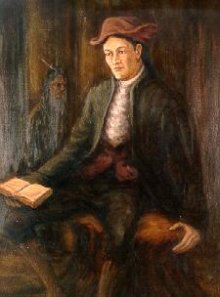
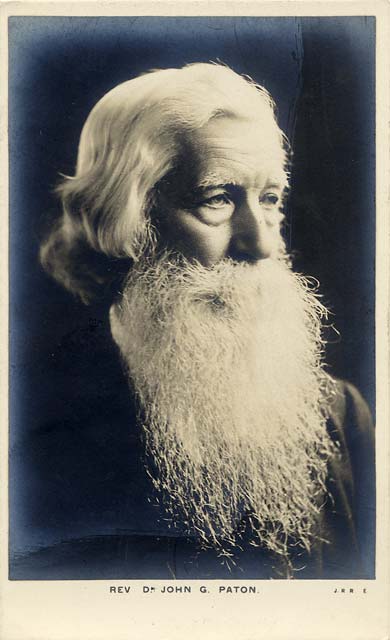
0_post_card_portraits_-_jrre_unidentified_rev_patonHere’s a selection from the first chapter of one of my all-time favorite books, John G. Paton: Missionary to the New Hebrides.  These two passages are some of the more memorable ones to me, holding out the beautiful example of a New Covenant Abraham, leading his family to the throne of grace and giving a foretaste of heavenly glory.

This book is well worth the reading.  If you don’t read the book, read the first chapter.  But I dare you not to continue reading after that.  Read it to your family on a quiet Lord’s Day afternoon and develop your own memories of hallowing the day with your children.  Oh, and make sure to read the poem at the end …

The book can be accessed online for free with GoogleBooks, and you can obtain it at Reformation Heritage Books.

* * *

Besides his independent choice of a Church for himself, there was one other mark and fruit of his early religious decision, which looks even fairer through all these years. Family Worship had heretofore been held only on Sabbath day in his father’s house; but the young Christian, entering into conference with his sympathising mother, managed to get the household persuaded that there ought to be daily morning and evening prayer and reading of the Bible and holy singing. This the more readily, as he himself agreed to take part regularly in the same and so relieve the old warrior of what might have proved for him too arduous spiritual toils. And so began in his seventeenth year that blessed custom of Family Prayer, morning and evening, which my father practised probably without one single omission till he lay on his deathbed, seventy-seven years of age; when, even to the last day of his life, a portion of Scripture was read, and his voice was heard softly joining in the Psalm, and his lips breathed the morning and evening Prayer,—falling in sweet benediction on the heads of all his children, far away many of them over all the earth, but all meeting him there at the Throne of Grace. None of us can remember that any day ever passed unhallowed thus; no hurry for market, no rush to business, no arrival of friends or guests, no trouble or sorrow, no joy or excitement, ever prevented at least our kneeling around the family altar, while the High Priest led our prayers to God, and offered himself and his children there. And blessed to others, as well as to ourselves, was the light of such example! I have heard that, in long after years, the worst woman in the village of Torthorwald, then leading an immoral life, but since changed by the grace of God, was known to declare, that the only thing that kept her from despair and from the hell of the suicide, was when in the dark winter nights she crept close up underneath my father’s window, and heard him pleading in family worship that God would convert “the sinner from the error of wicked ways and polish him as a jewel for the Redeemer’s crown.” “I felt,” said she, “that I was a burden on that good man’s heart, and I knew that God would not disappoint him. That thought kept me out of Hell, and at last led me to the only Saviour” . . . .

We had, too, special Bible Readings on the Lord’s Day evening,—mother and children and visitors reading in turns, with fresh and interesting question, answer, and exposition, all tending to impress us with the infinite grace of a God of love and mercy in the great gift of His dear Son Jesus, our Saviour. The Shorter Catechism was gone through regularly, each answering the question asked, till the whole had been explained, and its foundation in Scripture shown by the proof-texts adduced. It has been an amazing thing to me, occasionally to meet with men who blamed this “catechizing” for giving them a distaste to religion; every one in all our circle thinks and feels exactly the opposite. It laid the solid rock foundations of our religious life. After-years have given to these questions and their answers a deeper or a modified meaning, but none of us have ever once even dreamed of wishing that we had been otherwise trained. Of course, if the parents are not devout, sincere, and affectionate,—if the whole affair on both sides is taskwork, or worse, hypocritical and false,—results must be very different indeed! Oh, I can remember those happy Sabbath evenings; no blinds drawn, and shutters up, to keep out the sun from us, as some scandalously affirm; but a holy, happy, entirely human day, for a Christian father, mother, and children to spend. How my father would parade across and across our flag-floor, telling over the substance of the day’s sermons to our dear mother, who, because of the great distance and because of her many living “encumbrances,” got very seldom indeed to the church, but gladly embraced every chance, when there was prospect or promise of a “lift ” either way from some friendly gig! How he would entice us to help him to recall some idea or other, rewarding us when we got the length of “taking notes” and reading them over on our return; how he would turn the talk ever so naturally to some Bible story, or some martyr reminiscence, or some happy allusion to the “Pilgrim’s Progress”! And then it was quite a contest, which of us would get reading aloud, while all the rest listened, and father added here and there a happy thought, or illustration, or anecdote. Others must write and say what they will, and as they feel; but so must I. There were eleven of us brought up in a home like that; and never one of the eleven, boy or girl, man or woman, has been heard, or ever will be heard, saying that Sabbath was dull or wearisome for us, or suggesting that we have heard of or seen any way more likely than that for making the Day of the Lord bright and blessed alike for parents and for children. But God help the homes where these things are done by force and not by love! The very discipline through which our father passed us was a kind of religion in itself. If anything really serious required to be punished, he retired first to his closet for prayer, and we boys got to understand that he was laying the whole matter before God; and that was the severest part of the punishment for me to bear! I could have defied any amount of mere penalty, but this spoke to my conscience as a message from God. We loved him all the more, when we saw how much it cost him to punish us; and, in truth, he had never very much of that kind of work to do upon any one of all the eleven—we were ruled by love far more than by fear.
Read Full Post »

A powerful plea from J. Gresham Machen (1881-1937) for a return to meaningful pre-membership instruction to recall the “paper currency” back to a “gold standard.”  This extract comes from his work, What is Faith?

* * *

At this point, a question may perhaps be asked. We have said that saving faith is acceptance of Christ, not merely in general, but as He is offered to us in the gospel. How much, then, of the gospel, it may be asked, does a man need to accept in order that he may be saved; what, to put it baldly, are the minimum doctrinal requirements in order that a man may be a Christian? That is a question which, in one form or another, I am often asked; but it is also a question which I have never answered, and which I have not the slightest intention of answering now. Indeed it is a question which I think no human being can answer. Who can presume to say for certain what is the condition of another man’s soul; who can presume to say whether the other man’s attitude toward Christ, which he can express but badly in words, is an attitude of saving faith or not? This is one of the things which must surely be left to God.

(more…)

Read Full Post »

by B. B. Warfield

The Shorter Catechism is, perhaps, not very easy to learn. And very certainly it will not teach itself. Its framers were less careful to make it easy than to make it good.  As one of them, Lazarus Seaman, explained, they sought to set down in it not the knowledge the child has, but the knowledge the child ought to have.  And they did not dream that anyone could expect it to teach itself.  They committed it rather to faithful men who were zealous teachers of the truth, “to be,” as the Scottish General Assembly puts it in the Act approving it, “a Directory for catechizing such as are of a weaker capacity,” as they sent out the Larger Catechism “to be a Directory for catechizing such as have made some proficiency in the knowledge of the grounds of religion.”

No doubt it requires some effort whether to teach or to learn the Shorter Catechism. It requires some effort whether to teach or to learn the grounds of any department of knowledge.  Our children – some of them at least – groan over even the primary arithmetic and find sentence-analysis a burden.  Even the conquest of the art of reading has proved such a task that “reading without tears” is deemed an achievement. We think, nevertheless, that the acquisition of arithmetic, grammar and reading is worth the pains it costs the teacher to teach, and the pain it costs the learner to learn them.  Do we not think the acquisition of the grounds of religion worth some effort, and even, if need be, some tears? (more…)

Read Full Post »

In the previous post on building multi-generational churches, I focused mainly on the duties of parents and especially fathers.  On their shoulders, in large part, rests the future of the Church.  But of course, as we observed, the church ‘fathers’ must cultivate them, and so really it does come back to the teaching and ruling ministry of the Church at the end of the day.

The following extract from Samuel Miller (1769-1850) comes from his masterly work, The Christian Education of Children and Youth. In this passage, he urges one particular duty of church officers in raising up and retaining a godly seed for the Church.  It is the time-honored Reformed practice of pastoral catechizing of the youth:

It follows, of course, that the pastor who does not diligently attend to the religious instruction of the young people of his charge, is blind to the comfort, the acceptance, and the popularity of his own ministry. Why is it that so many ministers, before reaching an infirm old age, grow out of date with their people, and lose their influence with them? Especially, why is it that the younger part of their flocks feel so little attraction to them, dislike their preaching, and sigh for a change of pastors? There is reason to believe that this has seldom occurred, except in cases in which pastors have been eminently negligent of the religious training of their young people; in which, however respectable they may have been for their talents, their learning, and their worth, in other respects, they have utterly failed to bind the affections of the children to their persons; to make every one of them revere and love them as affectionate fathers; and, by faithful attentions, to inspire them with the strongest sentiments of veneration and filial attachment. Those whose range of observation has been considerable, have, no doubt, seen examples of ministers, whose preaching was by no means very striking or attractive, yet retaining to the latest period of their lives, the affections of all committed to their care, and especially being the favourites of the young people, who have rallied round them in their old age, and contributed not a little to render their last days both useful and happy. It may be doubted whether such a case ever occurred excepting where the pastor had bestowed much attention on the young people of his charge.

Such are some of the evils which flow from neglect on the part of the Church to train up her children in the knowledge of her doctrines and order. She may expect to see a majority of those children—even children of professors of religion—growing up in ignorance and profligacy; of course forsaking the church of their fathers; leaving her either to sink, or to be filled up by converts from without; turning away from those pastors who neglected them; and causing such pastors to experience in their old age, the merited reward of unfaithful servants (22-23).

Here is one big reason why churches, even Reformed ones, lose their youth.  The ministry has neglected catechizing.  Church catechizing, that is.  Much of the evangelical ministry today, sadly, has farmed out its duty here to ‘youth pastors’ – most of whom are often little better than glorified baby-sitters.  At best, it has delegated church education to pious, but unordained lay people.  But as Miller shrewdly observes, this passing on duty is also passing on a major opportunity.  An opportunity for the ministry to win young people’s minds to the principles of the church of their baptism, as well as an opportunity to win their hearts by sustained care and attention.  A profound insight indeed.

My mind here is taken to a beautiful mental image I have of the good Dr. Luther.   I can’t recall if it was a painting or something I read at some point – but forever irretrievable, I fear.  The master has gathered his pupils around him, and he is imparting a sacred lesson.  The little peasant catechumens are listening with rapt attention, and on occasion one is put on the spot to give an answer.   Here we see the embodiment of duty, of love, and of shrewd church policy, aimed at winning and at retaining the young.

We in the Reformed ministry must imitate our Saviour.  “Suffer the little children to come unto me, and forbid them not: for of such is the Kingdom of heaven.”  And when we are done baptizing them, let us yet hold on to them.  Let us retain them in our hearts, in our prayers, in our attentions – and in our devoted, focused instruction of them.  And combining this discipline with godly parenting in the home, by the blessing of the Spirit, shouldn’t we hope to mend the breaches in Zion’s walls?

Read Full Post »

The following comes from President Edwards’ The Life and Diary of the Rev. David Brainerd (1743).  It in an insightful snapshot of the old Reformed discipline of catechesis and demonstrates how integral it is to evangelism itself. 

* * * *

THE method I am taking to instruct the Indians in the principles of our holy religion, are, to preach, or open and improve some particular points of doctrine; to expound particular paragraphs, or sometimes whole chapters, of God’s word to them; to give historical relations from Scripture of the most material and remarkable occurrences relating to the church of God from the beginning; and frequency to catechise them upon the principles of Christianity. The latter of these methods of instructing I manage in a twofold manner. I sometimes catechise systematically, proposing questions agreeable to the Reverend Assembly’s Shorter Catechism.  This I have carried to a considerable length. At other times I catechise upon any important subject that I think difficult to them. Sometimes when I have discoursed upon some particular point, and made it as plain and familiar to them as I can, I then catechise them upon the most material branches of my discourse, to see whether they had a thorough understanding of it. But as I have catechised chiefly in a systematical form, I shall here give some specimen of the method I make use of in it, as well as of the propriety and justness of my people’s answers to the questions proposed to them.

Questions upon the benefits believers receive from Christ at death.

Q. I have shown you, that the children of God receive a great many good things from Christ while they live, now have they any more to receive when they come to die?–A. Yes.

Q. Are the children of God then made perfectly free from sin?–Yes.

Q. Do you think they will never more be troubled with vain, foolish, and wicked thoughts?–A. No, never at all.

Q. Will not they then be like the good angels I have so often told you of?–A. Yes.

Q. And do you call this a great mercy to be freed from all sin?–A. Yes.

Q. Do all God’s children count it so?–A. Yes, all of them.

Q. Do you think this is what they would ask for above all things, if God should say to them, Ask what you will, and it shall be done for you?–A. O yes, be sure, this is what they want.

Q. You say the souls of God’s people at death are made perfectly free from sin, where do they go then?–A. They go and live with Jesus Christ.

Q. Does Christ show them more respect and honour, and make them more happy* than we can possibly think of in this world?-A. Yes.

Q. Do they go immediately to live with Christ in heaven, as soon as their bodies are dead? or do they tarry somewhere else a while?–A. They go immediately to Christ.

Q. Does Christ take any care of the bodies of his people when they are dead, and their souls gone to heaven, or does he forget them?–A. He takes care of them.

These questions were all answered with surprising readiness, and without once missing, as I remember. And in answering several of them which respected deliverance from sin, they were much affected, and melted with the hopes of that happy state.

Questions upon the benefits believers receive from Christ at the resurrection.

Q. You see I have already shown you what good things Christ gives his good people while they live, and when they come to die; now, will he raise their bodies, and the bodies of others, to life again at the last day?–A. Yes, they shall all be raised.

Q. Shall they then have the same bodies they now have?-A. Yes.

Q. Will their bodies then be weak, will they feel cold, hunger, thirst, and weariness, as they now do?–A. No, none of these things.

Q. Will their bodies ever die any more after they are raised to life?–A. No.

Q. Will their souls and bodies be joined together again?–A. Yes.

Q. Will God’s people be more happy then, than they were while their bodies were asleep?–A. Yes.

Q. Will Christ then own these to be his people before all the world?–A. Yes.

Q. But God’s people find so much sin in themselves, that they are often ashamed of themselves, and will not Christ be ashamed to own such for his friends at that day?–A. No, he never will be ashamed of them.

Q. Will Christ then show all the world, that he has put away these people’s sins,† and that he looks upon them as if they had never sinned at all?–A. Yes.

Q. Will he look upon them as if they had never sinned, for the sake of any good things they have done themselves, or for the sake of his righteousness accounted to them as if it was theirs?–A. For the sake of his righteousness counted to them, not for their own goodness.

Q. Will God’s children then be as happy as they can desire to be?–Yes.

Q. The children of God while in this world, can but now and then draw near to him, and they are ready to think they can never have enough of God and Christ, but will they have enough there, as much as they can desire?–A. O yes, enough, enough.

Q. Will the children of God love him then as much as they desire, will they find nothing to hinder their love from going to him?–A. Nothing at all, they shall love him as much as they desire.

Q. Will they never be weary of God and Christ, and the pleasures of heaven, so as we are weary of our friends and enjoyments here, after we have been pleased with them awhile?–A. No, never.

Q. Could God’s people be happy if they knew God loved them, and yet felt at the same time that they could not love and honour him?–A. No, no.

Q. Will this then make God’s people perfectly happy, to love God above all, to honour him continually, and to feel his love to them?–A. Yes.

Q. And will this happiness last for ever?–A. Yes, for ever, for ever.

These questions, like the former, were answered without hesitation or missing, as I remember, in any one instance.

Questions upon the duty which God requires of men.

Q. Has God let us know any thing of his will, or what he would have us to do to please him?–A. Yes.

Q. And does he require us to do his will, and to please him?–A. Yes.

Q. Is it right that God should require this of us, has he any business to command us as a father does his children?–A. Yes.

Q. Why is it right that God should command us to do what he pleases?–A. Because he made us, and gives us all our good things.

Q. Does God require us to do any thing that will hurt us, and take away our comfort and happiness?–A. No.

Q. But God requires sinners to repent and be sorry for their sins, and to have their hearts broken; now, does not this hurt them, and take away their comfort, to be made sorry, and to have their hearts broken?–A. No, it does them good.

Q. Did God teach man his will at first by writing it down in a book, or did he put it into his heart, and teach him without a book what was right?–A. He put it into his heart, and made him know what he should do.

Q. Has God since that time writ down his will in a book?–A. Yes.

Q. Has God written his whole will in his book; has he there told us all that he would have us believe and do?–A. Yes.

Q. What need was there of this book, if God at first put his will into the heart of man, and made him feel what he should do?–A. There was need of it, because we have sinned, and made our hearts blind.

Q. And has God writ down the same things in his book, that he at first put into the heart of man?–A. Yes.

In this manner I endeavour to adapt my instructions to the capacities of my people; although they may perhaps seem strange to others who have never experienced the difficulty of the work. And these I have given an account of, are the methods I am from time to time pursuing, in order to instruct them in the principles of Christianity. And I think I may say, it is my great concern that these instructions be given them in such a manner, that they may not only be doctrinally taught, but duly affected thereby, that divine truths may come to them, “not in word only, but in power, and in the Holy Ghost,” and be received “not as the word of man.”

Read Full Post »

The practice of Reformed catechesis is quite counter-cultural.  Having given it a little thought, a few reasons come to mind.  1. Catechesis is an authoritative discipline.  It deals not with opinions, but with dogma.  Not with suggestions, but with commandments.  Not tips and hints, but with divinely mandated means of grace.  2. Catechesis is churchly in orientation.  It is by the church and for the church.  It presumes that membership in the Visible Church – nothing less than the Kingdom of God on earth – is a high privilege, and involves serious preparation.  3. Catechesis is rigorously intellectual.  While seeking to reach those of the smallest capacities, even the “little ones” without offending them, it yet pushes everyone under its influence to think and think deeply.  4. Catechesis is thoroughly covenantal.  It has always had the next generation of the church in view, preparing baptized children to lay hold of the promise that is their birthright (Acts 2:39).  While catechesis leaves regeneration to the sovereignty of the Spirit, it does not leave children to cut their own religious path.  It cuts the path for them.  We do not blush to say that in catechism, the church indoctrinates its children.  5. Catechesis is catholic.  By catholic, I mean that it does not deal with secondary matters, much less the novel, but with the faith once delivered to the saints.  The things “most surely believed among us” (Luke 1:1).  It is not provincial, pedaling its own idiosyncratic theology (African theology, feminist theology, etc.), but it holds forth what unifies all true believers in all ages.  There is “one body, and one Spirit . . . one Lord, one faith, one baptism, one God and Father of all” (Eph. 4:4-6).   6. Catechesis is confessional.  Contra biblicism, catechesis affirms that the Spirit leads his Church into all truth, and that the Church has a responsibility to articulate that truth using its own words.  Further, it delimits what we must believe from what we must not – heresy.  7. Catechesis is biblical.  “To the law and to the testimony.”  If one seriously studies the great catechisms of the Reformation, one will be confronted not only with lengthy footnoted proof texts undergirding each proposition.  He will also see how their very language is shaped by the Scriptures.  Not surprisingly, then, catechesis is rejected precisely because men will not receive the Word of God.

Read Full Post »

Let’s face it.  Those of us who practice family worship frequently don’t feel like it, often fall into formalism, and end off hopping down way too many bunny trails.  How many times, too, is the whole business interrupted because the little one has a runny nose (or worse, smelly drawers)?  The boy isn’t sitting up?  Or older sis is annoying the younger for the umpteenth time?   And after a long day of homeschooling, errands, cleaning, and damage controlling, mom is frazzled – and dad is just plain socked.   At its best, family worship is usually nondescript; at its worst, it approaches something like a three-ring circus.

And yet, when we look back on it more impartially, we find that there has been glory there all along.   After the drill is done – and done with some habit – we see in faith that the very rhythm itself has been wonderful.  All the children know their places.  The catechumens say their lines.  The old songs of Zion are taken up and singing fills the room; and those who can’t read croon right along.  The humble family Bible is taken out, and father reads a portion.  And then the approach to the throne of grace.

Yes, it’s flawed.  Messy even.  And we must confess that it is fraught with sin.  But it is covered in the blood and accepted by the Father.  Let’s open our eyes – there is glory here.  Things into which the very angels desire to look.

Read Full Post »

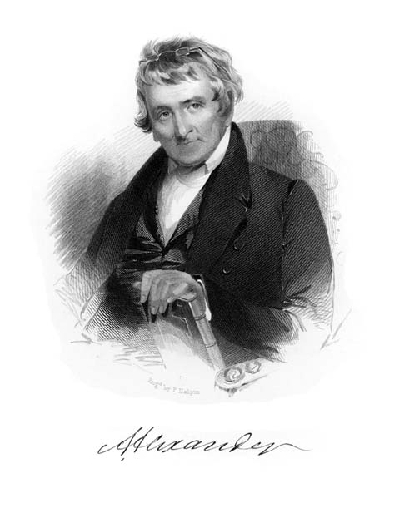
The following is a review of Ashbel Green’s Lectures on the Shorter Catechism by Archibald Alexander in 1830.  Alexander (1772-1851) was the  first President of Princeton Seminary and a venerable patriarch of American Presbyterianism.  The following presents the bulk of this review, which treats the warrant and nature of the good old plan of Presbyterian catechizing.

* * * * *

[If] we do not entirely misinterpret the temper and taste of the times in which we live, doctrinal catechisms, and lectures explanatory of such catechisms, are not the books which will be sought after and read with avidity. The religious taste of most readers is, we fear, greatly vitiated by works of fiction and other kinds of light reading. Nothing will now please, unless it be characterized by novelty and variety; and while many new means of instruction have been afforded to our youth, in which we sincerely rejoice, we are so old fashioned in our notions, as to feel regret that in our own church those excellent little summaries of Christian doctrine, the Westminster Catechisms, are falling with many into disuse. Our numerous (more…)

Read Full Post »

“More knowledge is ordinarily diffused, especially among the young and ignorant, by one hour’s catechetical exercise, than by many hours’ continued discourse.”

– John Owen (1616-1683)

Read Full Post »

Below is an exceprt from Hints on the Art of Catechising by Edward Bather, a 19th century clergyman in the Church of England.  Quite helpful material from an obviously seasoned catechist.  Enjoy!

* * * * *

I shall understand catechising, then, as it is commonly defined—namely, as signifying—instruction in the first rudiments of any art or science, communicated by asking questions and hearing and correcting the answers. And if I may be allowed to put my meaning into very familiar phrase, and to state plainly what I would recommend, it is this —That the catechist, having taken for his basis, or the subject matter to be unfolded, either some portion of the Church Catechism itself, or some text which illustrates it, or both, should then first “instruct” his pupils by questioning the meaning into them, and then “examine” them by questioning it out of them. The first process, it is obvious, may most conveniently be attended to in the school, and the second in the church: or, in other words, in the school, where he has most time, and is in least fear of being tedious, he will naturally most apply himself to put those questions by which he means to conduct his pupils into knowledge of the subject; and in the church, those by which he would give them opportunity to produce their knowledge; but in neither situation will he confine himself to either mode exclusively. And then I say, when the meaning of any general head of faith or practice, as proved and illustrated by Scripture, shall have been got out of the children in its particulars, or piece by piece, in answer to the questions put to them—those children themselves and the by-standers together will be a congregation, just in a fit condition to profit, under God, by exhortation or preaching: and there are two ways in which the minister may address them with great advantage. He has the opportunity, whilst the catechetical instruction is proceeding, of interspersing, as he gets his replies, many brief remarks and practical observations in a natural and lively, and therefore attractive and affecting manner; or he may sum up the particulars afterwards in a short discourse, and ground upon them, with good effect, the admonitions which they obviously suggest.

But of this I shall have more to say presently. The practice recommended has, of course, its difficulties, and the method cannot be fully shown without more minute examples than can well be given in an address of this nature. I may possibly, however, explain myself in some degree. The thing to be done is to possess the minds of a number of ignorant and heedless children with the sense and meaning—we will say—of one of our Lord’s parables, and to bring them to perceive and consider the practical lesson which it is intended to convey. In order to this, their attention must in the first place be gained and fixed, and then there will probably be words and phrases to be explained, perhaps old customs also—the literal story or similitude to be compared with the religious truth or doctrine which it is employed to illustrate, and other portions of Scripture to be cited, and brought to bear on the point in hand, in a way of confirmation or further exposition. Then there are two ways of proceeding: you may preach or lecture upon the subject, and in so doing, you tell your hearers what you have acquired and ascertained yourselves: or else you may communicate instruction as I advise, by asking questions, and correcting the answers; or I should rather say, by bringing the children themselves to correct them, by means of further questioning on your part. And in that case they tell you every thing. The truth and meaning comes out of their mouths to you, not out of yours to them, though it is certain you guide them to it, and put it into them. Everybody knows what in the language of the bar is meant by asking leading questions, and that a witness must not be led—because there the object is not to instruct or tell him what he should say, but to examine him or inquire what he really knows and has to say; but the case of which we are now speaking being exactly the reverse, the catechist’s aim being, at least in the first instance, to instil, and not to extract, his proceedings must be just what the advocate’s ought not to be. And then the whole “skill,” to use the words of Herbert in the Country Parson, “consists but in these three points; first an aim and mark of the whole discourse whither to drive the answerer, which the questionist must have in his mind before any question be propounded, upon which and to which the questions are to be chained. Secondly, a most plain and easy framing of the question, even containing in virtue the answer also, especially to the more ignorant. Thirdly, when the answerer sticks, an illustrating of the thing by something else which he knows, making what he knows serve him in what he knows not” (pp. 18-21).


Read Full Post »

« Newer Posts - Older Posts »