Feeds:
Posts
Comments

Archive for the ‘Biblical Theology’ Category

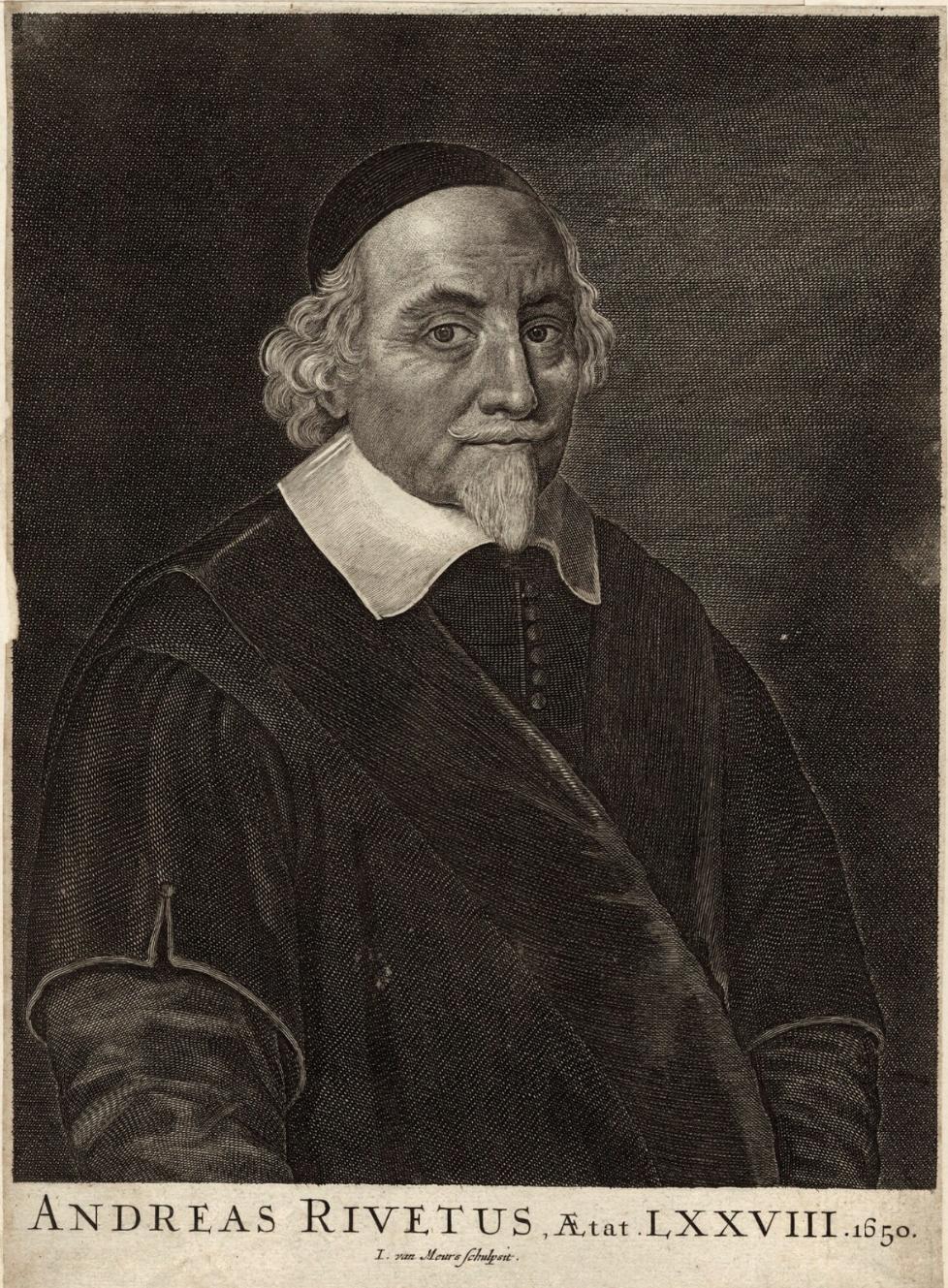
Question: Will the Jewish nation always be a rejected nation, or will the entire nation yet come to repentance, believing and confessing that the Messiah has already come, and that Jesus is the Christ?

“Answer: When speaking of the conversion of the Jews, we understand this to refer to the entire nation, and not only to Judah and Benjamin who had returned from Babylon and lived in Canaan until the destruction of Jerusalem. Rather, it also refers to the ten tribes. These tribes neither remained together nor are they hidden in an unknown corner of the world, as the Jews fabricate. Instead, they partially intermingled with the eastern nations, forsaking the Jewish religion. Another part, having dispersed themselves among the nations of the earth, continued to adhere to their religion; whereas a very large multitude also returned to Canaan and intermingled with the other Jews. Anna, the prophetess, the daughter of Phanuel from the tribe of Aser, served God at Jerusalem in the temple (Luke 2:36).

“Furthermore, very many from the tribes of Judah, Benjamin, and Levi did not return from Babylon. Among those who did return were also very many who again left their native land due to internal disturbances, and thus were dispersed throughout the entire world among various nations, still maintaining the Jewish religion. James wrote to the “twelve tribes which are scattered abroad” (James 1:1). The dispersed Jews came from all manner of nations to Jerusalem on the feast days for the purpose of worship, as is to be observed in (Acts 2:5-11). After the destruction of Jerusalem, the entire Jewish nation was dispersed and no longer has a specific residence. We are speaking here of this nation without distinction, and we believe that it will acknowledge that Jesus is the Christ—the Messiah who was promised in the Old Testament and anticipated by the fathers. This is the general sentiment of the theologians of all ages—even Lutheran and papist theologians. There are, however, also those who doubt this, and some deny it. In order to confirm this matter, we shall not now say all that can be said about it. Rather, we shall only 1 take two proofs from the New Testament and give them a place of prominence, since they are not subject to any evasive arguments of substance. After having given a clear exegesis of them, the few proofs we shall present from the Old Testament will give us more clarity and steadfastness in this matter.”

Read the rest below (pdf p. 519, doc. p. 510; source)

Read Full Post »

As I am about to teach a seminary course in NT Theology this coming semester in our presbytery’s theological training program, I found this chapter in Heidegger choice. Here is yet another example of how classic, orthodox Reformed theology definitely assigned a role for what later would be designated “Biblical Theology,” or as I far prefer to call it, Economic Theology. As God has “spoken at sundry times and divers manners unto the fathers by the prophets,” it is then fully appropriate to enquire how God has revealed Himself in the various economies of His one, unified, eternal plan.

Read Full Post »

The difference between the old and the new economy; superiority of the new over the old, the inferiority of the old. Distinctions within biblical language to reflect the manifold character of God’s revelation to us, while fundamentally one purpose and plan of God. Within God’s economy, there is unity in diversity. Further, some of the superior qualities of the new administration consist in a relatively greater degree of spirituality and perception of spiritual things and the eternal inheritance, above the more temporal attention of the old economy.

* * * * *

Moreover, they may be called the “old” and “new” testaments in a literal sense or a figurative one. And the words may be used with wide or narrow meaning. When the sense is literal, the word “old testament” stands for the Law, insofar as it was given to the Jewish people through Moses. It promised life to them on condition of perfect obedience, with the provision of a curse upon the transgressors, and it brought with it an unbearable burden of legal rituals and the yoke of a highly restrictive political order. For this reason it is called “the letter that kills,” “the dispensation of death and condemnation,” “bearing children for slavery, like Hagar” (2 Corinthians 3:6,7; Galatians 4:23, 24). Placed opposite to this is the “new testament” (in the strict sense), the teaching of spiritual grace and salvation fully revealed by the Son of God himself from the bosom of the Father and spread abroad by the apostles’ preaching. It promises righteousness without price, and life everlasting through and for the sake of Christ the testator unto all who believe in him through the grace that he will lavish on them abundantly.

(more…)

Read Full Post »

The following comes from the pen of Abraham Kuyper (1837-1920), pastor, theologian, and prime minister of the Netherlands. It’s a devotional work entitled To Be Near Unto God. And you don’t have to be a card-carrying Neo-Calvinist to appreciate it!

“NIGHT is a mystery in our life, and remains a mystery. For years together, sleep to most people is a provisional going out from life, in order after some seven or eight hours to come back to it. When they fall asleep, which most people do immediately after their head touches the pillow, they are gone, and when the hand on the dial of the clock has moved on a given number of hours, they rise and resume their part in life. At most they have an occasional remembrance of a dream that entered into their sleep, but for the rest it is all a blank. The seven hours during which they were lost in unconsciousness passed by unobserved, and as far as their remembrance of them goes they amounted to no more than two or at most three hours.

“Thus a third of life is taken out of their existence. When they are thirty years of age, they have actually lived but twenty, and the other ten years are wrapped in the haziness of sleep.

“This sleep, however, was not devoid of purpose. He who was weary on retiring, rises girded with new strength, though as far as his consciousness goes, he was idle. His thinking, feeling, willing, working, have all been at a stand-still. This absolute surcease of life is the normal state of things, for as long as man is well, in the fullness of his strength and not oppressed by cares, he sleeps as long as nothing disturbs him from without.

“Why this was so ordained, remains a riddle. For though it is true that after hours of work our strength becomes exhausted and demands rest to recuperate, this does not solve the problem. For at once the question arises: “Why this exhaustion of strength?” God, our Maker, after Whose Image weare created fainteth not, neither is He weary. The heavenly hosts of angels do not sleep. Of the New Jerusalem we read: “And there shall be no night there” (Rev. 22: 5). Thus, a being who does not continually exhaust his strength, and hence is in no need of sleep, is conceivable. Why God, our Maker, appointed a life for us with continual exhaustion of its power to be restored by sleep, remains a mystery. This ordinance of the Lord has not been promulgated without a purpose and a wise design, though no one understands it.”

Read the rest of the chapter here.

[Image source.]

Read Full Post »

Read Full Post »

This expanding collection of audio resources includes sermons, discourses, and articles by the great theologians of Old Princeton (1812-1929), the American bastion of Calvinist orthodoxy of the 19th century. As with the other collections, I’m attempting to develop a Reformed audio library of higher-quality, amateur recordings to fill gaps and so assist church officers and others who have narrower margins of time to sit and read. And visit the complete WPE Audio library here.

Archibald Alexander (1772-1851)

Archibald Alexander Hodge (1823-1886)

Samuel Miller (1769–1850)

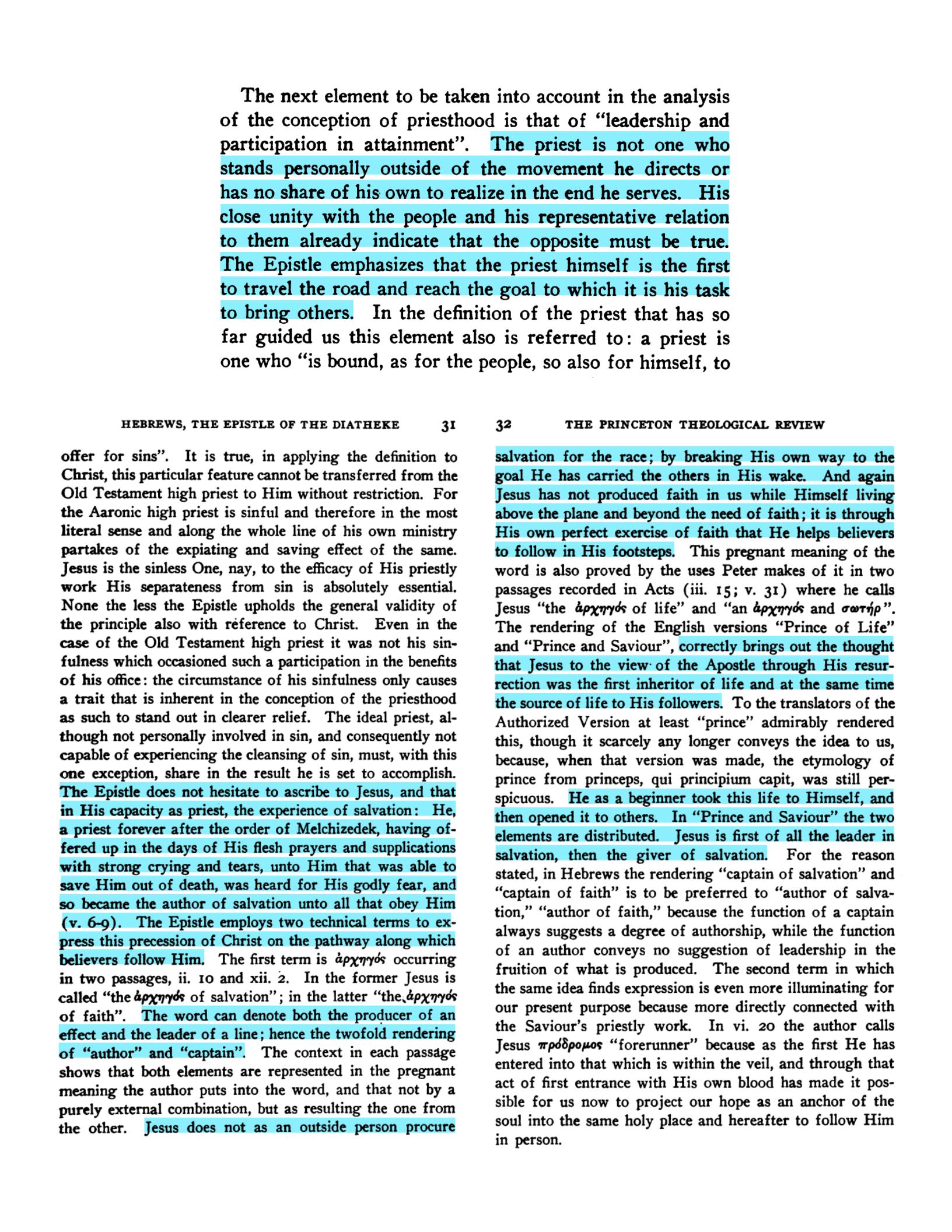
Geerhardus Vos (1862–1949)

Benjamin B. Warfield (1851-1921)

Don’t see something here you’d like to see added? Leave a comment!

[links updated 1/9/25]

Read Full Post »