Feeds:
Posts
Comments

Archive for the ‘Audio Resources’ Category

I thought I might share what I’ve been reading recently. In addition to my devotional and theological recordings, here are some books I’ve finished in recent days of personal interest. In our extremely digital age, we need to stay reading. Let us read good books; and if we read books that are not explicitly Christian, let us do so critically with an eye to Scripture as our absolute authority.

First, Nancy R. Pearcey’s The Toxic War on Masculinity: How Christianity Reconciles the Sexes. In a similar fashion to Carl Trueman’s The Rise and Triumph of the Modern Self, Nancy Pearce frames her book of cultural commentary around a “how did we get here?” question. For Trueman, it was “how did we ever get to the place where a man thinks he is a woman?” For Pearcey, it is “how did masculinity ever become ‘toxic?'” She engages in a historical and sociological inquiry that is quite insightful, from a thoughtful, Christian perspective. I especially found her explanation of the shift of men from cottage-industry and family-integrated work patterns to working outside the home in factories, etc., at the Industrial Revolution, and its negative impact on father-son relationships and family life in general. For a kind of teaser, listen to this interview on Issues, etc.

(more…)

Read Full Post »

A false dichotomy, if one is to take James Durham seriously:

“Never, never did men run to quench fire in a city, lest all should be destroyed, with more diligence than men ought to bestir themselves to quench this [sin of schism] in the church; never did mariners use more speed to stop a leak in a ship, lest all should be drowned, than ministers especially, and all Christian men should haste to stop this beginning of the breaking in of these waters of strife, lest thereby the whole church be overwhelmed. And if the many evils which follow thereupon, the many commands whereby union is pressed, yea, the many entreaties and obtestations whereby the Holy Ghost does so frequently urge this upon all, as a thing most acceptable to him and profitable to us; if, I say, these and many other such considerations have not weight to convince of the necessity of this duty to prevent or heal a breach [emphasis mine], we cannot tell what can prevail with men that profess reverence to the great and dreadful name of God, conscience of duty, and respect to the edification of the church and to their own peace at the appearance of the Lord in the great day, wherein the peace-makers shall be blessed, for they shall be called the children of God?”

Read more about the Scottish doctrine of visible church union and the sin of schism in MacPherson’s classic below. And an audio recording of that particular chapter can be accessed here.

Whole doctrine catholicity | “Who is she that looketh forth as the morning, fair as the moon, clear as the sun, and terrible as an army with banners” (Song 6:10)?

(more…)

Read Full Post »

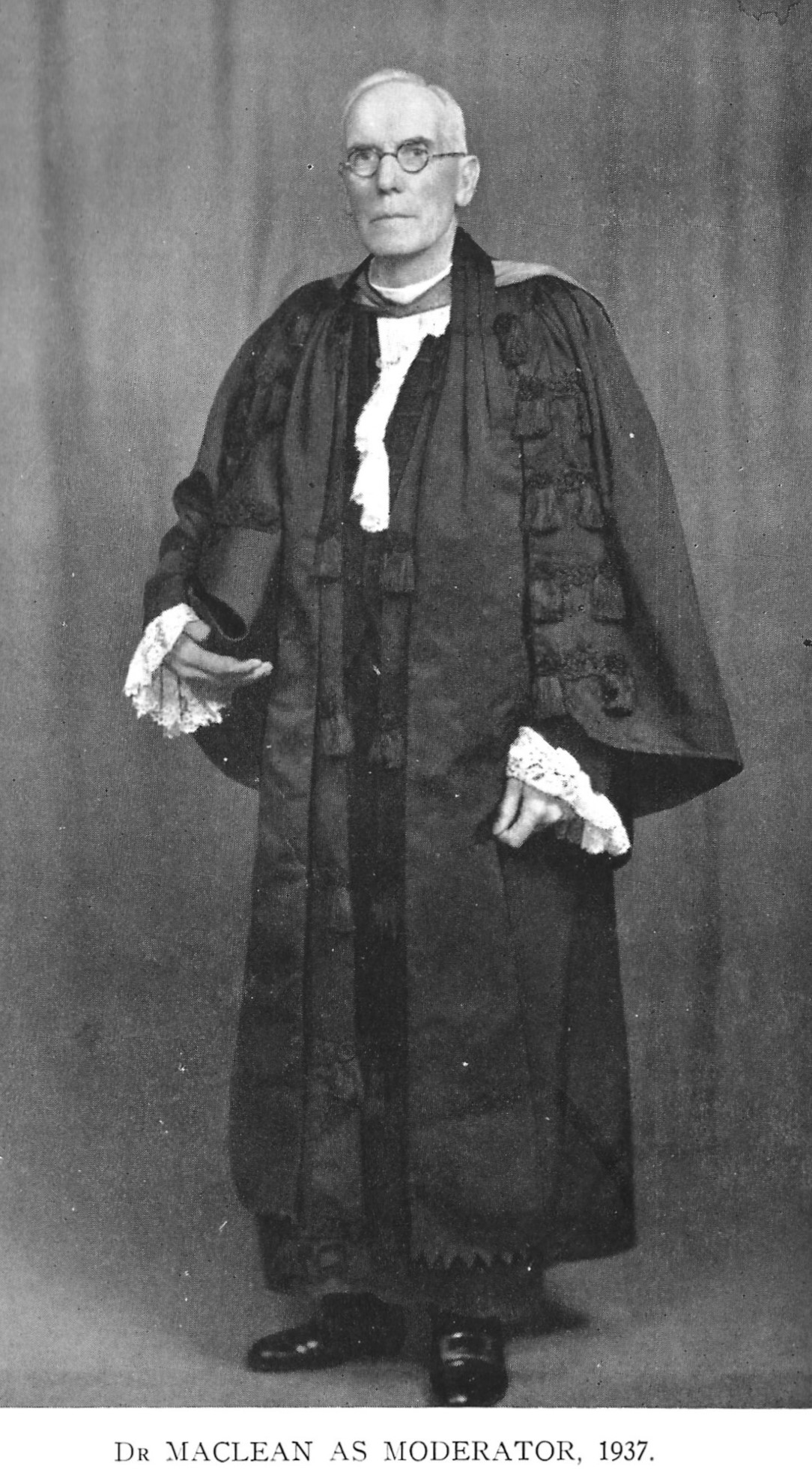
Just recently audio-recorded two articles by Free Church of Scotland Principal Donald Maclean (1869-1943). I have found several of the men of that generation not only profoundly rich theologically and spiritually, but that their English prose is also quite compelling. We are generally below the mark these days, I fear.

The following quote is a sample, from Maclean’s “An Evangelical Ministry.” Here, he answers the question as to the effect of Anglo-American Christianity’s emphasis on the social application of Christian around the turn of the 20th century: “The answer is sadly easy. The flood-tide to the Churches has, alas, not set in. The prejudices and hostility of sinful man have not been softened by the undoubted social amelioration effected. The heedless multitude still pass by. But even more serious is the reaction which the social application of Christianity has had upon the faith itself. Revealed truth itself cannot be affected by human reactions, for the Word of the Lord endures for ever. Nevertheless, the attempts to apply Christianity socially have profoundly affected the meaning which the Christian faith has for the average man and ordinary churchgoer. The emphasis on the social has largely stifled the spiritual nature of the faith. It has obscured the revealed fact that the Christian message was primarily to and for individuals. That the Son of God became man, and that man must be born again, are sufficiently strong reminders to us of the divine estimate of the immortal soul of man. The great doctrines of grace which the Bible so unmistakably connects with the redemption of the human personality, have been so rarely emphasised during more than a generation that, not only have these doctrines become unknown, but the spiritual faculties of hearers have been so weakened by disuse that spiritual discernment has faded away. The Church of to-day is consequently faced with the difficult but necessary task, arising from her former neglect, of re-educating her people in the fundamental elements of the faith which give it the character and distinction of being the Christian faith of revelation. For the business of the Church in its God-given mission is to the individual and through the individual to society. Moreover, the Christian revelation holds out no hope for society except in so far as the men and women who form it are Christian, which for the secular State is a futile and unattainable ideal. It is therefore all the more essential that the truth should be understood that a Christian society can only be fashioned out of and by Christian men and women.”

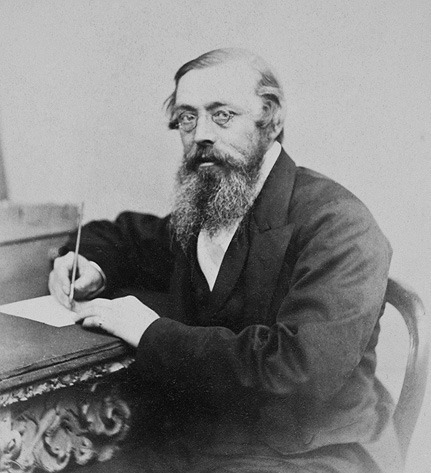
Special thanks to the Rev. John Keddie for assistance with photo above. More historic audio resources from the heritage of the Free Church of Scotland available here. All Thomas Chalmers titles are separate, here. And visit our entire audio library here.

Read Full Post »

Listen to Thomas M’Crie’s The Life of Alexander Henderson.

Robert Baillie, in a speech delivered before the General Assembly in 1647 upon the death of this great churchman, declared of his late friend, “That glorious soul of blessed memory, who now is crowned with the reward of all his labours for God and for us, I wish his remembrance may be fragrant among us, so long as free and pure Assemblies remain in this land, which we hope shall be to the coming of our Lord. You know he spent his strength, and wore out his days, he breathed out his life in the service of God and of his Church. This binds it on our back, as we would not prove ungrateful, to pay him his due. If the thoughts of others be conform to my inmost sense, in duty and reason, he ought to be accounted by us and posterity, the fairest ornament, after John Knox, of incomparable memory, that ever the Church of Scotland did enjoy.”

And check our our entire audio library here.

Read Full Post »

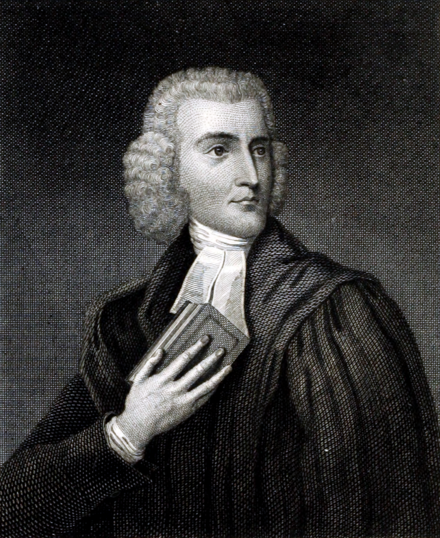
Just added a recording in two parts of John Witherspoon’s farewell sermon to his congregation in Paisley, Scotland before sailing over to the American colonies to take up the presidency of the College of New Jersey in 1768. It is a profoundly moving and historic sermon, and especially one that ministers of the Gospel would do well to read. I began recording it soon before my transition to a pastorate in New Jersey, which added to its personal significance for me. Here are the opening words of the sermon. And to access more titles from my growing audio library, go here.

“My brethren, these words [Acts 20:26-27] are a part of the apostle Paul’s discourse to the elders of Ephesus, when taking leave of them, under a firm persuasion, or rather a certain knowledge, that he would never again see them in the body. My present situation, of which none of you is ignorant, has determined me to the choice of this passage, as a very proper subject from which I may conclude the exercise of my ministry among you. I had once occasion, on leaving another charge, to have taken a formal farewell of a very affectionate people, but had not courage to attempt it. The circumstances attending the removal, which, if Providence prevent not, seems now to be at hand, are such as do not lessen, but greatly increase the difficulty of speaking from such a subject. And yet, in another view, they seemed to urge it so strongly, and to present such an opportunity of being useful, as I durst not wholly decline. Every Christian ought to be an observer of providence. Nothing will more effectually promote his holiness and comfort. And both a minister and his people ought to improve the aspect of providence, when it hath any thing peculiar in it, to their mutual benefit.

“Let me therefore intreat you to attend to the following discourse, with patience and composure. This request I the rather hope you will comply with, as there is nothing intended that is personal, further than must necessarily arise from the subject itself, or be unavoidably suggested by your own thoughts. I bless God that I have no complaint to make of want of duty or affection upon your side; neither is it any part of my purpose to justify my own conduct, during the time that I have had the honour and happiness of being entrusted with the ministry of the gospel in this place. I shall therefore only fay, that whether I have been able to deliver my own foul by fidelity in duty, and by purity of principle, I am certain, that very much has been laid to the charge of many of yours. Least of all do I intend to endeavour to satisfy you of the motives which have induced me to accept of a call to a distant part of the world, and, in some degree, a different employment in the Church of Christ. For this, I know that an account must be given, in due time, to a much greater Judge, with whose approbation either the applause or censure of men are not worthy to be laid in the balance. The single purpose, therefore, of the following discourse, shall be to give you such a comprehensive view of the truths of the everlasting gospel, of the importance and difficulty of a minister’s work; as may direct you in the choice of another pastor, increase your esteem of such as are faithful, and excite you to guard against every thing that may either discourage them in their work, or prevent their success.”

Read Full Post »

Principal John Macleod (1872-1948) writes with a freshness and a force of thought that sadly is all too uncommon today. Listen to my latest recording of his sermon, “The Sure Mercies of David.” (View entire library here.) Here are a couple of worthy passages:

Nay, as Victor our Lord has overcome and is set down with the Father on His Throne. There as the Exalted Servant He is seated on the Throne of His Heavenly Father and on the throne of His father David. It is as David’s throne was the throne of the Lord over Israel that his Exalted Son sits upon it now. Having died death outright He lives with a life over which the shadow of death shall never fall. He dieth no more for He has borne and exhausted the curse. So as Lord of life and death He is the Resurrection and the Life. His rising from the dead was the step that went before His Ascension; and it was a step that brought with it in full detail every succeeding step of His glory as the Lord’s Exalted Servant.

With our Lord’s Resurrection and Ascension the Kingdom of God has come. Until He arose and went up it was a kingdom or order of things that was yet to come. This is the case no more. The fullness of the glory of the kingdom is in the course , of being unveiled. The fullness itself reaches unto the eternal ages.

Also, a delightful passage on the conversion of the Jews:

Israel shall return to the Lord their God and to David their King. When the set time comes the David of the New Testament will subdue them and bring them in. Then the natural branches shall come to their place in the old olive tree and it will be as it were life from the dead. Not only will it be life from the dead : to them it will be such life from the dead as a pining Church and perishing world need. It is for ~ur Lord Himself to bring about this glorious return. He will then make Jerusalem a praise in the earth; for He will pour on the house of David and on the inhabitants of Jerusalem His own Spirit, the token of His good will, as the Spirit of prayer, and they shall call on Him. They shall look on Him whom they pierced, and the world shall know the mourning of the brethren of the New Testament Joseph when He makes Himself known to them and gives them the kiss of peace. This thing will not be done in a corner. All the world shall hear of it.

Here is the original copy:

Read Full Post »

Hugh Martin, great 19th century Free Church of Scotland preacher and churchman, is well-known for his masterful preaching as exhibited in his The Shadow of Calvary. But he clearly had a polemic side in his advocacy of a strict adherence to the Confession of Faith as constitution of the Church, together with its commitment to the due obedience of nations to King Jesus. This speech of his in 1871 was printed in the Watchword is a worthy contribution to ongoing discussions of confessional subscription among Presbyterians. I have recorded it here, and the PDF is available below. See more audio titles from the old Free Church and Church of Scotland legacies.

I am grateful to Rev. Rob McCurley for introducing me to this speech in a lecture of his, as well as to Rev. John Keddie for so helpfully treating it and the larger Constitutionalist cause in his Preserving a Reformed Heritage: The Free Church of Scotland in the 20th Century.

* * * *

“The extreme seriousness of the conflict going forward in the Free Church of Scotland arises from this, that the question now raise is that of the preservation or destruction of our Constitution.

“We brush aside at the outset the assertion (and the question grounded on it), that the Church of Scotland changed her Confession in the middle of the 17th century, — and why not do the same again? An utterance like this, in the present discussion, is characterized by such thoughtlessness, if not indeed such moral levity, as to deprive it of all right to serious answer. The Church of Scotland, in adopting the Westminster Confession, declared it to be ‘in no respect contrary to the doctrine of this Church.’ And in amending the formula in 1846, she did so with the avowed purpose not of changing but of expressing, re-affirming, and conserving the principles of the Church. And how men can allege a parallel between that and a proposal to make ‘allowance’ for the principles of another Church, exactly wherein they contradict our own, ought to surpass all powers of honourable imagination. It is not by moral trifling of this description that we are to be turned aside from our argument. . . .”

Read the rest here:

Read Full Post »

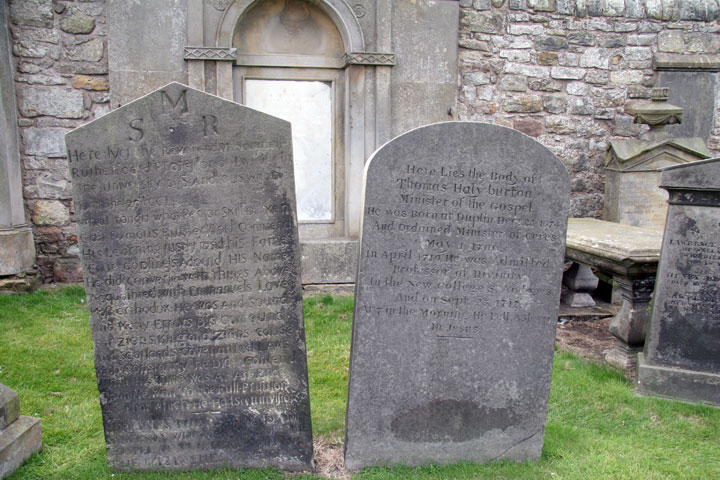
Just completed recording Thomas Halyburton’s “A Christian’s Belief Under Troubles: Two Sermons After the Death of a Friend.” Access this three-part series and other titles here. View my full audio library here. (And please drop me a note if any link fails: michael at reformedparish dot com).

The following introduction is taken from the James Begg Society.

* * * *

THOMAS Halyburton (1674-1712) was born into a family of Scottish Covenanters. His Father, Rev. George Halyburton, was a minister in the Reformed Church of Scotland until his ejection in 1662. Twenty years later George was denounced by the Privy Council of Scotland for holding “conventicles” (church services in the open air, unauthorised by the established church and outlawed by the government in those days). After his father’s death, young Thomas’s family (mother and sister) fled to Rotterdam in order to avoid the fierce persecution which was carried on against the Covenanters, where Thomas had his early education in the school of Erasmus. Following the Revolution, he returned to Scotland and continued his education.

After a period of inner struggle with the philosophy of Deism, God sovereignly and graciously enlighened Thomas’s soul, and gave him saving faith in the Lord Jesus Christ. He became committed to the same Reformed Christian religion as his father, and followed in his footsteps as a minister of the gospel. On completing theological training, Thomas was licenced to preach in the Church of Scotland by Queen Anne, and ordained to the ministry of the church in Ceres, Fife. The church was part of the presbytery of Kirkcaldy.

After faithfully pastoring the church in Ceres for ten years, Rev. Dr. Halyburton became Professor of Theology at St. Leonard’s College in St. Andrews.

He died two years later at the age of 38, following an illness. At his request, his body was buried in St. Andrews next to his favourite Christian minister, Rev. Dr. Samuel Rutherford.

Thomas Halyburton’s theological and apologetic writings are marked by a distinctive thoroughness. The surviving scripts of his sermons show him to have been richly theological, deeply experimental (i.e. dealing with the experiences of the soul) and very practical — a master of the classic Puritan style of preaching.

* * * *

Have you been blessed by these recordings? Could you possibly help with a one-time gift, or perhaps a monthly recurring donation of $2, $3, or $5? Donations can be made here. Please earmark your contribution in the notes “WPE Audio,” as it will be processed through the Reformed Parish Mission. Donations will offset the monthly SermonAudio expenses; and any excess will go towards supporting my efforts to bring the Reformed faith to the working class, immigrant, and Hispanic populations here in the U.S.

Read Full Post »

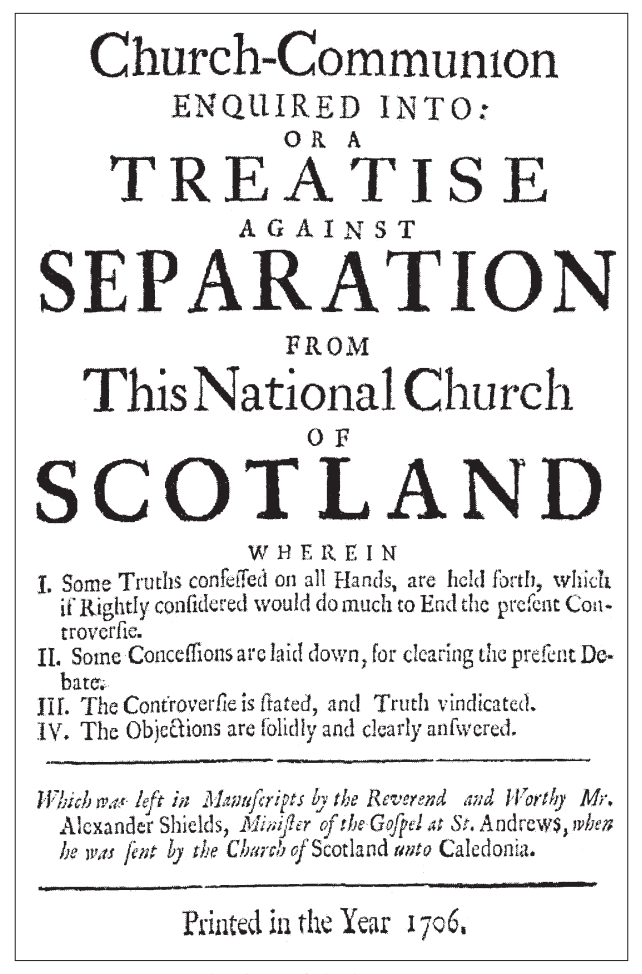
Just finished reading and recording Alexander Shield’s Church Communion Inquired Into (1706). Listen to it here, or read it below. This treatise is such a highwater-mark of classic Presbyterianism, with particular focus on the visible unity of the Church of Christ. It was his heartfelt, pastoral appeal to his brethren who refused to enter the Revolution Church of 1690 on account of its putative corruptions, urging them to reconsider their separation. It is not the easiest of reads, for sure, as it was written in the midst of controversy, among other things. But it is a definitive work on Presbyterian catholicity, right after James Durham’s On Scandal. Here is a very moving appeal from his conclusion:

“Keep your Zeal lively against all sin, but let it have two edges, to resent the Dishonour done to God, by Schism as well as defection; let it be Ballanced with Charity, and managed with Discretion. And we request you, that you study Uniformity in your Zeal, that you be not like Cake unturned, hot for some lesser Points in Religion, and cold for other Duties, but with a regular Proportion to their Concern in the Vitals of Religion. Let Religion be more in your Heart than Head, in Practice than in Controversie. Neglect not the Duties of your General Calling of Piety towards God, Sobriety in your selves, Righteousness and Mercy to Men, Brotherly Love, and Holy Christian Fellowship; And forget not the relative Duties of your particular Callings. Have a care of the Idleness of busy Bodies. 1 Thess. 4.11. But study to be quiet, and do your own business, and to work with your own hands. Beware of them that cause Divisions and Offenses, and avoid them. And look on them that blow the Bellows of Contention as no Friends to your or the Church’s Interest. Finally, study to be United one with another, and with your Pastors make Acquaintance, and entertain frequent and Friendly Converse with them, receive the Law at their Mouth, for they are the Messengers of the Lord of Hosts: Grieve them not by your Contempt, or continued Withdrawing, lest they be put to Complain of you to God, and it become Sin unto you.”

Here is a summary of the author by Matthew Vogan: “Alexander Shields (1660?–1700) is less well known than other field preachers such as Donald Cargill, Richard Cameron, and James Renwick. One of the last of the field preachers and a close associate of James Renwick, he was also a prisoner on the Bass Rock. He was a prolific writer and ably defended the Covenanter principles in the classic book A Hind Let Loose. After the Revolution of 1689, he was chaplain to the Cameronian regiment fighting against France in defence of Holland and the Protestant cause. In 1699, he was also among the first foreign missionaries of the Church of Scotland in the infamous Darien venture to what is now known as Panama. He died and was buried in Jamaica in 1700 at the age of forty. John Macleod well describes him as ‘one of the most striking figures of his epoch’. The life of this zealous young man is uniquely interesting and instructive.” Learn more about Shields and this treatise in Vogan’s two-part article, “Alexander Shields, the Revolution Settlement and the Unity of the Visible Church” (2013).

Whole doctrine catholicity | “Who is she that looketh forth as the morning, fair as the moon, clear as the sun, and terrible as an army with banners” (Song 6:10)?

Listen to other titles at WPE Audio

* * * *

Whole doctrine catholicity | “Who is she that looketh forth as the morning, fair as the moon, clear as the sun, and terrible as an army with banners” (Song 6:10)?

Read Full Post »

Have a listen to recorded sermons by the Second Reformation divine, the great architect of the Church of Scotland in that era, Alexander Henderson. More titles from this and other expanding shelves in my audio library here.

Principal John Macleod in his definitive work, Scottish Theology in Relation to Church History (1943), wrote the following:

“There are great times in which a crop of great men is raised up. In one sense all times are great by reason of the opportunities which they offer and the duties for which they call. Men in quiet times, however, live in an age that tells on the more stirring times ahead and their influence will contribute to the stir and bustle of those times when they come. The quiet times see the stream of life running a more smooth and less exciting course. They may be said to be the days of the average man or of the leading man that is distinctly small. The days of the Second Reformation were not of the tame an uneventful kind. They were days when things happened that are not forgotten and great men appeared on the field and had the chance to show their quality. The leader of the Church of Scotland in those days was not one of the creatures of the court exalted to dignified office above his brethren. There were such men with honours thrust upon them—yet not against their will—strutting their petty hour upon the stage. They were, however, but the puppets and tools of the royal policy. The leader who emerged when the call his work came was the minister of a quiet parish in Fife where he had almost as his next neighbor the Archbishop of St Andrews. The Archbishop was Spottiswoode, and the minister was Alexander Henderson.”

[Is a link broken? Please drop me a note! mjives dot refparish at gmail dot com]

Read Full Post »

« Newer Posts - Older Posts »