This was a really helpful biographical sketch of the great Presbyterian preacher of the Scottish Highlands, Lachlan Mackenzie (1754-1819). Below that are a collection of his sermons. Listen to some of his material I’ve recorded in audio here. And visit my entire audio library here.
Archive for the ‘Audio Resources’ Category
Lachlan Mackenzie of Locharron (1754-1819)
Posted in Audio Resources, Church of Scotland, Highlands & Islands on January 20, 2025| Leave a Comment »
John Maclaurin (1693-1754)
Posted in Audio Resources, Church of Scotland, Gospel Proclamation, The Gospel on January 14, 2025| Leave a Comment »

Before reading of him in Principal John Macleod’s Scottish Theology in Relation to Church History, I had never heard of John Maclaurin. A contemporary of Jonathan Edwards and Thomas Boston, he stood within the old Evangelical wing of the Church of Scotland during the long, wintry reign of Moderatism. Impressed with the high praise for his sermon “Glorifying in the Cross of Christ,” I recorded it here. Here is a rich sample from Maclaurin as he waxes eloquent on the “fabric of nature” visibly responding to the horror of the death of the Prince of life:
“The frame of nature solemnized the death of its Author; heaven and earth were mourners; the sun was clad in black; and if the inhabitants of the earth were unmoved, the earth itself trembled under the awful load. There were few to pay the Jewish compliment of rending their garments; but the rocks were not so insensible, they rent their bowels. He had not a grave of his own; but other men’s graves opened to him. Death and the grave might be proud of such a tenant in their territories; but he came not there as a subject, but as an invader, a conqueror. It was then the king of terrors lost his sting; and on the third day the Prince of life triumphed over him, spoiling death and the grave. But this last particular belongs to Christ’s exaltation: the other instances show a part of the glory of his humiliation, but it is a small part of it.”
You can read more about Maclaurin in the PDF below, taken from Macleod’s work and the DSCH&T. And be sure to check out other audio titles from the Old Church of Scotland and the entire West Port Audio library.
Manton, “Preference of Duties: Morals Before Rituals”
Posted in Audio Resources, Conscience & Casuistry, Legalism & Antinomianism, Natural Law, Puritans & Puritanism on December 30, 2024| Leave a Comment »
This small treatise reflects something of the high watermark the Puritans left the Church in Christian ethics & casuistry, written by the Westminster Divine, Thomas Manton. Access the audio here. He does a masterful job of exposing a subtle, legal attitude so often prevalent in the church, that outward, religious observances must always and without qualification supersede concerns of human life and well-being. A colleague of mine shared it with me during the Covid church closure mess of 2020. It was quite relevant then and remains so today. A must-read for every Reformed pastor if not every serious Christian. And visit the complete audio library here.
The Baptist’s pressing question
Posted in Audio Resources, Free Church of Scotland, Macleod, John (1872-1948) on December 16, 2024| Leave a Comment »
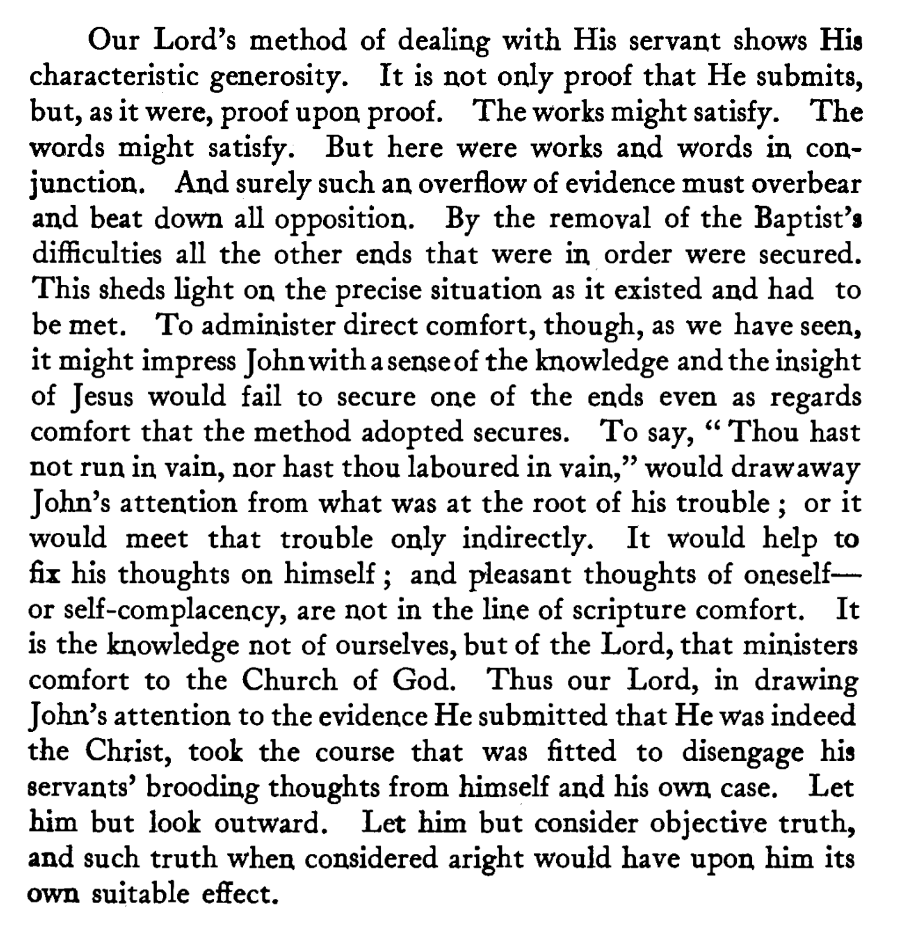
Absolutely tremendous article (sermon?) in the public domain by Prof. John Macleod (1872-1948). I recently recorded it as I prepared for a recent message of mine on Luke 7:18-23, “John Baptist hath sent us unto thee, saying, Art thou he that should come? or look we for another?” (Verse 20.) You won’t be disappointed. Here’s a little “handful of purpose.” And view the entire audio library here, with more Macleod recordings and many others.
“I am Debtor”
Posted in Audio Resources, Church of Scotland, Free Church of Scotland, Gospel Proclamation, Missiology, The Gospel & the Poor on December 9, 2024| Leave a Comment »
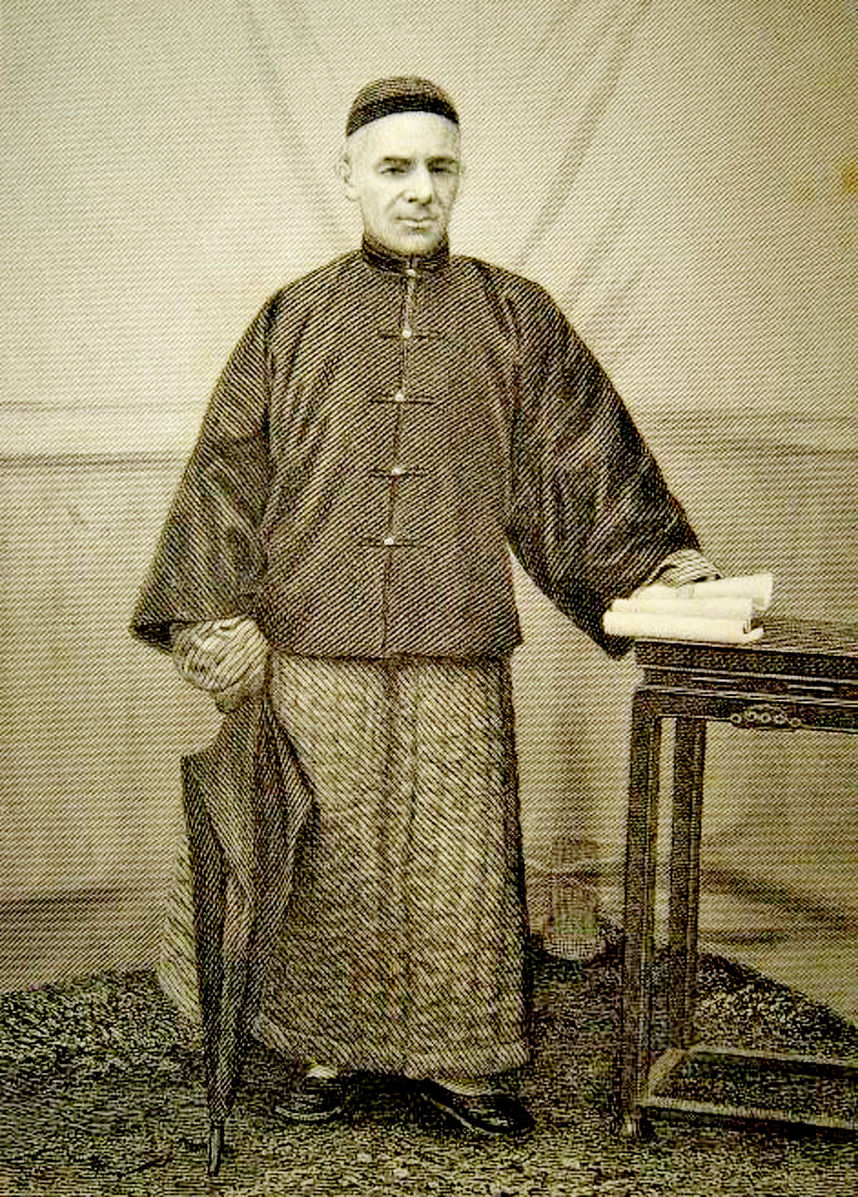
The following is a portion from William Chalmers Burns‘ sermon “I am Debtor,” from Romans 1:14. Burns was a good friend and ministerial colleague to Robert Murray M’Cheyne, and was a heroic Presbyterian missionary to China. Listen to the full audio recording here. And for more audio resources, click on the WPE Audio tab at the top.
* * * *
The apostle says something more than this, — “I am debtor both to the Greeks, and to the Barbarians; both to the wise, and the unwise.” The meaning of this seems to be, — if I were free to make a choice, I might choose the barbarian or I might choose the Greek, I might choose the wise or the unwise; but Paul says, I am debtor, and you know a debtor has no such thing as a choice to make to whom he will pay his debts. The debtor knows this, and the believer feels it just in the same way. “Whatever my calculations may be, or whatever I might myself desire, the question is not, what would I like, but what is my commission, — what are the objects of my embassy? It is not my choice that I have to do with, but God’s commission, — what instructions does it contain?”
We would fain impress this important, solemn truth upon God’s children. Believer, do you feel this? Do you know what it is to feel yourself a debtor to a lost world? Have you ever thought of what object Christ had in view when He brought you to Himself? what design He had in calling you? It was certainly, in the first instance, to save you from perdition, but that was not the only end. It is possible to think too much, or, at least, too exclusively, about your own case. In one sense you cannot do that; woe be to him who seeks to pull the mote out of a brother’s eye, when a beam is in his own. But yet a believer must remember that he is called to know Christ, not only to be safe himself, but also that he may be a witness for Christ in the world. Ah! think of this; don’t be selfish in the matter of salvation, and remember above all, that his is not a thing which you may or may not do, just as you like. Some people do much in this way, just because they have a liking to it, and because the employment suits their taste – and it is a happy thing to feel that; but there is a far more unchangeable foundation for a believer’s labour in the Lord’s vineyard than that. The man is no longer free to like, or not to like; he is a debtor now – a debtor to do it fully, and constantly, and unceasingly, and devotedly, whether he likes it or not. Think of it in this light, and then you will be going and hasting to tell your friends, and all whom you know, of these precious things of God. Oh, if this were fully felt, and felt universally , how many would be preaching whose mouths are dumb through sloth and idleness! There would be fewer preaching as a trade, and more preaching as debtors, forevery believer would then have a voice with which to sound the praises of the most high God.
“Of the Festivals of the Church, and Especially Christmas”
Posted in Audio Resources, New England Puritanism, Puritans & Puritanism, Sabbatarianism & the Church Calendar, Worship, True & False, tagged bible, christianity, christmas, faith, jesus on December 1, 2024| Leave a Comment »
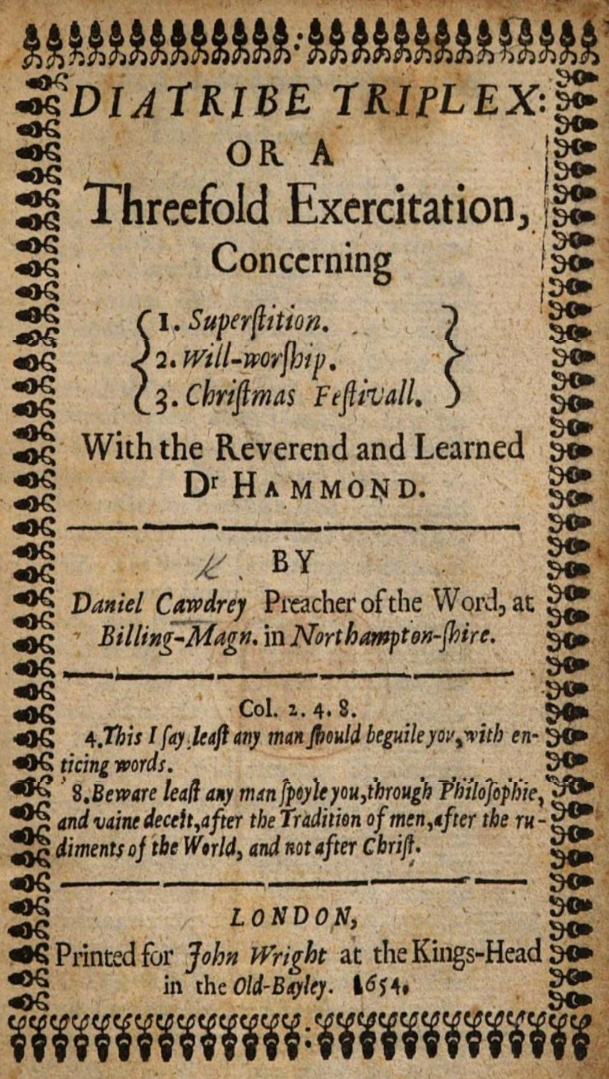
Just finished recording part 2 of 2 of Daniel Cawdrey’s “Of the Festivals of the Church, and Especially Christmas.” Listen to the audio here. This is the third part of a larger work, attached below. The University of Michigan has digitized the text here.
Visit the complete WPE Audio library.
Cawdrey (1588–1664) was a member of the Westminster Assembly, which produced the Westminster Confession of Faith, as well as the Larger and Shorter Catechisms. Like the rest of the Puritans of England and New England, as well as the Presbyterians of Scotland, these godly men rejected all holy days of men’s devising based on what has become called the ‘regulative principle of worship,’ which requires us to have clear and undoubted certainty about the divine, scriptural origin of any worship practice, and that any worship falling short of this standard must be set aside.
The Puritans were not kill-joys or men of bigoted, narrow minds. Anyone who reads their sermons and devotional writings will find them to be the warmest lovers of God, of Christ, and of their fellow men. They were also as a rule generous, catholic-minded men who embraced all those who called upon the Lord in sincerity, even among those who might disagree with them. And above all, they were men who passionately wanted to please God, even if that went against the flow of the opinions of men. I offer these recordings in that spirit.
The following is a sample from Cawdrey, in particular on his contention that the observation of Christmas is ultimately hostile to the proper, apostolic practice of Lord’s day observance:
“[It is said that] The Birth of Christ, is a mercy of such excellent quality, that it can never be overvalued, &c. This is granted; But to Institute a day as Holy, without command of Christ, for an Annual commemoration of this, is above the power of any Church, and a Superstitious presumption: and [altogether] needless; considering that the Lord’s day, (which includes the commemoration, not only of his Birth, but his Resurrection, and the whole works of our Redemption by him) was instituted by himself, or his Apostles, by him authorized and inspired, for this very end; & comes [around] once in every week. To limit it therefore to one day in a year, to remember that Mercy, is not an exaltation, but a derogation from it. If this were done, on his own design[ated] Day, wee need not fixe another day.”
Friend, let appeal to you not to brush off this position. You may in the end disagree with it; by all means, search the Scriptures, and be a Berean. But none of us “have attained,” and we should always be willing to bring any of our views or practices to the touchstone of Scripture. Embracing this position would naturally involve sacrifices, hurt feelings, and misunderstandings. But I can assure you from close to 30 years of experience after becoming convinced, and after raising four children in these principles, it is well worth it. “Them that honor me, I will honor.” And you don’t have to be a Grinch! I’m not—and I keep up many, many friendships with dear brothers who aren’t persuaded.
But of course, they’ll understand sooner or later (1 Cor. 13:12)!
Magnalia Christi Americana (1698)
Posted in Audio Resources, New England Puritanism, Puritans & Puritanism, The Church in America on November 28, 2024| Leave a Comment »

I’ve recorded several chapters of Cotton Mather’s great Magnalia Christi Americana: Or, The Ecclesiastical History of New-England: from Its First Planting, in the Year 1620, Unto the Year of Our Lord 1698. Here are the opening words of the first chapter, “Discoveries of America.”
* * * * *
“It is the opinion of some, though ’tis but an opinion, and but of some learned men, that when the sacred oracles “of Heaven assure us, the things under the earth are some of those, whose knees are to bow in the name of Jesus, by those things are meant the inhabitants of America, who are Antipodes to those of the other hemisphere. I would not quote any words of Lactantius, though there are some to countenance this interpretation, because of their being so ungeographical: nor would I go to strengthen the interpretation by reciting the words of the Indians to the first white invaders of their territories, we hear you are come from under the world to take our world from us. But granting the uncertainty of such an exposition, I shall yet give the Church of God a certain account of those things, which in America have been believing and adoring the glorious name of Jesus; and of that country in America, where those things have been attended with circumstances most remarkable. I can contentedly allow that America (which, as the learned Nicholas Fuller observes, might more justly be called Columbina) was altogether unknown to the penmen of the Holy Scriptures, and in the ages when the Scriptures were penned. I can allow, that those parts of the earth, which do not include America, are, in the inspired writings of Luke and of Paul, stiled all the world. I can allow, that the opinion of Torniellus and of Pagius, about the apostles preaching the gospel in America, has been sufficiently refuted by Basnagius. But I am out of the reach of Pope Zachary’s excommunication. I can assert the existence of the American Antipodes: and I can report unto the European churches great occurrences among these Americans. Yet I will report every one of them with such a Christian and exact veracity, that no man shall have cause to use about any one of them the words which the great Austin (as great as he was) used about the existence of Antipodes; it is a fable, and nulla ratione credendum.
Ignoring discipline tantamount to unchurching
Posted in Audio Resources, Catholicity, Church of Scotland, Church Order & Discipline, Separatism & Schism, The Visible Church on November 26, 2024| Leave a Comment »
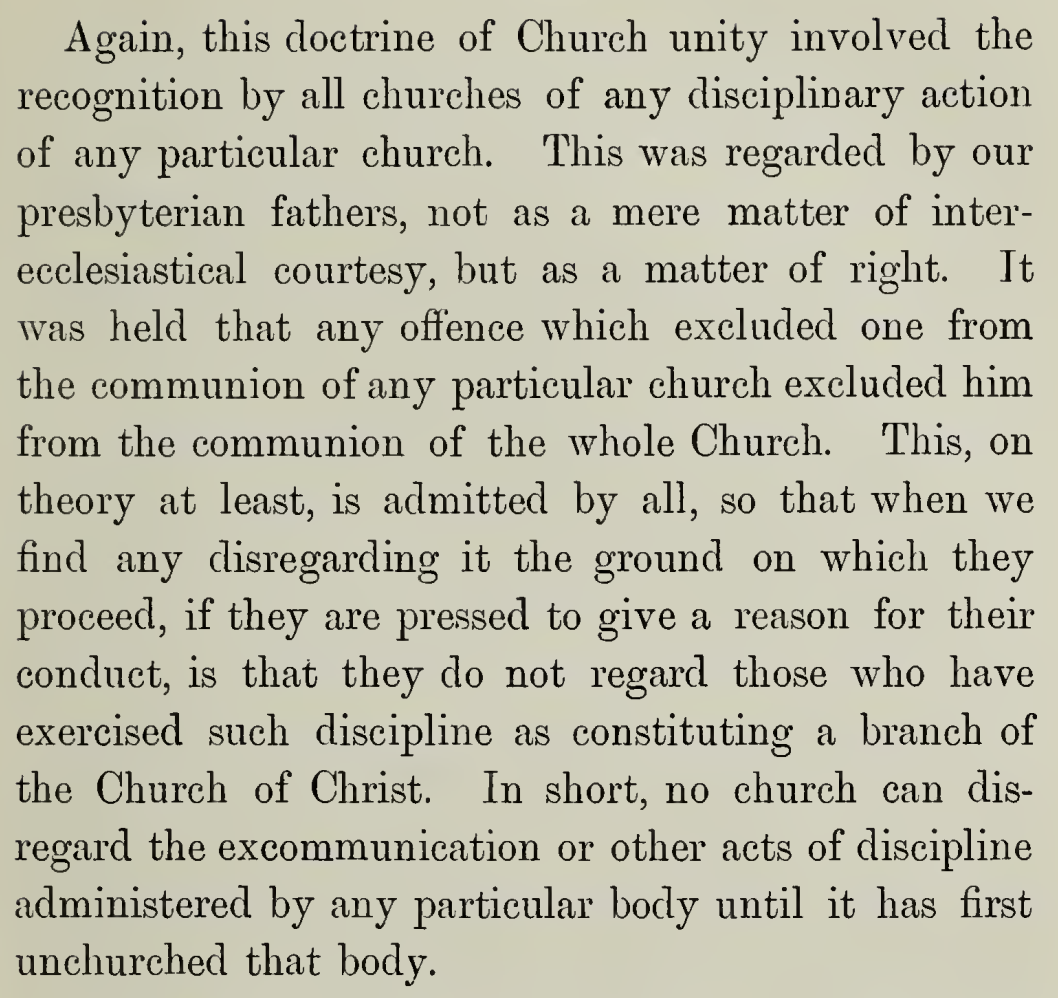
MacPherson explains the radically catholic ecclesiology of our Scottish Presbyterian forbears. Listen to an audio recording of the chapter where he treats this subject here.
Whole doctrine catholicity | “Who is she that looketh forth as the morning, fair as the moon, clear as the sun, and terrible as an army with banners” (Song 6:10)?
Puritan counsel on moving
Posted in Audio Resources, Conscience & Casuistry, New England Puritanism, Puritans & Puritanism on November 2, 2024| Leave a Comment »
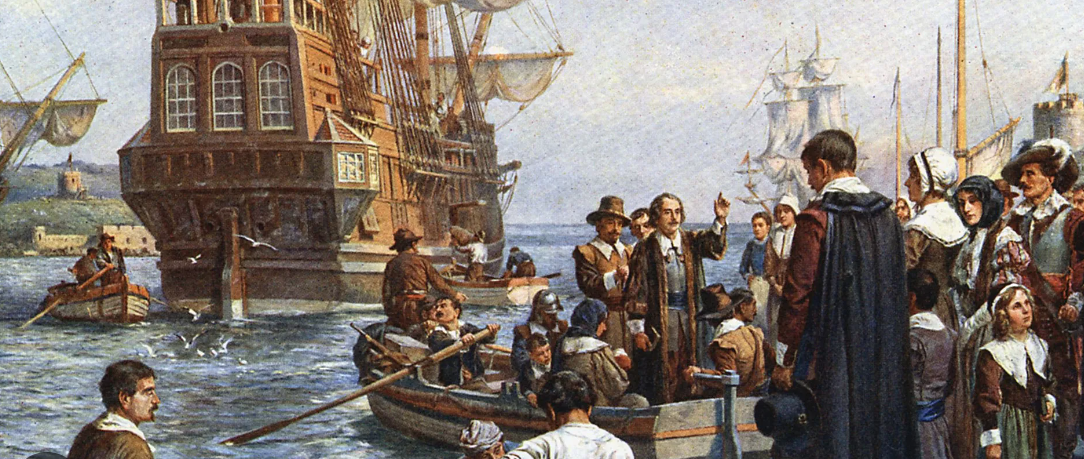
John Cotton gives an extremely helpful list of biblical considerations for the Christian who is trying to decide whether or not to move. This is taken from “God’s Promise to His Plantations” (1630). I’ve left the archaic formatting in place.
* * * * *
Quest. But how shall I know whether God hath appointed me such a place, if I be well where I am, what may warrant my removeall?
Answ. There be foure or five good things, for procurement of any of which I may remove. Secondly, there be some evill things, for avoiding of any of which wee may transplant our selves. Thirdly, if withall we find some speciall providence of God concurring in either of both concerning our selves, and applying general grounds of removall to our personall estate.
First, wee may remove for the gaining of knowledge. Our Saviour commends it in the Queene of the south, that she came from the utmost parts of the earth to heare the wisdom of Solomon: Matth. 12. 42. And surely with him she might have continued for the same end, if her personall calling had not recalled her home.
Secondly, some remove and travaile for merchandize and gaine-sake; Daily bread may be sought from farre, Prov. 31. 14. Yea our Saviour approveth travaile for Merchants, Matth. 13. 45, 46. when hee compareth a Christian to a Merchantman seeking pearles: For he never fetcheth a comparison from any unlawful thing to illustrate a thing lawfull. The comparison from the unjust Steward, and from the Theefe in the night, is not taken from the injustice of the one, or the theft of the other; but from the wisdome of the one, and the sodainnesse of the other; which in themselves are not unlawfull.
To read further, see below. To access the entire sermon and an audio recording, click here.
Robert Bruce: What do we get in the Supper?
Posted in Audio Resources, Church of Scotland, Sacraments, The Lord's Supper, tagged baptism, christianity, church, jesus, Sacraments on October 8, 2024| Leave a Comment »
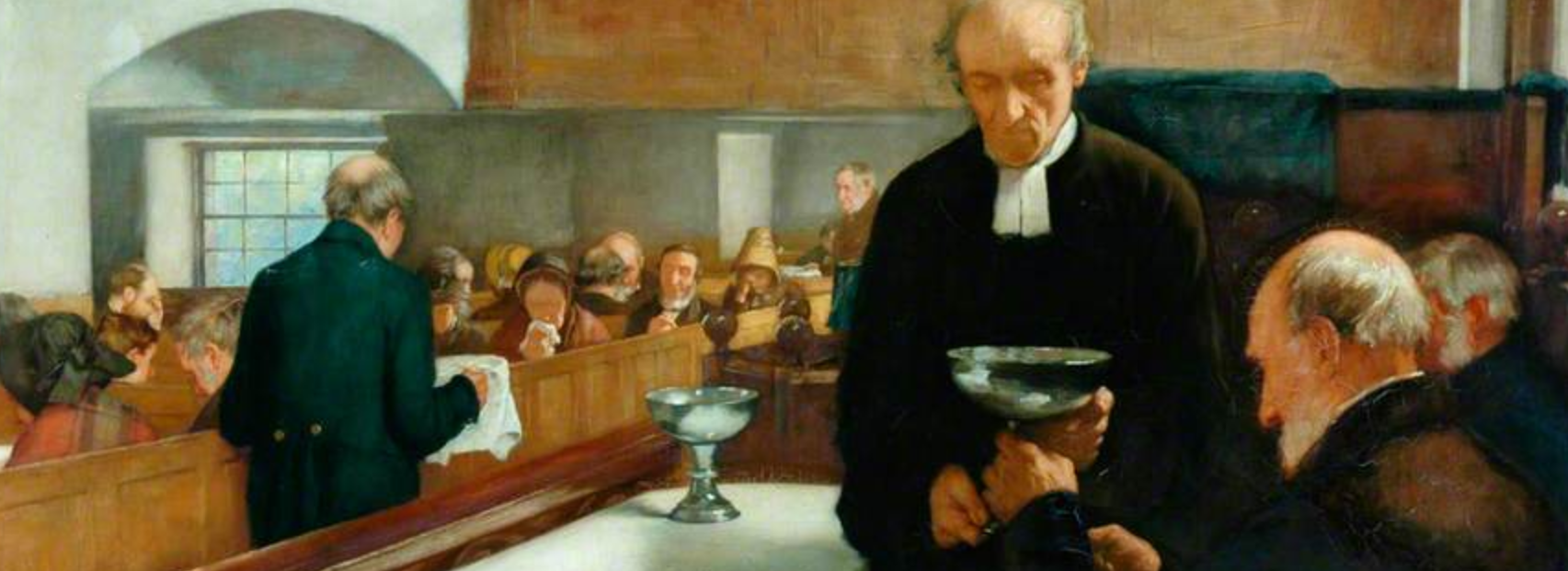
“This is their [Romanist] argument; whereof ye see their conclusion to be this: We get no other new thing in the sacrament than we do in the word, if there be no perception but spiritual. Ergo, the sacrament, is superfluous. We admit the antecedent to be true; we get no other thing, nor no new thing in the sacrament, but the same thing which we got in the word. I would have thee devise and imagine with thyself, what new thing thou wouldest have: let the heart of man devise, imagine, and wish; he durst never have thought to have such a thing as the Son of God; he durst never have presumed, to have pierced the clouds, to have ascended so high, as to have craved the Son of God in His flesh, to be the food of his soul. Having the Son of God, thou hast Him who is the heir of all things; who is King of heaven and earth; and in Him thou hast all things. What more then canst thou wish? What better thing canst thou wish ? He is equal with the Father, one in substance with the Father, true God, and true man, what more canst thou wish? Therefore, I say, we get no other thing in the sacrament than we had in the word: content thee with this. But suppose it be so; yet the sacrament is not superfluous. For wouldest thou understand what new thing thou obtainest, what other thing tbou gettest? I will tell thee. Suppose thou get that same thing which thou hadst in the word, yet thou gettest that same thing better. What is that better? Thou obtainest a greater and surer hold of that same thing in tire sacrament, than thou hadst by the hearing of the word. That same thing which thou possessedst by the hearing of the word, thou dost possess now more largely; He has larger bounds in thy soul by the receiving of the sacrament, than otherwise He could have by the hearing of the word only. Then, wilt thou ask what new thing we get? I say, we get this new thing : we get Christ better than we did before; we get the thing which we had, more fully, that is, with a surer apprehension than we had of it before; we get a greater hold of Christ now. For by the sacrament my faith is nourished, the bounds of my soul are enlarged: and so, whereas I had but a little hold of Christ before, as it were between my finger and my thumb, now I get Him in my whole hand; and still the more that my faith grows, the better hold I get of Christ Jesus. So the sacrament is very necessary, if it were no more but to get Christ better, and to get a closer apprehension of Him, by the Sacrament than we could have before.”
The following is an extremely profound passage from Robert Bruce’s magisterial treatise on the sacrament of the Lord’s Supper. Listen to this chapter in audio here. Those who may not be used to the older style may benefit from a modern rendition available here. Access more titles in the WPE Audio library.
 West Port Experiment