Feeds:
Posts
Comments

Archive for the ‘Articles’ Category

The following is especially written for young men.  It’s advice I hope to give to my own son when he comes of age.  But of course, there are principles that carry over for females as well.

* * *

1. It is billus-08etter to marry than to burn. If you are not called to be celibate, be honest with yourself (Matt. 19:12, 1 Cor. 7:9). Then make three things your full-time job, in this order. First, become outwardly ready. If you’re miles away from financial readiness, don’t waste time and energy by toying with what you can’t yet have. Yet, don’t wait for a perfect readiness that may never come, or you may tempt yourself. Second, seriously begin finding a suitable partner. Finally, get married as soon as reasonably possible. Don’t prolong things unnecessarily. This is a recipe for trouble.
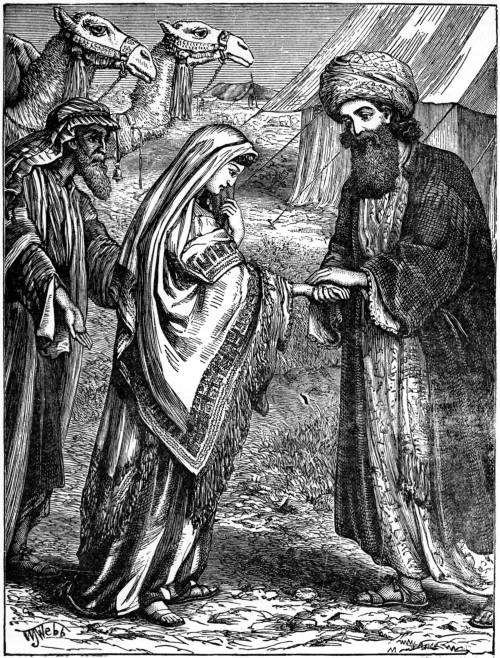
2. Do not be unequally yoked. This means that you ought to seek a sincere, orthodox Christian, above all (1 Cor. 7:39, 2 Cor. 6:14). Then after this non-negotiable, seek one of relatively the same spiritual maturity, of relatively the same confessional and practical convictions, and of relatively the same outward circumstances – age, appearance, socio-economic background, etc. Race, however, should not be a factor. As a rule, the better the match, the better the marriage. The more mismatched, the more occasions for problems down the road.

3. Keep perspective on attraction. Don’t discount attraction or feel unholy for desiring it – God made it (Gen. 24:16, Prov. 30:18, 19). But don’t let it override your better judgment, as the flesh can make it a snare (Judg. 14:3). Give greater weight to piety than to appearances (1 Sam. 16:7, Prov. 11:22, 31:10-31, 1 Pet. 3:3, 4). Also keep in mind that beauty is somewhat subjective. It is multi-faceted, and some aspects can take time to discover and appreciate. Marriage is but the beginning of a journey in discovering a partner’s beauty – and seeing beyond imperfections. Last, be aware of the influence of our culture’s paradigms on your remaining corruption. It wants to condition your ideals, and you must manfully resist it (Rom. 12:1, 2).

4. Navigate safely to shore. In terms of process, start with friendships in safe contexts. You can always make friends, but you should never break hearts if you can help it. Reserve your affections (as far as possible) for after engagement and your body for after marriage (1 Cor. 6:18, 2 Tim. 2:22).

5. Weigh the whole package. Look at pros and cons as impartially and prayerfully as you can. Be an intelligent reader of providence. Weigh such things as proximity, ‘availability,’ ‘attainability,’ personalities, the interest you sense or don’t sense, the in-law advantages and disadvantages, church situations, the prospect’s outlook on important life-issues, such as family, career, education, etc., and the time investment necessary in working through all this. Remember #1 and that time is ticking.

6. Ask advice and help from your parents and trusted friends – and pray. There is wisdom in a multitude of counselors. They will often give you helpful perspective – and perhaps help you make connections. But don’t ever forget to bring this all before the Lord. All answers are with Him (Jas. 1:5). “Delight yourself in the Lord, and he shall give you the desires of your heart.”

7. Never give your ‘all’ to anyone but Jesus, and love Him above anyone else. He is the best match, and will never disappoint. And remember that the married state is temporary, while heaven is for eternity (1 Cor. 7:29-31).

Read Full Post »

From "A Christmas Story" (1983)It’s Christmas Eve, and we’re among the very precious few nowadays who aren’t doing anything special. Though we are committed Christians, we don’t observe this holiday – though we love and embrace all sincere Christians who celebrate the God who entered our world of sin and misery through a virgin’s womb. Yet, unlike the masses both of saints and seculars, for us this is just another Monday. And tomorrow is just another Tuesday. (more…)

Read Full Post »

In the previous post on building multi-generational churches, I focused mainly on the duties of parents and especially fathers.  On their shoulders, in large part, rests the future of the Church.  But of course, as we observed, the church ‘fathers’ must cultivate them, and so really it does come back to the teaching and ruling ministry of the Church at the end of the day.

The following extract from Samuel Miller (1769-1850) comes from his masterly work, The Christian Education of Children and Youth. In this passage, he urges one particular duty of church officers in raising up and retaining a godly seed for the Church.  It is the time-honored Reformed practice of pastoral catechizing of the youth:

It follows, of course, that the pastor who does not diligently attend to the religious instruction of the young people of his charge, is blind to the comfort, the acceptance, and the popularity of his own ministry. Why is it that so many ministers, before reaching an infirm old age, grow out of date with their people, and lose their influence with them? Especially, why is it that the younger part of their flocks feel so little attraction to them, dislike their preaching, and sigh for a change of pastors? There is reason to believe that this has seldom occurred, except in cases in which pastors have been eminently negligent of the religious training of their young people; in which, however respectable they may have been for their talents, their learning, and their worth, in other respects, they have utterly failed to bind the affections of the children to their persons; to make every one of them revere and love them as affectionate fathers; and, by faithful attentions, to inspire them with the strongest sentiments of veneration and filial attachment. Those whose range of observation has been considerable, have, no doubt, seen examples of ministers, whose preaching was by no means very striking or attractive, yet retaining to the latest period of their lives, the affections of all committed to their care, and especially being the favourites of the young people, who have rallied round them in their old age, and contributed not a little to render their last days both useful and happy. It may be doubted whether such a case ever occurred excepting where the pastor had bestowed much attention on the young people of his charge.

Such are some of the evils which flow from neglect on the part of the Church to train up her children in the knowledge of her doctrines and order. She may expect to see a majority of those children—even children of professors of religion—growing up in ignorance and profligacy; of course forsaking the church of their fathers; leaving her either to sink, or to be filled up by converts from without; turning away from those pastors who neglected them; and causing such pastors to experience in their old age, the merited reward of unfaithful servants (22-23).

Here is one big reason why churches, even Reformed ones, lose their youth.  The ministry has neglected catechizing.  Church catechizing, that is.  Much of the evangelical ministry today, sadly, has farmed out its duty here to ‘youth pastors’ – most of whom are often little better than glorified baby-sitters.  At best, it has delegated church education to pious, but unordained lay people.  But as Miller shrewdly observes, this passing on duty is also passing on a major opportunity.  An opportunity for the ministry to win young people’s minds to the principles of the church of their baptism, as well as an opportunity to win their hearts by sustained care and attention.  A profound insight indeed.

My mind here is taken to a beautiful mental image I have of the good Dr. Luther.   I can’t recall if it was a painting or something I read at some point – but forever irretrievable, I fear.  The master has gathered his pupils around him, and he is imparting a sacred lesson.  The little peasant catechumens are listening with rapt attention, and on occasion one is put on the spot to give an answer.   Here we see the embodiment of duty, of love, and of shrewd church policy, aimed at winning and at retaining the young.

We in the Reformed ministry must imitate our Saviour.  “Suffer the little children to come unto me, and forbid them not: for of such is the Kingdom of heaven.”  And when we are done baptizing them, let us yet hold on to them.  Let us retain them in our hearts, in our prayers, in our attentions – and in our devoted, focused instruction of them.  And combining this discipline with godly parenting in the home, by the blessing of the Spirit, shouldn’t we hope to mend the breaches in Zion’s walls?

Read Full Post »

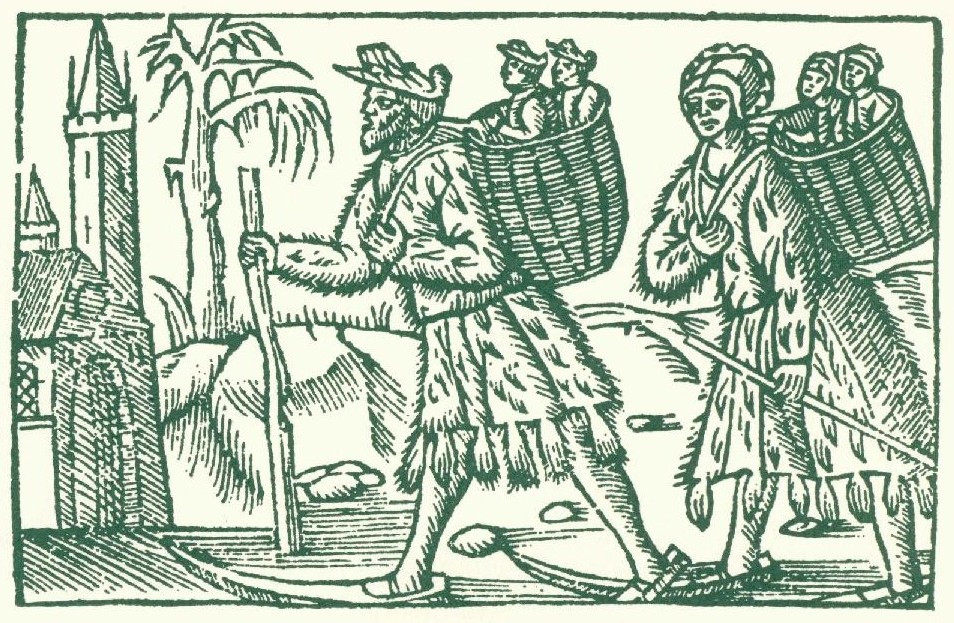
olaus-magnus-jpeg1I serve in a Presbyterian denomination with congregations generally consisting of first-generation converts to the Reformed faith and their children.  We don’t have swarms of young people, and many of them either leave for ‘greener’ Christian pastures or, sadly, go prodigal.  So retention is a problem, and ‘sustainability’ (to use an overused term) is a regular worry.  Sometimes, it is easy to feel like we’re on the high seas in a leaky rowboat, and the winds are kicking up.

I must confess that I look wistfully at some of those Presbyterian and Reformed congregations that are large, established, and multi-generational.  Without having sold out.  They are not many, of course.  Usually in the present day large equals compromised.  But God has been faithful to some communions.  The ones I know are Dutch Reformed.  They don’t just have Christian but Reformed schools.  That is, teachers have to subscribe to the subordinate standards.  Many of the children usually profess the faith in the congregations where they were baptized.  They then find mates, marry, settle down, bear children and further populate their ranks.  If not in their original congregation, then not far off.  Often in the same denomination. (more…)

Read Full Post »

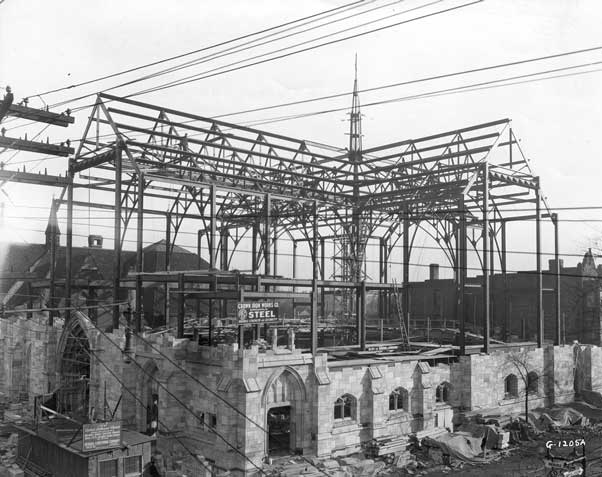
Writing more than a century before the McDonaldization of the Church, Thomas Chalmers (1780-1847) exposed the fallacy of faith in structures for evangelization.  It is a “Quixotic imagination, that on the strength of churches alone, viewed but in the light of material apparatus, we were to Christianize the population – expecting of these new erections, that, like so many fairy castles, they were, of themselves, to transform every domain in which they were placed into a moral fairyland” (Works 18:109).  While perhaps most evangelicals would probably deny the bald proposition that the building can birth a believer, yet it is very easy subconsciously to think that outward can allure the natural man out of his state of spiritual rebellion.  The fact is, if you build it, they just won’t come.  It is fleshly to think otherwise, for the arm of the flesh – and the fleshly mind – are powerless.

Yes, but what if it is well stocked with professionals?  Professional preachers, counsellors, and administrators?  All with D.Mins?  What if the attractive building is complemented with wide array of wonderful programs for young and old, and for every other conceivable demographic slice?  If you build that, will they come?  No doubt.  But then there is coming (Jn. 6:24-26), and there is coming (Jn. 6:65-66)!

Yet, church buildings are of  value.  Chalmers believed as much and zealously campaigned for the provision of more church buildings in his day.  By his efforts, more than 200 were built in the 1830s throughout Scotland.  But buildings are nothing unless they are furnished with a faithful ministry.  What is more, he contended, they must not serve the public indiscriminately.  To the church and its ministry a fixed, geographical district ought to be assigned for its regular and faithful cultivation.  A church ought to be a neighborhood church, a parish church, with a busy parish minister.  

Build that, and they will come.  Those whom the Father draws, that is.

Read Full Post »

Call me a curmudgeon.  Or an arch-conservative, allergic to all things new.  And I will freely admit that I romanticize earlier days, fully aware that they were never so rosy as I fancy them.  But I am just not ready to jump on the small (‘cell’) groups bandwagon like so many other Reformed folks.  I have already raised some questions on the subject in a previous post.  I really do question how ecclesiologically Reformed it is after all.

But here’s another thing that makes me nervous of them.  I fear that they detract from a robust pulpit ministry, from Lord’s day to Lord’s day.  In some circles, cell groups aim to provide meaningful biblical study for preachers who want their Sunday services to be ‘seeker sensitive.’   In my judgment, that makes cell groups a crutch for an impotent ministry.

Related, it seems that they are now being touted (or maybe I’m just noticing it) as suitable vehicles for ‘missional’ outreach.  Unbelievers need a ‘safe’ place to be welcomed, where they will not feel judged.  So we can win them over to church, with all its trappings, through the back door.  Now, I am all for loving unbelievers and making them feel loved.  But what about public preaching as a means of grace?   What of God’s choice of the foolishness of preaching?  What of the scandal of the cross?  And does that scandal come in bold face through the small groups, or is it in the fine print on page 236?

Why are Reformed people enthusiastic about this?  Am I off, or is this broad evangelicalism, low churchism, or even anti-churchism sneaking in under the radar?

Read Full Post »

The practice of Reformed catechesis is quite counter-cultural.  Having given it a little thought, a few reasons come to mind.  1. Catechesis is an authoritative discipline.  It deals not with opinions, but with dogma.  Not with suggestions, but with commandments.  Not tips and hints, but with divinely mandated means of grace.  2. Catechesis is churchly in orientation.  It is by the church and for the church.  It presumes that membership in the Visible Church – nothing less than the Kingdom of God on earth – is a high privilege, and involves serious preparation.  3. Catechesis is rigorously intellectual.  While seeking to reach those of the smallest capacities, even the “little ones” without offending them, it yet pushes everyone under its influence to think and think deeply.  4. Catechesis is thoroughly covenantal.  It has always had the next generation of the church in view, preparing baptized children to lay hold of the promise that is their birthright (Acts 2:39).  While catechesis leaves regeneration to the sovereignty of the Spirit, it does not leave children to cut their own religious path.  It cuts the path for them.  We do not blush to say that in catechism, the church indoctrinates its children.  5. Catechesis is catholic.  By catholic, I mean that it does not deal with secondary matters, much less the novel, but with the faith once delivered to the saints.  The things “most surely believed among us” (Luke 1:1).  It is not provincial, pedaling its own idiosyncratic theology (African theology, feminist theology, etc.), but it holds forth what unifies all true believers in all ages.  There is “one body, and one Spirit . . . one Lord, one faith, one baptism, one God and Father of all” (Eph. 4:4-6).   6. Catechesis is confessional.  Contra biblicism, catechesis affirms that the Spirit leads his Church into all truth, and that the Church has a responsibility to articulate that truth using its own words.  Further, it delimits what we must believe from what we must not – heresy.  7. Catechesis is biblical.  “To the law and to the testimony.”  If one seriously studies the great catechisms of the Reformation, one will be confronted not only with lengthy footnoted proof texts undergirding each proposition.  He will also see how their very language is shaped by the Scriptures.  Not surprisingly, then, catechesis is rejected precisely because men will not receive the Word of God.

Read Full Post »

The architects of the Reformed Churches in the 16th century were trans-generational thinkers. As those who rediscovered Covenant Theology, this should be expected. In reading the First Book of Discipline (1560), one will encounter explicit and repeated concern for future generations as justification for church policy decisions. For “the profite of the posterity to come.” Like good fathers, they wanted what was best for their bairns, and their bairns’ bairns as well!

Does this paternal, trans-generational concern shape the way we ‘do church’?  Is what we do in doctrine, worship, and government really in the best interests of the rising generations, or is it more candy to placate the over-indulged? Are we correcting and cultivating, or just coddling?

Read Full Post »

I’m certainly not well-versed in the current Reformed debates on the two kingdoms.  But what I have read in some quarters has given me the impression that the two kingdoms, church and state, ought to be as two ships passing in the night.  Each are on their own charted courses and should steer quite (quite!) clear of each other.
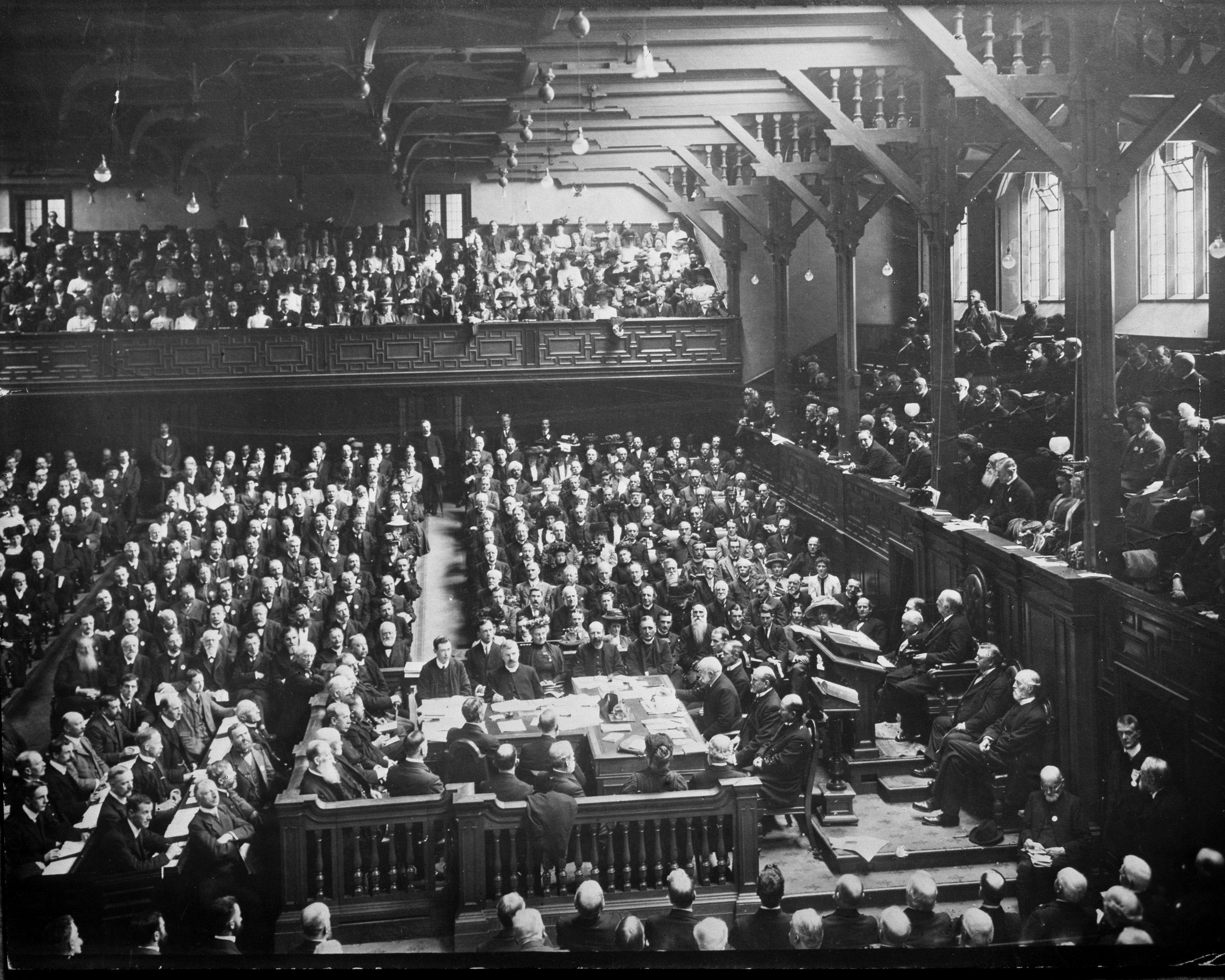
Now, this may be a position held in modern confessionally Reformed circles.  And it may have a pedigree going back to early 18th century American Presbyterianism.  But if my impression approximates to reality, then the position of some can hardly be advanced as classically reformed.  It may employ Melville’s famous terminology of the two kingdoms, but not the substance.

In my recent reading of the First and Second Books of Discipline (1560 and 1578 respectively) drafted by the architects of Presbyterianism, it is clear that the two kingdoms were to be distinct.  They ought not intrude on each other’s territory.  But note how they envisaged the ideal relationship, as recorded in the opening sections of the Second Book of Discipline:

10. The civil power should command the spiritual to exercise and do their office according to the word of God. The spiritual rulers should require the Christian magistrate to minister justice and punish vice, and to maintain the liberty and quietness of the kirk within their bounds.

11. The magistrate commands external things for external peace and quietness amongst the subjects; the minister handles external things only for conscience cause.

12. The magistrate handles external things only, and actions done before men; but the spiritual ruler judges both inward affections and external actions, in respect of conscience, by the word of God.

13. The civil magistrate craves and gets obedience by the sword and other external means, but the ministry by the spiritual sword and spiritual means.

14. The magistrate neither ought to preach, minister the sacraments, nor execute the censures of the kirk, nor yet prescribe any rule how it should be done, but command the ministers to observe the rule commanded in the word, and punish the transgressors by civil means. The ministers exercise not the civil jurisdiction, but teach the magistrate how it should be exercised according to the word.

15. The magistrate ought to assist, maintain, and fortify the jurisdiction of the kirk. The ministers should assist their princes in all things agreeable to the word, provided they neglect not their own charge by involving themselves in civil affairs.

Hardly did the Scottish Reformers admit the “Am I my brother’s keeper?” principle in their concept of the two kingdoms.  No, Cain ought not intermeddle in Abel’s affairs.  But neither should he ignore him as though he had relationship whatsoever.  The civil magistrate was to have a concern and exert his influence in the Kirk circa sacris.  So likewise the Kirk had a prophetic mantle to tell the civil magistrate how he ought to rule the people!

Read Full Post »

More often than not, we identify Presbyterianism as a form of church government.  But recently, it occurred to me that a preacher’s exercise of looking at good commentaries after he has done his own firsthand exegesis is also an exercise in Presbyterianism.  It is a golden mean between exegetical Independency and Episcopacy.  Exegetical Independency says ‘no’ to the fruits of other men’s labors and an unequivocal ‘yes’ to one’s own.  It is idosyncratic, and in too many instances just plain idiotic.  On the other extreme, there is exegetical Episcopacy.  It makes too much of the gifts of some, becoming slavishly subservient to them.  The preacher who rushes to the commentaries before digesting God’s Word himself buries his talent in a napkin and exalts others to a lordly status – even over Scripture.  As in church government, so in exegesis.  Presbyterianism is the golden mean.

Read Full Post »

« Newer Posts - Older Posts »