“Let a man examine himself, and so let him eat of that bread and drink of that cup. For he that eateth and drinketh unworthily, eateth and drinketh damnation [judgment] to himself, not discerning the Lord’s body” (1 Cor. 11:27-28).
How should you prepare for the Lord’s Supper? A few thoughts for those who have come to appreciate the theology, practice, and piety of confessional Presbyterianism around the celebration Communion.
First, dedicate time ahead of time. You cannot put things off until Saturday night. Nor can you just let attendance at a midweek preparatory service ‘check the box.’ You need to begin to schedule in some meaningful time, in addition to your regular personal and family seasons of worship, to be one on one with God. Adjust your week’s schedule early, especially if you have more responsibilities surrounding the weekend, such as food preparation, etc. And husbands, be especially mindful of your wives. Help plan ahead and streamline things so that preparation doesn’t get eclipsed, helping the children step up–and even stepping up yourself!
“I wish to communicate what to me is the most joyful event of my life. I have been intent for thirty years on the completion of a territorial experiment, and I have now to bless God for the consummation of it.” Thus Thomas Chalmers wrote to an American supporter of his West Port experiment in 1847, the final year of his life.
Read the entire story below. This is a modified portion from an earlier journal article, adapted for a broader audience. It was published in The Messenger, the denominational publication of the Free Reformed Churches. The entire magazine can be accessed here.
My daughter, Geneva, and I were discussing this recent chatter (bilge) of kinism among confessional Presbyterian types. She rather perceptively observed that there is a total confusion of race and culture here.
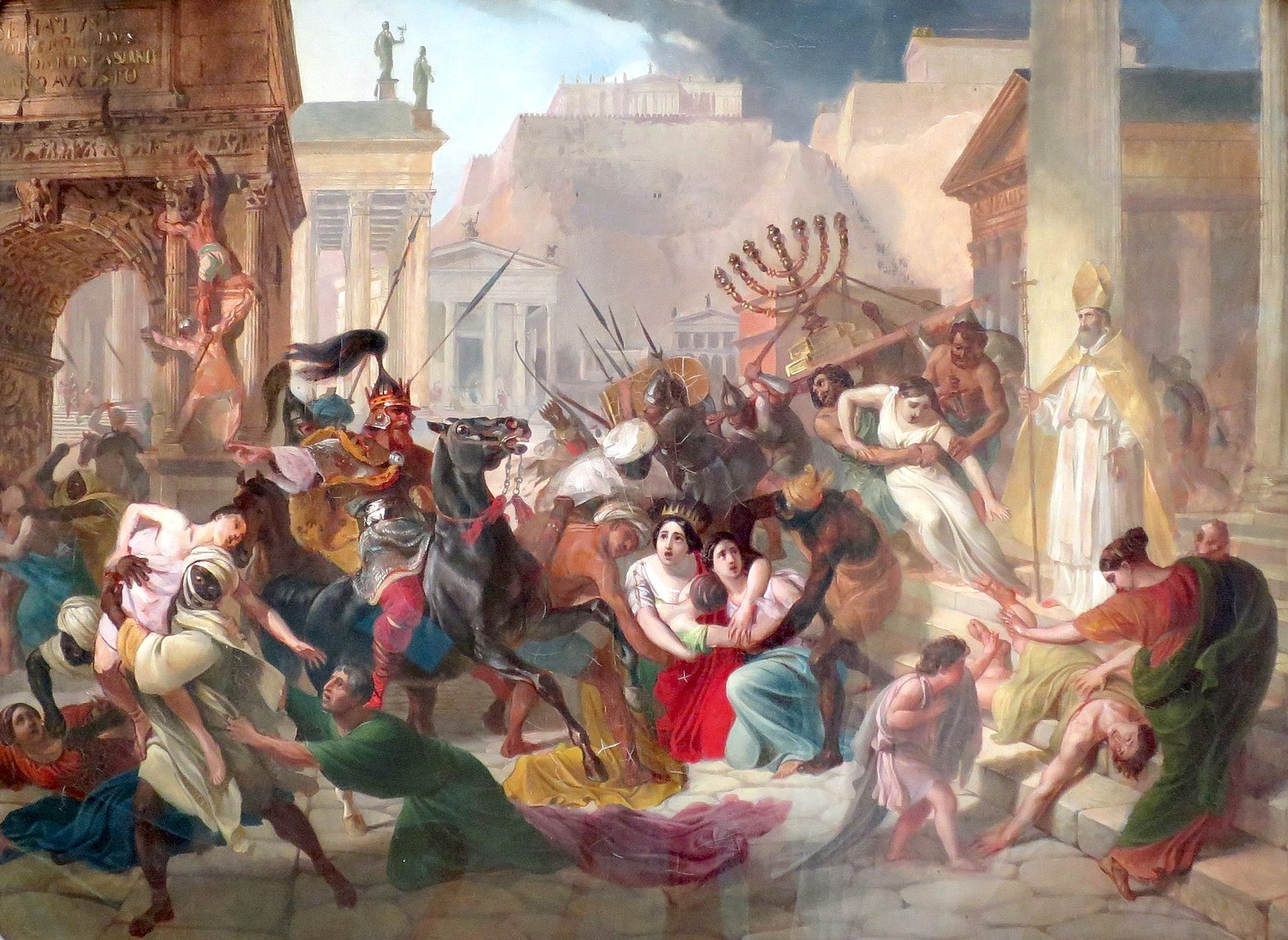
It is claimed that as the swarms of immigrants who pour through our porous border, “our people” are threatened. So does “our people” include Gavin Newsom and Joe Biden? I’m the first to bewail the dreadful non-enforcement of the U.S. border. But I share much more culture with many blacks and Latinos and find them more my people than many a white liberal. What is this supposed pristine white culture that is in jeopardy? And let’s not forget that the Vandals and Visigoths who toppled the Roman Empire became the genesis of Medieval Christendom. The “City of God” is my people.
“Fear not; from henceforth thou shalt catch men.” Luke 5:10
In this marvelous account, Jesus catches Peter. Now this may seem strange, given that Simon Peter had already become a follower of the Nazarene. Andrew, Peter’s brother, had been a following of John the Baptist. But the Baptist redirected his disciples to Jesus, for Jesus “must increase,” and he “decrease.” Andrew dutifully went, but soon was himself caught by the Master. From there he went to his brother for another catch. “We have found the Messiah” (Jn. 1:41)! Andrew drew Peter to shore, as it were, and Jesus did the rest! Peter began following Jesus.
But still, he kept one foot on dry land. He held on to his day job—better safe than sorry, after all! Following is one thing; forsaking all quite another. But Jesus would not let this one go. So on this morning, after he finished teaching the crowds, he bade Peter go fishing. “Launch out into the deep, and let down your nets for a draught.” What! Peter was the fisherman, Peter knew these waters like the back of his hand, Peter went when the fish were out, and Peter had done everything right. Yet Peter that night had come up empty. Yet out of respect, he yielded to Jesus. Reluctantly no doubt, but reverently. He believed the Master; at least, generally speaking. But what did the carpenter-preacher really know about this trade?
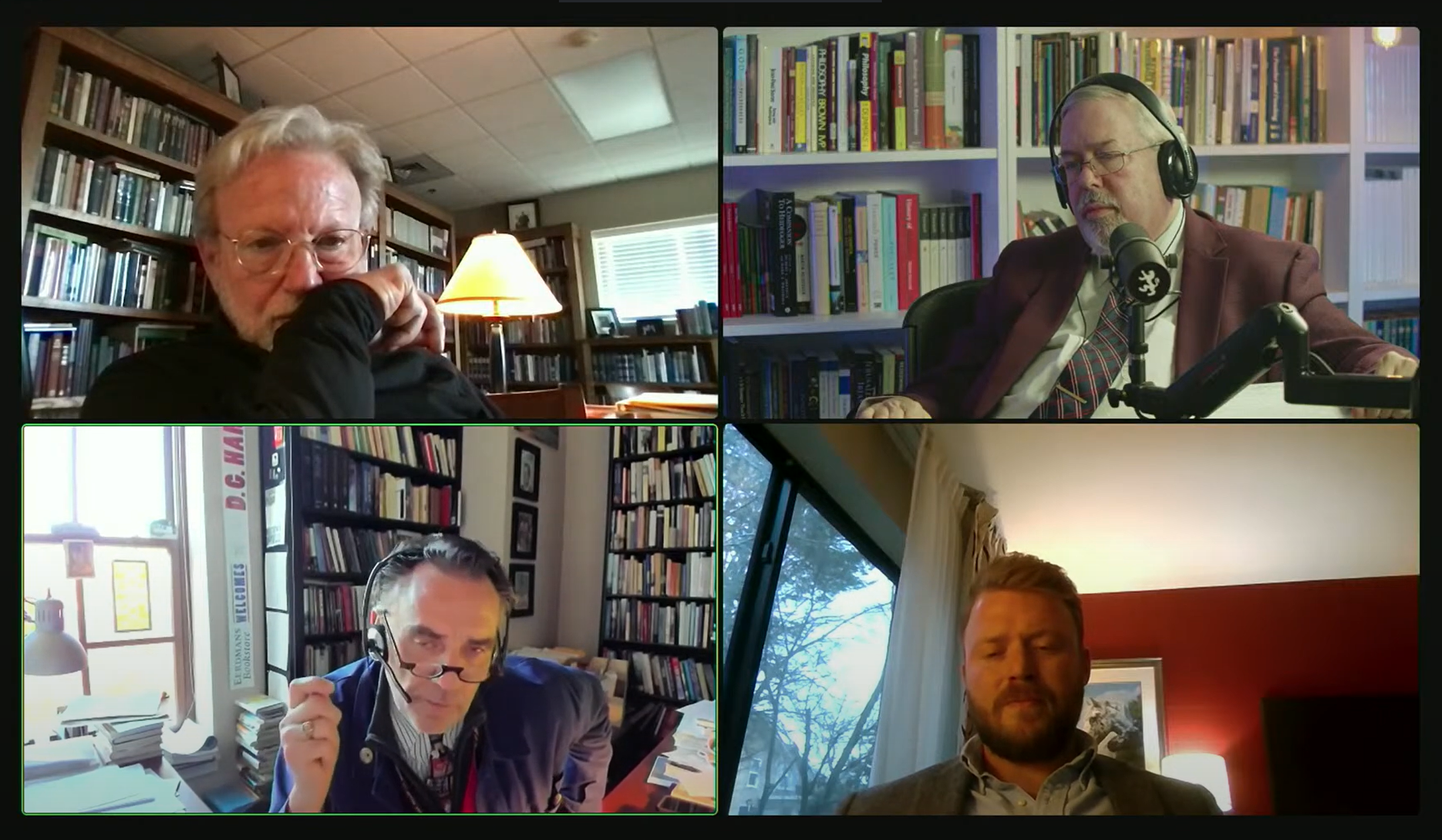
Establishments got some good press last week, at least on a respectable Reformed podcast. Kudos to Christ the Center for welcoming on Timon Cline to a panel discussion last Friday. While I’ve never heard of Timon before, I am sure going to read and listen to more of him. And I’m sure I’m not alone!
The panel discussion focused on Dr. Alan Strange’s newly published book, Empowered Witness: A Panel Discussion on Politics, Culture, and the Spiritual Mission of the Church. Giving feedback and critiques were D. G. Hart, Nick Wilborn, and Timon Cline. I’ve not read Strange’s book, so I’m only commenting on the video. The discussion up to Timon and related rejoinders was interesting enough. But Timon sure rocked the boat pretty hard when he brought up the obvious (at least from a historical Reformed perspective and not an American echo-chamber), that is, what about the spiritual nature in the church in light of the classic, confessionally Reformed and Presbyterian endorsements of religious establishments?
It’s clear that Dr. Strange was a bit flustered, though keeping a gracious demeanor. Sadly, though a respectable and accomplished Reformed scholar whom I otherwise appreciate, Strange’s response to Timon was more or less a rigmarole of informal fallacies and non-answers. Hart, however, just became flummoxed and unhinged. In contrast to Cline’s calm, measured demeanor, and even more importantly, to his much more careful, close, and logical reasoning (they guy’s a practicing lawyer, and it shines), Hart just full-on melted down, notwithstanding a clever little jab about Timon’s alleged tap-dancing like James Cagney. But even that was more amusing than apropos, as it only thinly veiled his chagrin. The young no-namer clearly bested his betters.
Just published another article on Thomas Chalmers. This is also a fantastic journal, and well worth the low cost to purchase. Get your copy here. For past articles I’ve written on Chalmers, visit the ‘About’ page and scroll to the bottom.
Cancelled services this ‘Christmas’ should be more than enough proof. Proof that Christmas observance and faithfulness to the pure worship of the one true and living God are mutually exclusive. That Christmas will, at least in part, be the death of us. And that, barring an outpouring of the Holy Spirit and a massive reformational purge of all the inventions of men in the worship of God, the West will soon be a paganized, secular wasteland.
Christmas and Christianity have admittedly coexisted for the better part of Christendom, except of course for the great Puritanic ‘pause’ from the 16th to the 18th centuries in much of English-speaking Protestantism. But how can what is fundamentally “not of heaven, but of men” (Luke 20:4), of unarguably ancient heathen and syncretistic Roman Catholic origin, ever live in peace with the Gospel of God? “And what concord [alliance] hath Christ with Belial? . . . And what agreement hath the temple of God with idols” (2 Cor. 6:15-16)?
This message was delivered at the Presbytery Conference of the Presbyterian Reformed Church on June 16, 2022. The audio is available here. Special thanks to Susan Abel for her selfless efforts in transcription!
* * * * *
Isaiah 35:7-10, “And the parched ground shall become a pool, and the thirsty land springs of water: in the habitation of dragons, where each lay, shall be grass with reeds and rushes. And an highway shall be there, and a way, and it shall be called The way of holiness; the unclean shall not pass over it; but it shall be for those: the wayfaring men, though fools, shall not err therein. No lion shall be there, nor any ravenous beast shall go up thereon, it shall not be found there; but the redeemed shall walk there. And the ransomed of the LORD shall return, and come to Zion with songs and everlasting joy upon their heads: they shall obtain joy and gladness, and sorrow and sighing shall flee away.”
Revelation 21:1-3, “And I saw a new heaven and a new earth: for the first heaven and the first earth were passed away; and there was no more sea. And I John saw the holy city, new Jerusalem, coming down from God out of heaven, prepared as a bride adorned for her husband. And I heard a great voice out of heaven saying, Behold, the tabernacle of God is with men, and he will dwell with them, and they shall be his people, and God himself shall be with them, and be their God. Amen, this is the Word of the living God.”
Last month I had the personal privilege of going back to my old stomping grounds—at least, one of them— as a boy. I had not been to Homestead, Florida, just south of Miami, since I was about fourteen years old, not long after my father went to glory. It was a place, notwithstanding the bitterness of the memories of the loss of my father, [that] was overall a time of great delight: many good memories, especially on this particular street. And I am sure my children can tell you, that I would mention the many late nights when we would play a pick-up game of baseball, and take some charcoal and make some bases, and have an awful lot of fun. Well, as we drove up and came into the neighborhood, memories started flooding back—a lot of good memories. And finally I came with my wife to this home, and there it was, largely as I remembered it, although it had a new coat of paint. And much was the same, and much was so very sweet and so very special. I even got to meet the next-door neighbor whom I did remember as a boy (and I got to have a selfie with them!). So it was quite special.
“Chalmers’ method was simple, systematic, spiritual, and unadorned. It was concerned with reaching souls rather than building brands; it sought them out. A gathered team of committed individuals connected with their local community and the lives of individuals through visitation and interaction. Such a method has massive challenges in a society where community has disintegrated but that is not to say it is impossible. No doubt something resembling it is bearing fruit in some communities.”
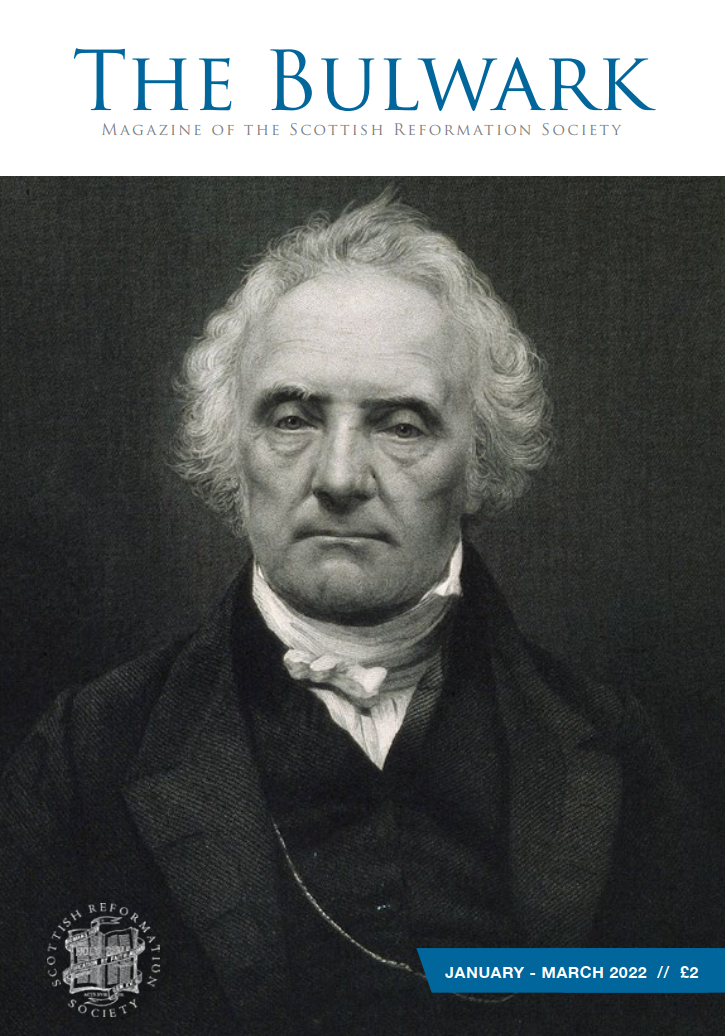
In this article below, my good friend Matthew Vogan recounts the old national vision of our Scottish Presbyterian forbears like Thomas Chalmers, who maintained confessional fidelity while also aggressively engaged in home missions. Does anyone among the theological heirs of Chalmers have such a national vision? Or even more pointedly, does anyone care?
Well, I for one deeply believe that they do care. And that they have the almighty Spirit of God dwelling in them and resting upon them. Nothing can defeat the sword of the Lord and of Gideon, nothing can stop these ‘sons of oil,’ for it is “not by might, nor by power, but by [His] Spirit, saith the LORD.” They will hear their charge, and they will go, shaking off all inhibitions and possessing the good land that rightly belongs them–and much more, to the Heir of all!
(There. That’s the closest this stodgy Presbyterian will ever get to ‘naming and claiming!’)
* * * *
This article is found in The Bulwark, popular magazine published by the Scottish Reformation Society. To read it more easily, you will likely need to download and rotate view.
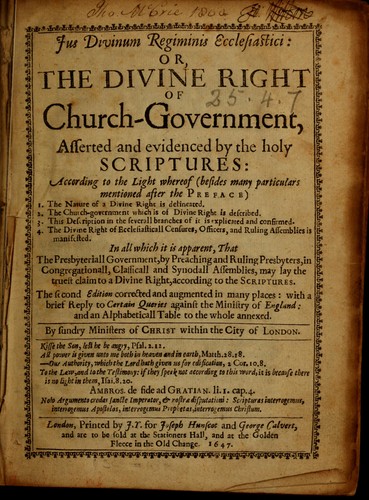
Listen to this classic work of Presbyterian church government written by London divines at the time of the Westminster Assembly. But fair warning: not for the faint of heart! But if you’re a thinker and would like to learn as you go, let me do the reading for you. [Project in progress.]
“Arguably the best biblical defenses of presbyterian ecclesiology and explanations of its polity were produced in the seventeenth century. Among these, none has a reputation better than an English work with the Latin title Jus Divinum Regiminis Ecclesiastici, with the English subtitle The Divine Right of Church Government. In three successive editions, two of which were penned during the time that the Westminster Assembly met, ‘sundry’ London ministers laid out their case. In the first part of the book they demonstrate that there is a government of the church established and revealed by God. In the second part of the book they describe that government, explain its benefits to God’s people, and further develop the biblical and theological justifications for presbyterianism.
“Chris Coldwell’s new edition of this classic work will prove a most welcome addition to the Presbyterian minister’s or even church member’s bookshelf. The entire book was addressed to people who were not yet persuaded regarding the merits of presbyterian church government. It hardly needs to be said that such an audience has only expanded in the Christian world and that many people could benefit from understanding a principled form of church government rather than ones where leaders (or members) make it up as they go along. This critical edition is almost a third longer than earlier abridged versions. It offers David Noe’s translations of Latin material and a thoughtful introduction. The edition also evidences Coldwell’s careful editorial work and successful sleuthing, in some cases solving puzzles that have stumped historians for centuries. Editor, subscribers, and publisher are to be thanked for this invaluable scholarly contribution.”
— Chad Van Dixhoorn, editor of The Minutes and Papers of the Westminster Assembly 1643–1652

 West Port Experiment