I just launched a bilingual study (and Spanish-immersion experience for myself!) in 1 Samuel with my good friend, Pr. Lucrecio Muñoz of Iglesia Buenas Nuevas in EHT. Using the RV-SBT 2023 for Spanish and a somewhat modernized version of the AV (KJV) for the English readings. God willing, installments will premier weekly for the foreseeable future at 4:00 p.m. Eastern every Lord’s day (Sunday). See all Reformed Parish videos on our YouTube channel.
Archive for February, 2026
RPM: Bilingual studies in 1 Samuel
Posted in Reformed Parish Mission (RPM) Posts on February 23, 2026| Leave a Comment »
“The Decided Preaching of the Gospel”
Posted in Church of England, Gospel Proclamation, Ordinary Means Ministry, Pastoral Theology, Preaching on February 23, 2026| Leave a Comment »
Just read this section from Charles’ Bridges masterful classic of pastoral theology, The Christian Ministry. Have a listen above; and hear the whole thing here. Or read it below.
Worth your time
Posted in Apologetics & Evidences, Education, Holy Trinity: Ontological & Economic, Israel; Calling of & Mission to the Jews, Natural Theology, Postwar Consensus, Nationalism, Race, Kinism, "Race Realism", Social Issues on February 22, 2026| Leave a Comment »

Just a few things I’ve read or listened to online that are worth your time. As usual, standard caveats.
“From Nietzsche to Nick Fuentes: The Rise of Nihilism Online”
WPE 001 | John Willison’s Sacramental Meditations, ft. Matthew Vogan
Posted in Christian Life & Experience, Church of Scotland, Experimental Religion & the Cure of Souls, Preaching, Sacraments, The Lord's Supper, WPE Podcast on February 18, 2026| Leave a Comment »
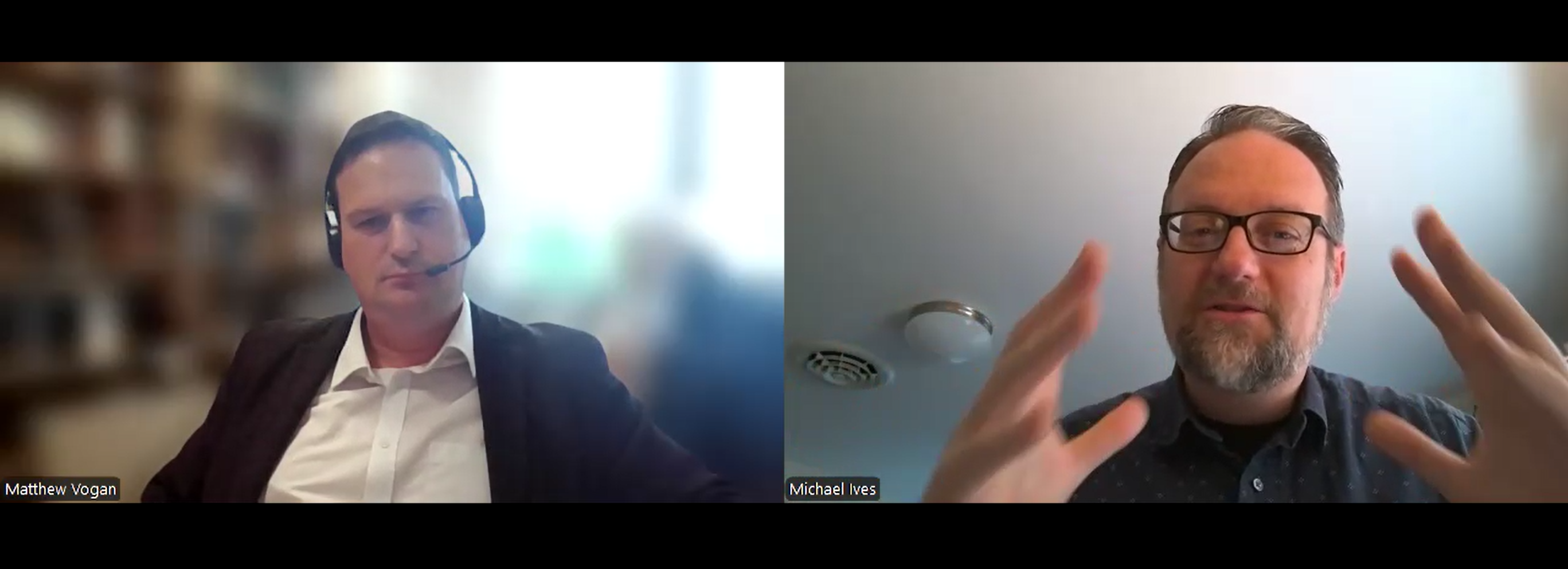
So this is the maiden episode of the West Port Experiment podcast. I have completed the first ten episodes before releasing any to make sure I wasn’t overcommitting or underperforming. But I’m hoping that this podcast fills a niche in a crowded digital area. While this site’s theme is about “parish missions, the care of souls, and all things reformed,” the first season is dedicated specifically to the Scottish Presbyterian tradition to which my denomination is devoted. God willing, I’ll continue to focus mainly in this area. But if it continues, I may branch off into other related areas, especially my great interest in Thomas Chalmers and the theory of practice of parish missions.
For now, the episodes focus on a text or texts for discussion with various friends as conversation partners from within and beyond my presbytery. In this first season, we will be dealing with John Willison, Samuel Rutherford, Hugh Binning, Alexander Henderson, David Dickson & the Stewarton Revival, James Guthrie, and Thomas Boston. I hope to release them about once per month.
In this episode, Matthew Vogan and I discuss John Willison’s Sacramental Meditations (1747). You can listen to a number of them here or read them here. We also reference Matthew’s article in the Historical Journal of the Scottish Reformation Society, “The Origins of John Willison’s Emphasis on the Lord’s Supper,” which is available here.
If you would like to be kept updated about WPE podcast releases, subscribe to this site at the right, just under the banner. If any links are broken, please drop me a note at michael@reformedparish.com.
[Instrumental music in podcast courtesy of Ernst Stolz.]
Warfield: the theocractic endowments unite upon Christ
Posted in Biblical Theology, Christ Jesus, Holy Trinity: Ontological & Economic, Old Princeton, Redemptive History on February 18, 2026| Leave a Comment »

“The Spirit of the Lord God is upon me”—this is the response of the Messiah to such gracious promises—”because the Lord hath anointed me to preach good-tidings unto the meek; he hath sent me to bind up the broken hearted, to proclaim liberty to the captives, and the opening of the prison to them that are bound; to proclaim the acceptable year of the Lord, and the day of vengeance of our God; to comfort all that mourn; to appoint unto them that mourn in Zion, to give unto them a garland for ashes, the oil of gladness for mourning, the garment of praise for the spirit of heaviness; that they might be called trees of righteousness, the planting of the Lord, that he might be glorified” (Isa. lxi. 1 sq.).
No one will fail to observe in these beautiful descriptions of the endowments of the Messiah, how all the theocratic endowments which had been given separately to others unite upon Him; so that all previous organs of the Spirit appear but as partial types of Him to whom as we are told in the New Testament, God “giveth not the Spirit by measure” (John iii. 34). Here we perceive the difference between the Messiah and other recipients of the Spirit. To them the Spirit had been “meted out” (Isa. xl. 13), according to their place and function in the development of the kingdom of God; upon Him it was poured out without measure. By Him, accordingly, the kingdom of God is consummated. The descriptions of the spiritual endowments of the Messiah are descriptions also, as will no doubt have been noted, of the consummated kingdom of God. His endowment also was not for himself but for the kingdom; it, too, was official. Nevertheless, it was the source in Him of all personal graces also, the opulence and perfection of which are fully described. And thus He becomes the type not only of the theocratic work of the Spirit, but also of His work upon the individual soul, perfecting it after the image of God.
* * * *
From “The Spirit of God in the Old Testament.” Listen to the entire audio here. Or read it below (scroll to the second page):
“Overcoming Potential Spouse Bottleneck”
Posted in Family & Family Issues, Fatherhood, Motherhood & Childbearing, Transgenerational Faith on February 8, 2026| Leave a Comment »
Once again, good stuff from Michael Foster. I’ve thought and talked a lot about these kids of issues over the years. We can’t afford not to think critically about these things and to work hard at “seeking rest” for our children, especially when our subcultures are thin and scattered.
* * * * *
A lot of Reformed families have accidentally engineered a bottleneck for their own kids.

When you choose a tight theological lane, a tight church network, and often a tight geography, you’ve already narrowed the field. Then you add a long list of non-negotiables that goes beyond basic orthodoxy into very specific doctrinal alignments, cultural preferences, schooling models, and lifestyle expectations. Every one of those cuts the pool again. People who love systematic clarity tend to apply that same instinct to marriage. The result is that the circle gets very small, very fast.
Add the rural-revival impulse and it tightens further. Land is cheaper away from population centers. So families move out for good reasons: stability, beauty, generational vision, space to raise kids well. But distance works both ways. You gain acreage and lose proximity. You gain control over your environment and lose density of like-minded peers. Then you wake up with a son or daughter in their mid-20s and realize there are six realistic prospects within two hundred miles, and half of them are already spoken for.
None of this is a moral indictment. It’s math. Social math. Demographic math. Network math. If you make five or six compounding narrowing decisions, you shouldn’t be surprised when outcomes narrow too.
Dickson on the ineffable mystery of Christ’s soul-sufferings
Posted in Church of Scotland, Covenant Theology, Experimental Religion & the Cure of Souls, Mental Health, The Decrees & Federal Theology on February 7, 2026| Leave a Comment »

The following are extracts of David Dickson’s (1583–1663) Therapeutica Sacra, Book 1, Chapter 4, “The Divine Covenants about the Eternal Salvation of Men; and in Special, Of the Covenant of Redemption,” etc. This chapter is both a high-water mark of Scottish federal theology and at the same time a tremendous glimpse into the high mystery of the psychological ordeal through which our Lord’s sinless soul had to pass. Behold, was there any sorrow like unto his sorrow? And truly, those vexed in their minds and even the psychologically tormented may take solace with the lengths to which God came down to “taste death for every man.”
I have also recorded the chapter here. Read or listen; then prostrate yourself before the “man of sorrows.”
* * * *
Objection. But did not this astonishing amazement of Christ’s soul, speak some imperfection of the human nature? Answer. It did no ways argue any imperfection, or lack of sanctity in him; but only a sinless and kindly infirmity, in regard of natural strength, in the days of his flesh. For the mind of a man, by any sudden and vehement commotion arising from a terrible object, may, without sinning, be so taken up, that the swift progress of his mind in discourse may for a while be stopped, and the act of reasoning suspended a while ; all the cogitations of the mind fleeing together to consult, and not being able to extricate themselves in an instant, may stand amazed, and sit down awhile, like Job’s friends astonished. Now our Lord, taking on our nature and our common sinless infirmities, became like unto us in all things except sin. Daniel’s infirmity at the sight of an angel, was not sin, (Dan. x).
Objection. But doth not this astonishing admiration, suddenly lighting upon Christ’s soul, prove that something unforeseen of him did befall him? Not at all; for he knew all things that should befall him, and told his disciples thereof, and \ras at a point, and resolved in every thing which was to come, before it came. But this astonishing amazement did only shew forth the natural difference between things preconceived in the mind, and these same things presented to sense: for there is in the mind a different impression of the preconceived heat of a burning iron, before it do touch the skin, from that powerful impression which a hot iron thrust into the flesh doth put upon the sense. In regard of which natural difference between foresight and feeling, between resolution and experience, this astonishment befell our Lord ; and in this regard, Christ is said to learn experimental obedience by these things which he suffered, (Heb. v. 8). . . .
(more…)Jesus, the “First and the Last” | RPM September Quarterly Update
Posted in Parish in American Context, Parish Theory & Practice, Reformed Parish Mission (RPM) Posts on February 6, 2026| Leave a Comment »
Here is the latest quarterly update. If you missed the last one from June, you can read it here. And visit Reformed Parish Mission to learn more about history and principles of this effort.
 West Port Experiment