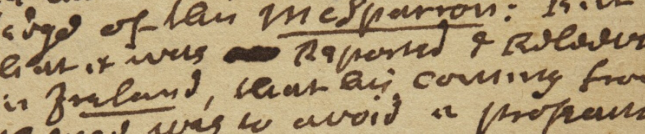
This is an academic article from the earlier 20th century on New England Puritan, Cotton Mather, on his zealous concern for the salvation of the Jews. He develops the account from Mather’s notable journal entry in 1696: “This day, from the dust, where I lay prostrate, before the Lord, I lifted up my cries: For the conversion of the Jewish Nation, and for my own having the happiness, at some time or other, to baptize a Jew, that should by my ministry, bee brought home unto the Lord.”
This was a really helpful article on manipulative ministers. In particular, certain things stood out to me. First, there is such a thing as “benevolent manipulators,” as there is such a thing as true and sincere believers who manipulate. Anyone can manipulate, whether periodically and minimally, or habitually and intractably. Not all who manipulate are befanged, salivating monsters; they can be your sweet grandmother or your devoted, soft-spoken pastor. But a cigar is a cigar.
Some signs of the benevolent manipulator include: “They will subtly question your loyalty. They will be suspicious of anyone who leaves the ‘group.’ They will often undermine anyone who might pose a threat to their influence. They will try to convince you that any concerns or actions not aligned with their agenda stem from personal weakness. And so on.”
The following comes from the pen of Thomas Boston. Though nestled away in country parishes, this man was an eminent theologian indeed. Here he demonstrates his command of Nicene orthodoxy:
“And as to the nature of this generation, our blessed Lord himself doth in some measure explain it to us, so far as we arc capable to apprehend this great mystery, when he tells us, John. v. 26. ‘As the Father hath life in himself, so hath he given to the Son to have life in himself.’ So that to beget the Son, is to give to the Son to have life in himself, as the Father hath life in himself; which doth necessarily import a communication [sharing] of the same individual essence. For to have life in himself was an essential attribute of God; i.e. to have life independently, of and from himself; and to be the source and fountain of life to all the creatures, is a perfection proper to God, inseparable from his nature, yea, the very same with his essence. And therefore the Father cannot give it, unless he give the essence itself: and he cannot give the essence by way of alienation, for then he himself would cease to be God; nor by way of participation, seeing the divine nature is one, and cannot be divided. Therefore it must be by way of communication [sharing]. So that the generation of the Son is that eternal action of the Father, whereby he did communicate to the Son the same individual essence which he himself hath, that the Son might have it equal with himself. But as to the manner of this generation, or communication of the divine essence of the Son, it is altogether ineffable and inconceivable to us. It is simply impossible for poor weak worms, such as we are, to understand or explain wherein it consists. It is not natural, but supernatural, and wholly divine, and therefore incomprehensible by us. Yea, it is incomprehensible even by the angels themselves, who far exceed men in intellectual abilities. We may justly hereunto apply what we have, Isa. liii. 8. ‘ Who shall declare his generation?’ This whole mystery is incomprehensible by us: We ought humbly and reverently to adore what we cannot comprehend. There is a coummunication of the whole essence or Godhead from the Father to the Son, in receiving whereof the Son doth no more lessen or diminish the majesty or Godhead of the Father, than the light of one candle doth the light of another from which it is taken. Whereupon the council of Nice said well, that Christ is God of God, light of light, very God of very God, not proceeding but begotten. Hence it is clear, that he had a being before he was born of a virgin, yea from eternity; and that he is the true God, and the most high God, equal with the Father, Phil. ii. 6. John i.1.; for no being can be eternal but God.”
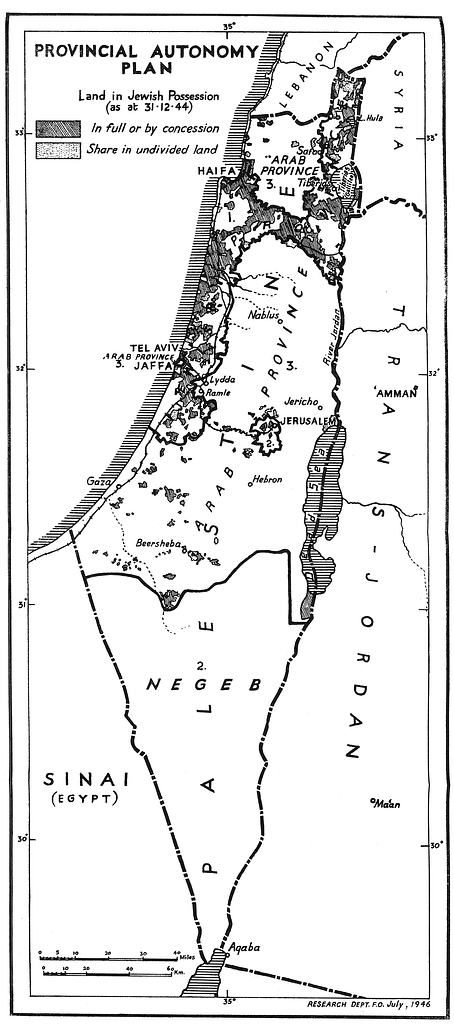
A friend shared this very helpful article about a year ago that explores the actual contours of how Scottish Presbyterians dealt with Jewish questions, the emergence of the nation-state of Israel, and the very problematic other-rail of Dispensationalism in modern evangelicalism. It is very regrettable in the current context that there isn’t much nuance in how our Reformed fathers approached Jewish questions vis-a-vis the errors of J.N. Darby and his ilk. Abstract here:


 West Port Experiment