Feeds:
Posts
Comments

Archive for November, 2025

As we turn in deep gratitude to the Most High for all His blessings towards us, let us remember especially the unique favor He has shown to our fathers and mothers of the faith who first came to these shores on a holy “errand into the wilderness.” In the words of the Mayflower Compact (1620), their cause was “undertaken for the Glory of God, and Advancement of the Christian Faith, and the Honour of our King and Country.”

Let me encourage you to listen to our Pilgrim and Puritan fathers. In addition to other amateur recordings, I’ve been steadily adding to this collection of sermons, treatises, and narratives from the pen of these giants of the faith, who helped found this “City on a Hill.” And if you’d like to hear an early account of the Pilgrim colony, check out Cotton Mather’s, “Magnalia Christi Americana 1.1: Discoveries of America.” Also, John Winthrop’s original sermon where he speaks of the “city on an hill,” is available under “A Modell of Christian Charity.”

And as we thank the Lord today, lest us with humility and earnestness implore Him to restore the former glory through national repentance. He did it before, and He can do it again! “Wilt thou not revive us again: that thy people may rejoice in thee” (Psalm 85:6)?

Visit the WPE Audio page for our full audio library.

Read Full Post »

Eusebius of Ceasarea (ca. 260-339). And thus note, not a 2CV.

“You also wrote me concerning some supposed image of Christ, which image you wished me to send you. Now what kind of thing is this that you call the image of Christ? I do not know what impelled you to request that an image of Our Saviour should be delineated. What sort of image of Christ are you seeking? Is it the true and unalterable one which bears His essential characteristics, or the one which He took up for our sake when He assumed the form of a servant?  . . . Granted, He has two forms, even I do not think that your request has to do with His divine form. . . . Surely then, you are seeking His image as a servant, that of the flesh which He put on for our sake. But that, too, we have been taught, was mingled with the glory of His divinity so that the mortal part was swallowed up by Life. Indeed, it is not surprising that after His ascent to heaven He should have appeared as such, when, while He—the God, Logos—was yet living among men, He changed the form of the servant, and indicating in advance to a chosen band of His disciples the aspect of His Kingdom, He showed on the mount that nature which surpasses the human one—when His face shone like the sun and His garments like light. Who, then, would be able to represent by means of dead colors and inanimate delineations (skiagraphiai) the glistening, flashing radiance of such dignity and glory, when even His superhuman disciples could not bear to behold Him in this guise and fell on their faces, thus admitting that they could not withstand the sight? If, therefore, His incarnate form possessed such power at the time, altered as it was by the divinity dwelling within Him, what need I say of the time when He put off mortality and washed off corruption, when He changed the form of the servant into the glory of the Lord God. . . ? … How can one paint an image of so wondrous and unattainable a form—if the term ‘form’ is at all applicable to the divine and spiritual essence—unless, like the unbelieving pagans, one is to represent things that bear no possible resemblance to anything. . . ? For they, too, make such idols when they wish to mould the likeness of what they consider to be a god or, as they might say, one of the heroes or anything else of the kind, yet are unable even to approach a resemblance, and so delineate and represent some strange human shapes. Surely, even you will agree that such practices are not lawful for us.

“But if you mean to ask of me the image, not of His form transformed into that of God, but that of the mortal flesh before its transformation, can it be that you have forgotten that passage in which God lays down the law that no likeness should be made either of what is in heaven or what is in the earth beneath? Have you ever heard anything of the kind either yourself in church or from another person? Are not such things banished and excluded from churches all over the world, and is it not common knowledge that such practices are not permitted to us alone?

(more…)

Read Full Post »

Just finished listening to an audiobook version of Wayne A. Mack’s Strengthening Your Marriage. Highly recommended. Especially appreciated his chapter on developing and keeping up good communication between spouses, a really insightful and practical chapter on figuring out your shared finances, and—what perhaps surprised me the most—a chapter on child-rearing. The latter makes buckets of sense when you realize that marital tension is aggravated by poor and sloppy discipline, or beneath that, an unbiblical “philosophy” of child-rearing.

Great refresher for strong marriages (we can never just coast!), a solid primer for those in the early glow, and a life-preserver for those treading water and wanting to get back to shore.

Pick up and read! Or, if you have access to Hoopla or other free library services, have a listen!

Read Full Post »

I came across this excellent piece by Virgil Walker, entitled “The Moment the Mask Slipped: How Christian Nationalism Opened the Door to Ethnic Hostility.” Extremely well-written, poignant, and so needed in the present hour. I also appreciate how he writes from a position of real sympathy for nationalism, patriotism, and acknowledgment of racial diversity—at least, as defined with confessional “guardrails.” This is hardly another tired liberal, globalist harangue, tone-deaf to real fears and grievances of young white Americans. In doing this, I think he meets those ‘halfway’ who find themselves drawn to the more radical online provocateurs out there.

I haven’t fact-checked this. What little I have done lends credibility to this account. But if anyone has evidence to the contrary, send me a note: michael@reformedparish.com.

* * * * *

There are moments in cultural life when an undercurrent becomes undeniable—when quiet tremors surge into a cultural earthquake.

This week was one of those moments.

A friend and brother in Christ, Alex Kocman, posted a simple photo of his adopted son turning thirteen. A family milestone. A request for prayer. A moment Christians should instinctively celebrate.

But the post detonated into more than seven million views.
And what followed wasn’t merely disagreement. It wasn’t a debate about prudence or policy.

It was ethnic hostility.
Open. Public. Unmasked.

Comments attacking the child’s dignity.
Insinuations that a white father “wasted his time” on a black boy.
Suggestions that adoption should be limited to “your own kind.”
Warnings that interracial families “destroy the West.”
Accusations that bringing a child into the home from another ethnicity is “inviting a foreigner into your bloodline.”

And here’s what matters:

Many of those voices weren’t from atheists, leftists, or anonymous trolls.
They came from people who openly identify with Christian Nationalism.

Not the entire movement.
But a growing, vocal, unrestrained wing of it.

And that’s exactly what I warned about long before this week.

Read the rest here.

Read Full Post »

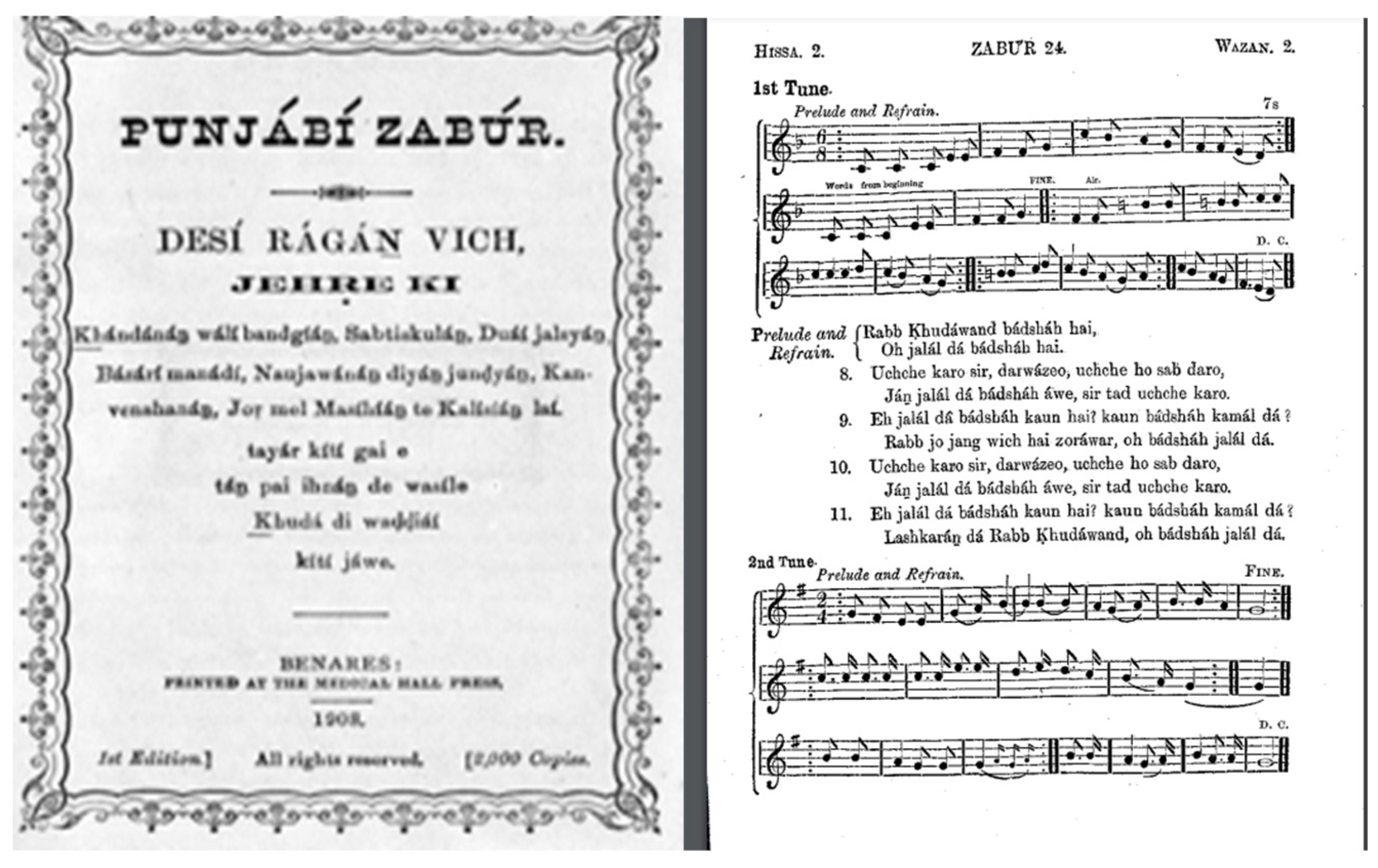
Such a pleasant surprise to learn of the rich culture of psalmody in the persecuted Pakistani church from Voice of the Martyrs! (Standard caveats with VOM.)

Read Full Post »

Read Full Post »

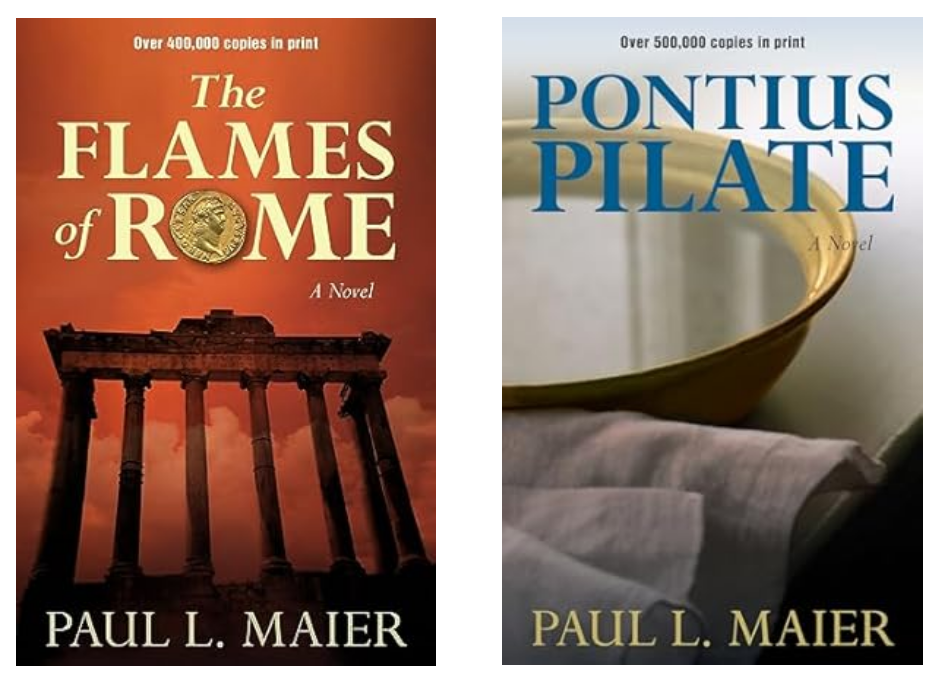
These two books are highly recommended for mature high school readers and up; very suitable for Sabbath downtime as well. Paul L. Meier, a Lutheran historian, certainly did his homework in these two works. It is historical fiction, yes. But it is more history than fiction. His essential approach was to insert fiction only where it was necessary to make things flow in a readable way. And they are very gripping, with great insight for the serious-minded Christian who wants to understand the world of our Lord and the first Christians better.

Read Full Post »

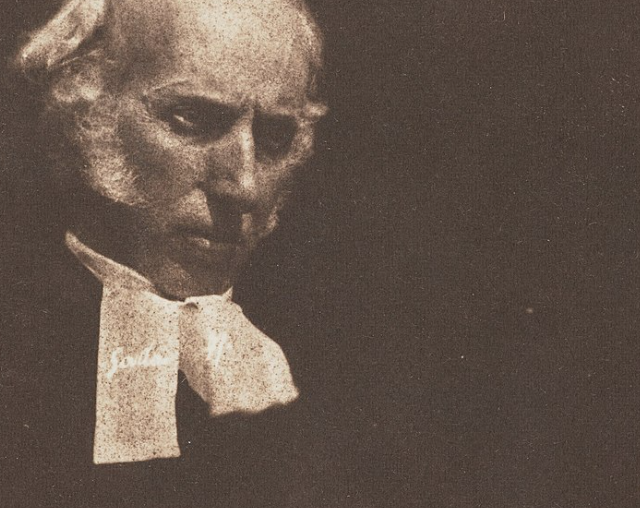
The following passage is taken from Free Church of Scotland minister Robert Gordon’s Christ as Made Known to the Ancient Church (1854), where he treats the command of God to build the tabernacle in the wilderness. “And let them make me a sanctuary; that I may dwell among them” (Ex. 25:8). Gordon sets forth rather poignantly the biblical doctrine as expressed in the Westminster Confession of Faith ch. 25, “On the Church.”

* * * * *

Though it was to the incarnation of Christ, therefore, that the passage before us does more immediately refer, as that which was prefigured by the tabernacle; yet the effect of his manifestation is, that God has always dwelt, and ever will dwell, among men, even in his Church, to whom Christ has promised that by his Spirit he will be with her always, even unto the end of the world. The Church, indeed, is represented as the tabernacle or dwelling, place of the Lord; for it is evidently of the Church at large, as well as of the place which God had chosen from among the tribes of Israel to put his name there, that he thus speaks: “The Lord hath chosen Zion; he hath desired it for his habitation. This is my rest for ever: here will I dwell; for I have desired it. I will abundantly bless her provision: I will satisfy her poor with bread. I will also clothe her priests with salvation: and her saints shall shout aloud for joy.” And again, “Look upon Zion, the city of our solemnities: thine eyes shall see Jerusalem a quiet habitation, a tabernacle that shall not be taken down; not one of the stakes thereof shall ever be removed, neither shall any of the cords thereof be broken. But there the glorious Lord will be unto us a place of broad rivers and streams.”

(more…)

Read Full Post »

As the weather cools, the leaves turn and fall, I continue my rounds in my little “territorial vineyard,” as Thomas Chalmers affectionately would call it. Since I arrived in S. Jersey in late 2023, I’ve made it more than midway through my second round. The Lord has been pleased to pick up my spirits after something of a little ‘dry spell’ in the mission. The following are sample conversations of late that have given me some encouragement.

As I approached one particular house that I first visited a year ago, I checked my notes. “Talker.” Yeah, I remember something of that first visit. Talkers in certain ways are definitely better than not-talkers, since they often give you more of an opportunity to proclaim the Gospel. If you can get a word in edgewise! But “talkers” will hardly enter the Kingdom for their much talking, unless of course they finally close their mouths and let God speak.

(more…)

Read Full Post »

A very insightful and theologically rich article on Augustine and the Church. I realize now just how much classic Westminsterian ecclesiology and sacramentology owes to him, especially as he articulated biblical truth over against the Donatists.

[source]

Read Full Post »

Older Posts »