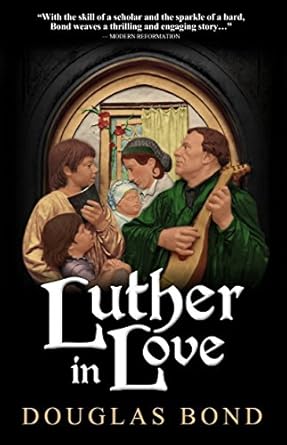
Some more personal reading recommendations. First, finished reading Luther in Love to the family in our Sabbath down time. We’ve read a number of his other books for younger readers—and the young at heart—all of them well-researched and well-written. I thought this one in particular really exhibited Bond’s literary excellence. Very easy to read. My only quibble is that the book’s title would lead you to think that its central theme is his relationship with his wife, Katharina von Bora. Their relationship is prominent, to be sure; but it’s really more a life of Luther. But if you really want to read some historical fiction featuring their Christian romance, I’d highly recommend, Kitty, My Rib, by E. Jane Mall.
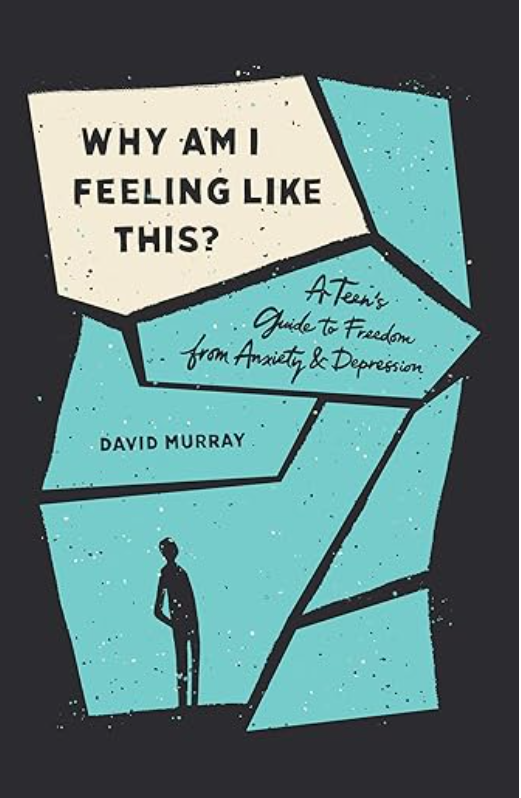
Another book I read to the family was the non-fiction book by David Murray, Why Am I Feeling Like This? A Teen’s Guide to Freedom from Anxiety and Depression. This is the best thing I’ve come across from a Reformed perspective, addressed to adolescents. He covers the range of emotional pathologies, whether full-blown disorders or just the phases of that often tumultuous transition from childhood to adulthood. Very insightful, very appropriate, and very accessible. This is helpful also to share with others who are trying to help their teenagers weather their feelings biblically and wisely. You can read the introduction and the first chapter here, where he introduces “Circular Sarah.”
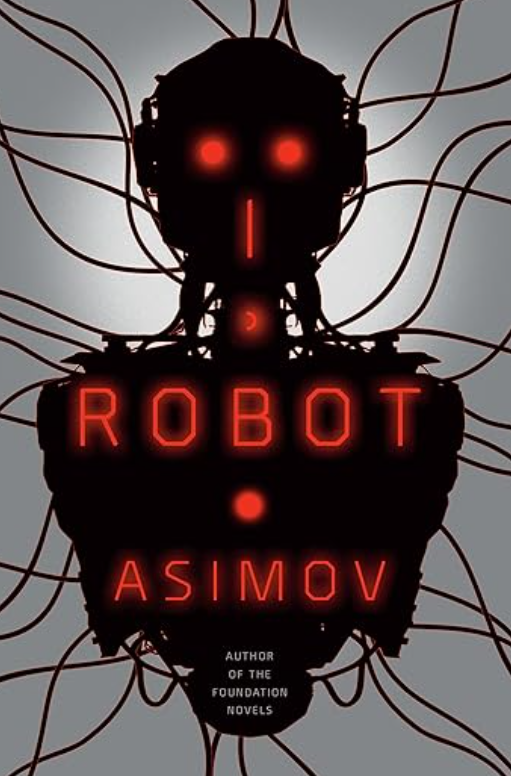
Finally, my last recommendation is a modern, secular classic, the sci-fi I, Robot by Isaac Asimov. Now, this genre is not my typical go-to, but my son put me on to it, and I was not at all disappointed. Originally published in 1950 and written about a futuristic world set in the 21st century, it is quite striking how very prescient Asimov was in terms robotics and artificial intelligence. The book is a catena of short stories featuring a handful of characters and their robotic counterparts who really prove to be a foil and a looking-glass for themselves as humans, in all their fancy, fury, and folly. I was quite surprised with how Asimov combined the technical, literary, and philosophical in a compelling way. Definitely both sides of the brain were working full power! And yet so tragic to consider that the celebrated author was a Russian Jew turned atheist. Man can imagine artificial intelligence and foreshadow it with elegance; and time has shown that he can bring it into being. Yet in his hubris he cannot and will not return to the Source. “Where is the wise? where is the scribe? where is the disputer of this world? hath not God made foolish the wisdom of this world? For after that in the wisdom of God the world by wisdom knew not God, it pleased God by the foolishness of preaching to save them that believe” (1 Cor. 1:20-21). When one looks at the image above, what does he see but a dead idol, the stump of Dagon, the hollow shell of a man? Even so, the idol-maker is just “like unto them.”
And check out my growing library of devotional and theological resources from our rich and diverse Reformed heritage here.
 West Port Experiment
Leave a comment