Feeds:
Posts
Comments

Archive for May, 2025

An intriguing thought. I’ve frequently thought of how establishments, while nearly a thing of the past in the secular West, might yet be on the horizon in the East. Stranger things have happened. And, of course, there is that ‘little thing’ (!) of prophecy: “Yea, all kings shall fall down before him: all nations shall serve him” (Psalm 72:11). O, brethren, let us pray for this nation, and for any godly magistrates that He might raise up “for such a time as this!” Mark Noll in his New Shape of World Humanity: How American Experience (2010):

“But third, it is a different story where Christianity spreads in regions of economic strength, as especially in Chᴉna. In this rapidly strengthening Asian power, the systems of belief that once guided society are passing away. Before Maoism imploded, it badly damaged ancestral reliance on Confucian precepts. Christianity seems to be taking off in Chᴉna because more and more Chᴉnese seem to be seeking a new moral compass as Chᴉna itself makes a commanding entrance onto the world stage. David Jeffrey, the provost of Baylor University who for fifteen years has been regularly invited to lecture on Christian subjects at premier universities in Chᴉna, has asked a speculative question that should give foreign analysts pause. Once before, Jeffrey remarks, a great world power passed through tumultuous times as Christian ranks expanded on the margins of society. It was the late 3rd and early 4th centuries. In that turmoil the Emperor Constantine was converted and become, from the top of the imperial system, a supporter of Christianity as a new glue for empire. Is it impossible to imagine that a new Constantine might exist somewhere in the junior ranks of the Chᴉnese communist party?”


Read Full Post »

“As the Sabbath Day is the most excellent of all the Days in the week; so a Communion Sabbath is the most desireable of all the Sabbaths in the Year; for, that is a Day in God’s Courts, in an eminent Manner, and is truly better than a Thousand. . . . If ordinary Sabbaths do require great Care and Diligence in preparing for, and improving them; then much more do Communion Sabbaths, being solemn and high Days; wherein we make most near Approaches unto God, and he makes near Approaches unto us: They are Days of Heaven upon Earth, and do most eminently represent the Employments and Enjoyments of the Glorified in Heaven.”

John Willison

Read Full Post »

The following is drawn from the First Book of Discipline (1560), adopted by the Church of Scotland during the Reformation period. Education is key!

* * * * *

The Necessity of Schools

Seeing that God has determined that his church here in earth shall be taught not by angels but by men; and seeing that men are born ignorant of all godliness; and seeing, also, God now ceases to illuminate men miraculously, suddenly changing them, as that he did his apostles and others in the primitive church: of necessity it is that your honours be most careful for the virtuous education and godly upbringing of the youth of this realm, if either ye now thirst unfeignedly [for] the advancement of Christ’s glory, or yet desire the continuance of his benefits to the generation following. For as the youth must succeed to us, so we ought to be careful that they have the knowledge and erudition to profit and comfort that which ought to be most dear to us-to wit, the church and spouse of the Lord Jesus.

Of necessity therefore we judge it, that every several church have a schoolmaster appointed, such a one as is able, at least, to teach grammar and the Latin tongue, if the town is of any reputation. If it is upland, where the people convene to doctrine but once in the week, then must either the reader or the minister there appointed, take care over the children and youth of the parish, to instruct them in their first rudiments, and especially in the catechism,[10] as we have it now translated in the book of our common order, called the Order of Geneva. And further, we think it expedient that in every notable town, and especially in the town of the superintendent, [there] be erected a college, in which the arts, at least logic and rhetoric, together with the tongues, be read by sufficient masters, for whom honest stipends must be appointed; as also provision for those that are poor, and are not able by themselves, nor by their friends, to be sustained at letters, especially such as come from landward.

(more…)

Read Full Post »

The following are extracts from John Flavel’s Whole Works reflecting his (and Protestantism’s) mainly positive appraisal of Constantine and the shift to Christendom. The first passage doesn’t mention his name in particular, but employs the “earth helping the woman” trope for Christian magistrates supporting the true religion that I first encountered in Thomas Chalmers, but clearly predates him.

* * * * * * * * * * * *

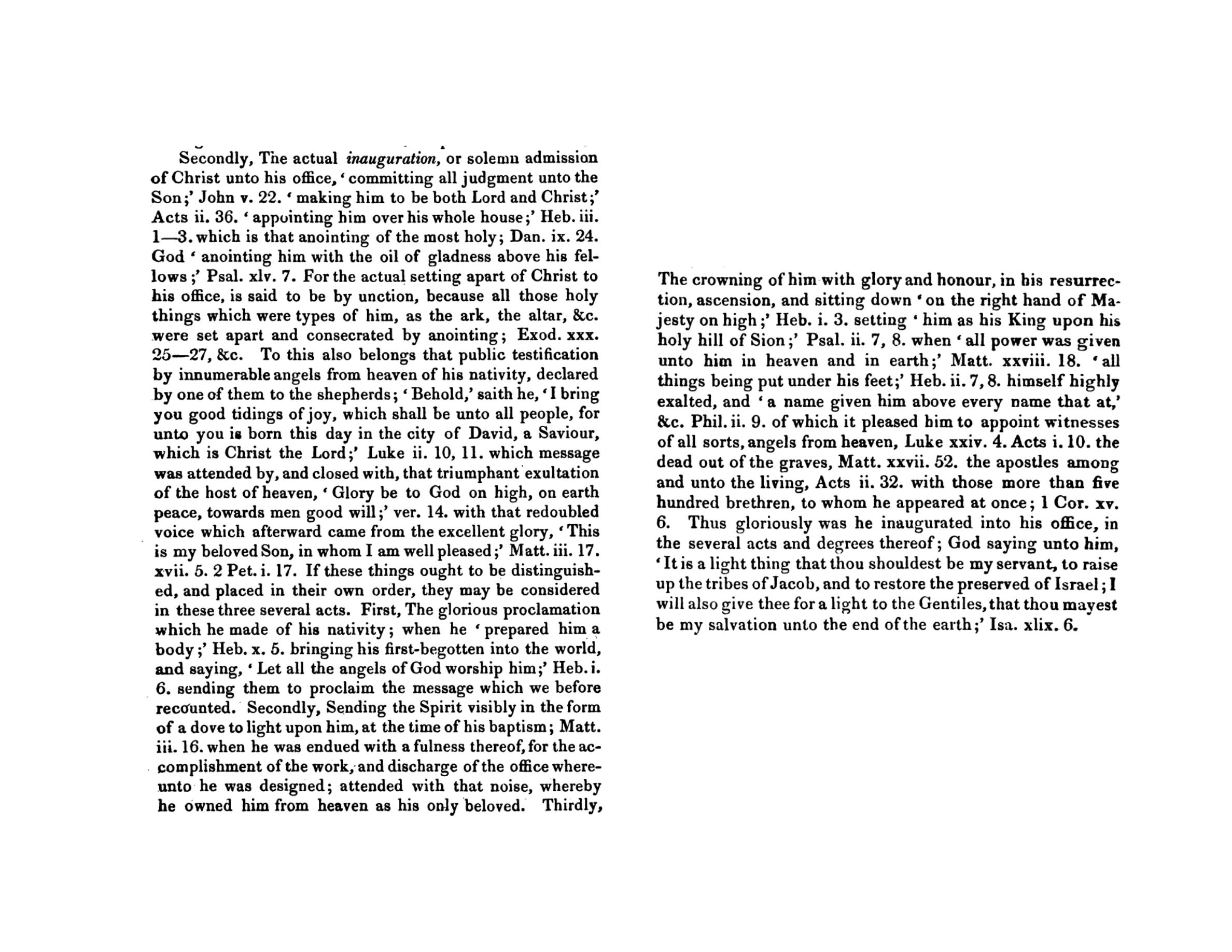
“Secondly, We shall next enquire how Jesus Christ administers this providential kingdom. And here I must take notice of the means by which, and the manner in which he does it. The means, or instruments, he uses in the governing the providential kingdom, (for he is not personally present with its himself), are either angels or men, “the angels are ministering creatures, sent forth by him for the good of them that shall be heirs of salvation,” Heb. 1:14. Luther tells us, they have two offices, superius canere, et inferius vigilare, “to sing above and watch beneath.” These do us many invisible offices of love. They have dear and tender respects and love for the saints. To them, God, as it were, puts forth his children to nurse, and they are tenderly careful of them while they live, and bring them home in their arms to their Father when they die. And as angels, so men are the servants of Providence; yes, bad men as well as good. Cyrus, on that account, is called God’s servant: they fulfill his will, while they are prosecuting their own lusts. “The earth shall help the woman,” Rev. 12:16. But good men delight to serve Providence; they and the angels are fellow servants in one house, and to one master, Rev. 19:10. Yes, there is not a creature in heaven, earth, or hell, but Jesus Christ can providentially use it and serve his ends, and promote his designs by it. But whatever the instrument be Christ uses, of this we may be certain, that his providential working is holy, judicious, sovereign, profound, irresistible, harmonious, and to the saints peculiar” (Works 1:216).

(more…)

Read Full Post »

Read Full Post »

And some other resources from CCEF on the same subject here and here.

Read Full Post »

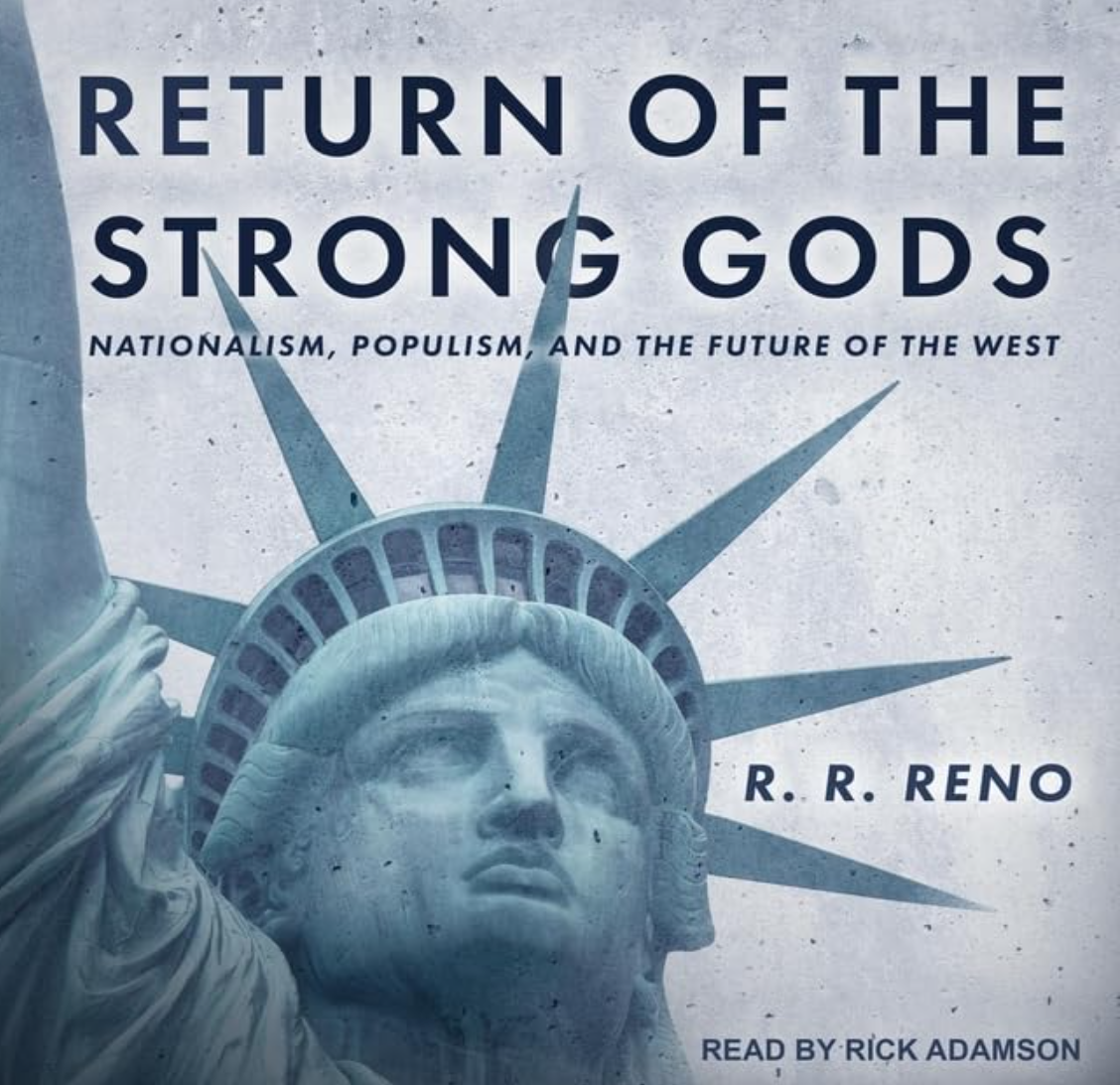
In the last few months, I finished a couple of really insightful non-fiction titles. The first was R. R. Reno’s The Return of the Strong Gods: Nationalism, Populism, and the Future of the West. This was the most helpful overview of what the “post-war consensus” (PWC) actually is and why it is on life support if not in its death pangs. Basically, the PWC was birthed in the aftermath of World War II and the horrors both on the battlefield and in the concentration camps. “Never again!” was the motto in Europe and the U.S., and the modus operandi of the elites was to tamp down on all discourse—religious, political, or social—that could elevate the blood pressure of the nations and so risk a reprise of the world wars. Liberalism in the broader sense of tolerance, acceptance, and openness, was the prevailing doctrine. But what it ended up doing was fueling the populisms and nationalisms we have witnessed in the last decade or so. In the end, we are humans who need “strong loves.” Something to be passionate about—and even die for!

(more…)

Read Full Post »

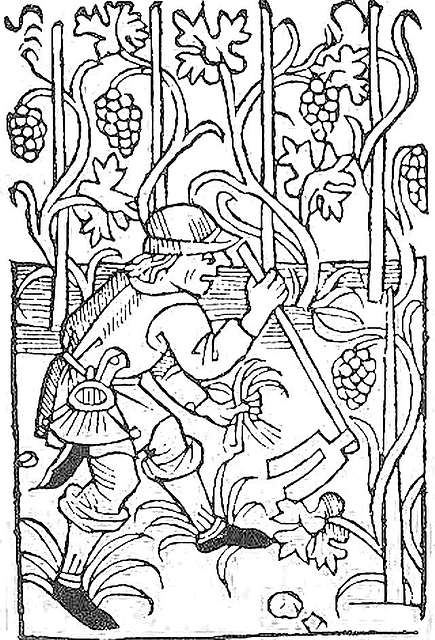
“The Dissenter builds his chapel, and he draws hearers indiscriminately from all the places around; but drawing none save those who have a predisposition for what is sacred, he can only retard the degeneracy of his townsmen, but never, with his present processes, is he able to recall it. The Establishment builds its chapel also; but, besides this, it metes off [measures out] a geographical vineyard to him who officiates therein; and it lies with himself to be in a very few months, a respected and a recognized functionary among all its tenements; and without any romantic sacrifice of his time or of his ease, but just in the quiet and regular discharge of the assiduities of his office, among the ignorant, the sick, and the dying, will he be sure to find good welcome in every heart, and goodwill in every home towards him. Now, it is by these week-day attentions among the people of his local territory, that he, at length, diffuses over the whole of this contiguous space an interest and a desire after his Sabbath ministrations; and gathers new recruits to his congregation from the most worthless of its families” (Thomas Chalmers, Works 16:149).

Read Full Post »

This is a helpful article by Jerrold Lewis on exclusive psalmody, vis-a-vis an argument for the setting of other portions of Scripture to verse and music for inclusion in public worship. While of course all Scripture is inspired and authoritative, Lewis makes a convincing case that the genre of the Psalms alone meet the unambiguous criterion required by the Regulative Principle of Worship. “Contrast the genre of the Psalms with Paul’s epistles, the visions of Daniel, or the narratives of Exodus. These are inspired, infallible, and rich in doctrine, but they were never songs. Nowhere in Scripture are we instructed to versify and sing Paul’s letters. No command tells us to render Isaiah into meter and melody for the congregation. To treat all Scripture as equally singable is to erase the clear distinction and intent the Holy Spirit Himself has drawn.”

Read Full Post »

Below are a number of documentaries and educational videos about Scottish Presbyterian history, with special focus on the history of the Covenants and the Covenanters.

The following short documentary series by my friend, Matthew Vogan, definitely the best out there from a confessionally sympathetic perspective. Well produced, informative, and challenging to the mind and heart. The trailer is immediately below; watch the entire series here.

Check out also a great series for children, “Stories of the Covenant” by the same. Watch a sample below; view the entire series here.

* * * *

(more…)

Read Full Post »

Older Posts »