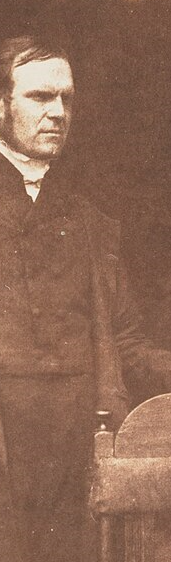
Patrick Fairbairn (1805–1874), Free Church of Scotland theologian and author of The Typology of Scripture, on his understanding of the papacy as the antichrist and “man of sin.”
* * * *
“On the whole, then, the conclusion which forces itself upon our minds from a full and impartial consideration of the apostolic testimony, is that the antichristian apostacy cannot be identified cither with the heathenism ofancient Rome, or with any conceivable form of infidelity or atheism yet to be developed. The conditions of the prophetical enigma are not satisfied by either of these views. So much for the negative side of the question. And in regard to the positive, if we may not say (as, indeed, we by no means think it can in truth be said) that in Romanism and the papacy the anticipated evil has found its only realization; yet we cannot for a moment doubt, that it is there we are to look for the most complete, systematic, and palpable embodiment of its grand characteristics. There, we perceive, as nowhere else, either to the same extent, or with the same firm determination of purpose, a mass of errors and abuses “grafted on the Christian faith, in opposition to, and in outrage of, its genius and its commands, and taking a bold possession of the Christian church.” We see “the doctrines of celibacy, and of a ritual abstinence from meats, against the whole spirit of the gospel, set up in the church by an authority claiming to have universal obedience; a man of sin exalting himself in the temple of God, and openly challenging rights of faith and honour due to God; advancing himself by signs and lying wonders, and turning his pretended miracles to the disproof and discredit of some of the chief doctrines or precepts of Christianity; and this system of ambition and falsehood succeeding, established with the deluded conviction of men still holding the profession of Christianity.” All this meets so remarkably the conditions of St Paul’s prophecy, and in its history and growth also from the apostolic age so strikingly accords with the warnings given of its gradual and stealthy approach, that, wherever else the antichrist may exist, they must be strangely biased, who do not discern its likeness in the Romish apostacy. We may the rather rest in the certainty of this conclusion, as it is matter of historical certainty, that ages before the Reformation, and, indeed, all through the long conflict that was ever renewing itself on the part of kings and men of faith against Rome, the Pope was often denounced as the antichrist, and man of sin. But it is one thing to find a great and palpable realization of the idea there, and another thing to hold, that it is the only realization to be found in the past or the future. And if Romanists have made void the testimony of Scripture in rejecting the one application, we fear Protestants have too often grievously narrowed it by
excluding every other. Of this, however, we shall have a fitter occasion to speak, when we have examined that remaining portion of New Testament Scripture, which treats of the same subject, and in a way peculiarly its own. We refer, of course, to the Apocalypse.”
 West Port Experiment
Leave a comment