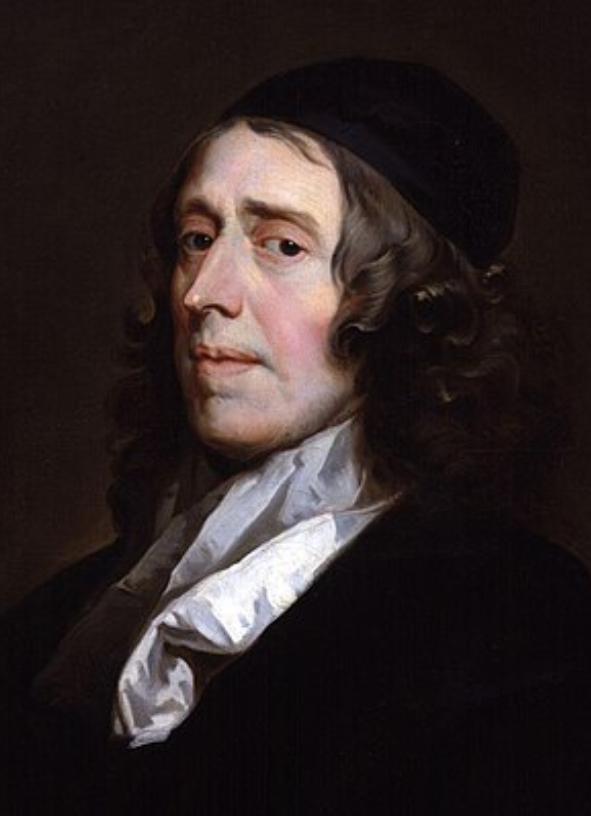
Here is a sermon I recorded by John Owen on the ordination of a minister, late in his career. As always, Owen is exceptional. Here is a sample passage—so searching! See the rest of the WPE Audio library at the tab up top.
* * * * * *
“Another thing required hereunto, is experience of the power of the things we preach to others. I think truly, that no man preaches that sermon well to others, that doth not first preach it to his own heart. He who doth not feed on, and digest, and thrive by what he prepares for his people, he may give them poison as far as he knows; for, unless he finds the power of it in his own heart, he cannot have any ground of confidence, that it will have power in the hearts of others. It is an easier thing to bring our heads to preach, than our hearts to preach. To bring our heads to preach, is but to fill our minds and memories with some notions of truth of our own or other men, and speak them out to give satisfaction to ourselves and others: this is very easy. But to bring our hearts to preach, is to be transformed into the power of these truths ; or to find the power of them both before, in fashioning our minds and hearts. and in delivering of them, that we may have benefit; and to be acted with zeal for God, and compassion to the souls of men. A man may preach every day in the week, and not have his heart engaged once. This hath lost us powerful preaching in the world, and set up, instead of it, quaint orations; for such men never seek after experience in their own hearts : and so it is come to pass, that some men’s preaching, and some men’s not preaching, have lost us the power of what we call the ministry: that, though there be twenty or thirty thousand in orders, yet the nation perishes for want of knowledge, and is overwhelmed in all manner of sins, and not delivered from them unto this day.”
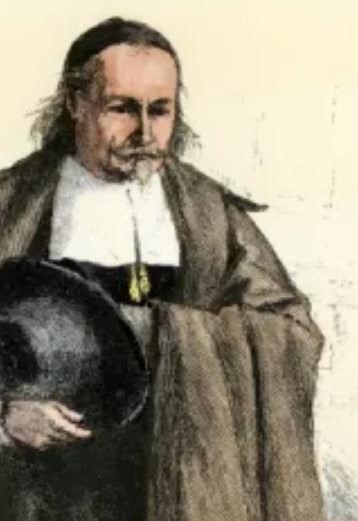
The following is the text of a rather insightful, inspiring, and challenging firsthand vignette of English Puritanism, by John Geree, “The Character of an Old English Puritan, or Non-Conformist.” Listen to a recording of it here; and visit the entire WPE audio library. A digital facsimile is below.
* * * *
The Old English Puritan was such an one, that honored God above all, and under God gave every one his due. His first care was to serve God, and therein he did not what was good in his own, but in God’s sight, making the word of God the rule of his worship. He highly esteemed order in the House of God: but would not under color of that submit to superstitious rites, which are superfluous, and perish in their use. He reverenced Authority keeping within its sphere: but durst not under pretence of subjection to the higher powers, worship God after the traditions of men. He made conscience of all God’s ordinances, though some he esteemed of more consequence. He was much in prayer; with it he began and closed the day. It is he was much exercised in his closet, family and public assembly. He esteemed that manner of prayer best, whereby the gift of God, expressions were varied according to present wants and occasions; yet did he not account set forms unlawful. Therefore in that circumstance of the church he did not wholly reject the liturgy, but the corruption of it. He esteemed reading of the word an ordinance of God both in private and public but did not account reading to be preaching. The word read he esteemed of more authority, but the word preached of more efficiency. He accounted preaching as necessary now as in the Primitive Church, God’s pleasure being still by the foolishness of preaching to save those that believe. He esteemed the preaching best wherein was most of God, least of man, when vain flourishes of wit and words were declined, and the demonstration of God’s Spirit and power studied: yet could he distinguish between studied plainness and negligent rudeness. He accounted perspicuity the best grace of a preacher: And that method best, which was most helpful to the understanding, affection, and memory. To which ordinarily he esteemed none so conducible as that by doctrine, reason and use. He esteemed those sermons best that came closest to the conscience: yet would he have men’s consciences awakened, not their persons disgraced. He was a man of good spiritual appetite, and could not be contented with one meal a day. An afternoon sermon did relish as well to him as one in the morning. He was not satisfied with prayers without preaching: which if it were wanting at home, he would seek abroad: yet would he not by absence discourage his minister, if faithful, though another might have quicker gifts. A lecture he esteemed, though not necessary, yet a blessing, and would read such an opportunity with some pains and loss. The Lord’s Day he esteemed a divine ordinance, and rest on it necessary, so far as it conduced to holiness. He was very conscientious in observance of that day as the mart day of the soul. He was careful to remember it, to get house, and heart in order for it and when it came, he was studious to improve it. He redeems the morning from superfluous sleep, and watches the whole day over his thoughts and words, not only to restrain them from wickedness, but worldliness. All parts of the day were like holy to him, and his care was continued in it in variety of holy duties: what he heard in public, he repeated in private, to whet it upon himself and family. Lawful recreations he thought this day unseasonable, and unlawful ones much more abominable: yet he knew the liberty God gave him for needful refreshing, which he neither did refuse nor abuse. The sacrament of baptism he received in infancy, which he looked back to in age to answer his engagements, and claim his privileges. The Lord’s Supper he accounted part of his soul’s food: to which he labored to keep an appetite. He esteemed it an ordinance of nearest communion with Christ, and so requiring most exact preparation. His first care was in the examination of himself: yet as an act of office or charity, he had an eye on others.
He endeavored to have the scandalous cast out of communion: but he cast not out himself, because the scandalous were suffered by the negligence of others. He condemned that superstition and vanity of Popish mock-fasts; yet neglected not an occasion to humble his soul by right fasting: He abhorred the popish doctrine of opus operatum in the action. And in practice rested in no performance, but what was done in spirit and truth. He thought God had left a rule in his word for discipline, and that aristocratical by elders, not monarchical by bishops, nor democratical by the people. Right discipline he judged pertaining not to the being, but to the well-being of a church. Therefore he esteemed those churches most pure where government is by elders, yet unchurched not those where it was otherwise. Perfection in churches he thought a thing rather to be desired, than hoped for. And so he expected not a church state without all defects. The corruptions that were in churches he thought his duty to bewail, with endeavors of amendment: yet he would not separate, where he might partake in the worship, and not in the corruption. He put not holiness in churches, as in the temple of the Jews; but counted them convenient like their synagogues. He would have them kept decent, not magnificent: knowing that the gospel requires not outward pomp. His chief music was singing of psalms wherein though he neglected not the melody of the voice, yet he chiefly looked after that of the heart. He disliked such church music as moved sensual delight, and was as hinderance to spiritual enlargements. He accounted subjection to the higher powers to be part of pure religion, as well as to visit the fatherless and widows: yet did he distinguish between authority and lusts of magistrates, to that he submitted, but in these he durst not be a servant of men, being bought with a price. Just laws and commands he willingly obeyed not only for fear but for conscience also; but such as were unjust he refused to observe, choosing rather to obey God than man; yet his refusal was modest and with submission to penalties, unless he could procure indulgence from authority. He was careful in all relations to know, and to duty, and that with singleness of heart as unto Christ. He accounted religion an engagement to duty, that the best Christians should be best husbands, best wives, best parents, best children, best masters, best servants, best magistrates, best subjects, that the doctrine of God might be adorned, not blasphemed. His family he endeavors to make a church, both in regard of persons and exercises, admitting none into it but such as feared God; and laboring that those that were borne in it, might be born again unto God. He blessed his family morning and evening by the word and prayer and took care to perform those ordinances in the best season. He brought up his children in the nurture and admonition of the Lord and commanded his servants to keep the way of the Lord. He set up discipline in his family, as he desired it in the church, not only reproving but restraining vileness in his. He was conscientious of equity as well as piety knowing that unrighteousness is abomination as well as ungodliness. He was cautious in promising, but careful in performing, counting his word no less engagement than his bond. He was a man of tender heart, not only in regard of his own sin, but others misery, not counting mercy arbitrary, but a necessary duty wherein as he prayed for wisdom to direct him, so he studied for cheerfulness and bounty to act. He was sober in the use of things of this life, rather beating down the body, than pampering it, yet he denied not himself the use of God’s blessing, lest he should be unthankful, but avoid excess lest he should be forgetful of the Donor. In his habit he avoided costliness and vanity, neither exceeding his degree in civility, nor declining what suited with Christianity, desiring in all things to express gravity. He own life he accounted a warfare, wherein Christ was his captain, his arms, prayers, and tears. The Cross his banner, and his word, Vincit qui patitur.
He was immovable in all times, so that they who in the midst of many opinions have lost the view of true religion, may return to him and find it.
“Why, the circle, whose centre is his meeting-house, and whose radius passes at its further extremity through the tenement of his most distant hearer—such a circle would comprehend, in Edinburgh, a population of fifty thousand, and in London, a population of half a million. There is no other way of addressing ourselves with effect to the moral cultivation of this stupendous domain, but by breaking it up into parishes, and each of its ministers going forth on the territorial principle, charged with the care and the cognizance of all its families—keeping up, by his varied attentions, the spiritual appetite where it exists, and reviving it when it has fallen into dormancy—sustaining, by the external appliance of his household visits and week-day ministrations, that will for religion, and for its services, which, when left to itself, is so miserably apt to wither into extinction—doing, on the large scale of a parish, all that a city missionary does on the smaller scale of a district” (Chalmers, Works 18:90).
Here is the latest quarterly update. If you missed the last one from November, you can read it here. And visit Reformed Parish Mission to learn more about history and principles of this effort.
Patrick Fairbairn (1805–1874), Free Church of Scotland theologian and author of The Typology of Scripture, on his understanding of the papacy as the antichrist and “man of sin.”
* * * *
“On the whole, then, the conclusion which forces itself upon our minds from a full and impartial consideration of the apostolic testimony, is that the antichristian apostacy cannot be identified cither with the heathenism ofancient Rome, or with any conceivable form of infidelity or atheism yet to be developed. The conditions of the prophetical enigma are not satisfied by either of these views. So much for the negative side of the question. And in regard to the positive, if we may not say (as, indeed, we by no means think it can in truth be said) that in Romanism and the papacy the anticipated evil has found its only realization; yet we cannot for a moment doubt, that it is there we are to look for the most complete, systematic, and palpable embodiment of its grand characteristics. There, we perceive, as nowhere else, either to the same extent, or with the same firm determination of purpose, a mass of errors and abuses “grafted on the Christian faith, in opposition to, and in outrage of, its genius and its commands, and taking a bold possession of the Christian church.” We see “the doctrines of celibacy, and of a ritual abstinence from meats, against the whole spirit of the gospel, set up in the church by an authority claiming to have universal obedience; a man of sin exalting himself in the temple of God, and openly challenging rights of faith and honour due to God; advancing himself by signs and lying wonders, and turning his pretended miracles to the disproof and discredit of some of the chief doctrines or precepts of Christianity; and this system of ambition and falsehood succeeding, established with the deluded conviction of men still holding the profession of Christianity.” All this meets so remarkably the conditions of St Paul’s prophecy, and in its history and growth also from the apostolic age so strikingly accords with the warnings given of its gradual and stealthy approach, that, wherever else the antichrist may exist, they must be strangely biased, who do not discern its likeness in the Romish apostacy. We may the rather rest in the certainty of this conclusion, as it is matter of historical certainty, that ages before the Reformation, and, indeed, all through the long conflict that was ever renewing itself on the part of kings and men of faith against Rome, the Pope was often denounced as the antichrist, and man of sin. But it is one thing to find a great and palpable realization of the idea there, and another thing to hold, that it is the only realization to be found in the past or the future. And if Romanists have made void the testimony of Scripture in rejecting the one application, we fear Protestants have too often grievously narrowed it by excluding every other. Of this, however, we shall have a fitter occasion to speak, when we have examined that remaining portion of New Testament Scripture, which treats of the same subject, and in a way peculiarly its own. We refer, of course, to the Apocalypse.”
It is a joyful time when new members are added to a congregation, formally identifying themselves as believers in Jesus and committing to live as one of His disciples. All churches have some kind of admission process which allows them to decide whether somebody can be accepted as a new member. However, what criteria should a church use? Robert Baillie (1602–1662) served as a minister in Kilwinning, an army chaplain, and Professor of Divinity (later Principal) at Glasgow University. He was also one of the Scottish commissioners to the Westminster Assembly. In his writings he interacted with some who believed that people were obliged to provide evidence that they were truly regenerate before they could be accepted as church members. Robert Baillie argues in the following extract that this sets the bar for church membership too high. We cannot see into each other’s hearts, so how can we know whether someone is genuinely saved or not? Also, the Lord Himself has organised His church in the world in such a way that it will never be composed entirely of the truly regenerate. Baillie’s position strives for the highest standards for church members to live up to, while relieving us of the burden of deciding whether each individual church member is genuinely born again.
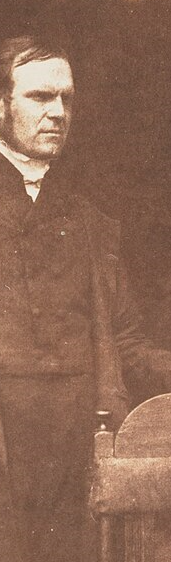
 West Port Experiment