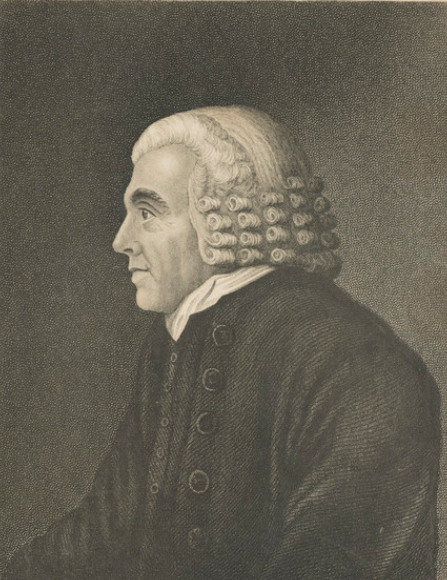
Just recorded three of John Brown’s Letters on the Constitution, Government, and Discipline of the Christian Church: No. 4, “Of the Qualifications of Church Members,” No. 18, “Of Scandals and Discipline,” and No. 19, “Of Church Fellowship and Separation.” Very solid and worth your time. Visit the entire WPE Audio library at the tab up top.
Below I’ve included a few striking passages, followed by the entire PDF. A few observations. First, I note that his letters definitely reflect his Secession outlook vis-a-vis certain corruptions of the Church of Scotland at the time. Second, baptized children may revoke their church standing by falling into heathenish “principles or practices.” Next, it would seem that Brown agrees with me (or better, I with him) that a working knowledge of the Shorter Catechism is more or less the cognitive requisite for an intelligent profession of faith. And while he counts as useful and warranted to utilize confessions and catechisms as a means to ascertaining an intelligent profession of faith, he has great misgivings against overloading the minds and consciences of applicants by the misuse of obliging them to public covenanting. He has said what I have long thought: to require taking vows to historically involved and obscure documents easily calls for implicit faith.
* * * *
“No doubt, the children of visible saints are to be accounted members of the Christian church, till, by heathenish principles or practices, they warrant their ejection. The promise is to church-members and their children. God is their God, and the God of their seed after them. Their children are federally holy; and of such is the kingdom of God (Acts 2:38, 39; Gen. 17:10; 1 Cor. 7:14; Mark 10:14). Detested be the fancy, that heathenizes all baptized in their infancy; that strips the children of Christians, of privileges conferred on the ancient Jews. If your parents be unconcerned, how your posterity grow up in the knowledge of divine truth; how they behave in their morals; whom they hear as their pastors; trample ye not upon the heavenly mandate, that the fathers unto the children, should declare God’s truth? should declare his testimony unto their children, that they may declare it unto another generation (Isa. 38:19; Psal. 78:3-7)? Rebel ye not against him that speaketh from heaven, Train up a child in the way that he should go; and when he is old, he will not depart from it? and requireth you, diligently to teach his statutes to your children, when you sit down, rise up, walk by the way, or abide in the house (Prov. 22:6; Deut. 6:6, 7)? If God know, you do not command your children and household, to walk in his way; do not endeavor, that you and your house should serve him: if you refuse to raise up seed in your family to Christ, the Lord; what remains, but, that supply to the church come from another airth [direction], and your offspring, perhaps with yourselves, be eternally destroyed; your seed be cursed; your children left to themselves to bring you to shame (Gen. 18:19; Josh. 24:15; Deut. 28:18; Prov. 29:15)? In your dying moments, how shall it affect you, to leave them ruined! At the tribunal; in the burning lake; how shall it torment you, to behold them damned, through your unconcern! to hear them curse you, as the guilty cause! Not only the children of visible saints; but everyone willing, ought to be the subject of the church’s instructing care. He that winneth souls is wise. Instruction, however, prepares for; does not constitute, or suppose, one a member of the Christian church.”
* * * * *
“Without knowledge, of the fundamental truths of the Christian faith; no man can make any Christian confession. Without knowledge of these, his heart cannot be good; he can have no hope, God will not have mercy on him; he cannot discern the Lord’s body. If he partake of the holy banquet, he eats and drink damnation to himself. He must not then be admitted (Prov. 19:2; Isa. 27:11; 1 Cor. 11:29). Indeed a person, weak in his intellects, but tender and circumspect in his life, may be admitted upon a smaller degree of knowledge, than one whose natural intellect is more vigorous, but his life less circumspect. The reason is; more of the powerful influence of gospel-truth, and less evidence of sloth, appear in the case of the former, than in that of the latter. In like manner, one educate in the Lutheran or Greek church, if sufficiently attested in life, might be occasionally admitted to partake with us, though ignorant of, or even prejudiced against some divine truths, not fundamental, which are publicly espoused by us. The reason is; his particular church has not, for ages past, enjoyed the same degrees of light into some divine truths; not made, precisely the same explicit espousal of them, as ours. He may, notwithstanding, hold fast whereunto he hath attained; in which case, him that is weak in the faith, receive ye, saith God, but not to doubtful disputations.
“But, how is the adult entrant to full communion with the Christian church to profess his faith? Is a simple adherence to the scripture sufficient? Must he declares his adherence to some human creed or confession of faith? Or must he swear a certain form of covenant-bond? You, Amelius, extol the first, as entirely safe, and freeing the conscience from ecclesiastic tyranny. To me, it appears quite unsatisfactory. An idiot, or ignorant, may profess an adherence to the sacred text, while he knows nothing of its contents. It secures not against human imposition, unless the candidate restrict his adherence to the divine originals, in Hebrew and Greek; which few could either give, or receive, with judgment. Nor could even such adherence give any satisfaction; unless the candidate explained, in what sense he understood a multitude of particular texts. Socinians, Arians, Sabellians, Anthropomorphites, Pelagians, Arminians, Antinomians, having wrested the scripture, pretend an adherence to it, as the only rule of their faith and practice. Yet what a church; rather what a synagogue of Satan, would a mixed collection of them make? What peculiar doctrine of Christianity; what principle of natural or revealed religion, would not be overturned by some of the unite body?
“To give a compendious view of the leading points of the Christian religion, which lie dispersed in the sacred volumes; to represent the analogy of faith, and assist towards perusing the scripture with understanding; to exhibit the heavenly truths, in express opposition to damnable errors, sprung up in the church; to mark to the world, the common sentiments of a church, that they may join her with judgment; to point out to her members, what they ought to be well rooted and grounded in; and to promote her purity and peace; a sound CONFESSION is extremely useful and necessary. The divine Spirit approves it. He charges to hold fast the form of sound words (2 Tim. 1:13). Few, or none, will dissent, but such as abhor restriction, from divulging their error with applause. So the thief hates the watchful cur [dog], who alarms the family, to prevent the pillage of their house. But as every creed, every confession of faith, is of human composure; to deny the seals of God’s covenant to a man, however circumstantiate, merely because he could not understand, or would not ignorantly approve, some particular phrase thereof, appears marked with tyranny over the conscience; and a thrusting of an human essay into the station of God’s sacred word, whose rectitude and truth, I must believe, whether I understand it or not.
“With respect to covenant-bonds, their express words being adopted, in a solemn appeal to the Most High; it is demonstrably evident, that, except they be so plain, as everyone, admittable to the Lord’s table, may understand them; except the things sworn to, or against, be so plainly commanded, or forbidden, in the heavenly oracles; as every, even the weakest Christian, may perceive it; to impose the swearing thereof, as a term of sacramental admission, would be highly criminal; would natively render the horrid sin of swearing without truth, judgment, or righteousness, a frequent term of Christian fellowship, at the holy feast. How shocking the thought! Besides, public covenanting is, everywhere in scripture, represented as a voluntary, an occasional duty. At what hazard, then, should men turn it into a stated, ordinary term of admission, to the Lord’s table? Would not this be, to behave as lords over, not as servants in God’s house?
“Moreover, how could a simple adherence to a creed or confession of faith; or the swearing of any human-formed covenant-bond, give proper security, concerning a man’s faith, or obedience? He is perhaps quite ignorant of what he avows: or has subtlety enough to understand the phrases thereof, in a sense very different, from the avowed by the church. On the whole, it plainly follows, that no man ought to be admitted to full communion with the visible church, without a thorough examination; in which he is called to mark his knowledge; confess his faith; and profess his resolution of obedience, in his own words. If hereon, it appear, he can, with understanding and candor, solemnly declare his adherence to a sound confession of faith; or swear a lawful covenant; the former is certainly ever agreeable; nor, in some cases, is the latter improper.”
* * * *
“That there may be union and communion, with ministers and Christians, who, in many things not fundamental, differ from us; and who are chargeable with many imperfections, infirmities, and faults, personal; with a church where sundry scandals are not confessed; and where not a few corruptions in doctrine, worship, discipline, and government, are entertained, but not imposed for approbation, the man acquaint with the oracles of God, must readily grant. Many and grievous, were the corruptions at Corinth; Galatia; Pergamos; Thyatira; Sardis; and Laodicea. For these, God sharply rebukes them, in their respective epistles; but, because not obstinate in their evil way; nowhere are the godly among them, advised to withdrawment; but to hold fast the truth they received; and to endeavour the purging out of corruptions (1 Cor. 1:11 and 5:1, 2 and 6:5 and 8 and 9 and 14 and 15 &c.; Gal. 3 and 4; Rev. 2 and 3). A variety of evils not purged out; a variety of inadvertent stumblings in a church pointing towards reformation, though never to be approved, warrant no separation. Nor will simple apostasy from reformation once attained, warrant it. We must plead with our mother, plead; till it plainly appear, nothing is gained by our pleading, but rather made worse (Hos. 2:2).”
Whole doctrine catholicity | “Who is she that looketh forth as the morning, fair as the moon, clear as the sun, and terrible as an army with banners” (Song 6:10)?
 West Port Experiment
Leave a comment