Feeds:
Posts
Comments

Archive for November, 2024

Recently as I was doing parish outreach visits, I came across a gentlemen with a rather interesting question. Rhetorical and somewhat cynical, to be sure; but a great opportunity to discuss the things of God with a lost sheep.

As this fellow, an African-American probably in his 50s, stood outside his house, I introduced myself. Very soon he raised this objection. “Alright. The Tower of Babel. Why should God even care? If He is so great and infinite, and human beings are just ants, how does their little building project matter?” Thus spake the ant.

So I, but another measly ant, took up the question. “David felt extremely small when he, in Psalm 8, looked up into the heavens and beheld the sun, the moon, the stars.” And so he exclaimed, “What is man, that thou art mindful of him, and the son of man, that thou visitest him?” Indeed, Father Abraham confessed that he was “but dust and ashes,” and Isaiah wondered at the nations as a mere “drop in a bucket and as the very small dust of the balances.”

I sense he was a bit flat-footed and struck that the Bible had actually considered these kinds of things. “But here’s the thing, Malcolm [pseudonym], the wonder is that God actually took such interest in His creation, and especially one speck of matter on which he impressed His very own image.” And when these image-bearing creatures rebel against Him, defy and dishonor Him, indeed, He cares! In fact, He is profoundly angry. And thus, Babel.

We talked for some time as the autumn sun set amid the changing colors. I got his number, parted from him, and thanked the Lord for another rebel ant who was open to talk. May God confound and confuse poor Malcolm, so that he may throw off the wisdom of this world for the “foolishness of God.”

For more information about RPM, click here. To receive quarterly updates, e-mail me at michael@reformedparish.com, or sign up for West Port Experiment on the right near the top.

Read Full Post »

Standard caveats, Rom. 12:9.

Read Full Post »

I’ve been meditating on these most mysterious and weighty words of our Lord in John 17:3, “As thou hast given him power over all flesh, that he should give eternal life to as many as thou hast given him.” Here is indication of the Father’s donation authority and right of Christ, as God-man, to dispense salvation to the elect out of the world over which He has been given all authority. Found this passage from Manton especially illuminating in light of it:

“There is no entrance into this kingdom but by coming into the kingdom of Christ. Besides the kingdom which belongeth to Father, Son, and Holy Ghost, one true and only God, there is the kingdom of Christ considered as mediator; a new right of empire and sovereignty over the creature, not destructive of the former,but accumulative, as superadded to it, that the government of God might be the more comfortable and beneficial to us in our lapsed estate.” Read the rest below.

[image source]

Read Full Post »

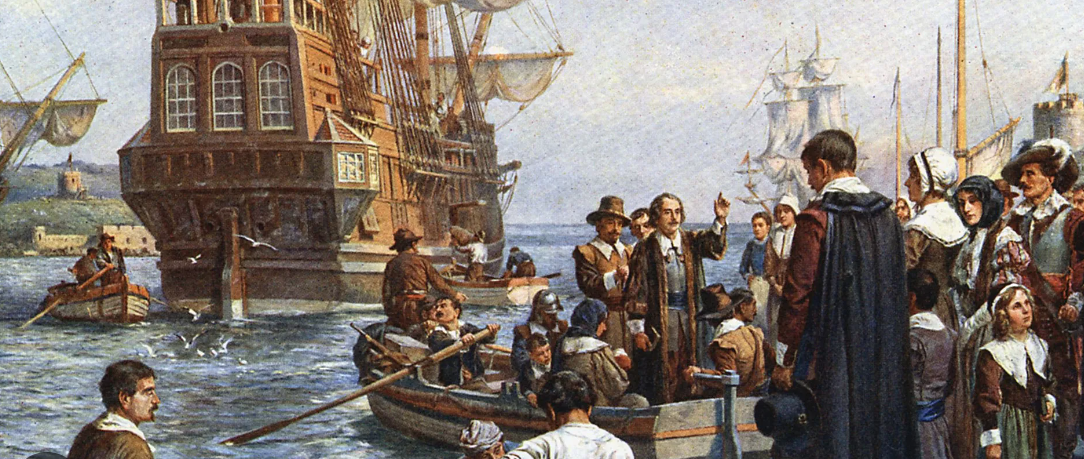
John Cotton gives an extremely helpful list of biblical considerations for the Christian who is trying to decide whether or not to move. This is taken from “God’s Promise to His Plantations” (1630). I’ve left the archaic formatting in place.

* * * * *

Quest. But how shall I know whether God hath appointed me such a place, if I be well where I am, what may warrant my removeall?

Answ. There be foure or five good things, for procurement of any of which I may remove. Secondly, there be some evill things, for avoiding of any of which wee may transplant our selves. Thirdly, if withall we find some speciall providence of God concurring in either of both concerning our selves, and applying general grounds of removall to our personall estate.

First, wee may remove for the gaining of knowledge. Our Saviour commends it in the Queene of the south, that she came from the utmost parts of the earth to heare the wisdom of Solomon: Matth. 12. 42. And surely with him she might have continued for the same end, if her personall calling had not recalled her home.

Secondly, some remove and travaile for merchandize and gaine-sake; Daily bread may be sought from farre, Prov. 31. 14. Yea our Saviour approveth travaile for Merchants, Matth. 13. 45, 46. when hee compareth a Christian to a Merchantman seeking pearles: For he never fetcheth a comparison from any unlawful thing to illustrate a thing lawfull. The comparison from the unjust Steward, and from the Theefe in the night, is not taken from the injustice of the one, or the theft of the other; but from the wisdome of the one, and the sodainnesse of the other; which in themselves are not unlawfull.

To read further, see below. To access the entire sermon and an audio recording, click here.

Read Full Post »

« Newer Posts